

Online courses directory (4179)

In the free online course Health & Safety for Scaffolds and Scaffolding Work learn about scaffolds and scaffolding work and how they are important for construction work to have a safe, stable work platform. <br /><br />The course begins by introducing you to scaffolds and how they are used for scaffolding work. You will learn about the duties and responsibilities different groups of people have when scaffolding work is being undertaken. You will learn about important steps that should be followed for ensuring that no one is exposed to health and safety risks. <br /><br />Next, you will learn about a variety of different types of scaffolds. You will learn about their features and when they are used. You will also learn about scaffolds that are only used for specific purposes.<br /><br />Finally, you will learn how to erect a scaffold safely to avoid any damages or injury. You will learn about control measures that are used for the tying of scaffolds. You will also learn about methods for anchoring scaffolds. You will learn about safe work practices that are used when dismantling scaffolds. You will learn common hazards and risk controls that can occur when performing scaffolding work.<br /><br />This free course will be of great interest to anyone who uses or plans to use scaffolds and scaffolding in the workplace. <br />

Build your earth science vocabulary and learn about cycles of matter and types of sedimentary rocks through the Education Portal course Earth Science 101: Earth Science. Our series of video lessons and accompanying self-assessment quizzes can help you boost your scientific knowledge ahead of the Excelsior Earth Science exam . This course was designed by experienced educators and examines both science basics, like experimental design and systems of measurement, and more advanced topics, such as analysis of rock deformation and theories of continental drift.

The free online course Health and Fitness - Flexibility, Calisthenics and Plyometrics is designed to show you how stretching exercises, calisthenics and plyometrics can be used to help improve your flexibility, core strength, and muscular speed and power. The course begins by focusing on flexibility and stretching. Firstly, an accurate description of what exactly is meant by flexibility is given. You will then learn about the many benefits of having high flexibility levels and study the process of how flexibility is developed within muscles all around the body. This section concludes by examining various flexibility development techniques and provides you with a variety of examples of stretches that will help you improve your own flexibility levels. The course then continues by examining how calisthenics can help you build and maintain fitness and core strength. You will learn how calisthenic exercise differs from more conventional forms of exercise such as basic strength training. You will then learn how calisthenic exercise develops both muscular strength and endurance by targeting multiple development systems within the muscle. Next, you will study the critical role that technique plays in remaining injury free while performing calisthenic exercises. This section concludes by presenting a range of calisthenic exercises that help develop a variety of muscle groups around the body. Finally, the course looks at how plyometric exercise can be used to develop explosive speed and power within various muscle groups around the body. You will learn about the high impact nature of plyometric exercises, the potential for injury and ways to decrease the risk of injury when performing them. You will learn about the correct surfaces to train on, what sports shoes to wear, the correct equipment to use and what techniques to follow when performing plyometric exercises. Finally, you will learn about a range of low, medium and high intensity plyometric exercises that can be used to develop explosive speed and power in various muscle groups around the body. This course will be of great interest to anyone who wishes to improve their overall flexibility, core strength and suppleness in a safe and progressive manner. The course will also be of interest to professionals who work in the health and fitness industry or individuals who may be interested in pursuing a career in the health and fitness.<br />

The free online course Health and Fitness - Running Tips, Swimming and Strength Training is designed to show you how running, swimming and strength training can improve your strength, flexibility, endurance and overall fitness levels. It will also show you how you can practice running, swimming and strength training and stay injury-free. The course begins by focusing on running as a means of building and maintaining fitness. You will learn about the importance of using good running shoes, what surfaces to run on to stay injury free and examine the correct mechanics that should be used while running. This section concludes by presenting a range of strategies that will help you increase your running mileage in a safe and progressive manner. The course then looks at how swimming can help you build and maintain fitness. You will learn about equipment that is needed in order to swim safely in both the open water and a swimming pool. This will help you appreciate the difference between open water and pool swimming as they are both conducted in extremely different environments. This section concludes by examining how to develop swimming skills in the freestyle and breaststroke. Finally, the course looks at how strength training can be used as a tool to help you stay fit and healthy. You will learn about the necessary precautions you need to take to ensure that you train safely, including completing warm-up and cool-down before and after exercise and completing all lifts with the correct technique. You will also study a wide range of exercises that can be used to increase strength in all areas of the body, including the legs, back, shoulders, arms and chest. This course will be of great interest to anyone who wishes to improve their overall strength and fitness levels in a safe and progressive manner. The course will also be of interest to professionals who work in the health and fitness industry or individuals who may be interested in pursuing a career in the health and fitness. <br />

The free online course Health and Safety for Caregiving is designed to ensure that you have the skills and knowledge necessary to keep both yourself and your clients safe while you perform your duties as a caregiver. A client may suffer a serious fall, seizure or even a diabetic emergency and carers need to be able to deal with any emergencies that they encounter in a calm manner. This course will help you develop the skills necessary to deal with a range of medical and physical emergencies, allowing you to provide care to your client with greater peace of mind. The course begins by introducing you to a variety of medical conditions that carers may encounter when working with clients. You will learn how to identify their symptoms, prevent their spread and, if necessary, treat them. You will then study the role that nutrition and hydration play in keeping your clients healthy. You will learn how to prepare healthy, nutritious meals for a wide range of diets including diabetic, celiac and lactose intolerant. You will also develop an ability to prevent foodborne illness by preparing meals in a safe environment. The course then continues to examine a further range of emergencies that you may encounter when working with a client. You will learn how to identify a range of medical emergencies including anaphylactic shock, diabetic attacks and strokes. You will then examine the correct actions to be taken and how to protect your client in each case. You will then examine other risks, including falls and fire safety. You will learn how to treat your client in the event of a fall and prevent or extinguish a fire should one occur when you are with a client. The course will be of great interest to all professionals working in the caregiving profession, who wish to ensure that their skills are kept to the highest standard possible. This free course will also be of great interest to any learner considering pursuing a career in the caregiving industry. <br />
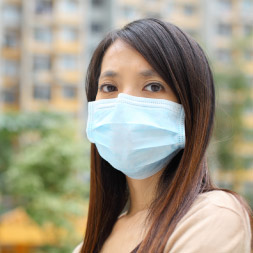
Every year millions of people in the developing world fall ill or die from infectious diseases due to lack of awareness of basic health guidelines and practices. In this free online healthcare course you will learn about guidelines for avoiding various infectious diseases such as cholera, malaria, and tuberculosis, as well as guidelines for treating the resulting symptoms like diarrhoea. These guidelines include why it is so important to keep individuals and family members clean in order to avoid germs and infections. This course will provide healthcare and aid workers in developing countries with practical knowledge of these diseases and how they can be avoided by using simple and effective hygiene practices and procedures. This free online healthcare course will be of great interest to all healthcare professionals who would like to learn more about the prevention and treatment of infectious diseases, and to all learners who would like a greater understanding of healthcare guidelines for avoiding infectious diseases.<br />

This class is offered as CS6440 at Georgia Tech where it is a part of the [Online Masters Degree (OMS)](http://www.omscs.gatech.edu/). Taking this course here will not earn credit towards the OMS degree. This is a survey course designed to provide a broad, forward-facing overview of contemporary health informatics, a specialized field of computing that seeks to improve the quality and efficiency of healthcare delivery. To understand health informatics (HIT) you also need to have at least a basic understanding of the complex and highly regulated US healthcare industry. The course is designed for students from diverse backgrounds and who have not been previously exposed to HIT. It is divided into three sections: The US healthcare delivery and the key role of the federal government in promoting HIT adoption The core technologies that drive all contemporary HIT systems and tools The real world applications of HIT from electronic medical and personal health records to exploiting digital data aggregated from them for research and other purposes

This course offers an overview of healthcare, health information technology, and health information management systems. The focus is on the role and responsibilities of entry-level health IT specialists in each phase of the health information management systems lifecycle. The curriculum is aligned to the new Certified Associate in Healthcare Information and Management Systems (CAHIMS) [1] certification administered by the Healthcare Information and Management Systems Society. This certificate is designed for students who have previous experience in IT or healthcare and it is designed to serve as a pathway into health IT careers. This course is a collaborative effort of TAACCCT grantees, in particular Bellevue Colleges and MoHealthWINs. The collaborative partners supporting the development of this course are Open Learning Initiative (OLI) at Stanford University and Carnegie Mellon University, Center for Applied Science and Technology (CAST), and Creative Commons (CC)- all funded through the Gates foundation OPEN Grant. The core development team includes content experts, learning scientists, software developers, instructional designers, universal design for learning experts and instructional technologists. [1] http://www.himss.org/health-it-certification/cahims?navItemNumber=13646
Find out why having "stiff arteries" can increase blood pressure and cause uneven blood flow. It all comes back to the idea of "total energy"!. Compliance and Elastance. Bernoulli's equation of total energy. Stored elastic energy in large and middle sized arteries. Compliance - Decreased blood pressure. Compliance - Increased blood flow. Compliance and Elastance. Bernoulli's equation of total energy. Stored elastic energy in large and middle sized arteries. Compliance - Decreased blood pressure. Compliance - Increased blood flow.
Find out what's inside of blood. What's Inside of Blood?. Hemoglobin moves O2 and CO2. Bohr Effect vs. Haldane Effect. Fetal Hemoglobin and Hematocrit. Oxygen Content. What's Inside of Blood?. Hemoglobin moves O2 and CO2. Bohr Effect vs. Haldane Effect. Fetal Hemoglobin and Hematocrit. Oxygen Content.
Learn about blood pressure and how we measure it. Take a deeper dive and find out how blood pressure is related to resistance and flow!. What is blood pressure?. Learn how a stethoscope can help determine blood pressure. Resistance in a tube. Adding up resistance in series and in parallel. Adding up resistance problem. Flow and Perfusion. Putting it all together: Pressure, flow, and resistance. Blood pressure changes over time. What is blood pressure?. Learn how a stethoscope can help determine blood pressure. Resistance in a tube. Adding up resistance in series and in parallel. Adding up resistance problem. Flow and Perfusion. Putting it all together: Pressure, flow, and resistance. Blood pressure changes over time.
Find out how the body works to maintain a normal blood pressure by sensing when its too high or too low and responding accordingly. Regulation of blood pressure with baroreceptors. Parts of a nephron. General overview of the RAAS system - Cells and hormones. Renin production in the kidneys. Activating Angiotensin 2. Angiotensin 2 raises blood pressure. Aldosterone raises blood pressure and lowers potassium. Aldosterone removes acid from the blood. ADH secretion. ADH effects on blood pressure. Aldosterone and ADH. Regulation of blood pressure with baroreceptors. Parts of a nephron. General overview of the RAAS system - Cells and hormones. Renin production in the kidneys. Activating Angiotensin 2. Angiotensin 2 raises blood pressure. Aldosterone raises blood pressure and lowers potassium. Aldosterone removes acid from the blood. ADH secretion. ADH effects on blood pressure. Aldosterone and ADH.
Learn about how arteries differ from veins and how arteries can get damaged over time. Arteries vs. Veins - What's the difference?. Arteriosclerosis, Arteriolosclerosis, and Atherosclerosis. Atherosclerosis - Part 1. Atherosclerosis - Part 2. Arteriolosclerosis - Part 1. Arteriolosclerosis - Part 2. Arteries vs. Veins - What's the difference?. Arteriosclerosis, Arteriolosclerosis, and Atherosclerosis. Atherosclerosis - Part 1. Atherosclerosis - Part 2. Arteriolosclerosis - Part 1. Arteriolosclerosis - Part 2.
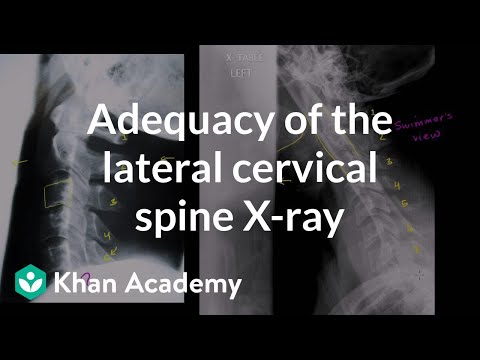
Learn about the cervical (neck) spine through an Xray!. Adequacy of the Lateral Cervical Spine X-Ray. Assessing Alignment of the Lateral Cervical Spine (neck) X-Ray. Cervical Spine Protection in Airway Management (not a substitute for formal training). Adequacy of the Lateral Cervical Spine X-Ray. Assessing Alignment of the Lateral Cervical Spine (neck) X-Ray. Cervical Spine Protection in Airway Management (not a substitute for formal training).
Find out how preload, afterload, and contractility work together to change your PV Loop (and affect stroke volume and cardiac output)!. What is Preload?. What is afterload?. Increasing the Heart's Force of Contraction. Reimagine the Pressure Volume Relationship. What is Contractility?. Getting Ea (Arterial Elastance) from the PV Loop. Arterial Elastance (Ea) and Afterload. Arterial Elastance (Ea) and Preload. Stroke Work in PV Loops and Boxes. Contractility, Ea, and Preload Effects on PV Boxes. What is Preload?. What is afterload?. Increasing the Heart's Force of Contraction. Reimagine the Pressure Volume Relationship. What is Contractility?. Getting Ea (Arterial Elastance) from the PV Loop. Arterial Elastance (Ea) and Afterload. Arterial Elastance (Ea) and Preload. Stroke Work in PV Loops and Boxes. Contractility, Ea, and Preload Effects on PV Boxes.

Get a ring-side seat as a pathologist talks about colon cells under the microscope. Normal Colon Tissue. Hyperplasia in Colon Tissue. Colon Dysplasia. Cancerous Colon Tissue. Normal Colon Tissue. Hyperplasia in Colon Tissue. Colon Dysplasia. Cancerous Colon Tissue.

Learn about hormones and diabetes, as well as some important information on glucose control. Intro to the Endocrine System. Precocious Puberty. Childhood Growth. Glucose Insulin and Diabetes. Blood Sugar Levels. Glucose Concentration Conversion. A1C Levels. Intro to the Endocrine System. Precocious Puberty. Childhood Growth. Glucose Insulin and Diabetes. Blood Sugar Levels. Glucose Concentration Conversion. A1C Levels.
Find out how the heart and circulatory system work in the fetus!. Meet the Placenta!. Umbilical vessels and the Ductus Venosus. Flow through the Heart. Hypoxic Pulmonary Vasoconstriction. Foramen Ovale and Ductus Arteriosus. Fetal Hemoglobin and Hematocrit. Double Bohr Effect. Fetal Circulation Right Before Birth. Baby Circulation Right After Birth. Fetal Structures in an Adult. Meet the Placenta!. Umbilical vessels and the Ductus Venosus. Flow through the Heart. Hypoxic Pulmonary Vasoconstriction. Foramen Ovale and Ductus Arteriosus. Fetal Hemoglobin and Hematocrit. Double Bohr Effect. Fetal Circulation Right Before Birth. Baby Circulation Right After Birth. Fetal Structures in an Adult.
Learn some basics about the Health Care system in the US. Blue Cross and Blue Shield. Conversation About Drug Pricing. Health Care Costs in US vs Europe. Healthcare System Overview. Paying Doctors. Medicare Overview. Blue Cross and Blue Shield. Conversation About Drug Pricing. Health Care Costs in US vs Europe. Healthcare System Overview. Paying Doctors. Medicare Overview.
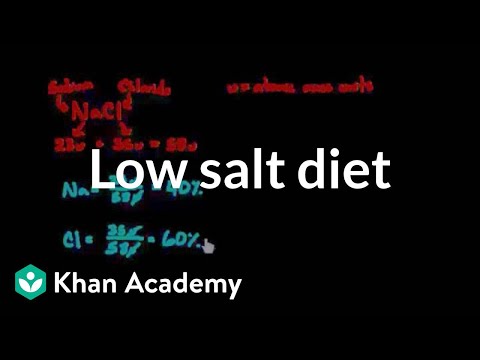
Learn some of the fundamentals behind staying healthy: Reducing your salt, keeping your weight in a healthy range, and exercising regularly. Low salt diet. Spotting salty foods. Calculate your own Body Mass Index. Introduction to exercise. 11 major muscle groups. Low salt diet. Spotting salty foods. Calculate your own Body Mass Index. Introduction to exercise. 11 major muscle groups.
Add to calendar

Trusted paper writing service WriteMyPaper.Today will write the papers of any difficulty.