

Online courses directory (4179)

Explores related and sometimes competing legal and policy frameworks for the development and dissemination of ideas and expression in the Information Age. The ways in which principles of free speech and expression compare and contrast with intellectual property rights are explored in relation to the advancement of knowledge and innovation, with particular focus on the impact of the Internet and new technology. The impact of other legal considerations and values on the development and dissemination of ideas and information (such as security, privacy, local control vs. national and international considerations, competition, and the protection of minors) are also examined. The course draws upon the contexts of education, business, and government. Course Level: Graduate This Work, PubPol 688/SI 519 - Intellectual Property and Information Law, by Bryce Pilz is licensed under a Creative Commons Attribution license.

If you're only working to serve someone else, stop. Only when you're following your true passions - in the cas

When putting together a team, Fern Mandelbaum, Partner at Monitor Venture Partners, focuses on the CEO. She looks for so

This is a course to teach basic Python programming skills through data analysis. The book and course materials are all free and licensed as Creative Commons. There is no complex math in...
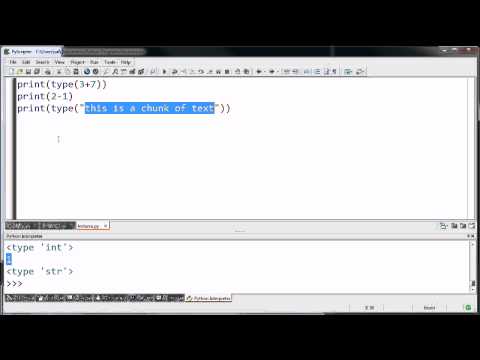
Introduction to programming and computer science. Introduction to Programs Data Types and Variables. Binary Numbers. Python Lists. For Loops in Python. While Loops in Python. Fun with Strings. Writing a Simple Factorial Program. (Python 2). Stepping Through the Factorial Program. Flowchart for the Factorial Program. Python 3 Not Backwards Compatible with Python 2. Defining a Factorial Function. Diagramming What Happens with a Function Call. Recursive Factorial Function. Comparing Iterative and Recursive Factorial Functions. Exercise - Write a Fibonacci Function. Iterative Fibonacci Function Example. Stepping Through Iterative Fibonacci Function. Recursive Fibonacci Example. Stepping Through Recursive Fibonacci Function. Exercise - Write a Sorting Function. Insertion Sort Algorithm. Insertion Sort in Python. Stepping Through Insertion Sort Function. Simpler Insertion Sort Function. Introduction to Programs Data Types and Variables. Binary Numbers. Python Lists. For Loops in Python. While Loops in Python. Fun with Strings. Writing a Simple Factorial Program. (Python 2). Stepping Through the Factorial Program. Flowchart for the Factorial Program. Python 3 Not Backwards Compatible with Python 2. Defining a Factorial Function. Diagramming What Happens with a Function Call. Recursive Factorial Function. Comparing Iterative and Recursive Factorial Functions. Exercise - Write a Fibonacci Function. Iterative Fibonacci Function Example. Stepping Through Iterative Fibonacci Function. Recursive Fibonacci Example. Stepping Through Recursive Fibonacci Function. Exercise - Write a Sorting Function. Insertion Sort Algorithm. Insertion Sort in Python. Stepping Through Insertion Sort Function. Simpler Insertion Sort Function.
In this free online course Python Programming - Working with Complex Decisions and Events you will learn about creating and using if statements, and checking multiple conditions using elif statements. You will also learn about creating and using for loops and while loops, and the mistakes that can happen when creating and using loops.<br /><br />The course begins by introducing you to if statements which are used to check conditions and make decisions with your code. You will learn about the constraints when checking your if statements, different ways to write an if statement and using the else statement for when the if statement in not true. You will learn about adding an if statement to check multiple conditions with the elif statement. You will also learn how to order elif and if statements for your code to work correctly, and how to combine conditions with the logic operators and & or.<br /><br />Next, you will learn about loops and how to create a for loop. You will learn about nesting loops in loops and using a variable as the condition in the loop. You will learn about accessing the loop values and manually assigning values for each step in the loop. <br /><br />Finally, you will learn about creating and constructing while loops. You will learn about how a while loop functions. You will learn the difference between using a for and while loop as well as mistakes that can happen when you use loops in your code.<br /><br />This free Alison course will be of great interest to those learners who wish to get started in programming and improve their ability to write programs using the Python programming language.<br /><br />Prerequisites: You should have completed the previous two courses on programming with Python: 'Programming Concepts with Python' and 'Python Programming - Working with Numbers, Dates and Time'.<br />
In this free online course Python Programming - Working with Functions and Handling Errors you will learn about functions, how to create your own functions and how to use them. You will also learn about errors that can occur in your code. You will learn about using the try/ except statement to handle potential errors.<br /><br />The course begins by introducing you to functions and you will learn how to create your own functions and how to pass parameters into your functions.<br /><br />Next, you will learn about what type of errors you can get and about different methods for handling errors. You will learn about using the try/except statement to test pieces of code that may cause an error.<br /><br />This free Alison course will be of great interest to those learners who wish to get started in programming and improve their ability to write programs using the Python programming language.<br /><br />Prerequisites: You will need to have completed the previous courses on programming with Python: 'Programming Concepts with Python', 'Python Programming - Working with Numbers, Dates and Time', 'Python Programming - Working with Complex Decisions and Events' and 'Python Programming - Working with Lists and Files'.<br />
In this free online course Python Programming - Working with Lists and Files you will learn about creating and modifying lists, creating files and saving data to those files. You will also learn about reading data form files along with what csv files are and getting data from them.<br /><br />The course begins by introducing you to lists. You will learn about creating lists, both empty lists and lists with values in them. You will learn about how to add data to your lists, updating and deleting items on your list, and searching through your lists.<br /><br />Next, you will learn how to create a file with your code, and how to write data to your file. You will learn how to close the file after your code is finished using it. You will also learn what csv files are, and the process of opening and reading data from files. You will learn about importing the csv library to help with reading data from csv files, and about taking the data from your csv file and putting it in a list.<br /><br />This free Alison course will be of great interest to those learners who wish to get started in programming and improve their ability to write programs using the Python programming language.<br /><br />Perquisites: Your will need to have completed the previous courses on programming with Python: 'Programming Concepts with Python', 'Python Programming - Working with Numbers, Dates and Time' and 'Python Programming Working with Complex Decisions and Events'.
In this free online course Python Programming - Working with Numbers, Dates and Time you will introduced to mathematical operations, converting variable types and using dates in and time in your code.<br /><br />The course begins by introducing you to storing numeric variables in your code. You learn about the difference between creating a numeric variable compared to creating a string. You will learn about preforming mathematical operations in your code, and formatting your numbers and printing them on screen. You will also learn about getting the user to input numbers and converting that input to work with your numeric variables and mathematical operations. <br /><br />Next, you will learn about working with dates and time. You will learn about importing libraries into your project so you can use their functions and methods. You will learn about obtaining and displaying today's date. You will learn how to format your dates and the different date formats to display the dates. You will learn about the functions which are included in the Datetime library and converting user input to a date format. You will learn about working with time and how it uses many of the same functions dates would but with specific parameters for time.<br /><br />This free Alison course will be of great interest to those learners who wish to get started in programming and improve their ability to write programs using the Python programming language.<br /><br />Prerequisites: You should have completed previous course in this series: Introduction to Programming with Python.

A first programming course in Python suitable for any age and/or experience level.

A free course to support python programming. Get a paid and full version for more !

Essential Tools & Techniques for Project Managers

This Stanford Continuing Studies course is the first of a three-quarter sequence of classes exploring "quantum enta

This Stanford Continuing Studies course is the third of a three-quarter sequence of classes exploring "quantum enta

Quantway 2 fully online

Familiarise yourself and manage your Gmail account effectively - stealing back time to do the things you WANT to do!

In this course I will show you step-by-step how to set up a fully functioning Excel spreadsheet.
![Quick Windows [Win8] App Development - For Busy People Only](https://udemyimages-a.akamaihd.net/course/240x135/116866_c05b_6.jpg)
Learn to build a beautiful full app in minimal time Leverage open source, HTML5/JavaScript and tons more!

The free online course R for Data Analysis will introduce you to data manipulation in R programming. You will learn about manipulating data and grouping it to prepare the data. You will also learn how to take data you prepared and present it on visualizations.<br /><br />The course begins by introducing you to data manipulation. You will learn what data manipulation is and about packages or library you need to add to your program for data manipulation. You will be introduced to the difference between feature and observation manipulation. You will learn about grouping and how that can organize your data output. <br /><br />Next, you will be introduced to the two different types data visualization. You will learn about the grammar of graphics, about different graphing techniques and charting libraries you will need for visualizations. The course also teaches about setting the colours and organizing your data in the visualizations.<br /><br />This free Alison course will be of great interest to professionals working in the areas of data science and data analysis and who want to learn more about using R for statistical computing.<br /><br />Prerequisites: The learner will need the have completed the previous course in Introduction to R for Data Science. The learner will need some knowledge of programming languages.

Oracle E Business Suite is the most comprehensive suite of integrated global business applications
Add to calendar

Trusted paper writing service WriteMyPaper.Today will write the papers of any difficulty.