

Online courses directory (4179)

This course provides a comprehensive overview of the concepts of algorithm analysis and development.

This comprehensive JavaScript programming course will teach you how to develop JavaScript applications in around 2 hours
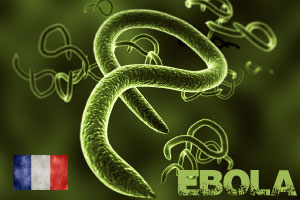
Une nouvelle éruption du virus Ebola a été enrégistrée dans les pays de l’Afrique de l’Ouest les semaines passées. Le taux de mortalité du virus Ebola est extrêmement élevé et une nouvelle éruption du virus peut avoir des consequences graves sur la santé des individus atteints par ce virus mais aussi sur les ressources des communautés et les pays dans lesquels l’épidémie survient. Ce cours sanitaire d’instruction mis en ligne vous expliquera clairement et en de simples termes: ce qu’est le virus Ebola, l’endroit où l’épidémie est apparue, les signes et symptômes d’une infection, comment une infection est traitée et comment prévenir une infection. Il expliquera aussi quelques incompréhensions portant sur le virus Ebola qui peut attaquer les communautés dans lesquelles surviennent les éruptions. Ce cours sera d’un grqnd intérêt pour les apprenants qui vivent dans ou près des regions où une éruption du virus Ebola est déjà survenue une fois et qui aimeraient apprendre plus sur le virus et comment éviter une éventuelle infection. Ce cours sera aussi d’un grand intérêt pour tous ceux qui travaillent dans le domaine de la santé et qui voudraient des ressources libres pour aider les individus et les communautés à avoir une meilleure comprehension du virus Ebola and de la manière dont une eruption de ce dernier peut être controlee.<br />

This class is offered as CS6505 at Georgia Tech where it is a part of the [Online Masters Degree (OMS)](http://www.omscs.gatech.edu/). Taking this course here will not earn credit towards the OMS degree. In this course, we will ask the big questions, “What is a computer? What are the limits of computation? Are there problems that no computer will ever solve? Are there problems that can’t be solved quickly? What kinds of problems can we solve efficiently and how do we go about developing these algorithms?” Understanding the power and limitations of algorithms helps us develop the tools to make real-world computers smarter, faster and safer.

Computação no ambiente R para métodos quantitativos

This course presents material in discrete mathematics and computation theory with a strong emphasis on practical algorithms and experiential learning. Discrete mathematics, also called finite mathematics or decision mathematics, is the study of mathematical structures that are fundamentally discrete in the sense of not supporting or requiring the notion of continuity. Objects studied in finite mathematics are largely countable sets such as integers, finite graphs, and formal languages. Concepts and notations from discrete mathematics are useful to study or describe objects or problems in computer algorithms and programming languages. The CDM course is currently under development and we are making the course available while it is under development. Only one of the planned fifteen modules is currently available. The module on Groups that is currently available would appear mid-way through the complete course.

This class explores how computation impacts the entire workflow of photography, which is traditionally aimed at capturing light from a 3D scene to form a 2D image. A detailed study of the perceptual, technical and computational aspects of forming pictures, and more precisely the capture and depiction of reality on a (mostly 2D) medium of images is undertaken over the entire term. The scientific, perceptual, and artistic principles behind image-making will be emphasized, especially as impacted and changed by computation. Topics include the relationship between pictorial techniques and the human visual system; intrinsic limitations of 2D representations and their possible compensations; and technical issues involving capturing light to form images. Technical aspects of image capture and rendering, and exploration of how such a medium can be used to its maximum potential, will be examined. New forms of cameras and imaging paradigms will be introduced.
This class is offered as CS6250 at Georgia Tech where it is a part of the [Online Masters Degree (OMS)](http://www.omscs.gatech.edu/). Taking this course here will not earn credit towards the OMS degree. This course covers advanced topics in Computer Networking such as Software-Defined Networking (SDN), Data Center Networking and Content Distribution. The course is divided into three parts: Part 1 is about the implementation, design principles and goals of a Computer Network and touches upon the various routing algorithms used in CN (such as link-state and distance vector). Part 2 talks about resource control and content distribution in Networking Applications. It covers Congestion Control and Traffic Shaping. Part 3 deals with the operations and management of computer networks encompassing SDN's (Software Defined Networks), Traffic Engineering and Network Security.

The free online course Computer Networking - Digital Network Security introduces you to the network architecture and protocols used in network security.<br /><br />The course begins by describing the features and functions of VPN protocol: Point-to-Point Tunneling Protocol (PPTP). You will learn how Point-to-Point Tunneling Protocol (PPTP) encapsulates Point-to-Point (PPP) frames into IP datagrams for transmission over an IP-based network. You will learn about L2TP and how it relies on IPSec in Transport Mode for encryption services.<br /><br />You will then learn about Firewalls which are the most commonly used type of security device in an organization's perimeter and how they protect a network from malicious attack and unwanted intrusion. You will learn about the role of a Perimeter network that keep certain information open to specific users or to the public while keeping the rest of an organization's data secret.<br /><br />You will learn about the two types of Packet filtering (Stateless and Stateful) and their functions. Next you will learn about Application-level gateway functions and how it supports address and port translation and checks whether the type of application traffic is allowed.<br /><br />Finally, you will learn about the Network Intrusion Detection System (NIDS) which detects malicious network activities by monitoring network traffic, and the Network Intrusion Prevention System (NIPS) which inspects network traffic and can remove, detain or redirect malicious traffic.<br /><br />This course will be of interest to all learners who would like to learn more about computer networking, the network architecture and protocols used in network security. It will also be of great interest to all learners who are considering computer networking as a career or who are considering doing professional computer networking exams. <br />
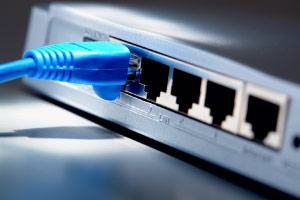
The free online course Computer Networking - Local Area Networks and the OSI Model introduces the key devices found on local area networks (LANs) and the structure of different types of LANs. It also explains the seven layers of the OSI model that allow devices on networks communicate with each other. <br /><br />The course begins by introducing you to the key devices found on LANs such as hubs, switches and routers, and how each of these devices functions to allow for effective and efficient communication on the LAN. You will then learn about the functions of IP addresses and how they are broken down into Network ID and Host ID components. You will be introduced to the different network topologies such as Star, Bus, Ring and how they function. Next you will learn about Ethernet which is the de facto standard and most widely installed LAN technology. You will learn how devices on an Ethernet network communicate with each other using Frames. <br /><br />The course then moves on to explain the seven layers of the OSI Model. You will learn about the structure and function of each layer and how data is passed through the seven layers to allow two devices communicate with each other. You will also be introduced to the TCP Model and you will learn about the similarities and differences between the OSI Model and the TCP Model in terms of their structure and functions.<br /><br />This course will be of interest to all learners who would like to learn more about computer networking, in particular the structure and function of LANs, and how the OSI Module allows devices on a LAN communicate with each other. It will be of great interest to all learners who are considering computer networking as a career or who are considering doing professional computer networking exams. <br />

The free online course Computer Networking - Wired and Wireless Networks and Protocols introduces you in a step-by-step manner to the structure and function of wired and wireless networks and their protocols. The course begins by introducing you to cabling systems for wired networks, in particular the twisted-pair cable, and cable speeds and the cable types. You will also learn about the tools needed when making the connections between patch panels and RJ45 jacks. <br /><br />You will learn about the structure of Internet Protocol addresses in detail, including IP Ranges and their classes. You will compare and contrast the structure and function of IPv4 and IPv6 addresses and will learn about the role of Default gateway and DNS server in networking.<br /><br />Finally, the course introduces you basic TCP/IP tools such as command prompt, ipconfig and ping, and the use of these tools will be demonstrated. Next, you will be introduced to advanced TCP/IP tools such as Netstat, Pathping, Nslookup, Telnet, NbtStat and Netsh. Again, these tools and their uses will be demonstrated.<br /><br />This course will be of interest to all learners who would like to learn more about computer networking, in particular the structure and function of wired and wireless networks and their protocols. It will also be of great interest to all learners who are considering computer networking as a career or who are considering doing professional computer networking exams. <br />

Lecture Series on Artificial Intelligence by Prof.Sudeshna Sarkar and Prof.Anupam Basu, Department of Computer Science &

Lecture Series on Artificial Intelligence by Prof.P.Dasgupta, Department of Computer Science and Engineering, IIT Kharag

Lecture Series on Computer Architecture by Prof. Anshul Kumar, Department of Computer Science & Engineering ,IIT Del

Lectures by Dr.Sukhendu Das, rnDept. of Computer Science and Engineering, rnIIT Madras

Lecture Series on Computer Networks by Prof. S.Ghosh,Department of Computer Science & Engineering, I.I.T.,Kharagpur.

Lecture Series on Computer Organization by Prof. S. Raman, Department of Computer Science and Engineering, IIT Madras.

Lecture Series on Data Communication by Prof.A. Pal, Department of Computer Science Engineering,IIT Kharagpur.

Lecture - 24 GraphsrnLecture Series on Data Structures and Algorithms by Dr. Naveen Garg, Department of Computer Science

Lecture Series on Database Management System by Prof.D.Janakiram, Department of Computer Science and Engineering, IIT Ma
Add to calendar

Trusted paper writing service WriteMyPaper.Today will write the papers of any difficulty.