

Online courses directory (13677)

Zoology is the scientific study of diversity of animal life, classification, physiology, behavior, and evolution. Unicellular organisms have evolved into complex multicellular forms. Organisms, both unicellular and multicellular, in various complex shapes and sizes are found in almost every habitat and environment. The field of zoology includes many subfields of biology as well as a vast diversity of unicellular and multicellular organisms. Animals first appeared in the fossil record an estimated 600 million years ago as multicellular protozoa. Over the next 70 million years, they radiated into an incredible number of different invertebrate phyla (which represent the majority of animal groups and species), and in the next 150 million years, vertebrate and invertebrate species began to colonize the land. Though the history of animals is extensive and the fossil record at times is conflicted and vague, understanding the historical connections between animals is important in order to understand modern-day rela…
Developmental biology asks questions about how organisms come into being, how life forms, and how complex structures develop and are differentiated. These fundamental questions have been the subject of research for centuries; accordingly, this course you will teach you not only about the beginnings of organisms, but about the beginnings of developmental biology as a science. Currently, developmental biologists use a range of tools and research focifrom molecular techniques to surgical manipulations to chemical and environmental studiesto answer these questions. Their approaches are multi-faceted because developmental biology itself addresses topics of importance to a wide range of fields, from molecular biology to neuroscience to evolutionary biology. In this course, you will learn about the field of developmental biology from its origins to the present day. We will take a look at historical experiments as well as modern techniques and the mechanisms of development. You will follow a variety of me…
Molecular biology studies the molecular mechanisms of life, particularly those responsible for genes and their expression. In the center of molecular biology are the nucleic acids, DNA and RNA, and how they contribute to the synthesis of proteins. After a historical introduction (Unit 1), this course describes the basic types of DNA and RNA structure and the molecular interactions that shape them (Unit 2). Unit 3 describes how DNA is packaged within the cellular nucleus as chromosomes; in eukaryotes the DNA coils around histones to form nucleosomes that comprise the chromatin of the chromosomes. The next three units describe the core processes of molecular biology: replication of DNA (Unit 4), transcription of DNA into messenger RNA (Unit 5), and translation of messenger RNA into a protein (Unit 6). These are followed by modifications of these basic processes: regulation of gene expression (Unit 7), DNA mutation and repair (Unit 8), and DNA recombination and transposition (Unit 9). The course conclu…
One of the best ways to understand the present is to understand the past. Evolutionary Biology is the study of the changes in life forms over time - changes that have occurred over millions of years as well as those that have occurred over just a few decades. In this course, we will look at the various mechanisms of evolution, how these mechanisms work, and how change is measured. The concepts you learn in this course will serve as a foundation for studying fossil records and current classification schemes in biology. We will begin the course by reviewing the evolutionary concepts of selection and speciation. We will then learn to measure evolutionary change through comparisons with the Hardy-Weinberg Equilibrium, to understand the process of change through Game Theory, and to interpret and classify changes by creating phylogenies. The course will wrap up with a look at the history of life according to the fossil record and a discussion of the broad range of life forms as they are currently classified. At the…
Ecology is the study of interactions between organisms and between organisms and their environments. Population ecology is the subfield of ecology that identifies those ecological factorsin the community or in the ecosystemthat regulate a population’s size. Ecosystems and communities involve complex interactions that have evolved over long periods of time. The species that are present and the interactions we see between them are the result of evolution under the unique environmental pressures that exist in a given environment. These interactions may be delicately intertwined, such that the loss of a single species from a community could mean the collapse of the entire community in a domino effect. Thus, biologists are concerned with the preservation of biodiversity in ecosystemsretaining as many different species in the ecosystem as possible so the intricate relationships among species are preserved. In recent years, we have seen a decrease in the biodiversity of ecosystems. Human activities a…
Biochemistry is the study of the chemical processes and compounds, such as cellular makeup, that bring about life in organisms. It is a combination of multiple science fields; you can think of it as general and cell biology coupled with organic and general chemistry. Although living organisms are very complex, from a molecular view, the material that constitutes “life” can be broken down into remarkably simple molecules, much like the breakdown of our English language to the English alphabet. Although there exists thousands upon thousands of molecules, they all breakdown into four core components: nucleic acids, amino acids, lipids, and carbohydrates. As we can make hundreds of thousands of words from just 26 letters, we can make thousands of different biomolecules from those 4 components. For example, the human genome, containing the necessary information to create a human being, is really just one very long strand of 4 different nucleotides. This course is structured around that approach, so…
The purpose of this course is to explore the subject of human disease, placing special emphasis on the cause of disease at the tissue level. We will pay close attention to the underlying mechanisms that initiate and perpetuate the disease state. Much can be learned about the causes of disease at the molecular and cellular level; we will accordingly spend quite a bit of time examining molecules, cells, and tissues and determining how the disruption of their normal functioning by various known and unknown causes can lead to disease. We will begin this course with a basic review of molecules, cells, and tissues in the human body. We will then discuss the body’s first line of defense, the inflammatory reaction, and the immune system. Finally, we will survey the body’s organ systems. We will approach each of the systems by examining the ways in which a prototype disease impacts its functioning. (These “prototypes” will be diseases that impact a large number of patients around the world.) We…
Biotechnology is the application of biology and biological concepts to science and engineering. It is the crossroad of the biological sciences with other major disciplines of science, from organic chemistry to mechanical engineering. The earliest applications of biotechnology involve people of ancient civilizations using organisms to create bread and wine. The discovery of the Penicillium mold to combat infection is another famous example, as its production involved a specially designed fermentation process using microorganisms. Nowadays, scientists use almost all aspects of biology in their applications, from DNA to protein to cellular organelles. Living organisms, especially microorganisms, are thought of as biochemical machinery, able to be edited and changed to create new purposes. We could program them to create insulin for diabetes patients or to produce fuel for our cars. Biotechnology is nearly limitless in its applications. As biotechnology is a very diverse topic, this course will in…
Cancer has existed among humans since humans themselves began and has been a subject of urgent interest from very early in our history. What we call “cancer” consists of a number of different diseases with one fundamental similarity: they are all initiated by the unchecked proliferation and growth of cells in which the pathways and systems that normally control cell division and mortality are absent. Cancer-cell abnormalities are often due to mutations of the genes that control the cell cycle and cell growth. To understand cancer cells, then, one must first understand the processes that regulate normal cell cycles. This course will cover the origins of cancer and the genetic and cellular basis for cancer. It will examine the factors that have been implicated in triggering cancers; the intercellular interactions involved in cancer proliferation; current treatments for cancer and how these are designed; and future research and treatment directions for cancer therapy.
The advent of computers transformed science. Large, complicated datasets that once took researchers years to manually analyze could suddenly be analyzed within a week using computer software. Nowadays, scientists can use computers to produce several hypotheses as to how a particular phenomenon works, create computer models using the parameters of each hypothesis, input data, and see which hypothetical model produces an output that most closely mirrors reality. Computational biology refers to the use of computers to automate data analysis or model hypotheses in the field of biology. With computational biology, researchers apply mathematics to biological phenomena, use computer programming and algorithms to artificially create or model the phenomena, and draw from statistics in order to interpret the findings. In this course, you will learn the basic principles and procedures of computational biology. You will also learn various ways in which you can apply computational biology to molecular and cell…
In this course, you will study microscopic anatomy. The study of the structure of a cell, tissue, organ, or related feature is known as anatomy. Gross anatomy (or macroscopic anatomy) involves examining anatomical structures that can be seen with the naked eye, whereas microscopic anatomy is the examination of minute anatomical structures that cannot be observed without the help of visual enhancement, such as a microscope. The terms microscopic anatomy and histology (the study of microscopic structure of animal and plant tissue) are used interchangeably. Many times it will be necessary to survey gross anatomy so that when you focus in on the microscopic anatomy you will have a geographical idea of the location within the body. This course makes use of microscope slides of anatomical structures to aid in the discussions of anatomy. Unit 1 begins with an overview of basic cell structure. The study of cells is known as cytology. Cells contain numerous structures that can only be seen with the aid of specialize…
Immunology is the study of our immune system, a highly sophisticated system that defends us against all disease-causing invaders by identifying and neutralizing such threats. Even though we might get sick every now and then, the immune system does an incredible job of warding off infection given how many infectious agents (thousands!) we come into contact with every day. This becomes most apparent when a healthy individual compares himself or herself to an individual with little or no immune response who cannot survive in a normal environment and must rely on specialized rooms much cleaner than even a surgery room. Before the discovery of immunity, we used to associate sickness and disease with various superstitions and beliefs. Only with the discovery of bacteria, viruses, and our own cells did scientists slowly piece together the modern theory of our immune system. Our overall system can be broken down into two sub-systems, each with its own unique cells, molecules, and functions. Our cells are in turn capa…

This eight-week online course provides an overview of the economy surrounding biotechnology. As a participant, you’ll learn about biorefineries, nutrients, biopolymers, bioenergy, and the cycle that takes products from biomass to world markets.

Lecture Series on Enzyme Science and Engineering by Prof.Subhash Chand, Department of Biochemical Engineering,IIT Delhi.

This is an introductory course in biochemistry, designed for both biology and chemical engineering majors. A consistent theme in this course is the development of a quantitative understanding of the interactions of biological molecules from a structural, thermodynamic, and molecular dynamic point of view. A molecular simulation environment provides the opportunity for you to explore the effect of molecular interactions on the biochemical properties of systems. This course assumes that students have taken introductory chemistry, including basic thermodynamics, as well as introductory organic chemistry. An introductory biology course is not a prerequisite for the course, but students would benefit from some prior exposure to biology, even at the high school level. Required mathematical skills include simple algebra and differential calculus.

Learn how to biohack what you eat, how you exercise and how you feel during each phase of your menstrual cycle.

Estudio comparativo de los temas fundamentales de los sistemas vivientes tanto en plantas como en animales. Una caracter

Vídeo-aulas, teoria e testes em 15 módulos para aumentar seu conhecimento em Biologia para o ENEM e vestibulares.
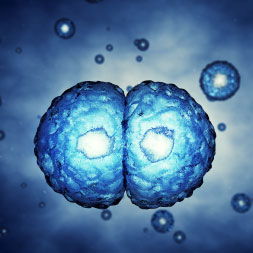
Cell division and replication are fundamental biological processes that occur in all organisms. This free online course about cell division will explain the complex processes of cell division in detail. You will learn about mitosis and meiosis and the phases that occur in each of these processes. You will learn that in the early stages of development embryonic cells can generate all cell types in the body. You will also look at how cells divide and replicate allowing us grow and repair body tissues, and if damage occurs, how some cells can replicate faster than surrounding cells to form tumours. This free course will be of great interest to all students who wish to pursue a career in the sciences, medicine, pharmacy, nursing, biology or biodiversity or the individual learner who simply wants to learn more about mitosis, meiosis and their role in cell division and replication.<br />
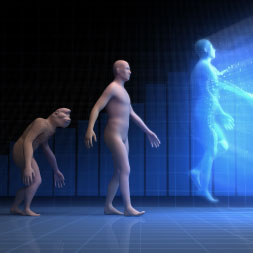
Evolution and natural selection are very important concepts that have revolutionised our understanding of biology. Natural selection is a process resulting in the evolution of organisms that are best adapted to their environment, usually occurring over thousands, and even millions of years. In this free online biology course you will be introduced to the concepts of evolution and natural selection, the causes of these fundamental biological processes and how the success of a species can depend on changes to just one allele on one gene in one chromosome. You will study the naturally occurring variation within species and how mutations and reproduction continues this process. You will also be introduced to DNA, the blueprint of life forms on earth, by looking both at its physical structure and how it copies itself, and turns into the proteins that make up all living organisms. This free online biology course will be of great interest to all learners who wish to pursue a career in the sciences and medicine, to learners who are already studying subjects such as biology, biodiversity and biochemistry, and the individual who simply wants to learn more about how and why there is such diversity among plants and animals today.<br />
Add to calendar

Trusted paper writing service WriteMyPaper.Today will write the papers of any difficulty.