

Online courses directory (13677)

7 principles to make all meetings 'High Payback'

This class is offered as CS6290 at Georgia Tech where it is a part of the [Online Masters Degree (OMS)](http://www.omscs.gatech.edu/). Taking this course here will not earn credit towards the OMS degree. The course begins with a lesson on performance measurement, which leads to a discussion on the necessity of performance improvement. Pipelining, the first level of performance refinement, is reviewed. The weaknesses of pipelining will be exposed and explored, and various solutions to these issues will be studied. The student will learn hardware, software, and compiler based solutions to these issues.
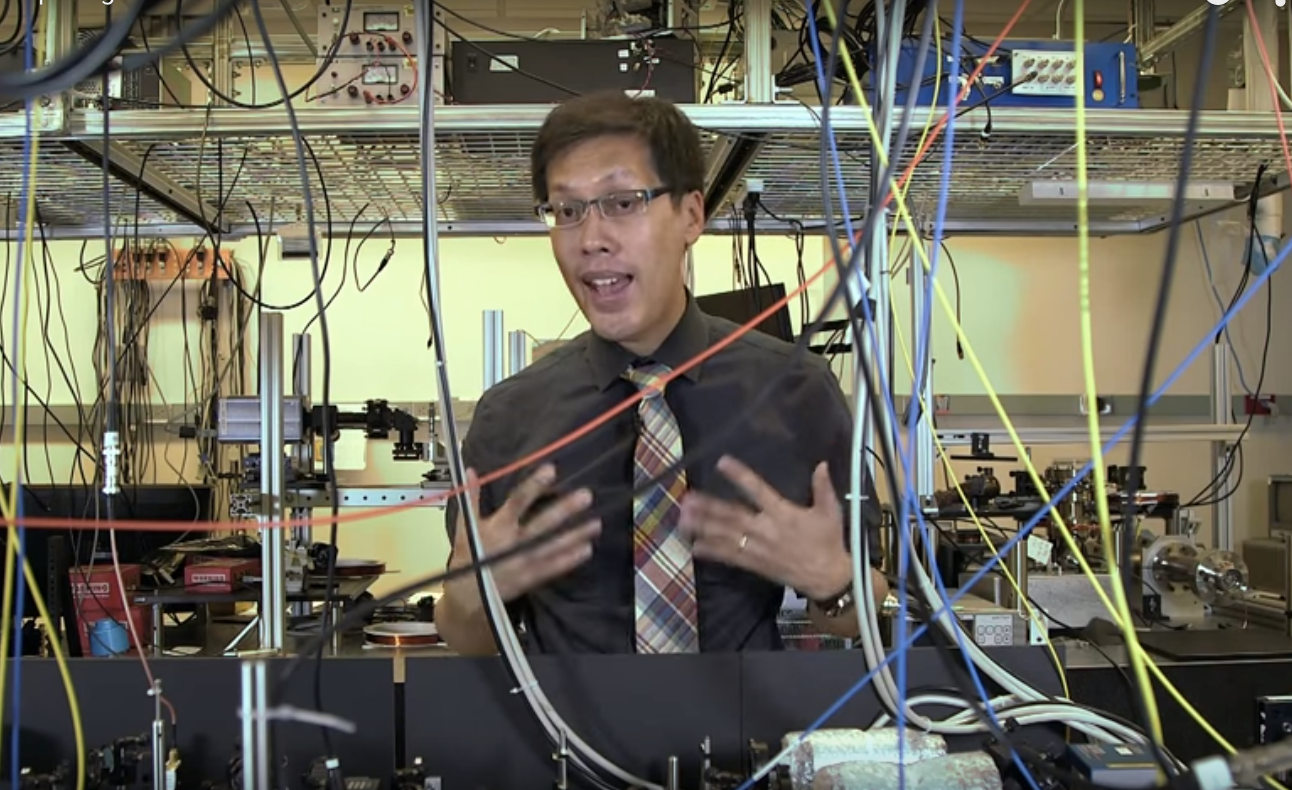
The goal of this course is to give you solid foundations for developing, analyzing, and implementing parallel and locality-efficient algorithms. This course focuses on theoretical underpinnings. To give a practical feeling for how algorithms map to and behave on real systems, we will supplement algorithmic theory with hands-on exercises on modern HPC systems, such as Cilk Plus or OpenMP on shared memory nodes, CUDA for graphics co-processors (GPUs), and MPI and PGAS models for distributed memory systems. This course is a graduate-level introduction to scalable parallel algorithms. “Scale” really refers to two things: efficient as the problem size grows, and efficient as the system size (measured in numbers of cores or compute nodes) grows. To really scale your algorithm in both of these senses, you need to be smart about reducing asymptotic complexity the way you’ve done for sequential algorithms since CS 101; but you also need to think about reducing communication and data movement. This course is about the basic algorithmic techniques you’ll need to do so. The techniques you’ll encounter covers the main algorithm design and analysis ideas for three major classes of machines: for multicore and many core shared memory machines, via the work-span model; for distributed memory machines like clusters and supercomputers, via network models; and for sequential or parallel machines with deep memory hierarchies (e.g., caches). You will see these techniques applied to fundamental problems, like sorting, search on trees and graphs, and linear algebra, among others. The practical aspect of this course is implementing the algorithms and techniques you’ll learn to run on real parallel and distributed systems, so you can check whether what appears to work well in theory also translates into practice. (Programming models you’ll use include Cilk Plus, OpenMP, and MPI, and possibly others.)

Learn How To Make Money Blogging Part-Time. Turn WordPress Into A Money Making Machine.

Learn to deal with the realities of managing projects at supersonic speeds despite truncated timelines, inadequate staffing, and skimpy budgets.

How to easily add Live Helpdesk | Support Tickets | Ideas Forum | Satisfaction Rating | User Voting | Knowledge Base

Impara come utilizzare Highrise e tutte le sue funzioni. In questo video apprenderai le funzioni base del CRM.

Apply best practices to common types of machine learning problems, extract quantifiable data, and explore source tools.

An introduction to the math and processes to apply machine learning techniques to web data.

Learn how to comply with the duties, rights, and responsibilities of HIPAA, ARRA & HITECH.

Learn what it takes to get the best out of people and turn employees into your company champions

In this course Hurwitz explains to employers why they should hire veterans, and to veterans what they need to do to ente

Repercussions, causes and ideas.

In this course, we will study the emergence of the major civilizations of the ancient world, beginning with the Paleolithic Era (about 2.5 million years ago) and finishing with the end of the Middle Ages in fifteenth century A.D. We will pay special attention to how societies evolved across this expanse of timefrom fragmented and primitive agricultural communities to more advanced and consolidated civilizations. To do this, we will rely upon textbook readings to provide historical overviews of particular civilizations and then utilize primary-source documents to illuminate the unique features of these individual societies. By the end of the course, you will possess a thorough understanding of important overarching social, political, religious, and economic themes in the ancient world, ranging from the emergence of Confucian philosophy in Asia to the fall of imperial Rome. You will also understand how many aspects of these ancient civilizations continue to remain relevant in today’s world.
This course will introduce you to the history of the world’s major civilizations from medieval times to the early modern era. You will learn about the pivotal political, economic, and social changes that took place in Asia, Africa, the Americas, and Europe during this period. The course will be structured chronologically, with each unit focusing on the expansion or decline of a particular civilization or the interactions and exchanges between civilizations. The units will include representative secondary and primary source documents that illustrate important overarching political, economic, and social themes, such as the transformation of western Europe during the Renaissance, the emergence of a more inclusive world economy, and the impact of early European exploration and colonization. By the end of the course, you will understand how many different civilizations evolved from isolated societies into expansive, interconnected empires capable of exerting global influence.
This course will present a comparative overview of world history from the 17th century to the present era. You will examine the origins of major economic, political, social, cultural, and technological trends of the past 400 years and explore the impact of these trends on world societies. This course will be structured chronologically and thematically, with each unit focusing on a significant historical subject. The units will include representative primary-source documents and images that illustrate important overarching themes, such as the emergence of modern nation-states, the economic and technological interactions between Western and non-Western peoples, the changing social and cultural perceptions about religion and the state, and the development of physical and virtual networks of information exchange. This course is designed to align with Thomas Edison State College TECEP examination. Visit the TECEP website [1], and click on “World History from 1600 to Present (HIS-126-TE)” to download t…
This course will introduce you to historical research methods and familiarize you with the tools and techniques that historians use to study the past. You will learn about the process of modern historical inquiry and gain a better understanding of the diverse resources that historians use to conduct research. The course will be structured topically. The first four units will focus on research methodology and examine how and why historians conduct research on the past. Later units will examine how different historical resources can be used for historical research. By the end of the course, you will understand how to conduct research on past events and be familiar with the variety of physical and electronic resources available for historical research.
This course will introduce you to the history of Europe from the medieval period to the Age of Revolutions in the eighteenth century. You will learn about the major political, economic, and social changes that took place in Europe during this 800-year period. The course will be structured chronologically. Each unit will include representative primary-source documents that illustrate important overarching political, economic, and social themes, such as the Renaissance, the Protestant Reformation, European expansion overseas, and the French Revolution. By the end of the course, you will understand how Europe had transformed from a fragmented and volatile network of medieval polities into a series of independent nation-states by 1800.
This course will introduce you to the history of Europe from 1800 to present day. You will learn about the major political, economic, and social changes that took place in Europe during this period. This course is structured chronologically, with each unit focusing on a particular historical event or trend. Each unit will include representative primary-source documents that illustrate important overarching political, economic, and social themes, such as the Industrial Revolution, the First and Second World Wars, imperialism, and the Cold War. By the end of this course, you will understand how nationalism, industrialization, and imperialism fueled the rise of European nation-states in the nineteenth century, as well as how world war and oppressive regimes devastated Europe during the 1900s.
This course will introduce you to United States history from the colonial period to the Civil War and Reconstruction. You will learn about the major political, economic, and social changes that took place in America during this 250-year period. The course will be structured chronologically, with each unit focusing on a significant historical subject in early American history. The units will include representative primary-source documents that illustrate important overarching political, economic, and social themes, such as the development of British America, the founding of the American republic, and the crisis of the federal union that led to the Civil War. By the end of the course, you will understand how the American federal union was founded, expanded, and tested from 1776 to its collapse in 1861.
Add to calendar

Trusted paper writing service WriteMyPaper.Today will write the papers of any difficulty.