

Online courses directory (10358)

This course does not seek to provide answers to ethical questions. Instead, the course hopes to teach students two things. First, how do you recognize ethical or moral problems in science and medicine? When something does not feel right (whether cloning, or failing to clone) — what exactly is the nature of the discomfort? What kind of tensions and conflicts exist within biomedicine? Second, how can you think productively about ethical and moral problems? What processes create them? Why do people disagree about them? How can an understanding of philosophy or history help resolve them? By the end of the course students will hopefully have sophisticated and nuanced ideas about problems in bioethics, even if they do not have comfortable answers.

Bioethics provides an overview of the legal, medical, and ethical questions around reproduction and human genetics and how to apply legal reasoning to these questions.
This law course includes interviews with individuals who have used surrogacy and sperm donation, with medical professionals who are experts in current reproductive technologies like In Vitro Fertilization and Preimplantation Genetic Diagnosis, and bioethicists and journalists who study the ownership and use of genetic information within human tissue. Additional Harvard colleagues will also share with you their thoughts on topics such as disability law as it relates to reproductive technology.
While the law and ethics surrounding these technologies are a central component to this course, we also show you examples of the deeply personal and human side of these issues. Throughout the course, and with the help of law students, we will discuss leading legal cases in this field, which will illuminate the types of questions the law has struggled with – stretching and evolving over time. From the famous Baby M surrogacy case, to cases on the paternity of sperm donors, to a case related to the ownership of human tissue turned into a commercial product, and others. We will show you the ethical, legal, and rhetorical underpinnings, which have served as the basis for various court decisions over the past 20 or 30 years. We will also explore potential future technologies and their implications for society: genetic enhancements to increase our intelligence, let us live a hundred years longer, or make us immune to diseases – and the possibility of creating animal-human hybrids, for example a mouse with a humanized brain.
The content within this course is intended to be instructive, and show how legal reasoning has been applied, or could be applied, to questions related to parenthood, reproduction, and other issues surrounding human genetic material. The material organized within this course should be considered an authoritative overview, but is not intended to serve as medical or legal advice.
This course is designed for a diverse audience including, but not limited to, law students, prospective law students, medical professionals, as well as members of the general public interested in questions and topics related to surrogacy, parenthood, genetic and reproductive technology, ownership of genetic material, and more. You do not need any background in law, medicine, philosophy, or really any subject to enjoy this course. This course is meant to be an introduction for anyone interested in these topics.
Honor Code
HarvardX requires individuals who enroll in its courses on edX to abide by the terms of the edX honor code. HarvardX will take appropriate corrective action in response to violations of the edX honor code, which may include dismissal from the HarvardX course; revocation of any certificates received for the HarvardX course; or other remedies as circumstances warrant. No refunds will be issued in the case of corrective action for such violations. Enrollees who are taking HarvardX courses as part of another program will also be governed by the academic policies of those programs.
Research Statement
HarvardX pursues the science of learning. By registering as an online learner in an HX course, you will also participate in research about learning. Read our research statement to learn more.
Nondiscrimination/Anti-Harassment
Harvard University and HarvardX are committed to maintaining a safe and healthy educational and work environment in which no member of the community is excluded from participation in, denied the benefits of, or subjected to discrimination or harassment in our program. All members of the HarvardX community are expected to abide by Harvard policies on nondiscrimination, including sexual harassment, and the edX Terms of Service. If you have any questions or concerns, please contact harvardx@harvard.edu and/or report your experience through the edX contact form.

Use of available (mainly web-based) programs for analyzing biological data. This is an introductory course with a strong emphasis on hands-on methods. Some theory is introduced, but the main focus is on using extant bioinformatics tools to analyze data and generate biological hypotheses.

Use of available (mainly web-based) programs for analyzing biological data. This is Part 2 of an introductory course with a strong emphasis on hands-on methods. Some theory is introduced, but the main focus is on using extant bioinformatics tools to analyze data and generate biological hypotheses.

This course was the first in a two-part series covering some of the algorithms underlying bioinformatics. It has now been split into three smaller courses.

This is the second course in a two-part series on bioinformatics algorithms, covering the following topics: evolutionary tree reconstruction, applications of combinatorial pattern matching for read mapping, gene regulatory analysis, protein classification, computational proteomics, and computational aspects of human genetics.

This course teaches the concepts and computational methods in the exciting interdisciplinary field of bioinformatics and their applications in life sciences. The lectures are taught in both Mandarin Chinese and English with slides in English. 生物信息学是一门新兴的生命科学与计算科学的前沿交叉学科。本课程讲授生物信息学主要概念和方法,以及如何应用生物信息学手段解决生命科学问题。本课程同时提供中文普通话授课和英文授课两个版本,以及英文幻灯片。

What makes bioinformatics education exciting is that people of a variety of education levels can get started quickly, with just a computer and internet access.

Estudio comparativo de los temas fundamentales de los sistemas vivientes tanto en plantas como en animales. Una caracter

¿Te has preguntado cómo funciona tu cuerpo?
En este curso de Biología Humana conocerás la información básica sobre la estructura y función celular, y cómo a partir de la interacción entre células, se forman tejidos, órganos y sistemas. Estos elementos en conjunto, hacen que nuestro cuerpo funcione adecuadamente.
Para que termines con éxito este curso, necesitas empeño y dedicación en el estudio de las metas que hemos diseñado para ti, es importante que dediques 8 horas de estudio a la semana, recuerda que tú eres responsable de administrar dicho tiempo.
Te sugerimos realizar un plan de trabajo para que consideres las fechas límites de las actividades y evitar atrasos. Por otra parte es importante que pongas mucha atención en todos los recursos que te ofrecemos, los cuales refuerzan tu conocimiento para culminar el curso satisfactoriamente.
Para facilitar la comprensión y asimilación de los contenidos del curso hemos diseñado ilustraciones, animaciones, documentos adicionales y ejemplos que debes analizar y relacionar con el funcionamiento de tu cuerpo. Asimismo, pondrás en práctica tus conocimientos mediante actividades que te servirán para conocer tu nivel de dominio de cada apartado y te servirán para acreditar tu curso.

This course deals with a more advanced treatment of the biochemical mechanisms that underlie biological processes. Emphasis will be given to the experimental methods used to unravel how these processes fit into the cellular context as well as the coordinated regulation of these processes. Topics include macromolecular machines for energy and force transduction, regulation of biosynthetic and degradative pathways, and the structure and function of nucleic acids.

This course illustrates how knowledge and principles of biology, biochemistry, and engineering are integrated to create new products for societal benefit. It uses a case study format to examine recently developed products of pharmaceutical and biotechnology industries: how a product evolves from initial idea, through patents, testing, evaluation, production, and marketing. Emphasizes scientific and engineering principles; the responsibility scientists, engineers, and business executives have for the consequences of their technology; and instruction and practice in written and oral communication.
The topic focus of this class will vary from year to year. This version looks at inflammation underlying many diseases, specifically its role in cancer, diabetes, and cardiovascular disease.

This course covers sensing and measurement for quantitative molecular/cell/tissue analysis, in terms of genetic, biochemical, and biophysical properties. Methods include light and fluorescence microscopies; electro-mechanical probes such as atomic force microscopy, laser and magnetic traps, and MEMS devices; and the application of statistics, probability and noise analysis to experimental data. Enrollment preference is given to juniors and seniors.
This course covers sensing and measurement for quantitative molecular/cell/tissue analysis, in terms of genetic, biochemical, and biophysical properties. Methods include light and fluorescence microscopies; electro-mechanical probes such as atomic force microscopy, laser and magnetic traps, and MEMS devices; and the application of statistics, probability and noise analysis to experimental data. Enrollment preference is given to juniors and seniors.
This course covers sensing and measurement for quantitative molecular/cell/tissue analysis, in terms of genetic, biochemical, and biophysical properties. Methods include light and fluorescence microscopies; electro-mechanical probes such as atomic force microscopy, laser and magnetic traps, and MEMS devices; and the application of statistics, probability and noise analysis to experimental data. Enrollment preference is given to juniors and seniors.

In this course problems from biological engineering are used to develop structured computer programming skills and explore the theory and practice of complex systems design and construction.
The official course Web site can be viewed at: BE.180 Biological Engineering Programming.

Living cells have unique functions that can be harnessed by engineers to tackle human problems in energy, water, food, and health.
Historically living cells were considered too difficult to predictably engineer because of their complexity, vulnerability, and continuous change in state. The elucidation of the design principles that underlie cell function along with increasing numbers of examples of hybrid cell based devices are slowly erasing that notion.
In this class you will be learn about these established and emerging cellular design principles and begin to view cells as machines. This knowledge can also then be applied to non-living devices that mimic and communicate with cells. You will also be introduced to current and emerging living/non-living biohybrid devices such as biohybrid robots and neural implants.
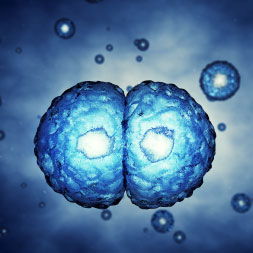
Cell division and replication are fundamental biological processes that occur in all organisms. This free online course about cell division will explain the complex processes of cell division in detail. You will learn about mitosis and meiosis and the phases that occur in each of these processes. You will learn that in the early stages of development embryonic cells can generate all cell types in the body. You will also look at how cells divide and replicate allowing us grow and repair body tissues, and if damage occurs, how some cells can replicate faster than surrounding cells to form tumours. This free course will be of great interest to all students who wish to pursue a career in the sciences, medicine, pharmacy, nursing, biology or biodiversity or the individual learner who simply wants to learn more about mitosis, meiosis and their role in cell division and replication.<br />
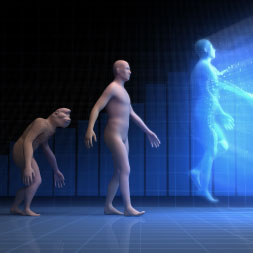
Evolution and natural selection are very important concepts that have revolutionised our understanding of biology. Natural selection is a process resulting in the evolution of organisms that are best adapted to their environment, usually occurring over thousands, and even millions of years. In this free online biology course you will be introduced to the concepts of evolution and natural selection, the causes of these fundamental biological processes and how the success of a species can depend on changes to just one allele on one gene in one chromosome. You will study the naturally occurring variation within species and how mutations and reproduction continues this process. You will also be introduced to DNA, the blueprint of life forms on earth, by looking both at its physical structure and how it copies itself, and turns into the proteins that make up all living organisms. This free online biology course will be of great interest to all learners who wish to pursue a career in the sciences and medicine, to learners who are already studying subjects such as biology, biodiversity and biochemistry, and the individual who simply wants to learn more about how and why there is such diversity among plants and animals today.<br />
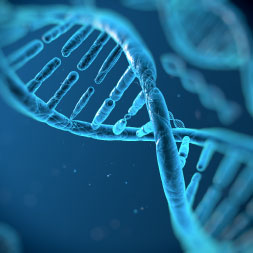
It is over sixty years since the structure of DNA was first discovered by Watson and Crick. Since then work in genetics and gene technology has expanded to the point where the entire human genome has been sequenced, and there is now hope of being able to cure diseases using gene therapy. There is also on-going work in the area of modifying plant DNA to produce pest-resistant crops that give bigger harvests for more food. Today, people need a thorough knowledge and understanding of genetics and gene therapy so that they can make up their own minds as to the potential benefits and drawbacks of what this field of science can offer us. In this free online course you will discover what genes do and explore and come to understand reference terms such as meiosis and mitosis. The course also covers evolutionary aspects of DNA and the genome. You will also learn about gene technology which includes gene testing, gene therapy and the controversial area of genetic modification in plants. This course will be of great interest to professionals working in the areas of biology, medicine and development, to learners who would like a career in the areas of genetics and gene technology, and to anyone interested in understanding the basic area of science that underpins all living existence.<br />
Add to calendar

Trusted paper writing service WriteMyPaper.Today will write the papers of any difficulty.