

Online courses directory (10358)

This course provides intensive coverage of the theory and practice of electromechanical instrument design with application to biomedical devices. Students will work with MGH doctors to develop new medical products from concept to prototype development and testing. Lectures will present techniques for designing electronic circuits as part of complete sensor systems. Topics covered include: basic electronics circuits, principles of accuracy, op amp circuits, analog signal conditioning, power supplies, microprocessors, wireless communications, sensors, and sensor interface circuits. Labs will cover practical printed circuit board (PCB) design including component selection, PCB layout, assembly, and planning and budgeting for large projects. Problem sets and labs in the first six weeks are in support of the project. Major team-based design, build, and test project in the last six weeks. Student teams will be composed of both electrical engineering and mechanical engineering students.

The course covers basic concepts of biomedical engineering and their connection with the spectrum of human activity. It

This course consists of a series of seminars focused on the development of professional skills. Each semester focuses on a different topic, resulting in a repeating cycle that covers medical ethics, responsible conduct of research, written and oral technical communication, and translational issues. Material and activities include guest lectures, case studies, interactive small group discussions, and role-playing simulations.

This seminar based course explores techniques for recognizing, analyzing, and resolving ethical dilemmas facing healthcare professionals and biomedical researchers in today's highly regulated environment. Guest lectures by practicing clinicians, technologists, researchers, and regulators will include case studies, interactive small group discussions, and role-playing simulations. Professional conduct topics will include authorship, conflict of interest, data acquisition and management, and the protection of human subjects and animals involved in research programs.

This course teaches the design of contemporary information systems for biological and medical data. Examples are chosen from biology and medicine to illustrate complete life cycle information systems, beginning with data acquisition, following to data storage and finally to retrieval and analysis. Design of appropriate databases, client-server strategies, data interchange protocols, and computational modeling architectures. Students are expected to have some familiarity with scientific application software and a basic understanding of at least one contemporary programming language (e.g. C, C++, Java, Lisp, Perl, Python). A major term project is required of all students. This subject is open to motivated seniors having a strong interest in biomedical engineering and information system design with the ability to carry out a significant independent project.
This course was offered as part of the Singapore-MIT Alliance (SMA) program as course number SMA 5304.

This course presents the fundamentals of digital signal processing with particular emphasis on problems in biomedical research and clinical medicine. It covers principles and algorithms for processing both deterministic and random signals. Topics include data acquisition, imaging, filtering, coding, feature extraction, and modeling. The focus of the course is a series of labs that provide practical experience in processing physiological data, with examples from cardiology, speech processing, and medical imaging. The labs are done in MATLAB® during weekly lab sessions that take place in an electronic classroom. Lectures cover signal processing topics relevant to the lab exercises, as well as background on the biological signals processed in the labs.

Preventive security and reducing privacy threats are global issues in the 21st century. This world first course investigates the biological traits that uniquely identify individuals such as fingerprints, irises and signatures and the biometric technologies that safeguard against identify theft and electronic fraud.

Biomimetics is based on the belief that nature, at least at times, is a good engineer. Biomimesis is the scientific method of learning new principles and processes based on systematic study, observation and experimentation with live animals and organisms. This Freshman Advising Seminar on the topic is a way for freshmen to explore some of MIT's richness and learn more about what they may want to study in later years.

Learn about the tools and principles of biomimicry, a new discipline that emulates nature's best ideas in order to solve human design challenges. Each week you’ll get outside to explore nature and learn a key biomimicry design concept that you’ll then apply to develop a novel biomimetic design.

This course focuses on feedback control mechanisms that living organisms implement at the molecular level to execute their functions, with emphasis on techniques to design novel systems with prescribed behaviors. Students will learn how biological functions can be understood and designed using notions from feedback control.

This subject deals primarily with kinetic and equilibrium mathematical models of biomolecular interactions, as well as the application of these quantitative analyses to biological problems across a wide range of levels of organization, from individual molecular interactions to populations of cells.

The success of your research depends on the quality of the biospecimens you use. This biology and life sciences course will provide you with the essential knowledge you need for collecting, storing, identifying, and using high quality human biospecimens in your research program. You’ll improve the quality of your research, and increase your chances of being published in high impact journals. Get ahead of the competition and open doors to opportunities in leading biomedical research laboratories or biobanks.
Over 6 weeks professionals with extensive experience in biobanking, from the University of British Columbia and the British Columbia Cancer Agency, will teach you the international best practices for biobanking and research involving human biospecimens based on National Cancer Institute (NCI) and International Society of Biological Environmental Repositories (ISBER) standards.

This course provides a broad foundation of statistical terms and concepts as well as an introduction to the R statistical software package. The topics covered are fundamental components of biostatistical methods used in both omics and population health research.
Working with biomedical big data presents many challenges; familiarity with common statistical terms and definitions, and understanding basic statistical theory will help you overcome those challenges.
Topic-specific information and examples will be followed by self-assessment opportunities for you to gauge your understanding. In addition, practice datasets and exercises will be provided for you to improve your R programming skills.

an introductory course to learn about biotechnological techniques and and its pharmaceutical applications.

Have you ever wondered why humans walk on two legs rather than four? In this course, we will explore how science investigates this unusual form of locomotion. We will start our investigation by looking at the mechanics of upright walking in humans and comparing that to bipedal locomotion in large birds, bears, and apes.
We will journey back millions of years into the human fossil record in an effort to understand how and why upright walking evolved. Around our first birthday, each of us learned how to walk, but how does this happen? With bipedalism came costly trade-offs as well-- we’ll examine these aches and pains as byproducts of our evolutionary history.
This course will take an intentionally interdisciplinary approach to studying how and why humans move bipedally. You will be exposed to anthropology, biomechanics, anatomy, evolution and paleontology to explore something deeply human: upright walking.
This course was developed in collaboration with SmithsonianX (National Musuem of Natural History and the National Zoological Park).

Birds are amazing animals! They are extremely intelligent, quite social, and some can make ideal companions! From parrots to parakeets, chickens to canaries and cockatoos, there are many species of birds to choose from when considering these feathered friends as pets.
This course provides introductory material about pet bird care including behavioral characteristics of different species of birds, bird handling, anatomy and physiology, and keeping birds as pets. Bird enthusiasts, pet bird owners, and others who work with birds will learn interesting and practical information!

Vinod Khosla, partner at Kleiner, Perkins, Caufield & Byers, was bitten by the entrepreneurship bug early in lif
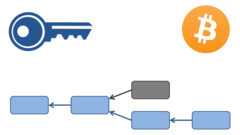
There’s a lot of excitement about Bitcoin, but also a lot of confusion about what Bitcoin is and how it works. We’re offering this course focusing on the computer science behind Bitcoin to help cut through the hype and get to the core of what makes Bitcoin unique.

The definitive guide to understand what the bitcoin is and why we should care about them.

This class is an interdisciplinary survey that explores the experiences of people of African descent through the overlapping approaches of history, literature, anthropology, legal studies, media studies, performance, linguistics, and creative writing. It connects the experiences of African Americans and of other American minorities, focusing on social, political, and cultural histories, and on linguistic patterns. Activities include lectures, discussions, workshops, and required field trips that involve minimal cost to students.
Add to calendar

Trusted paper writing service WriteMyPaper.Today will write the papers of any difficulty.