

Online courses directory (10358)
Line integral of scalar and vector-valued functions. Green's theorem and 2-D divergence theorem. Introduction to the Line Integral. Line Integral Example 1. Line Integral Example 2 (part 1). Line Integral Example 2 (part 2). Position Vector Valued Functions. Derivative of a position vector valued function. Differential of a vector valued function. Vector valued function derivative example. Line Integrals and Vector Fields. Using a line integral to find the work done by a vector field example. Parametrization of a Reverse Path. Scalar Field Line Integral Independent of Path Direction. Vector Field Line Integrals Dependent on Path Direction. Path Independence for Line Integrals. Closed Curve Line Integrals of Conservative Vector Fields. Example of Closed Line Integral of Conservative Field. Second Example of Line Integral of Conservative Vector Field. Green's Theorem Proof Part 1. Green's Theorem Proof (part 2). Green's Theorem Example 1. Green's Theorem Example 2. Constructing a unit normal vector to a curve. 2 D Divergence Theorem. Conceptual clarification for 2-D Divergence Theorem. Introduction to the Line Integral. Line Integral Example 1. Line Integral Example 2 (part 1). Line Integral Example 2 (part 2). Position Vector Valued Functions. Derivative of a position vector valued function. Differential of a vector valued function. Vector valued function derivative example. Line Integrals and Vector Fields. Using a line integral to find the work done by a vector field example. Parametrization of a Reverse Path. Scalar Field Line Integral Independent of Path Direction. Vector Field Line Integrals Dependent on Path Direction. Path Independence for Line Integrals. Closed Curve Line Integrals of Conservative Vector Fields. Example of Closed Line Integral of Conservative Field. Second Example of Line Integral of Conservative Vector Field. Green's Theorem Proof Part 1. Green's Theorem Proof (part 2). Green's Theorem Example 1. Green's Theorem Example 2. Constructing a unit normal vector to a curve. 2 D Divergence Theorem. Conceptual clarification for 2-D Divergence Theorem.

Thinking about forms of derivatives in multi-dimensions and for vector-valued functions: partial derivatives, gradient, divergence and curl. Partial Derivatives. Partial Derivatives 2. Gradient 1. Gradient of a scalar field. Divergence 1. Divergence 2. Divergence 3. Curl 1. Curl 2. Curl 3. Partial Derivatives. Partial Derivatives 2. Gradient 1. Gradient of a scalar field. Divergence 1. Divergence 2. Divergence 3. Curl 1. Curl 2. Curl 3.
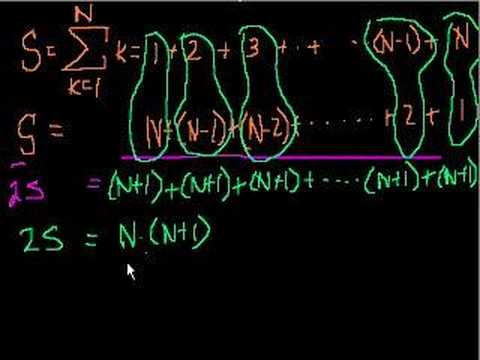
Sequences, series and approximating functions. Maclaurin and Taylor series. Sequences and Series (part 1). Sequences and series (part 2). Maclaurin and Taylor Series Intuition. Cosine Taylor Series at 0 (Maclaurin). Sine Taylor Series at 0 (Maclaurin). Taylor Series at 0 (Maclaurin) for e to the x. Euler's Formula and Euler's Identity. Visualizing Taylor Series Approximations. Generalized Taylor Series Approximation. Visualizing Taylor Series for e^x. Error or Remainder of a Taylor Polynomial Approximation. Proof: Bounding the Error or Remainder of a Taylor Polynomial Approximation. Polynomial approximation of functions (part 1). Polynomial approximation of functions (part 2). Approximating functions with polynomials (part 3). Polynomial approximation of functions (part 4). Polynomial approximations of functions (part 5). Polynomial approximation of functions (part 6). Polynomial approximation of functions (part 7). Taylor Polynomials. Sequences and Series (part 1). Sequences and series (part 2). Maclaurin and Taylor Series Intuition. Cosine Taylor Series at 0 (Maclaurin). Sine Taylor Series at 0 (Maclaurin). Taylor Series at 0 (Maclaurin) for e to the x. Euler's Formula and Euler's Identity. Visualizing Taylor Series Approximations. Generalized Taylor Series Approximation. Visualizing Taylor Series for e^x. Error or Remainder of a Taylor Polynomial Approximation. Proof: Bounding the Error or Remainder of a Taylor Polynomial Approximation. Polynomial approximation of functions (part 1). Polynomial approximation of functions (part 2). Approximating functions with polynomials (part 3). Polynomial approximation of functions (part 4). Polynomial approximations of functions (part 5). Polynomial approximation of functions (part 6). Polynomial approximation of functions (part 7). Taylor Polynomials.

This course provides a brisk, challenging, and dynamic treatment of differential and integral calculus, with an emphasis on conceptual understanding and applications to the engineering, physical, and social sciences.
Using definite integrals with the shell and disc methods to find volumes of solids of revolution. Disk method around x-axis. Generalizing disc method around x-axis. Disc method around y-axis. Disc method (washer method) for rotation around x-axis. Generalizing the washer method. Disc method rotation around horizontal line. Washer method rotating around non-axis. Part 2 of washer for non axis rotation. Disc method rotating around vertical line. Calculating integral disc method around vertical line. Washer or ring method for vertical line rotation. Evaluating integral for washer method around vertical line. Shell method for rotating around vertical line. Evaluating integral for shell method example. Shell method for rotating around horizontal line. Shell method with two functions of x. Calculating integral with shell method. Shell method with two functions of y. Part 2 of shell method with 2 functions of y. Disc method: function rotated about x-axis. Disc method (rotating f(x) about x axis). Volume of a sphere. Disc method with outer and inner function boundaries. Shell method to rotate around y-axis. Disk method: rotating x=f(y) around the y-axis. Shell method around a non-axis line. Shell method around a non-axis line 2. Disk method around x-axis. Generalizing disc method around x-axis. Disc method around y-axis. Disc method (washer method) for rotation around x-axis. Generalizing the washer method. Disc method rotation around horizontal line. Washer method rotating around non-axis. Part 2 of washer for non axis rotation. Disc method rotating around vertical line. Calculating integral disc method around vertical line. Washer or ring method for vertical line rotation. Evaluating integral for washer method around vertical line. Shell method for rotating around vertical line. Evaluating integral for shell method example. Shell method for rotating around horizontal line. Shell method with two functions of x. Calculating integral with shell method. Shell method with two functions of y. Part 2 of shell method with 2 functions of y. Disc method: function rotated about x-axis. Disc method (rotating f(x) about x axis). Volume of a sphere. Disc method with outer and inner function boundaries. Shell method to rotate around y-axis. Disk method: rotating x=f(y) around the y-axis. Shell method around a non-axis line. Shell method around a non-axis line 2.
Parameterizing a surface. Surface integrals. Stokes' theorem. Introduction to Parametrizing a Surface with Two Parameters. Determining a Position Vector-Valued Function for a Parametrization of Two Parameters. Partial Derivatives of Vector-Valued Functions. Introduction to the Surface Integral. Example of calculating a surface integral part 1. Example of calculating a surface integral part 2. Example of calculating a surface integral part 3. Surface Integral Example Part 1 - Parameterizing the Unit Sphere. Surface Integral Example Part 2 - Calculating the Surface Differential. Surface Integral Example Part 3 - The Home Stretch. Surface Integral Ex2 part 1 - Parameterizing the Surface. Surface Integral Ex2 part 2 - Evaluating Integral. Surface Integral Ex3 part 1 - Parameterizing the Outside Surface. Surface Integral Ex3 part 2 - Evaluating the Outside Surface. Surface Integral Ex3 part 3 - Top surface. Surface Integral Ex3 part 4 - Home Stretch. Conceptual Understanding of Flux in Three Dimensions. Constructing a unit normal vector to a surface. Vector representation of a Surface Integral. Stokes' Theorem Intuition. Green's and Stokes' Theorem Relationship. Orienting Boundary with Surface. Orientation and Stokes. Conditions for Stokes Theorem. Stokes Example Part 1. Part 2 Parameterizing the Surface. Stokes Example Part 3 - Surface to Double Integral. Stokes Example Part 4 - Curl and Final Answer. Evaluating Line Integral Directly - Part 1. Evaluating Line Integral Directly - Part 2. Stokes' Theorem Proof Part 1. Stokes' Theorem Proof Part 2. Stokes' Theorem Proof Part 3. Stokes' Theorem Proof Part 4. Stokes' Theorem Proof Part 5. Stokes' Theorem Proof Part 6. Stokes' Theorem Proof Part 7. Introduction to Parametrizing a Surface with Two Parameters. Determining a Position Vector-Valued Function for a Parametrization of Two Parameters. Partial Derivatives of Vector-Valued Functions. Introduction to the Surface Integral. Example of calculating a surface integral part 1. Example of calculating a surface integral part 2. Example of calculating a surface integral part 3. Surface Integral Example Part 1 - Parameterizing the Unit Sphere. Surface Integral Example Part 2 - Calculating the Surface Differential. Surface Integral Example Part 3 - The Home Stretch. Surface Integral Ex2 part 1 - Parameterizing the Surface. Surface Integral Ex2 part 2 - Evaluating Integral. Surface Integral Ex3 part 1 - Parameterizing the Outside Surface. Surface Integral Ex3 part 2 - Evaluating the Outside Surface. Surface Integral Ex3 part 3 - Top surface. Surface Integral Ex3 part 4 - Home Stretch. Conceptual Understanding of Flux in Three Dimensions. Constructing a unit normal vector to a surface. Vector representation of a Surface Integral. Stokes' Theorem Intuition. Green's and Stokes' Theorem Relationship. Orienting Boundary with Surface. Orientation and Stokes. Conditions for Stokes Theorem. Stokes Example Part 1. Part 2 Parameterizing the Surface. Stokes Example Part 3 - Surface to Double Integral. Stokes Example Part 4 - Curl and Final Answer. Evaluating Line Integral Directly - Part 1. Evaluating Line Integral Directly - Part 2. Stokes' Theorem Proof Part 1. Stokes' Theorem Proof Part 2. Stokes' Theorem Proof Part 3. Stokes' Theorem Proof Part 4. Stokes' Theorem Proof Part 5. Stokes' Theorem Proof Part 6. Stokes' Theorem Proof Part 7.

Calculating derivatives. Power rule. Product and quotient rules. Chain Rule. Implicit differentiation. Derivatives of common functions. Newton Leibniz and Usain Bolt. Slope of a line secant to a curve. Slope of a secant line example 1. Slope of a secant line example 2. Slope of a secant line example 3. Approximating instantaneous rate of change word problem. Approximating equation of tangent line word problem. Slope of secant lines. Derivative as slope of a tangent line. Tangent slope as limiting value of secant slope example 1. Tangent slope as limiting value of secant slope example 2. Tangent slope as limiting value of secant slope example 3. Tangent slope is limiting value of secant slope. Calculating slope of tangent line using derivative definition. Derivatives 1. The derivative of f(x)=x^2 for any x. Formal and alternate form of the derivative. Formal and alternate form of the derivative for ln x. Formal and alternate form of the derivative example 1. The formal and alternate form of the derivative. Interpreting slope of a curve exercise. Recognizing slope of curves. Calculus: Derivatives 1. Calculus: Derivatives 2. Derivative Intuition Module. Derivative intuition. Graphs of functions and their derivatives example 1. Where a function is not differentiable. Identifying a function's derivative example. Figuring out which function is the the derivative. Graphs of functions and their derivatives. Intuitively drawing the derivative of a function. Intuitively drawing the antiderivative of a function. Visualizing derivatives exercise. Visualizing derivatives. Power Rule. Is the power rule reasonable. Derivative properties and polynomial derivatives. Power rule. Proof: d/dx(x^n). Proof: d/dx(sqrt(x)). Power rule introduction. Derivatives of sin x, cos x, tan x, e^x and ln x. Special derivatives. Chain rule introduction. Chain rule definition and example. Chain rule with triple composition. Chain rule for derivative of 2^x. Derivative of log with arbitrary base. Chain rule 1. Extreme Derivative Word Problem (advanced). The Chain Rule. Chain Rule Examples. Even More Chain Rule. More examples using multiple rules. Derivatives of sin x, cos x, tan x, e^x and ln x. Special derivatives. Applying the product rule for derivatives. Product rule for more than two functions. Product rule. Quotient rule from product rule. Quotient rule for derivative of tan x. Quotient rule. Using the product rule and the chain rule. Product Rule. Quotient rule and common derivatives. Equation of a tangent line. Implicit differentiation. Showing explicit and implicit differentiation give same result. Implicit derivative of (x-y)^2 = x + y + 1. Implicit derivative of y = cos(5x - 3y). Implicit derivative of (x^2+y^2)^3 = 5x^2y^2. Finding slope of tangent line with implicit differentiation. Implicit derivative of e^(xy^2) = x - y. Derivative of x^(x^x). Implicit differentiation. Proof: d/dx(ln x) = 1/x. Proof: d/dx(e^x) = e^x. Proofs of derivatives of ln(x) and e^x. Newton Leibniz and Usain Bolt. Slope of a line secant to a curve. Slope of a secant line example 1. Slope of a secant line example 2. Slope of a secant line example 3. Approximating instantaneous rate of change word problem. Approximating equation of tangent line word problem. Slope of secant lines. Derivative as slope of a tangent line. Tangent slope as limiting value of secant slope example 1. Tangent slope as limiting value of secant slope example 2. Tangent slope as limiting value of secant slope example 3. Tangent slope is limiting value of secant slope. Calculating slope of tangent line using derivative definition. Derivatives 1. The derivative of f(x)=x^2 for any x. Formal and alternate form of the derivative. Formal and alternate form of the derivative for ln x. Formal and alternate form of the derivative example 1. The formal and alternate form of the derivative. Interpreting slope of a curve exercise. Recognizing slope of curves. Calculus: Derivatives 1. Calculus: Derivatives 2. Derivative Intuition Module. Derivative intuition. Graphs of functions and their derivatives example 1. Where a function is not differentiable. Identifying a function's derivative example. Figuring out which function is the the derivative. Graphs of functions and their derivatives. Intuitively drawing the derivative of a function. Intuitively drawing the antiderivative of a function. Visualizing derivatives exercise. Visualizing derivatives. Power Rule. Is the power rule reasonable. Derivative properties and polynomial derivatives. Power rule. Proof: d/dx(x^n). Proof: d/dx(sqrt(x)). Power rule introduction. Derivatives of sin x, cos x, tan x, e^x and ln x. Special derivatives. Chain rule introduction. Chain rule definition and example. Chain rule with triple composition. Chain rule for derivative of 2^x. Derivative of log with arbitrary base. Chain rule 1. Extreme Derivative Word Problem (advanced). The Chain Rule. Chain Rule Examples. Even More Chain Rule. More examples using multiple rules. Derivatives of sin x, cos x, tan x, e^x and ln x. Special derivatives. Applying the product rule for derivatives. Product rule for more than two functions. Product rule. Quotient rule from product rule. Quotient rule for derivative of tan x. Quotient rule. Using the product rule and the chain rule. Product Rule. Quotient rule and common derivatives. Equation of a tangent line. Implicit differentiation. Showing explicit and implicit differentiation give same result. Implicit derivative of (x-y)^2 = x + y + 1. Implicit derivative of y = cos(5x - 3y). Implicit derivative of (x^2+y^2)^3 = 5x^2y^2. Finding slope of tangent line with implicit differentiation. Implicit derivative of e^(xy^2) = x - y. Derivative of x^(x^x). Implicit differentiation. Proof: d/dx(ln x) = 1/x. Proof: d/dx(e^x) = e^x. Proofs of derivatives of ln(x) and e^x.

Learn and develop the habit of excellent money management!

Sal works through the problems from the CA Standards.

CA Algebra I: Number Properties and Absolute Value. CA Algebra I: Simplifying Expressions. CA Algebra I: Simple Logical Arguments. CA Algebra I: Graphing Inequalities. CA Algebra I: Slope and Y-intercept. CA Algebra I: Systems of Inequalities. CA Algebra I: Simplifying Expressions. CA Algebra I: Factoring Quadratics. CA Algebra I: Completing the Square. CA Algebra I: Quadratic Equation. CA Algebra I: Quadratic Roots. CA Algebra I: Rational Expressions 1. CA Algebra I: Rational Expressions 2. CA Algebra I: Word Problems. CA Algebra I: More Word Problems. CA Algebra I: Functions.

Sal works through 80 questions taken from the California Standards Test for Algebra II.
California Standards Test: Algebra II. California Standards Test: Algebra II (Graphing Inequalities). CA Standards: Algebra II (Algebraic Division/Multiplication). CA Standards: Algebra II. Algebra II: Simplifying Polynomials. Algebra II: Imaginary and Complex Numbers. Algebra II: Complex numbers and conjugates. Algebra II: Quadratics and Shifts. Examples: Graphing and interpreting quadratics. Hyperbola and parabola examples. Algebra II: Circles and Logarithms. Algebra II: Logarithms Exponential Growth. Algebra II: Logarithms and more. Algebra II: Functions, Combinatorics. Algebra II: binomial Expansion and Combinatorics. Algebra II: Binomial Expansions, Geometric Series Sum. Algebra II: Functions and Probability. Algebra II: Probability and Statistics. Algebra II: Mean and Standard Deviation.

Sal does the 80 problems from the released questions from the California Standards Test for Geometry.
CA Geometry: deductive reasoning. CA Geometry: Proof by Contradiction. CA Geometry: More Proofs. CA Geometry: Similar Triangles 1. CA Geometry: Similar Triangles 2. CA Geometry: More on congruent and similar triangles. CA Geometry: Triangles and Parallelograms. CA Geometry: Area, Pythagorean Theorem. CA Geometry: Area, Circumference, Volume. CA Geometry: Pythagorean Theorem, Area. CA Geometry: Exterior Angles. CA Geometry: Deducing Angle Measures. CA Geometry: Pythagorean Theorem, Compass Constructions. CA Geometry: Compass Construction. CA Geometry: Basic Trigonometry. CA Geometry: More Trig. CA Geometry: Circle Area Chords Tangent. CA Geometry: Secants and Translations.

Course in French with English subtitles -- Ce cours introduit à la vie et à la pensée du réformateur Jean Calvin (1509-1564) ainsi qu’à son influence sur le monde moderne et contemporain. La démarche proposée se veut critique, il ne s’agit ni de canoniser ni de condamner Calvin, mais de comprendre sa pensée avec toute la distance requise et d’en analyser les enjeux. -- This course is an introduction to the life and thought of the reformer John Calvin (1509-1564) and to his influence on the modern and contemporary world. The approach we develop is critical: we intend neither to canonize nor to condemn Calvin or his thought. Our goal, rather, is to avoid any rash evaluation in order to understand his thought and analyze the issues at stake in it.

This class will provide an understanding of the camera settings and gear that is used in professional DSLR and mirrorless video production. We will cover the basics of camera systems and lenses, including achieving perfect exposure and great color, and will also dig into lighting and camera support. This course will lead you through a smooth transition from still photographer to video professional.

Advice for college students from seniors at the University of Michigan

Series de Cultura e Historia Latina

Discover how genetics has revolutionised the detection and treatment of cancer, and how these may develop in the future.

This course will help anyone who loves dogs to better understand their dog’s reproductive health and how to control its reproduction. This includes understanding the pros and cons of having your dog spayed or castrated, and understanding at what age that surgery can be performed.
Add to calendar

Trusted paper writing service WriteMyPaper.Today will write the papers of any difficulty.