

Online courses directory (10358)

Inorganic chemistry is a division of chemistry that studies metals, their compounds, and their reactivity. Metal atoms can be bound to other metal atoms in alloys or metal clusters, to nonmetal elements in crystalline rocks, or to small organic molecules, such as a cyclopentadienyl anion in ferrocene. These metal atoms can also be part of large biological molecules, as in the case of iron in hemoglobin (oxygen-carrier protein in the blood). In this course, you should not think of metals as you encounter them in your daily life (i.e., when you pick up a steel knife, a can of soda, or a gold necklace). Instead, you should think of a metal as the central atom or ion in a molecule surrounded by other ions or small molecules called ligands. Depending on what these ligands are, the metal-containing compound can acquire very different physical and chemical properties. For example, when magnesium (in its ionic state) is bound to carbonate ions, it forms solid crystalline rocks, as in the dolomite rocks (c…
Analytical chemistry is the branch of chemistry dealing with measurement, both qualitative and quantitative. This discipline is also concerned with the chemical composition of samples. In the field, analytical chemistry is applied when detecting the presence and determining the quantities of chemical compounds, such as lead in water samples or arsenic in tissue samples. It also encompasses many different spectrochemical techniques, all of which are used under various experimental conditions. This branch of chemistry teaches the general theories behind the use of each instrument as well analysis of experimental data. This course begins with a review of general chemistry and an introduction to analytical terminology. You will learn terms relevant to the process of measuring chemical compounds, such as sensitivity and detection limit. The course continues with a unit on common spectrochemical methods, followed by an extension of these methods in a unit on atomic spectroscopy. These methods allow…
Biochemistry is the study of the chemical processes and compounds, such as cellular makeup, that bring about life in organisms. It is a combination of multiple science fields; you can think of it as general and cell biology coupled with organic and general chemistry. Although living organisms are very complex, from a molecular view, the material that constitutes “life” can be broken down into remarkably simple molecules, much like the breakdown of our English language to the English alphabet. Although there exists thousands upon thousands of molecules, they all breakdown into four core components: nucleic acids, amino acids, lipids, and carbohydrates. As we can make hundreds of thousands of words from just 26 letters, we can make thousands of different biomolecules from those 4 components. For example, the human genome, containing the necessary information to create a human being, is really just one very long strand of 4 different nucleotides. This course is structured around that approach, so…
Remember that organic chemistry is the discipline that studies the properties and reactions of organic, carbon-based compounds. This course is intended to be taken after the first two semesters of organic chemistry. Many of the topics within this outline have been covered in the first two semesters of organic chemistry; however, this course will explore these topics in much greater depth. It is important to make sure that you have a good grasp of the concepts from earlier organic chemistry courses before moving on to this course. We begin by studying a unit on ylides, benzyne, and free radicals. Many free radicals affect life processes. For example, oxygen-derived radicals may be overproduced in cells, such as white blood cells that try to defend against infection in a living organism. In the first unit, you will learn about free radicals, including oxygen-containing compounds. Afterward we move into a comprehensive examination of stereochemistry, as well as the kinetics of substitution and el…
Advanced Inorganic Chemistry is designed to give you the knowledge to explain everyday phenomena of inorganic complexes. You will study the various aspects of their physical and chemical properties and learn how to determine the practical applications that these complexes can have in industrial, analytical, and medicinal chemistry. This course will begin with the discussion of symmetry and point group theory and its applications in the field of vibrational spectroscopy. We will then study molecular orbital (MO) theory specifically applied to metal organic complexes. MO theory will be critical in understanding the following: 1) the relative position of ligands in the spectrochemical series, 2) the electronic transitions and related selection rules, and 3) the application of spectroscopy of metals. The course will then move onto the study of the oxidation states of transition metals and their redox properties. A firm grasp of the chemical redox properties of transition metals is critical to understanding thei…
This course will teach you the important role that metal ions play in key biological processes. You will learn that many biological functions are performed at the cellular level by metal ions that are incorporated into the activation sites of proteins and enzymes. For example, when oxygen is transported through blood in the human body, it is bound to iron ions that are incorporated into the hemoglobin protein. In order to function properly, these iron ions must be high-spin and in their +2 oxidation state. As you progress through this course, you will learn about these and other requirements and mechanisms that must be present in order to facilitate critical biological functions. You will begin this course by reviewing the basic principles of inorganic chemistry, biochemistry, and molecular biology. Following a brief overview of the spectroscopy methods that scientists use in the study of metals that contain protein, you will explore the structures of the most relevant metal centers in biological…
Bioorganic chemistry studies the chemistry of organic biomolecules. It is a rapidly growing interdisciplinary field that combines organic chemistry and biochemistry. Please recall that organic chemistry investigates all molecules that contain carbon and hydrogen, and biochemistry focuses on the network of molecular pathways in the cell. Bioorganic chemistry employs organic chemistry to explain how enzymes catalyze the reactions of metabolic pathways and why metabolites react the way they do. Bioorganic chemistry aims to expand organic-chemical research on structures, synthesis, and kinetics in a biological direction. This one-semester course will cover several advanced chemistry topics and will discuss the chemistry behind biological processes. The course begins by introducing you to the mechanisms behind the most common biological chemical reactions (Unit 1). You will then take a closer look at the metabolic processes of biomolecules. You will apply your knowledge of the structural feature…
Spectroscopy is the study of the interaction between matter and electromagnetic radiation. Molecules respond to different types of radiation in different ways, depending on the frequency (?) or wavelength (?) of the radiation. In General Chemistry, we studied spectroscopy as a tool for explaining the quantum mechanical model of the atom. In that course, we learned that light is an electromagnetic radiation of a wavelength that is visible to the human eye. We also learned that light, which exists in tiny “packets” called photons, exhibits properties of both waves and particles, a characteristic referred to as the wave-particle duality. The quantized relationship is defined as E = hv, where E is energy, h is Plank’s constant, and v is frequency. Spectroscopy and spectrometry are often used in chemistry for the identification of substances through the spectrum from which they are emitted or by which they are absorbed. The type of spectroscopic technique is defined by the type of radia…

This course applies the concepts of reaction rate, stoichiometry and equilibrium to the analysis of chemical and biological reacting systems, derivation of rate expressions from reaction mechanisms and equilibrium or steady state assumptions, design of chemical and biochemical reactors via synthesis of chemical kinetics, transport phenomena, and mass and energy balances. Topics covered include: chemical/biochemical pathways; enzymatic, pathway, and cell growth kinetics; batch, plug flow and well-stirred reactors for chemical reactions and cultivations of microorganisms and mammalian cells; heterogeneous and enzymatic catalysis; heat and mass transport in reactors, including diffusion to and within catalyst particles and cells or immobilized enzymes.

This course aims to connect the principles, concepts, and laws/postulates of classical and statistical thermodynamics to applications that require quantitative knowledge of thermodynamic properties from a macroscopic to a molecular level. It covers their basic postulates of classical thermodynamics and their application to transient open and closed systems, criteria of stability and equilibria, as well as constitutive property models of pure materials and mixtures emphasizing molecular-level effects using the formalism of statistical mechanics. Phase and chemical equilibria of multicomponent systems are covered. Applications are emphasized through extensive problem work relating to practical cases.

This is an undergraduate introductory laboratory subject in ocean chemistry and measurement. There are three main elements to the course: oceanic chemical sampling and analysis, instrumentation development for the ocean environment, and the larger field of ocean science.
This course is offered through The MIT/WHOI Joint Program. The MIT/WHOI Joint Program is one of the premier marine science graduate programs in the world. It draws on the complementary strengths and approaches of two great institutions: the Massachusetts Institute of Technology (MIT) and the Woods Hole Oceanographic Institution (WHOI).

This course covers chemicals in our environment and in our bodies and how they impact our health. It addresses policies and practices related to chemicals, particularly related to how they get into our bodies (exposures), what they do when they get there (toxicology), how we measure them (biomonitoring) and their impact on our health.

This core class in the Environmental M.Eng. program is for all students interested in the behavior of chemicals in the environment. The emphasis is on man-made chemicals; their movement through water, air, and soil; and their eventual fate. Physical transport, as well as chemical and biological sources and sinks, are discussed. Linkages to health effects, sources and control, and policy aspects are discussed and debated.

This course addresses the challenges of defining a relationship between exposure to environmental chemicals and human disease. Course topics include epidemiological approaches to understanding disease causation; biostatistical methods; evaluation of human exposure to chemicals, and their internal distribution, metabolism, reactions with cellular components, and biological effects; and qualitative and quantitative health risk assessment methods used in the U.S. as bases for regulatory decision-making. Throughout the term, students consider case studies of local and national interest.

This course is designed to cover subjects in advanced high school chemistry courses, correlating to the standard topics as established by the American Chemical Society. This course is a precursor to the Advanced Chemistry Coursera course. Areas that are covered include atomic structure, periodic trends, compounds, reactions and stoichiometry, bonding, and thermochemistry.
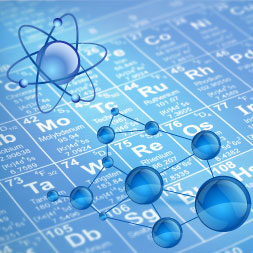
Two fundamental aspects of chemistry are, firstly, the structure of the atom and the role of the subatomic particles neutrons, protons and electrons, and, secondly, the atomic structure of the known elements that make up everything and how their place in the Periodic table of the elements determines their chemical properties. This free online course will give learners a comprehensive knowledge and understanding of these two core building blocks within chemistry. The course starts by examining the structure of the atom and subatomic particles, and then discusses the elements, and breaks them down into their subatomic structure of protons, neutrons and electrons. You will learn how the structure of each element determines its place in the Periodic table and its chemical properties. This course will be of great interest to all students who wish to pursue a career in any of the sciences such as chemistry, physics, biology or geology, or the individual learner who simply wants to learn and understand what the world around us is made up of.<br />
Gases behave differently from either solids or liquids, so there are different methods for understanding their behaviour. Having neither fixed volume nor shape gases are moulded entirely by the container in which they are held and from this it is possible to measure their behaviour by measuring properties such as pressure, volume, temperature and number of molecules. This free online chemistry course will introduce the concept of the ideal gas and the ideal gas law which is a good indicator of the behaviour of gases under many different conditions. The various components in the ideal gas law are explained in clear terms and you will see that by using equations you will understand how the impact of a change to one property, for example temperature, will impact on the other properties. Where there are multiple gases in a container you will be shown how to work out their partial pressure relative to the total pressure. This free online chemistry course will be of great interest to all students who wish to pursue a career in any of the sciences such as chemistry, physics, biology or geology, and to the individual learner who simply wants to learn and understand how gases behave.<br />
A molecule is a group of two or more atoms that bind together using chemical bonds. They may be from one or multiple elements and it is the ratio, or mass composition, of each molecule that gives the molecular compound its chemical characteristics. In this free online science course, you will learn about molecules and how they are composed of various elements, in mass, atoms and ratios. The course introduces the student to Avogadro’s number or the Mole, which is used to convert between atomic mass and grams, so that you will be able to work out ratios and weights of molecules. You will also learn how to balance chemical equations, and by balancing the reactants within equations, get viable chemical reactions. This branch of chemistry is known as Stoichiometry. The course will be of great interest to all students who wish to pursue a career in any of the sciences such as chemistry, physics, biology or geology, or the individual learner who simply wants to learn and understand how atoms form the molecules which make up all the material surrounding us. <br />
Matter exists in four states - solid, liquid, gas and plasma and it will change state depending on the temperature and pressure applied to the matter. In this free online chemistry course about states of matter you will learn about the characteristics of each of the four states and the amount of energy that can be added to or taken from a substance before it starts to change state. As all substances change state at different temperatures and pressures you will learn how to use phase change diagrams to plot the energy and pressure levels, the triple point, critical temperature, boiling and melting points associated with different substances. You will also learn in a step by step manner how to calculate the change in energy needed to move a substance along the state of matter spectrum. This free online chemistry course will be of great interest to all students who wish to pursue a career in any of the sciences such as chemistry, physics, biology or geology, or the individual learner who simply wants to learn and understand what is happening when matter changes from solid to liquid to gas.<br />
The amount of energy required to change the state of a substance depends on how strong or weak the bonds between the molecules are. For substances with strong bonds at standard temperature and pressure, like diamonds, it is extremely difficult to separate the molecules, whereas substances with weak bonds, like helium, remain in a gaseous form and do not condense into liquid or solid states. In this free online chemistry course you learn more about factors that affect the chemical nature of substances. You will learn why substances changing state can also be affected by mixing substances together. The course explains about using water as a solvent and mixing in different substances to see the effect on the boiling and melting points of the solution. This is followed by step by step examples of working out what the change in boiling or melting point will be based on the amount of solute added. This free online chemistry course will be of great interest to all students who wish to pursue a career in any of the sciences such as chemistry, physics, biology or geology, or the individual learner who simply wants to learn more about factors that affect the chemical nature of substances.<br />
Add to calendar

Trusted paper writing service WriteMyPaper.Today will write the papers of any difficulty.