

Online courses directory (10358)

This course immerses students in the process of building and testing their own digital and board games in order to better understand how we learn from games. We explore the design and use of games in the classroom in addition to research and development issues associated with computer–based (desktop and handheld) and non–computer–based media. In developing their own games, students examine what and how people learn from them (including field testing of products), as well as how games can be implemented in educational settings.
This course immerses students in the process of building and testing their own digital and board games in order to better understand how we learn from games. We explore the design and use of games in the classroom in addition to research and development issues associated with computer–based (desktop and handheld) and non–computer–based media. In developing their own games, students examine what and how people learn from them (including field testing of products), as well as how games can be implemented in educational settings.
This course immerses students in the process of building and testing their own digital and board games in order to better understand how we learn from games. We explore the design and use of games in the classroom in addition to research and development issues associated with computer–based (desktop and handheld) and non–computer–based media. In developing their own games, students examine what and how people learn from them (including field testing of products), as well as how games can be implemented in educational settings.

Today, computer graphics is a central part of our lives, in movies, games, computer-aided design, virtual reality, virtual simulators, visualization and even imaging products and cameras. This course, part of the Virtual Reality (VR) Professional Certificate program, teaches the basics of computer graphics that apply to all of these domains.
Students will learn to create computer-generated images of 3D scenes, including flybys of objects, make a real-time scene viewer, and create very realistic images with raytracing. We will start with a simple example of viewing a teapot from anywhere in space, understanding the basic mathematics of virtual camera placement. Next, you will learn how to use real-time graphics programming languages like OpenGL and GLSL to create your own scene viewer, enabling you to fly around and manipulate 3D scenes. Finally, we will teach you to create highly realistic images with reflections and shadows using raytracing.
This course runs for 6 weeks and consists of four segments. Each segment includes an individual programming assignment:
- Overview and Basic Math (Homework 0: 10% of grade)
- Transformations (Homework 1: 20% of grade)
- OpenGL and Lighting (Homework 2: 35% of grade)
- Raytracing (Homework 3: 35% of grade)
This term, students who earn a total score of 50% or greater will have passed the course and may obtain a certificate from UC San DiegoX.

This course provides introduction to computer graphics algorithms, software and hardware. Topics include: ray tracing, the graphics pipeline, transformations, texture mapping, shadows, sampling, global illumination, splines, animation and color. This course offers 6 Engineering Design Points in MIT's EECS program.

This course analyzes issues associated with the implementation of higher-level programming languages. Topics covered include: fundamental concepts, functions, and structures of compilers, the interaction of theory and practice, and using tools in building software. The course includes a multi-person project on compiler design and implementation.
This class is offered as CS6250 at Georgia Tech where it is a part of the [Online Masters Degree (OMS)](http://www.omscs.gatech.edu/). Taking this course here will not earn credit towards the OMS degree. This course covers advanced topics in Computer Networking such as Software-Defined Networking (SDN), Data Center Networking and Content Distribution. The course is divided into three parts: Part 1 is about the implementation, design principles and goals of a Computer Network and touches upon the various routing algorithms used in CN (such as link-state and distance vector). Part 2 talks about resource control and content distribution in Networking Applications. It covers Congestion Control and Traffic Shaping. Part 3 deals with the operations and management of computer networks encompassing SDN's (Software Defined Networks), Traffic Engineering and Network Security.

The free online course Computer Networking - Digital Network Security introduces you to the network architecture and protocols used in network security.<br /><br />The course begins by describing the features and functions of VPN protocol: Point-to-Point Tunneling Protocol (PPTP). You will learn how Point-to-Point Tunneling Protocol (PPTP) encapsulates Point-to-Point (PPP) frames into IP datagrams for transmission over an IP-based network. You will learn about L2TP and how it relies on IPSec in Transport Mode for encryption services.<br /><br />You will then learn about Firewalls which are the most commonly used type of security device in an organization's perimeter and how they protect a network from malicious attack and unwanted intrusion. You will learn about the role of a Perimeter network that keep certain information open to specific users or to the public while keeping the rest of an organization's data secret.<br /><br />You will learn about the two types of Packet filtering (Stateless and Stateful) and their functions. Next you will learn about Application-level gateway functions and how it supports address and port translation and checks whether the type of application traffic is allowed.<br /><br />Finally, you will learn about the Network Intrusion Detection System (NIDS) which detects malicious network activities by monitoring network traffic, and the Network Intrusion Prevention System (NIPS) which inspects network traffic and can remove, detain or redirect malicious traffic.<br /><br />This course will be of interest to all learners who would like to learn more about computer networking, the network architecture and protocols used in network security. It will also be of great interest to all learners who are considering computer networking as a career or who are considering doing professional computer networking exams. <br />
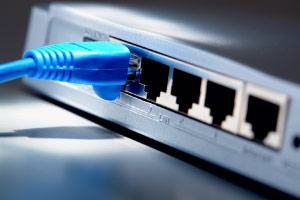
The free online course Computer Networking - Local Area Networks and the OSI Model introduces the key devices found on local area networks (LANs) and the structure of different types of LANs. It also explains the seven layers of the OSI model that allow devices on networks communicate with each other. <br /><br />The course begins by introducing you to the key devices found on LANs such as hubs, switches and routers, and how each of these devices functions to allow for effective and efficient communication on the LAN. You will then learn about the functions of IP addresses and how they are broken down into Network ID and Host ID components. You will be introduced to the different network topologies such as Star, Bus, Ring and how they function. Next you will learn about Ethernet which is the de facto standard and most widely installed LAN technology. You will learn how devices on an Ethernet network communicate with each other using Frames. <br /><br />The course then moves on to explain the seven layers of the OSI Model. You will learn about the structure and function of each layer and how data is passed through the seven layers to allow two devices communicate with each other. You will also be introduced to the TCP Model and you will learn about the similarities and differences between the OSI Model and the TCP Model in terms of their structure and functions.<br /><br />This course will be of interest to all learners who would like to learn more about computer networking, in particular the structure and function of LANs, and how the OSI Module allows devices on a LAN communicate with each other. It will be of great interest to all learners who are considering computer networking as a career or who are considering doing professional computer networking exams. <br />
The free online course Computer Networking - Wired and Wireless Networks and Protocols introduces you in a step-by-step manner to the structure and function of wired and wireless networks and their protocols. The course begins by introducing you to cabling systems for wired networks, in particular the twisted-pair cable, and cable speeds and the cable types. You will also learn about the tools needed when making the connections between patch panels and RJ45 jacks. <br /><br />You will learn about the structure of Internet Protocol addresses in detail, including IP Ranges and their classes. You will compare and contrast the structure and function of IPv4 and IPv6 addresses and will learn about the role of Default gateway and DNS server in networking.<br /><br />Finally, the course introduces you basic TCP/IP tools such as command prompt, ipconfig and ping, and the use of these tools will be demonstrated. Next, you will be introduced to advanced TCP/IP tools such as Netstat, Pathping, Nslookup, Telnet, NbtStat and Netsh. Again, these tools and their uses will be demonstrated.<br /><br />This course will be of interest to all learners who would like to learn more about computer networking, in particular the structure and function of wired and wireless networks and their protocols. It will also be of great interest to all learners who are considering computer networking as a career or who are considering doing professional computer networking exams. <br />

The Internet is a computer network that millions of people use every day. Understand the design strategies used to solve computer networking problems while you learn how the Internet works.

How does the global network infrastructure work and what are the design principles on which it is based? In what ways are these design principles compromised in practice? How do we make it work better in today's world? How do we ensure that it will work well in the future in the face of rapidly growing scale and heterogeneity? And how should Internet applications be written, so they can obtain the best possible performance both for themselves and for others using the infrastructure? These are some issues that are grappled with in this course. The course will focus on the design, implementation, analysis, and evaluation of large-scale networked systems.
Topics include internetworking philosophies, unicast and multicast routing, congestion control, network quality of service, mobile networking, router architectures, network-aware applications, content dissemination systems, network security, and performance issues. Material for the course will be drawn from research papers, industry white papers, and Internet RFCs.

 The Internet has become integral to our daily lives. Despite its importance to users, most have only a general idea of how it works. If you’re eager to learn more about the Internet and computer networks in general, this course is for you! This course was created in collaboration with the Lübeck University of Applied Sciences with support from the German Federal Ministry of Education and Research (BMBF).
In this course, you will learn about technologies that you use at home like Wireless LAN. We will also illustrate how the Internet works on a global scale and investigate the role of major protocols; in particular the Internet Protocol (version 4 and version 6) and its helper protocols (e.g., ICMP, ARP, DHCP).
You’ll learn how the protocols TCP and UDP are used to realize applications. Out of the many applications that the Internet has, the Hypertext Transfer Protocol is focused on as the lead example since it is the main protocol for the Web.
Key tools will be introduced and used, including the network protocol analyzer Wireshark, the network emulators eNSP and WANem, command line tools ping and traceroute, Firefox browser Add-Ons like IPvFox, and many test web pages.
This course uses videos and texts to provide an overarching foundation, augmented with practical exercises so that you can experiment and explore on your own.
A portion of the profit from verified certificates in this course will go toward Kiron Open Higher Education. Kiron enables access to higher education and successful learning for refugees through digital solutions.

Lecture Series on Artificial Intelligence by Prof.Sudeshna Sarkar and Prof.Anupam Basu, Department of Computer Science &

Lecture Series on Artificial Intelligence by Prof.P.Dasgupta, Department of Computer Science and Engineering, IIT Kharag

Lecture Series on Computer Architecture by Prof. Anshul Kumar, Department of Computer Science & Engineering ,IIT Del

Lectures by Dr.Sukhendu Das, rnDept. of Computer Science and Engineering, rnIIT Madras

Lecture Series on Computer Networks by Prof. S.Ghosh,Department of Computer Science & Engineering, I.I.T.,Kharagpur.

Lecture Series on Computer Organization by Prof. S. Raman, Department of Computer Science and Engineering, IIT Madras.

Lecture Series on Data Communication by Prof.A. Pal, Department of Computer Science Engineering,IIT Kharagpur.
Add to calendar

Trusted paper writing service WriteMyPaper.Today will write the papers of any difficulty.