Online courses directory (10358)

Learn how to create a confirmation dialog Box with jQuery

Conflicts with roommates, professors, classmates, co-workers, and club members are a common part of the college experience. This interactive course is designed to help you successfully manage the disputes you encounter during your time in higher ed.

This course introduces participants from the health care sector to gender based violence (GBV), including global epidemiology of GBV, health outcomes, seminal research, policy and ethical guidelines, and clinical best practices for GBV prevention, support and management.

An introduction to modern astronomy's most important questions. The four sections of the course are Planets and Life in The Universe; The Life of Stars; Galaxies and Their Environments; The History of The Universe.

The United States Congress is the most open of the national branches of government, and therefore the most closely studied. This course aims to find ways to deal with the vast array of information we have about Congress by asking two basic questions: What does Congress do (and why), and what are the various ways of studying congressional behavior? This course focuses on both the internal processes of the House and Senate, and on the place of Congress in the American political system.
The United States Congress is the most open of the national branches of government, and therefore the most closely studied. This course aims to find ways to deal with the vast array of information we have about Congress by asking two basic questions: What does Congress do (and why), and what are the various ways of studying congressional behavior? This course focuses on both the internal processes of the House and Senate, and on the place of Congress in the American political system.

This course analyzes the development of the United States Congress by focusing on the competing theoretical lenses through which legislatures have been studied. In particular, it compares sociological and economic models of legislative behavior, applying those models to floor decision-making, committee behavior, political parties, relations with other branches of the Federal government, and elections. Graduate students are expected to pursue the subject in greater depth through reading and individual research.
This course analyzes the development of the United States Congress by focusing on the competing theoretical lenses through which legislatures have been studied. In particular, it compares sociological and economic models of legislative behavior, applying those models to floor decision-making, committee behavior, political parties, relations with other branches of the Federal government, and elections. Graduate students are expected to pursue the subject in greater depth through reading and individual research.

A SoftPLC by Real Games which makes Complex Logic Simple

This project management course focuses on configuring your Beta Testing Community using Centercode Connect.

This Project Management Training course focuses on configuring your Beta Project using Centercode Connect.

Finalizing theProject This Project Management Course focuses on launching your Beta Project using Centercode Connect.

Aprenda a investir no mercado financeiro através de conselhos do gênio dos investimentos, o bilionário Warren Buffett...
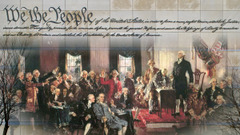
An introduction to the main themes of the American Constitution—popular sovereignty, separation of powers, federalism, and rights—and to basic techniques of constitutional interpretation.

This course examines American constitutional law in historical and modern context. It focuses closely on the constitutional text and Supreme Court case law. It explores the allocation of decision-making authority among government institutions, including the distribution of power across the branches of the federal government and between the federal and state governments. The course also examines the guarantees of individual rights and liberties stemming from the due process, equal protection, and other clauses in the Bill of Rights and post Civil War amendments.
Acknowledgments
Professor Warshaw would like to acknowledge the training in Constitutional Law he received from Gary J. Jacobsohn, Kathleen Sullivan, and Norman Spaulding.
Other Versions
Other OCW Versions
Archived versions: