

Online courses directory (10358)

This overview course is designed to show new students how to take a course on edx.org. You will learn how to navigate the edX platform and complete your first course! From there, we will help you get started choosing the course that best fits your interests, needs, and dreams.

With the continuous generation of massive amounts of biomedical data on a daily basis, whether from research laboratories or clinical labs, we need to improve our ability to understand and analyze the data in order to take full advantage of its power in scientific discoveries and patient care. For non-bioinformaticians, “handling” big data remains a daunting task. This course was designed to facilitate the understanding, analysis, and interpretation of biomedical big data to those in the biomedical field with limited or no significant experience in bioinformatics. The goal of this course is to “demystify” the process of analyzing biomedical big data through a series of lectures and online hands-on training sessions and demos. You will learn how to use publicly available online resources and tools for genomic, transcriptomic, and proteomic data analysis, as well as other analytic tools and online resources. This course is funded by a research grant from the US National Institutes of Health (NIH)-Big Data to Knowledge (BD2K) Initiative.

Learn how to tackle big data problems with your own Hadoop clusters! In this course, you’ll deploy Hadoop clusters in the cloud and use them to gain insights from large datasets.

This course will introduce you to web deployment platforms. You’ll begin by deploying your first web application to the Heroku platform, making it publicly available on the internet. In the process, you will learn about the underlying mechanics of web hosting. You will also learn how to configure your app, from accessing log output to configuring environment variables.

Water supply is a problem of worldwide concern: more than 1 billion people do not have reliable access to clean drinking water. Water is a particular problem for the developing world, but scarcity also impacts industrial societies. Water purification and desalination technology can be used to convert brackish ground water or seawater into drinking water. The challenge is to do so sustainably, with minimum cost and energy consumption, and with appropriately accessible technologies.
This subject will survey the state-of-the-art in water purification by desalination and filtration. Fundamental thermodynamic and transport processes which govern the creation of fresh water from seawater and brackish ground water will be developed. The technologies of existing desalination systems will be discussed, and factors which limit the performance or the affordability of these systems will be highlighted. Energy efficiency will be a focus. Nanofiltration and emerging technologies for desalination will be considered. A student project in desalination will involve designing a well-water purification system for a village in Haiti.

Aprenderás a desarrollar mensajería en tiempo real como WhatsApp, a conectar con el API de Twitter, hacer que tus aplicaciones interactúen con Facebook, crear tu propia red social de fotos, y hacer apps que se prueben automáticamente.
Un curso dinámico e interactivo, con los aspectos más importantes en la construcción de aplicaciones de forma profesional para Android.
Nuestro curso es el único que te enseñará a dar el siguiente paso en la construcción de aplicaciones profesionales para Android, esto lo haremos a través de darte las herramientas y conocimiento más actualizado. Inclusive tendremos en exclusiva una vídeo conferencia desde el Google I/O!
Sabías que Android es el sistema operativo dominante con un 82.2% de la cuota de mercado. Imagina cuantos miles de consumidores puedes tener al crear tus apps profesionales para Android.
En nuestro curso de Android aprenderás: Android Studio, actividades, fragmentos, intents, Model-View-Presenter, RecyclerView, ViewHolder, Adapter, Firebase, Navegación con tabs, ViewPager, autenticación, almacenamiento, consumo de API, Facebook SDK, GCM, notificaciones, Integración con Android wear, Cámara, Google Play Services, GPS, mapas, Graddle, Unit testing (JUnit4, Mockito), UI testing (Espresso).

Entender las metodologías para la innovación de productos para mercados emergentes. Las metodologías son: 1) megatendencias sociales, tecnológicas y del comportamiento del consumidor 2) JTBD y 3) Matriz Morfológica.

América Latina y el Caribe están viviendo un rápido proceso de urbanización que conlleva desafíos y oportunidades para el desarrollo integral de la región.
¿Cómo se puede manejar la expansión urbana y planear de manera efectiva? ¿Cómo se puede asegurar vivienda digna para la creciente población? ¿Qué hacer con los barrios informales que tipifican las ciudades en desarrollo? ¿Cómo se puede valorizar el patrimonio urbano y revitalizar los centros históricos?
Con este curso se aprenderán las herramientas necesarias y el conocimiento especializado que permiten enfrentar los desafíos que la región tiene para asegurar un desarrollo efectivo y sustentable de sus ciudades, mitigar los riesgos sociales, económicos y de infraestructura que esta expansión conlleva y formular planes de largo plazo que se traduzcan en un desarrollo urbano equitativo y bien estructurado.
Este MOOC está orientado a funcionarios públicos de América Latina y el Caribe que trabajen o estén involucrados en el ámbito de desarrollo urbano y vivienda. Asimismo, se desarrolló teniendo en mente a los actores que, a través del estudio o su labor cotidiana, estén teniendo un mayor acercamiento a esta temática y sus derivadas.
Los contenidos y materiales de este MOOC se basan en recursos teóricos, lecciones aprendidas, casos reales y actividades prácticas que permiten al participante comprender el contexto urbano de América Latina y el Caribe, junto con sus oportunidades y fortalezas. Por el mismo lado, se hace un esfuerzo por conectar a los participantes y sus experiencias, para dialogar y trabajar en soluciones conjuntas a los problemas generales y particulares que enfrenta la Región y sus ciudades.
Si tienes alguna pregunta, escríbenos a idbx@iadb.org
La preparación de este curso fue financiada por el Programa Especial para el Desarrollo Institucional (SPID) del Banco Interamericano de Desarrollo. Mayor información en la página web del SPID.

Guía para describir y aplicar la Clasificación Internacional del Funcionamiento, de la Discapacidad y de la Salud

Learn about descriptive statistics, and how they are used and misused in the social and behavioral sciences. Learn how to critically evaluate the use of descriptive statistics in published research and how to generate descriptive statistics yourself, using freely available statistical software.
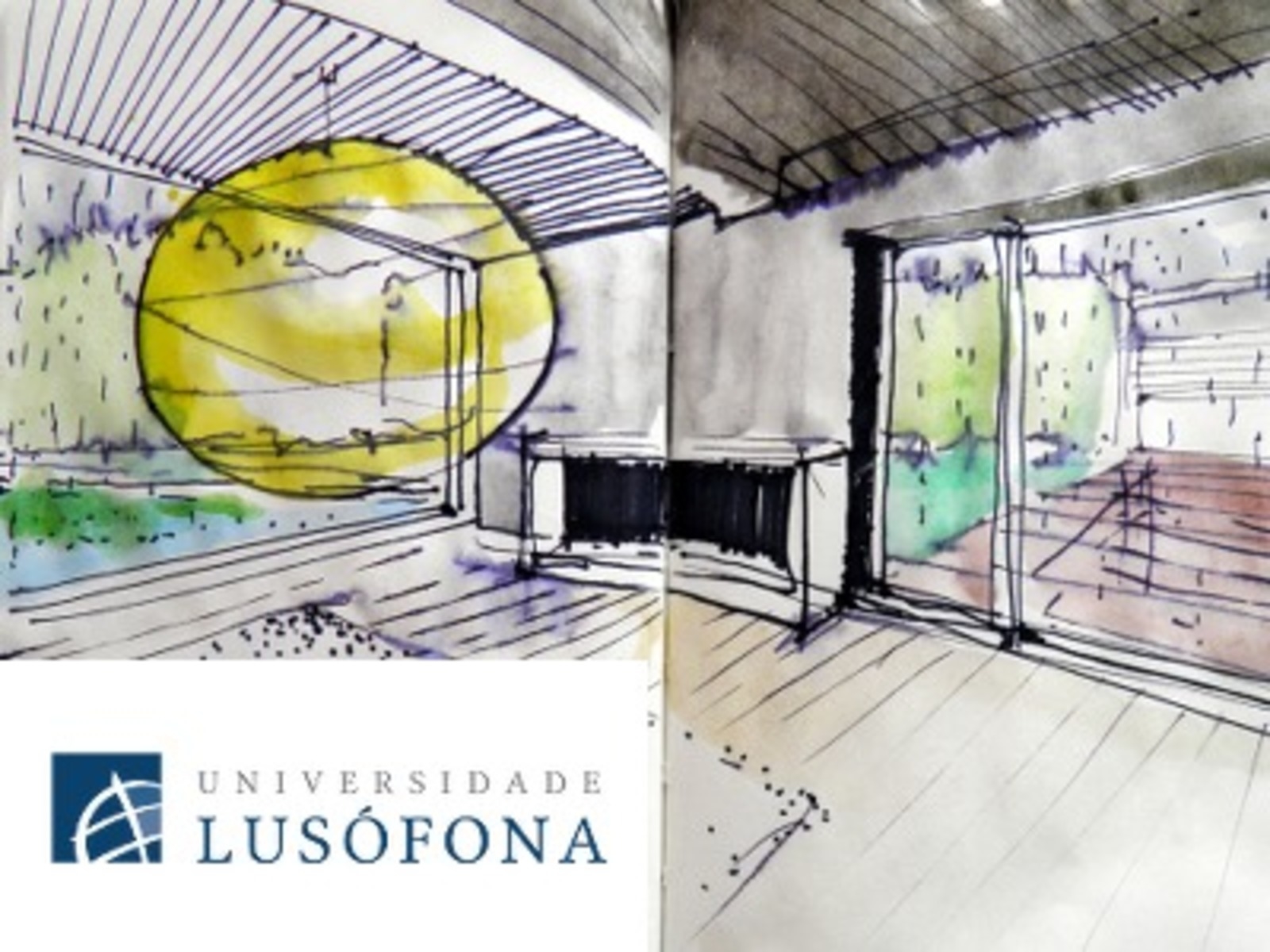
A formação em desenho consiste numa das matérias mais aliciantes da capacidade expressiva do ser humano. O deslumbramento sobre uma linguagem completa de técnica, de perceções sensoriais e persistência.
Ao longo do presente curso os alunos encontrarão alguns dos princípios sugeridos para a iniciação a um diário gráfico pessoal, numa linguagem a conquistar em cada desafio proposto.
Os desenhos são livremente registados em processo analógico de forma livre mas alicerçados a conteúdos subsequentes, somando competências ao longo dos diferentes exercícios.
Mais do que saber desenhar virtuosamente, procura-se dar a conhecer a confiança de desenhar livremente, sem pré conceitos e caminhando para um registo individual, único.
Objetivos de aprendizagem
O curso tem por objetivo principal o ensino de técnicas de composição aplicadas ao desenho. Serão exploradas diferentes abordagens de desenho com a aplicação de diferentes técnicas e materiais.
Como material de suporte serão usados cadernos para Diário Gráfico de formato A4 e A5. Serão exploradas técnicas alternativas de desenho para Diário Gráfico como por exemplo o uso de café e lápis e canetas aguareláveis. Serão exploradas técnicas bidimensionais e tridimensionais, a criação de volume e o uso de perspetiva.
O curso segue uma metodologia baseada no experimentar fazer. O modelo pedagógico do curso foi definido com o intuito de derrubar as barreiras iniciais ao desenho e os medos associados ao “gostava mas não sei”. Os diferentes exercícios apresentados em vídeo em tempo real de produção do desenho permitem uma maior compreensão do desenho enquanto aplicação de técnicas aprendíveis e não como fruto de um “dom” que só poucos têm. Desafiamos todos os que gostariam de desenhar a participar neste curso.
Requisitos
O curso de Desenho para Diário Gráfico não tem pré-requisitos. Partimos do princípio que todas as pessoas podem aprender a desenhar se assim o quiserem. Deste modo, o curso destina-se a todos os interessados em aprender as técnicas e regras mais comuns aplicadas ao desenho para diários gráficos.
Alunos têm ainda a possibilidade de comprar o Statement of Participation (no valor de 29€). Aqueles que comprarem o Statement of Participation, devem completar no mínimo 80% do curso (exercícios, vídeos e quizzes) para poderem fazer download do Statement of Participation.
Estrutura do curso
A matéria divide-se metodologicamente em quatro partes:
- Introdução;
- Codificação do Campo visual;
- Codificação expressiva;
- e aplicabilidade em desenho de exterior.
Os desafios são compostos por uma contextualização em vídeo e por materiais didáticos complementares.

This Graphic Design course builds on the introductory course and investigates the application of graphic design principals in the production process such as composition, balance, contrast and hierarchy. It is suitable for students studying graphic design, and designers and artists working in the graphic design industry. <br />

Design your own world. Are you ready? This MOOC is a journey into contemporary design through 101 exercises. Learn by doing and transform your everyday life into 101 projects.

Design 1o1 “Redux”
Are you ready?
The Design 1o1 saga is finally back with its special “redux” edition!
A special edition in which we go one step beyond! In fact, in this journey, Stefano Mirti and Anne-Sophie Gauvin are handing over more responsibilities to their students. Our former teachers will keep on producing the course contents (and correct the exams together with the course instructors), while the rest (the scary part) will be run by the Design 1o1 community.
“Design 1o1 Redux” is an introduction to design through 101 exercises. A six-month journey divided into 3 courses “online” here on iversity (Part 1, Part 2 and Part 3), one final exhibition / graduation party and an “offline” workshop for which we will go one step beyond.
In short:
Part 1: “Myself” (Nov 2 to Dec 27)
Part 2: “My House” (Jan 04 to Feb 28)
Part 3: “My World” (Feb 29 to Apr 24)
Exhibition / Graduation: In Croatia (Apr 23-24)
Winter camp: In Croatia (Apr 25 to May 1)
Ready for take off?
Here go with the first part of the course: “Myself”.
Design 1o1 Redux Part 1: Myself
Starting from our very own selves, we will collectively observe, translate and communicate many things, in a series of different ways and projects.
As Protagoras once said, “Man is the measure of all things”. It is the main reason we focus on “ourselves” in this first part of Design 1o1 Redux.
To do so, we will work with all kinds of cool apps for phones and tablets (do you have a smartphone or tablet?). We will also share our works with the others on Instagram, using special hashtags.
Indeed, we will explore a new way to learn a new design.
:-)
Course Structure
Our various activities will be divided into 8 weeks:
Week 1: My Body
Week 2: My Mind
Week 3: My Time
Week 4: My Diary
Week 5: My Food
Week 6: My Clothes
Week 7: My Exam
Week 8: My Break
What will I learn?
You will learn to develop some basic design attitudes for better understanding the mechanics of today’s world.
One step at a time, you will learn that “design” is foremost a language.
A language shared, talked and discussed by designers from all over the world.
How does the world look through the special lenses of "design"?
Along the way, you will learn about a considerably high number of things. Starting from your very own selves.
Prior Knowledge
In terms of prior knowledge, there is nothing required.
If you have a lot of prior knowledge, it might make the learning process more difficult, but don’t worry, no one is perfect. If we talk about contemporary “#design”, we are all absolute beginners!
However, in terms of technical equipment, this course is easier to follow via a smartphone or tablet. Of course, you can follow us via a desktop computer... but this is not how we intended the whole thing to be.
:-)
Workload
Between 4 and 7 hours a week.
Everyday, from Monday to Friday, for a total of 6 weeks, you will receive a package via email. Each package will contain a 15-second video to watch (to get you in the proper mood), and a pdf-letter introducing the daily brief (or “homework”) and a series of objects, characters and happenings intertwined with the narrative of the course (to go deeper in the subject at hand).
You will work on your assignment…
Then, once completed, you will upload it to your Instagram account (for the rest of us to see).
Easy as a kiss.
Questions or Comments?
You can write to Ms. Lola (our so-called secretary, but actually the real boss of this whole venture) at: design101.info@gmail.com.
Now, please understand that Ms. Lola is very busy. You might get higher chances of getting a quick and complete answer via Instagram, Facebook, Twitter. Come and let us show you around!
:-)
The Design 1o1 Community
This course is run by the Design 1o1 community.
You can learn more about who we are and what we do here.
All course contents are used for educational purposes.
The written content is by IdLab, and the visual content is assembled by IdLab.
The Design 1o1 Redux is a project by IdLab for Abadir Academy of Fine Arts.
Design 1o1 “Redux”
“Design 1o1 Redux” is an introduction to design through 101 exercises. A six-month journey divided into 3 courses “online” here on iversity (Part 1, Part 2 and Part 3), one final exhibition / graduation party and an “offline” workshop in which we will go one step beyond.
In short:
Part 1: “Myself” (Nov 2 to Dec 27)
Part 2: “My House” (Jan 4 to Feb 28)
Part 3: “My World” (Feb 29 to Apr 24)
Exhibition / Graduation: In Croatia (Apr 23-24)
Winter camp: In Croatia (Apr 25 to May 1)
:-)
Here we proceed with “Part 2: My House”.
Design 1o1 Redux Part 2: My House
Spaces, furniture, objects, memories... Our houses are composed of fascinating elements. In this part of the Design 1o1 Redux, we will rethink these components in order to design our own “homes”, the places where we live (or, “where the heart is” as Pliny the Elder would say).
Can we trap time into space? How to frame the ordinary? These are some of the many things we will explore!
To do so, we will work with all kinds of cool apps for phones and tablets (do you have a smartphone or tablet?). We will also share our works with the others on Instagram, using special hashtags.
Course Structure
Our various activities will be divided into 8 weeks:
Week 1: My Room
Week 2: My Kitchen
Week 3: My Garden
Week 4: My Guests
Week 5: My Basement
Week 6: My Show
Week 7: My Exam
Week 8: My Break
What will I learn?
You will learn to develop some basic design attitudes for better understanding the mechanics of today’s world.
One step at a time, you will learn that “design” is foremost a language.
A language shared, talked and discussed by designers from all over the world.
How does the world look through the special lenses of "design"?
Along the way, you will learn about a considerably high number of things. Starting from your very own self.
Prior Knowledge
In terms of prior knowledge, there is nothing required.
If you have a lot of prior knowledge, it might make the learning process more difficult, but don’t worry, no one is perfect. If we talk about contemporary “#design”, we are all absolute beginners!
However, in terms of technical equipment, this course is easier to follow via a smartphone or tablet. Of course, you can follow us via a desktop computer... but this is not how we intended the whole thing to be.
:-)
Workload
Between 4 and 7 hours a week.
Everyday, from Monday to Friday, for a total of 6 weeks, you will receive a package via email. Each package will contain a 15-second video to watch (to get you in the proper mood), and a pdf-letter introducing the daily brief (or “homework”) and a series of objects, characters and happenings intertwined with the narrative of the course (to go deeper in the subject at hand).
You will work on your assignment…
Then, once completed, you will upload it to your Instagram account (for the rest of us to see).
Easy as a kiss.
Questions or Comments?
You can write to Ms. Lola (our so-called secretary, but actually the real boss of this whole venture) at: design101.info@gmail.com.
Now, please understand that Ms. Lola is very busy. You might get higher chances of getting a quick and complete answer via Instagram, Facebook, Twitter. Come and let us show you around!
:-)
The Design 1o1 Community
This course is run by the Design 1o1 community.
You can learn more about who we are and what we do here.
All course contents are used for educational purposes.
The written content is by IdLab, and the visual content is assembled by IdLab.
The Design 1o1 Redux is a project by IdLab for Abadir Academy of Fine Arts.

Design 1o1 “Redux”
“Design 1o1 Redux” is an introduction to design through 101 exercises. A six-month journey divided into 3 courses “online” here on iversity (Part 1, Part 2 and Part 3), one final exhibition / graduation party and an “offline” workshop in which we will go one step beyond.
In short:
Part 1: “Myself” (Nov 2 to Dec 27)
Part 2: “My House” (Jan 4 to Feb 28)
Part 3: “My World” (Feb 29 to Apr 24)
Exhibition / Graduation: In Croatia (Apr 23-24)
Winter camp: In Croatia (Apr 25 to May 1)
:-)
And now, Part 3: My World...
Design 1o1 Redux Part 3: My World
Johan Cruyff, a very famous footballer (and fantastic designer), once said:
“I never practice tricks. I play very simply.
That's what it's all about. Playing simple football is the hardest thing.”
If we think about it, design is everything.
It can be football, but it can also be an object, a building, a game… our lives, our worlds!
In this part of the Design 1o1 Redux, we will go out and “get busy” designing our very own worlds. Something for which we will need to master a high level of simplicity.
We will work with all kinds of cool apps for phones and tablets (do you have a smartphone or tablet?). We will also share our works with the others on Instagram, using special hashtags.
:-)
Course Structure
Our various activities will be divided into 8 weeks:
Week 1: My Neighborhood
Week 2: My Town
Week 3: My Trips
Week 4: My Nature
Week 5: My Shelter
Week 6: My Thing
Week 7: My Exam
Week 8: My Break
What will I learn?
You will learn to develop some basic design attitudes for better understanding the mechanics of today’s world.
One step at a time, you will learn that “design” is foremost a language.
A language shared, talked and discussed by designers from all over the world.
How does the world look through the special lenses of "design"?
Along the way, you will learn about a considerably high number of things. Starting from your very own self.
Prior Knowledge
In terms of prior knowledge, there is nothing required.
If you have a lot of prior knowledge, it might make the learning process more difficult, but don’t worry, no one is perfect. If we talk about contemporary “#design”, we are all absolute beginners!
However, in terms of technical equipment, this course is easier to follow via a smartphone or tablet. Of course, you can follow us via a desktop computer... but this is not how we intended the whole thing to be.
:-)
Workload
Between 4 and 7 hours a week.
Everyday, from Monday to Friday, for a total of 6 weeks, you will receive a package via email. Each package contains a 15-second video to watch (to get you in the proper mood), and a pdf-letter introducing the daily brief (or “homework”) and a series of objects, characters and happenings intertwined with the narrative of the course (to go deeper in the subject at hand).
You will work on your assignment…
Then, once completed, you will upload it to your Instagram account (for the rest of us to see).
Easy as a kiss.
Questions or Comments?
You can write to Ms. Lola (our so-called secretary, but actually the real boss of this whole venture) at: design101.info@gmail.com.
Now, please understand that Ms. Lola is very busy. You might get higher chances of getting a quick and complete answer via Instagram, Facebook, Twitter. Come and let us show you around!
:-)
The Design 1o1 Community
This course is run by the Design 1o1 Community.
You can learn more about who we are and what we do here.
All course contents are used for educational purposes.
The written content is by IdLab, and the visual content is assembled by IdLab.
The Design 1o1 Redux is a project by IdLab for Abadir Academy of Fine Arts.

This course explores the reciprocal relationships among design, science, and technology by covering a wide range of topics including industrial design, architecture, visualization and perception, design computation, material ecology, and environmental design and sustainability. Students will examine how transformations in science and technology have influenced design thinking and vice versa, as well as develop methodologies for design research and collaborate on design solutions to interdisciplinary problems.
This course explores the reciprocal relationships among design, science, and technology by covering a wide range of topics including industrial design, architecture, visualization and perception, design computation, material ecology, and environmental design and sustainability. Students will examine how transformations in science and technology have influenced design thinking and vice versa, as well as develop methodologies for design research and collaborate on design solutions to interdisciplinary problems.
This course explores the reciprocal relationships among design, science, and technology by covering a wide range of topics including industrial design, architecture, visualization and perception, design computation, material ecology, and environmental design and sustainability. Students will examine how transformations in science and technology have influenced design thinking and vice versa, as well as develop methodologies for design research and collaborate on design solutions to interdisciplinary problems.

This is an intermediate algorithms course with an emphasis on teaching techniques for the design and analysis of efficient algorithms, emphasizing methods of application. Topics include divide-and-conquer, randomization, dynamic programming, greedy algorithms, incremental improvement, complexity, and cryptography.
Add to calendar

Trusted paper writing service WriteMyPaper.Today will write the papers of any difficulty.