

Online courses directory (10358)

This subject examines the interactions of East Asia with the rest of the world and the relationships of each of the East Asian countries with each other, from ca. 1500 to 2000 A.D. Primary focus on China and Japan, with some reference to Korea, Vietnam, and Central Asia. Asks how international diplomatic, commercial, military, religious, and cultural relationships joined with internal processes to direct the development of East Asian societies. Subject addresses perceptions and misperceptions among East Asians and foreigners.

This subject is an introduction to various forms of culture in East Asia (focusing on China, Japan and Korea), including both traditional and contemporary examples. Critically examines the shared cultural elements that are widely considered to constitute "East Asian culture," and also the diversity within East Asia, historically and today. Examples include religious and philosophical beliefs (Confucianism and Buddhism), literature, art, food, architecture, and popular culture. The study of gender will be an integral part of this subject. The influence and presence of Asian cultural expressions in the U.S. are also considered.
This class is suitable for students of all levels, and requires no Asian language background. Students who wish to fulfill the MISTI-Singapore requirement may do the final project on Singapore. Taught in English.
The course includes field trips to the Museum of Fine Arts and the Peabody Essex Museum.
This subject is an introduction to various forms of culture in East Asia (focusing on China, Japan and Korea), including both traditional and contemporary examples. Critically examines the shared cultural elements that are widely considered to constitute "East Asian culture," and also the diversity within East Asia, historically and today. Examples include religious and philosophical beliefs (Confucianism and Buddhism), literature, art, food, architecture, and popular culture. The study of gender will be an integral part of this subject. The influence and presence of Asian cultural expressions in the U.S. are also considered.
This class is suitable for students of all levels, and requires no Asian language background. Students who wish to fulfill the MISTI-Singapore requirement may do the final project on Singapore. Taught in English.
The course includes field trips to the Museum of Fine Arts and the Peabody Essex Museum.
This subject is an introduction to various forms of culture in East Asia (focusing on China, Japan and Korea), including both traditional and contemporary examples. Critically examines the shared cultural elements that are widely considered to constitute "East Asian culture," and also the diversity within East Asia, historically and today. Examples include religious and philosophical beliefs (Confucianism and Buddhism), literature, art, food, architecture, and popular culture. The study of gender will be an integral part of this subject. The influence and presence of Asian cultural expressions in the U.S. are also considered.
This class is suitable for students of all levels, and requires no Asian language background. Students who wish to fulfill the MISTI-Singapore requirement may do the final project on Singapore. Taught in English.
The course includes field trips to the Museum of Fine Arts and the Peabody Essex Museum.

The course examines various aspects of culture in both premodern and modern East Asia, ranging from literature, art, performance, and cuisine to contemporary pop culture (film, manga, anime, etc.).

Learn the basics of Microsoft Excel. Develop a strong foundation before mastering this powerful business tool.

Take your PHP further & learn how to develop professional apps using objects & frameworks on this PHP course.

Introducing strategies for developing your spoken English communication skills in the context of doing business in Asia.

Lynn Reedy, senior vice president of product, development and architecture at eBay, sets the stage for the talk about eB
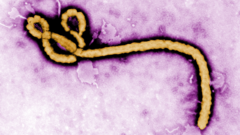
Learn about the evolving Ebola epidemic and its various aspects including disease prevention, management and treatment, response to the epidemic, ethical considerations, and the post-Ebola global health landscape.

March 2014 marked the starting point of the largest outbreak of Ebola virus disease in history. Although the disease seems to be on a decrease, we are not there yet and new outbreaks will surely emerge. New efforts to combat the outbreak are necessary. This is why we developed this online course about Ebola, targeted at health professionals across the world.

This course gives you the permission to take care of yourself by learning the skills to manage stress and optimize wellbeing.

Too often modern cities and suburbs are disorganized places where most new development makes daily life less pleasant, creates more traffic congestion, and contributes to climate change. This trend has to change; and our course is going to show you how.
Ecodesign means integrating planning, urban design and the conservation of natural systems to produce a sustainable built and natural environment. Ecodesign can be implemented through normal business practices and the kinds of capital programs and regulations already in use in most communities. We will show you how ecodesign has already been used for exceptional projects in many cities and suburbs—from Hammarby Sjöstad in Stockholm to False Creek North in Vancouver to Battery Park City in Manhattan, as well as many smaller-scale examples that can be adopted in any community. Cities and suburbs built according to ecodesign principles can and should become normal, instead of just a few special examples, transforming urban development into desirable, lower-carbon, compact and walkable communities and business centers.
As this course describes specific solutions to the vexing urban challenges we all face, course participants can see how these ideas might be applied in their own area. Participants will learn the conceptual framework of ecodesign, see many real, successful examples, and come to understand the tools, processes, and techniques for policy development and implementation.
Ecodesign thinking is relevant to anyone who has a part in shaping or influencing the future of cities and suburbs – citizens, students, designers, public officials, and politicians. At the conclusion of the course participants will have the tools and strategies necessary to advocate policies and projects for a neighbourhood or urban district using the ecodesign framework.

Ecologies of Construction examines the resource requirements for the making and maintenance of the contemporary built environment. This course introduces the field of industrial ecology as a primary source of concepts and methods in the mapping of material and energy expenditures dedicated to construction activities.

We will cover fundamentals of ecology, considering Earth as an integrated dynamic system. Topics include coevolution of the biosphere, geosphere, atmosphere and oceans; photosynthesis and respiration; the hydrologic, carbon and nitrogen cycles. We will examine the flow of energy and materials through ecosystems; regulation of the distribution and abundance of organisms; structure and function of ecosystems, including evolution and natural selection; metabolic diversity; productivity; trophic dynamics; models of population growth, competition, mutualism and predation. This course is designated as Communication-Intensive; instruction and practice in oral and written communication provided. Biology is a recommended prerequisite.

This course provides a review of physical, chemical, ecological, and economic principles used to examine interactions between humans and the natural environment. Mass balance concepts are applied to ecology, chemical kinetics, hydrology, and transportation; energy balance concepts are applied to building design, ecology, and climate change; and economic and life cycle concepts are applied to resource evaluation and engineering design. Numerical models are used to integrate concepts and to assess environmental impacts of human activities. Problem sets involve development of MATLAB® models for particular engineering applications. Some experience with computer programming is helpful but not essential.

The free online course Ecology Studies – Conservation Biology and Biodiversity provides detailed information on the current biodiversity crisis, the importance of biodiversity to human life and the use of conservation preserves and legislative frameworks for biodiversity protection. The course begins by introducing you to biodiversity and how it exists at multiple levels of organization and is measured in different ways. These measurements include numbers of species, genetic diversity, chemical diversity, and ecosystem diversity. The five mass extinctions of prehistory are explained along with the most recent extinctions recorded in written history and how they are the basis for one method of estimating contemporary extinction rates. Next, you will learn how humans use many compounds as medicines that were first discovered or derived from living organisms. You will learn how the loss of biodiversity threatens ecosystem services that support human agriculture such as: pollination, nutrient cycling, pest control, and soil development and maintenance. You will also learn about the core threats to biodiversity including human population growth and unsustainable resource use, and how habitat loss occurs through deforestation, damming of rivers, and other human activities. Finally, you are introduced to the methods of biodiversity conservation, such as the optimal design of preserves and the limitations imposed by political and economic forces. You will also gain an understanding of how legislation within individual countries protects species and how agreements on global warming have had limited success. The course will be of great interest to students or professionals who want to develop a career in various aspects of biodiversity and ecosystem conservation or for those who simply want to learn more about the biodiversity crisis, how to preserve and conserve current biodiversity levels and how human activities are the core threat to the planet's ecosystems.<br />

The free online course Ecology Studies – Ecosystem Ecology provides detailed information on the modelling of ecosystems, energy transfer and biogeochemical cycles. The course begins by introducing you to the three broad categories of ecosystems based on their general environment: freshwater, ocean water, and terrestrial ecosystems. You will learn more about the resources within these ecosystems which organisms compete for such as organic material, sunlight, and mineral nutrients. You will learn to identify the various critical factors influencing community dynamics such as the components of its physical and geographic environment. The course then introduces you to how organisms acquire energy and how that energy is passed from one organism to another through food webs and their constituent food chains. You will gain an understanding of the different trophic levels, such as producers, consumers and decomposers, and how energy transfers affect ecosystem structures and dynamics. You will also learn about how the structure of ecosystems can be visualized and modelled with ecological pyramids to show the relative amounts of various parameters (such as number of organisms, energy, and biomass) across trophic levels. Finally, you will be introduced to the biogeochemical cycle, which is the process of recycling inorganic matter between living organisms and their environment. The six most common elements associated with organic molecules are covered explaining how mineral nutrients are cycled from one living organism to another, and between the biotic and abiotic world. You will also gain an understanding of how human activities have impacted these biogeochemical cycles and the potential consequences for society. The course will be ideal for students or professionals who want to develop a career in ecosystem research or for those who simply want to learn more about ecosystem structures, how energy is transferred between trophic levels, and how human activities have caused major disturbances to these cycles. This course will be of great interest to anyone who would like to learn more about ecosystem types and categories, the transfer of energy between trophic levels, through food webs and food chains, and how mineral nutrients are cycled through ecosystems.<br />

The free online course in Ecology Studies – Population and Community Ecology introduces you to patterns of population distribution, population growth and species relationships and behaviours. You will learn about species populations, how life patterns evolve through natural selection, and how species behaviours are influenced by the environment. The course begins by introducing you to the tools that ecologists use to measure the characteristics of populations such as size, density, dispersion pattern and age structure. You will also learn how life tables are used to calculate population life expectancy. You will learn to identify the environmental limits to population growth, how populations with unlimited resources grow exponentially and, when resources become limited why populations then follow a logistic growth curve. You will gain an understanding of population dynamics and regulation based on density-dependent and density-independent factors and learn how the age structure of a population allows us to predict population growth. You will also learn about the characteristics used to categorize species. Finally, you are introduced to community ecology where you will learn the features of community structure and keystone species, and how some species can form symbiotic relationships within an ecological community. You will be introduced to behavioural biology and learn about behaviours such as imprinting and habituation, conditioning, and cognitive learning and methods of communication. The course will be of great interest to professionals working in the areas of ecology or environmental science, and who would like to learn more about the social and environmental consequences of population growth, and the different characteristics of species behaviour.<br />

Learn what ecommerce is actually! A guide to assist you understanding essentials of online business systems
Add to calendar

Trusted paper writing service WriteMyPaper.Today will write the papers of any difficulty.