

Online courses directory (10358)

This course proposes an overview of current global health challenges drawing on the insights of several academic disciplines including medicine, public health, law, economics, social sciences and humanities. This interdisciplinary approach will guide the student into seven critical topics in global health.

In this global history course, you will learn not just by reading and watching lectures, but also by analyzing historical documents and applying your knowledge. The core of this course is a series of weekly lab assignments in which you and your fellow students will work in teams to use historical knowledge from the course to solve problems and develop new connections and interpretations of primary historical materials.
The course begins in 1300 AD at the height of the Silk Road, the triumphs of the Mongol Empire, and the spread of one of the most devastating contagions of all time, the Black Death. It examines the emergence of an international system of competitive empires and its effect on trade and exchange. We look at the Age of Revolution, and discuss industrialization during the 1800s. The course concludes with a close look at the 20th century and current-day globalization.
Course themes include migration and statelessness, economic integration, warfare and conflict, the transformation of the ecological balance, and cultural responses and innovations. To grapple with these themes, we explore first-hand perspectives of historical actors through a collection of texts and images.
This course integrates and actively supports groups of refugee learners in refugee camps in the Horn of Africa and Jordan, collaborating with students at Princeton, in a global learning partnership with InZone at the University of Geneva. This partnerships benefits from collaboration with the United Nations High Commission for Refugees in Azraq and Kakuma refugee camps, CARE in Azraq refugee camp and British Council in Amman, and from financial support from Princeton University, the University of Geneva and the Ford Foundation. We express our sincere appreciation to all who contribute to the implementation of this global learning project.
Course material
For you to engage in this experience, Global History Lab will provide you with historical content and a series of collaborative lab activities. Although the lectures are designed to be self-contained, we recommend (but do not require) that you refer to the book Worlds Together, Worlds Apart: A History of the World: From 1000 CE to the Present (Fourth Edition) (vol. 2), which was written specifically for this course.

Ideal for business leaders and HR professionals, this course probes into current research about the top ten global HR trends of 2016 that are forcing organizations to quickly respond and refocus to meet modern challenges.

When you notice inequality in your everyday life, do you ever wonder where it comes from, and what keeps it going?
This sociology course introduces you to core concepts of class, gender, and racial inequality, and an approach to studying complex forms of inequality called intersectionality. Featuring interviews with top scholars and discussion of the full-length award winning documentary, China Blue, which follows the life of a young seventeen-year-old worker from Sichuan province, to a Chinese jeans factory, this course will transform your perspective on yourself and others.
No previous knowledge required. Global Sociology is highly recommended.
Image: Ganesh Ramachandran | www.purpleganesh.com

In this marketing course, you will gain an understanding of the foundations, scope, and challenges of global marketing, as well as the cultural environments of global markets.
Organizations and businesses are always facing new challenges including slow domestic market growth, international competition, deregulation of formerly protected industries, short product life cycles, and emergence of global brands. This course will equip you with skills to understand and handle current and developing challenges in global marketing and how to create and implement successful strategies.
This course will help you understand the strategic implications of segmentation, targeting, and positioning and how they are developed within the context of customer, competitor, and context analysis. Particular emphasis will be placed on the role of disruptive positioning strategies and how firms can utilize such strategies to their advantage.
You will develop integrated marketing strategies taking into consideration the problems and perspectives of marketing across national boundaries and within foreign countries. You’ll learn to evaluate and prioritize information that influences marketing decisions and deal with ambiguous information when engaged in business globally. You will also gain understanding of the strategic implications of the Country of Origin Effect and how this influences customer’s information processing of firms and brands.

This globalization course focuses on the ways market-led macro-economic reforms associated with globalization (such as free trade agreements and privatization initiatives) have come together with much more micro innovations in how personal behavior is organized by market forces (rethinking education as a personal investment practice, for example, or outsourcing dating to for-profit companies).
At the end of this course you will be able to:
- Describe the main debates and controversies surrounding globalization
- Analyze the ties and tensions of uneven global development
- Understand the growing impact of global market integration
- Synthesize knowledge of market globalization with your own experiences of market forces and market reforms
- Evaluate the way in which market forces define and delimit personal choices and everyday life globally
- Develop capacity to respond and reflect personally amidst the ties and tensions of market-led globalization.
This course is adapted from a similar class offered by the Bachelor of Arts in Integrated Social Sciences, a fully online degree completion program from the University of Washington.

This course examines opportunities and risks firms face in today's global market. It provides conceptual tools for analyzing how governments and social institutions influence economic competition among firms embedded in different national settings. Public policies and institutions that shape competitive outcomes are examined through cases and analytical readings on different companies and industries operating in both developed and emerging markets.

This course examines the opportunities and risks firms face in today's global world. The course provides conceptual tools for analyzing how governments and a variety of social and economic institutions influence competition among firms embedded in different national settings. Public policies and institutions that shape competitive outcomes are examined through cases and analytic readings on different companies and industries operating in both developed and emerging markets. In addition to traditional case/class discussions, this course will include some presentations by various guest speakers. The hope is that greater exposure to/interaction with these real-world practitioners will "bring to life" some of the issues discussed in the readings/cases. Whenever possible, informal dinners and/or coffees will be organized for small groups of students interested in meeting with our guest speakers.

The experience of war has changed fundamentally – not only for those fighting and reporting, but also for those on the home front. High-tech nations wage wars from a distance using satellite-guided weaponry while non-state military actors, terrorist organizations, and citizen journalists have increasingly added new voices and visual perspectives to the conversation about conflict.
The ubiquity of smartphones, internet access, and social media transports the experience and complexity of war directly into our lives. Cyberspace offers greater freedoms and access to information at the same time as we discover a dramatic global rise of cyber espionage, internet censorship, and surveillance.
In this course, we map this emerging new terrain where violent conflict, information technology, and global media intersect and where the old distinctions between battlefront and home front, between soldier and civilian, between war and entertainment, and between public and private are being redrawn.
Considering these changes, this course engages with questions surrounding:
- The relationship between media, information technology, and war
- How violent conflict is presented in the media and the responsibilities of journalists during wartime
- The effect of instantaneous, worldwide reporting on battle and the politics of conflict
- How we can understand and critically engage with media and information technology
In order to engage with these questions, this course is taught through a number of conventional and unconventional forms of learning methods and activities. These include lecture videos, questionnaires, and discussion fora. But it also includes practical, experiential elements taught through crowdsourcing, individual research, critical viewing, media and image analysis, and surveys. Combined, these activities allow you to gain fresh and timely insights into what happens beneath the surface of the screen in front of you. They enable you to gain a deeper understanding of how the politics of today's wars play out on and behind the digital screens in our hypermediatized age.

Using examples of investigative and crusading journalism from Asia, Africa, Latin America and Europe, this course will help you understand how raising public awareness can create political and social change.
This course is a fast-paced introduction to global muckraking, past and present, and includes penetrating interviews with historians and investigative journalists.
Join us to discover the vital role that journalism has played in fighting injustice and wrongdoing over the last 100 years and delve into the current trends reshaping investigative reporting in the digital age.

Questions related to sexuality and reproduction are intimately linked to health, well-being and human rights. In this course, you will gain a unique opportunity to explore the field of SRHR together with participants from around the world, and to reflect upon themes and issues that are of global relevance.

This course provides an overview of the issue of postharvest loss of grains by exploring essential physical, technical, and social dimensions of postharvest supply chains and loss prevention methods globally.
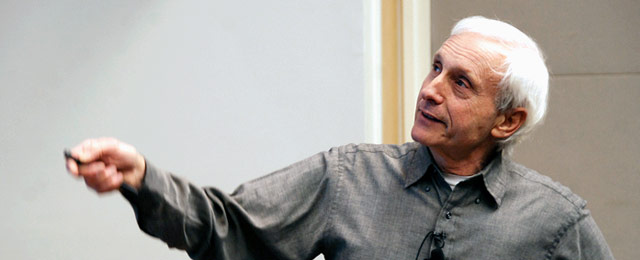
This survey course introduces students to the important and basic material on human fertility, population growth, the demographic transition and population policy. Topics include: the human and environmental dimensions of population pressure, demographic history, economic and cultural causes of demographic change, environmental carrying capacity and sustainability. Political, religious and ethical issues surrounding fertility are also addressed. The lectures and readings attempt to balance theoretical and demographic scale analyzes with studies of individual humans and communities. The perspective is global with both developed and developing countries included.

What possibilities exist for a fairer world? Can one person truly make a difference? In this social sciences course, we sample the possibilities and limits of social change in an interconnected, inequitable global landscape.
This course features in-depth examinations of the rise of garment work for Bangladeshi women, a labor strike in a Mexican suit factory, anti-sweatshop activism in China, and a chat with the president of one of the oldest textile manufacturers in the U.S.
Global Sociology is recommended but not required. Let’s start to understand how social change really works.
Image: Ganesh Ramachandran | www.purpleganesh.com

Ever wondered why some countries are rich and others poor? Or why some people believe hard work results in upward mobility and others don’t? To answer these questions, you need to “see” the world sociologically.
In this introductory sociology course, we will explore the concerns of an interconnected global world through classic sociological concepts. Through short lectures, interviews with prominent sociologists and everyday people around the world, you will learn to see your role in the scope of global history.
No previous experience needed.
Image: Ganesh Ramachandran | www.purpleganesh.com

This subject focuses on the specifics of strategy and organization of the multinational company, and provides a framework for formulating successful and adaptive strategies in an increasingly complex world economy. Topics include the globalization of industries, the continuing role of country factors in competition, organization of multinational enterprises, and building global networks. This particular version of the subject is taught and tailored specifically to those enrolled in the MIT Sloan Fellows Program.

Students will explore energy consumption patterns including individuals, countries and the entire globe. These patterns will include all sectors of the global economy from fully developed countries to developing nations. New energy sources will be investigated and international solutions to future needs will be analyzed.

Health Care Workers and Health Professions Students can prepare to plan and deliver TB care in their communities by applying the latest clinical and research data presented in this nine-week course focusing on TB/HIV Co-Infection.

Global Warming Science teaches you about the risks and uncertainties of future climate change by examining the science behind the earth’s climate. You will be able to answer such questions as, “What is the Greenhouse Effect?” and “How and why has earth’s climate changed through geologic history?”
This science course is designed for college sophomores and juniors with some preparation in college-level calculus and physics.

This course provides students with a scientific foundation of anthropogenic climate change and an introduction to climate models. It focuses on fundamental physical processes that shape climate (e.g. solar variability, orbital mechanics, greenhouse gases, atmospheric and oceanic circulation, and volcanic and soil aerosols) and on evidence for past and present climate change. During the course they discuss material consequences of climate change, including sea level change, variations in precipitation, vegetation, storminess, and the incidence of disease. This course also examines the science behind mitigation and adaptation proposals.
Add to calendar

Trusted paper writing service WriteMyPaper.Today will write the papers of any difficulty.