

Online courses directory (10358)

Educators have an ever-increasing stream of data at their fingertips, but knowing how to use this data to improve learning and teaching — how to make it less overwhelming, more useful, and part of an effective collaborative process — can be challenging.
Based on the book Data Wise: A Step-by-Step Guide to Using Assessment Results to Improve Teaching and Learning, this course describes a clear, 8-step process for using a wide range of data sources to improve instruction. You will see what this disciplined way of working with colleagues can look and feel like in a school setting. You will also have the opportunity to share insights and experiences about school improvement with educators from around the world.
In this course, you will:
- Understand what the Data Wise Improvement Process is and how it can help you improve teaching and learning.
- Build skills in looking at a wide range of data sources, including test scores, student work, and teaching practice.
- Identify next steps in supporting a culture of collaborative data inquiry in your setting.
Introduction to Data Wise is open to all, but is especially valuable for teachers and school and district leaders, as well as policymakers, and educational entrepreneurs who are dedicated to improving outcomes for students. There are several ways you could take this course:
- Participate on your own.
- Enroll with a few colleagues as part of a study group.
- Formally integrate it into professional development in your workplace.
It is a self-paced course. You can go through the essential materials in a day or take several weeks to allow for reflection. There will be one month of active course facilitation, which will include discussion board moderation, office hours, and other live events.
This course provides an introduction to a rich portfolio of books, resources, training, and support developed by the Data Wise Project at the Harvard Graduate School of Education. The Data Wise Project works in partnership with teachers and school and system leaders to develop and field-test resources that support collaborative school improvement. We encourage you to explore these resources as you chart a course for using data to improve learning and teaching for all students.
HarvardX requires individuals who enroll in its courses on edX to abide by the terms of the edX honor code. HarvardX will take appropriate corrective action in response to violations of the edX honor code, which may include dismissal from the HarvardX course; revocation of any certificates received for the HarvardX course; or other remedies as circumstances warrant. No refunds will be issued in the case of corrective action for such violations. Enrollees who are taking HarvardX courses as part of another program will also be governed by the academic policies of those programs.
HarvardX pursues the science of learning. By registering as an online learner in an HX course, you will also participate in research about learning. Read our research statement to learn more.
Harvard University and HarvardX are committed to maintaining a safe and healthy educational and work environment in which no member of the community is excluded from participation in, denied the benefits of, or subjected to discrimination or harassment in our program. All members of the HarvardX community are expected to abide by Harvard policies on nondiscrimination, including sexual harassment, and the edX Terms of Service. If you have any questions or concerns, please contact harvardx@harvard.edu and/or report your experience through the edX contact form.

In the free online course Introduction to Database Concepts you will learn about the structure of a database, and how to establish relationships within your database. You will learn about the objects and data that make up a database, and the ways to create databases to store data.<br /><br />The course begins by introducing you to the core concepts of databases. You will learn about applications for performing tasks and interacting with a database. Next, you will be introduced to concepts that you need to understand to be able to construct a database. You will learn about the normalization process of organizing data in a database, and the constraints that make data consistent and unique when required. You will learn about referential integrity and how constraints are a fundamental part of it.<br /><br />Finally, you will be introduced to objects that make up a database and the various datatypes you can store within a database. You will learn about creating, altering and deleting databases using the Data Definition Language.<br /><br />This free Alison course will be of interest to those wishing to learn about the core concepts of databases, database creation and database structure.<br />

This course covers database design and the use of database management systems for applications.

Learn about Databases, one of the most prevalent technologies underlying internet and computing applications today.

Have you ever imagined what is deep under the ground? What is happening deep inside the earth? How has the earth evolved into its present state? This course is an introduction to earth science, focusing on the deep earth. We will learn how temperature and chemical compositions inside the Earth are inferred from limited observations combined with laboratory experiments. We will also explore the fate of water on the early Earth related to advanced research questions. Upon finishing this course, you will learn how scientists interpret the unknown and use the scientific method to address immeasurable research challenges.
No specific knowledge is needed. Join this course and let’s imagine the inside of the Earth together.
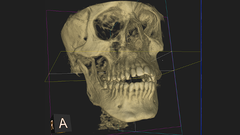
The mouth is the window into human health. This course provides an overview of dental medicine to engage, educate, excite and assist you in improving the oral health of your patients and members of your community.

This course will introduce students to architectural design and computation through the use of computer modeling, rendering and digital fabrication. The course focuses on teaching architectural design with CAD drawing, 3-D modeling, rendering and rapid prototyping. Students will be required to build computer models that will lead to a full package of architectural explorations with computers. Each semester we will explore the design process of a particular building type and building material.
The course also investigates a few design processes of selected architects. The course is critical of design principles and building production methods. Student assignments are graded based on the quality of design, representation and constructability. Great design input is always encouraged.

This subject explores the varied nature and practice of computation in design. We will view computation and design broadly. Computation will include both work done on the computer (digital computing) and by-hand. Design will include both the process of making designs and artifacts, as well as the designs and artifacts themselves. The aim of the course is to develop a view of computation and design beyond the specifics of techniques and tools, and a critical, self-awareness of our own approaches and metaphors for computation and design.

Want to take your design skills to the next level? Join a team of industry experts on this practical and informative journey from concept to conclusion.
This course will introduce you to the Design Thinking process and illustrate best practices for each step along the way. You’ll find this is an incredibly powerful tool for any field: from Engineering to Entrepreneurship and beyond.
You will utilize everything you learn in this course to create your very own project. In doing so, you will learn many practical and applicable skills such as user research and rapid prototyping, which will set you apart in your field.

In this free online course Introduction to Design Thinking and People Centred Design you will learn what design involves, how to examine design problems, and frame problems from a design point of view.<br /><br />The course begins by introducing you to design thinking for people centred design. You will learn about the seven mindsets for designers. You will learn about being people centred with your designs and how there is more than aesthetics to design, such as the perceived value that people place on what they see.<br /><br />Next, you will learn how to examine and reflect on design problems. You will be introduced to the questions you should ask when facing a design problem and how to examine a problem by looking at it from different angles. You will learn the importance of asking 'why' to explore a problem and its different aspects. Finally, you will learn about framing your problem from a design point of view.<br /><br />This free Alison Course will be of great interest to professionals working in the areas of product and service design and who would like to learn more about design thinking for people centred design. <br />

Have you ever wondered what babies are capable of from the moment they’re born?
Developmental psychology is the study of an individual’s social, emotional, cognitive, and biological development through his or her lifespan. The focus of this course will be from infancy to later life.
This psychology course will examine how babies and young children develop the ability to function in our world, including their attachment to their caregivers, and their ability to communicate and think about the world. We will also cover specific changes during adolescence and later life.
You should take this course if you are curious to understand what we know about infants’ abilities, how we know it, and about the important milestones that we all pass through as we develop.

This course is part of the Microsoft Professional Program Certificate in Front-End Web Development.
DevOps is the union of people, process and products to enable the continuous delivery of value to end users. It aims to create a culture and environment where building, testing, and releasing software can happen rapidly, frequently, and more reliably, so you can innovate like a startup and scale for the enterprise. By taking this introductory DevOps course, you’ll be able to define DevOps, understand why you need DevOps, and learn how you can get started with DevOps. You’ll learn the key ideas and techniques to bring development and operations together to produce higher-quality software and deliver it more quickly.

In the free course Introduction to DevOps you will be introduced to concepts and practices behind DevOps which can lead to improved customer satisfaction, improved productivity and efficiency, and the increased ability to build the right product by fast experimentation (DevOps is a clipped compound of the words 'development' and 'operations').<br /><br />The course begins by explaining what DevOps is and its benefits as a collaboration and communication methodology for both software developers and other information-technology (IT) professionals. You will learn about different aspects of DevOps such as how it can be used to establish a culture and environment where building, testing, and releasing software can happen rapidly, frequently, and more reliably. Testing occurs in almost every cycle of software development and is a useful way of knowing what works and your end user needs. You will learn about continuous integration and MTTR.<br /><br />The course then delves into continuous deployment and release management. You will gain knowledge about the three stages of deployment, how you can set up your own private agent, and the functionality of artifacts in DevOps. You will then learn about the process of configuration management, application performance monitoring, and availability monitoring. <br /><br />Finally, the course provides you with information on advanced processes of DevOps. You will learn about different advanced processes such as rollback and roll-forward, automated environment de-provisioning, and user telemetry. <br /><br />This course will be of great interest to software developers and other IT professionals who would like to learn more about DevOps and how it can bring significant benefits such as shorter time-to-market, better product quality, and more reliable releases.

"Introduction to DevOps: Transforming and Improving Operations” aims to help you develop a good working knowledge of the concept of DevOps, covering the foundation, principles, and practices of DevOps. This course will focus on the successful patterns used by high performance organizations over the past 10 years.
The core structure of this course is organized around the three basic principles of DevOps, otherwise known as the “Three Ways”. The “Three Ways” outline the values and philosophies that guide DevOps processes and practices:
- The First Way - This is a set of principles and practices that accelerate the delivery of IT services. Much of the material covered in this section will focus on Continuous Delivery and the extended principles and practices that lead to an accelerated flow.
- The Second Way - This is a set of principles and practices that amplify feedback loops. In this section we will cover the concepts of creating a problem solving culture, as well as understanding monitoring, as it applies to DevOps. A significant portion of this section will also include monitoring business metrics, and will also explain how change management applies to DevOps.
- The Third Way - The patterns discussed in this section cover the concepts of organizational learning and safety culture. Items like blameless postmortems, resilience engineering, and systems thinking as they apply to DevOps will be covered in this course.
The goal of this course is to cover an extensive study of all of the DevOps principles and practices known to date, such that you can create transformative DevOps initiatives with incredible outcomes. This course also sets up the foundation for implementing the tools and technology that will be needed for further success and execution of a DevOps transformation.
If you are a manager or a practitioner looking for guidelines on how to start transforming organizations, this course is for you. Upon completion, you should have a good understanding of the foundation, principles, and practices of DevOps. You should be able to continue your progress for an organizational transformation using the acquired skills set.

Phenomena as diverse as the motion of the planets, the spread of a disease, and the oscillations of a suspension bridge are governed by differential equations.MATH226x is an introduction to the mathematical theory of ordinary differential equations. This course follows a modern dynamical systems approach to the subject. In particular, equations are analyzed using qualitative, numerical, and if possible, symbolic techniques.
MATH226 is essentially the edX equivalent of MA226, a one-semester course in ordinary differential equations taken by more than 500 students per year at Boston University. It is divided into three parts. MATH226.1 is the first of these three parts.
In MATH226.1, we will discuss biological and physical models that can be expressed as differential equations with one or two dependent variables. We will discuss geometric/qualitative and numerical techniques that apply to all differential equations. When possible, we will study some of the standard symbolic solution techniques such as separation of variables and the use of integrating factors. We will also study the theory of existence and uniqueness of solutions, the phase line and bifurcations for first-order autonomous systems, and the phase plane for two-dimensional autonomous systems. The techniques that we develop will be used to analyze models throughout the course.
For additional information on obtaining credit through the ACE Alternative Credit Project, please visit here.

How do you design:
- A boat that doesn’t tip over as it bobs in the water?
- The suspension system of a car for a smooth ride?
- Circuits that tune to the correct frequencies in a cell phone?
How do you model:
- The growth of antibiotic resistant bacteria?
- Gene expression?
- Online purchasing trends?
The answer: Differential Equations.
Differential equations are the language of the models we use to describe the world around us. In this mathematics course, we will explore temperature, spring systems, circuits, population growth, and biological cell motion to illustrate how differential equations can be used to model nearly everything in the world around us.
We will develop the mathematical tools needed to solve linear differential equations. In the case of nonlinear differential equations, we will employ graphical methods and approximation to understand solutions.
Photo by user: bizoo_n. Copyright © 2016 Adobe Systems Incorporated. Used with permission.

Sounds and music are embedded in almost every aspect of daily life. This course will provide an overview of the fundamental principles of sound and the factors that determine our audio perception. It will also explore techniques of recording, mixing, processing, synthesis, sampling, analysis, and editing of digital audio.

This course is intended for students pursuing research projects at the Media Laboratory. Topics include Media Lab research areas, documenting research progress, ethical issues in research; patents, copyrights, intellectual property, and giving oral, written, and online presentations of results. A final oral presentation is required. Enrollment limited with preference given to students in the Media Arts and Sciences freshman program.

This course is a study of the history of theater art and practice from its origins to the modern period, including its roles in non-western cultures. Special attention is given to the relationship between the literary and performative dimensions of drama, and the relationship between drama and its cultural context.

In the free online course Introduction to Drones learn about the main components and parts that are found in drones and how they are built and prepared for flight. <br /><br />The course begins by introducing common acronyms that are used when talking about drones and it then describes the common components found in a drone. You will also learn about flight terms such as roll, pitch, yaw and throttle. <br /><br />Next, you will be brought through the steps in building a Rush 4 drone for the first time. You will learn about the process of preparing the motors, electronic speed controllers and power distribution board. You will be guided on how the first-person view is attached in order to film while you fly the drone. The course also reviews the process for the final assembly of a drone.<br /><br />Finally, you will learn about what steps need to be taken before you first fly a drone, in particular you will be introduced to the software tools that you can use to prepare your drone before flying.<br /><br />This free course will be of great interest to anyone who is interested in drones and would like to know how a typical drone is assembled.
Add to calendar

Trusted paper writing service WriteMyPaper.Today will write the papers of any difficulty.