

Online courses directory (10358)

This course is an introduction to the consideration of technology as the outcome of particular technical, historical, cultural, and political efforts, especially in the United States during the 19th and 20th centuries. Topics include industrialization of production and consumption, development of engineering professions, the emergence of management and its role in shaping technological forms, the technological construction of gender roles, and the relationship between humans and machines.
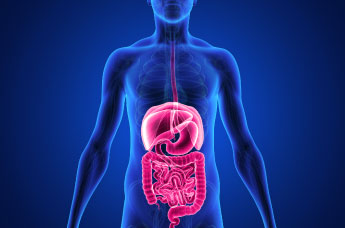
The human body cannot generate energy itself and so must obtain it from external sources. Energy from the sun is captured by plants, which in turn are eaten by animals. We humans use these plants and animals as food sources but, in order to obtain the energy we require from them, our food must be broken down into smaller molecules that the body can process. This is accomplished by a complex series of organs known as the digestive system. This free online human physiology course provides a clear introduction to the human digestive system. In this course you will learn how energy is obtained from food and be introduced to the different food types and vitamins. The course looks at the stages involved in ingestion and swallowing, describing how the stomach is designed for food storage and the initial processing of food. How the small and large intestines are structured to facilitate the digestion and absorption of nutrients is also examined. The course also provides an overview of the elimination of the waste products of digestion from the body. It outlines the special roles played by the liver and pancreas in the secretion of digestive enzymes. The mechanisms used by the digestive system to protect the body from infection are covered. This includes looking at the tonsils and other lymphoid tissue in the small and large intestine and explaining how the mammary gland protects the breastfeeding baby from infection. This free online human physiology course will be of great interest to healthcare professionals who would like a greater understanding of the human digestive system and its importance in human physiology, and to students of biology, medicine and nursing who would like to gain a greater knowledge and understanding of the structure and function of the human digestive system. <br />

The human muscular system plays a vital role in maintaining posture and is essential for movement of the body. This free online course enables the learner to explore the structure and functions of the human muscular system. It outlines the different types of muscles and the different makeup of these muscles. It explains the roles each muscle has in relation to movement of the body and explains how the nervous system controls muscular activity. This free online course will be of great interest to students of biology, anatomy, physiology and medicine, as well as healthcare professionals, who would like to gain a basic knowledge and understanding of the human muscular system.
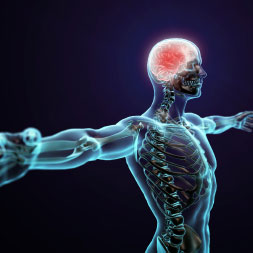
<p>This free online anatomy course will be of great interest to healthcare professionals who would like to obtain a greater knowledge and understanding of the human nervous system, and to anyone who would like to know more about the structure and function of the central and peripheral nervous systems. </p><br /> <p>The human nervous system is made up of two main parts - the central nervous system and the peripheral nervous system. The central nervous system is made up of the brain and spinal cord, while the peripheral nervous system consists of the nerves that extend to all the other organs in the body. The autonomic nervous system is part of the peripheral nervous system and comprises the sympathetic and parasympathetic nervous systems. </p><br /> <p>In an Introduction To The Human Nervous System you will learn about the structure and function of the central nervous system and the peripheral nervous system; the structure and function of the brain and spinal cord, and how these control and coordinate the sensory inputs and movements of the body. </p><br /> <p>The course also examines the peripheral nervous system and, in particular, the sympathetic and parasympathetic components of the autonomic nervous system. Nerve impulses and synaptic transmission are also explained in detail. </p>

Unlike most anatomical systems in the human body the reproductive systems in the male and female are completely different in structure and function but both work together to play a vital role in the production of an offspring. This free online course enables the learner to explore the structure and functions of the human reproductive system. It explains the necessity for reproduction and provides an understanding of how offspring develop. It describes the structure and functions of all the organs involved in the male and female reproductive systems and it outlines the different types of cells involved in the process of fertilization. It also describes the function of the mammary glands. Finally, it reviews the parturition of the fetus, describing the different phases up to child birth and post-child birth. This free online course will be of great interest to all students of biology, anatomy and physiology, and healthcare professionals who would like to further their knowledge and understanding of the human reproductive system and the processes involved in it.<br />

The respiratory system plays a vital role in the inhalation and exhalation of respiratory gases in the human body. It allows for the inhalation of gases such as oxygen in the air which can then be transported by the blood around the body to supply tissues and cells, and the exhalation of waste gases such as carbon dioxide into the air. This free online course enables the learner to explore the structure and functions of the human respiratory system. It outlines the different types of breathing and breathing cycles, and explains the different types of lung capacities. The course will be of great interest to students of medicine, biology, physiology and anatomy, as well as healthcare professionals who would like to gain a basic knowledge and understanding of the structure and function of the human respiratory system.<br />

Human sensory organs such as the eye, ear, nose and tongue are central in the processing of sensory information from all the stimuli that bombards the body continuously. Without sensory organs we would not be able to make sense of our environment and surroundings. This free online course enables the learner to explore the functions and structure of the human sensory organs. It outlines the different special senses such as vision, hearing, balance, smell and taste, and their corresponding receptor organs such as the eye, ear, nose and tongue. It also explains the different reflexes associated with each of these senses. This free online course will be of interest to students of biology, physiology, anatomy and medicine, as well as healthcare professionals who would like to gain a basic knowledge and understanding of the human sensory organs. <br />
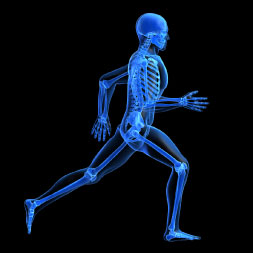
The human skeleton is an amazing and complex structure and is involved in vital functions such as supporting the bodily organs, providing points of attachment for the musculature system to allow movement, maintaining body shape, and protecting vital organs such as the brain and spinal cord. In this free online human anatomy course you will learn about the structure, development and function of bones within the human skeletal system. It outlines how bones develop from the fetal through to the adult stages of life. You will be introduced to the bones of the axial skeleton formed by the vertebral column, rib cage and skull. You will also learn about the appendicular skeleton formed by the pectoral girdle, the pelvic girdle and the upper and lower limbs. This free online human anatomy course will be of great interest to all healthcare professionals who would like to learn more about the human skeletal system and its biological functions, and to all learners who would like to learn more about the vital role it plays in maintaining human health.<br />

The Irish (or Gaelic) language is the official language of Ireland and is also recognised as a working language by the European Union. This free online course will introduce you to the Irish language and Irish language pronunciation skills and basic everyday vocabulary. You will learn how to pronounce words related to people, clothes, food, travel, directions, eating out, the body, places, numbers, colours, dates and times, as well as other general phrases. This free Irish language course will be of interest to all learners who would like to discover more about the Irish language and Irish Culture.<br />

For teachers and trainers to fulfil their instructional role most effectively, their teaching methods must be grounded in educational learning theory. Understanding the learning process is a key element of educational learning theory and provides a framework for teachers and trainers to plan, create and deliver effective lessons, and assess each student's learning. In this free online education course, you will be introduced to the learning process. The course begins by differentiating between teaching and learning, and by describing teachers’ and trainers’ perspectives on learning. The course provides details about two major learning theories: behaviourism and constructivism. Within the section on Behaviourism, operant conditioning and its implications for teaching are examined in detail. The section on Constructivism compares and contrasts two subtypes of constructivism: psychological constructivism and social constructivism. Finally, the implications of constructivism for teaching are discussed using two practical strategies. This free online education course will be of great interest to professionals in the education sector who would like a greater knowledge and understanding of the learning process that will enhance their teaching and training, and to all students who are interested in the process of how we learn.<br />

Three things are clear about today’s music industry: The consumption of music is expanding at the greatest rate in history and from the most portals ever imagined, the cost of producing music is decreasing, and the number of artists creating and seeking to expose their work and develop careers through the Internet has increased dramatically. As demand grows and Internet piracy wanes, ad-supported and subscription models will generate unprecedented revenues that will surpass even the best of past earnings. And, many astute “music industry-watchers” predict a steep rise in business activity and trade earnings by the end of the decade.
Whether you’re a music creator, consumer, or facilitator of this process, you’ll want to understand the history, underpinnings, and basics of the music business. This course has been developed to provide students with the latest instruction on the best way for creators, consumers, and facilitators to navigate the resurgence of one of the world’s most exciting industries: the music business. Course author John Kellogg—administrator, educator, entertainment lawyer, performer, and radio and television personality—offers students the opportunity to learn the fundamental principles of the developing new music business, for now and into the future.

Brought to you by the IEEE team that publishes the National Electrical Safety Code, this MOOC presents an introduction to the 2017 edition of the NESC and explains its purpose, scope, methodology, some basic rules and their application, as well as an overview of code adoption procedures, effective dates and more.
The course is intended for the general public and utility workers (employees and contractors) designing or implementing practical safeguards during the installation, operation, and maintenance of electric supply and communication facilities.
There are no pre-requisites for participants. Students and professionals, even those not in the electrical engineering field, will be able to access the course. Also, the participation of code enforcers, researchers, standards development representatives, and other interested parties is expected. Everyone is invited.
Verified students are eligible to earn Continuing Education Units (CEUs) and Professional Development Hours (PDHs), valid toward continuing education requirements for many professional certifications.

Discover how to integrate nature’s value into land-management decisions, based on case studies from the DoD.

Discover how to integrate nature’s value into decisions affecting the environment and human well-being.

Discover how to integrate nature’s value into decisions affecting the environment and human well-being.
This course provides a historical study of the origins of Christianity by analyzing the literature of the earliest Christian movements in historical context, concentrating on the New Testament. Although theological themes will occupy much of our attention, the course does not attempt a theological appropriation of the New Testament as scripture. Rather, the importance of the New Testament and other early Christian documents as ancient literature and as sources for historical study will be emphasized. A central organizing theme of the course will focus on the differences within early Christianity (-ies).

This course examines the Old Testament (Hebrew Bible) as an expression of the religious life and thought of ancient Israel, and a foundational document of Western civilization. A wide range of methodologies, including source criticism and the historical-critical school, tradition criticism, redaction criticism, and literary and canonical approaches are applied to the study and interpretation of the Bible. Special emphasis is placed on the Bible against the backdrop of its historical and cultural setting in the Ancient Near East.
This course provides an introduction to the profession of evaluation. Key topics include the various uses, purposes, and benefits of conducting evaluations, evaluation theory, evaluation design, evaluation methods, evaluation practice, and research on evaluation. Additionally, participants will be introduced to core concepts in international development evaluation, program design and redesign, developmental evaluation, and career opportunities in evaluation. Beyond providing an overview or refresher on some of the latest developments in the profession of evaluation, this course will also provide a basic foundation for intermediate and advanced level e-learning courses in evaluation. The course includes a series of videos, interactive activities, and quizzes. Participants may work through the course material at their own pace, but within the online discussion forum, they can also discuss course content with other students and the course teaching assistant. Prerequisites: There are no prerequisites. This is an introductory course and is designed for beginning evaluators. Required assignments: The course is entirely self-paced and self-guided. You will progress sequentially through 5 modules. In each module, you will watch a brief video, read any additional information provided, and take a short quiz. The quizzes are untimed and you may re-take them as many times as you need in order to pass. When you answer 80% of a module's quiz questions correctly, you may move on to the next module. Time Commitment: This is a short course designed to give you an introduction to the profession of evaluation. You should expect to spend approximately 5-6 hours total completing the course. Certificate of Completion: After taking the survey at the end of the course, you will be presented with a personalized, printable certificate of completion signed by the course instructors.

According to Islamic tradition, the Quran is not simply an inspired scripture. It is a divine book brought down from heaven by the angel Gabriel to the Prophet Muhammad, and its message is the key to heaven. Join us for an exploration of the scripture that is the word of God to over a billion people.
This course will introduce you to various aspects of the Quran, including its basic message, the historical context in which it originated, the diverse ways in which Muslims have interpreted it, and its surprisingly intimate relationship with the Bible. By the end of the course, you will gain an appreciation for the perspectives of Muslim believers and academic scholars alike on the origins and the meaning of the Islamic scripture. No background in Islam or Arabic is necessary for this course.
Join us as we discover a text which inspires many and remains at the heart of fascinating scholarly debates.

What's on the SAT? How do you study for it? Learn about the basics of the SAT and how to beat the test.
Add to calendar

Trusted paper writing service WriteMyPaper.Today will write the papers of any difficulty.