

Online courses directory (10358)
After Words: "The One World Schoolhouse: Education Reimagined". Sal's interview on the One World Schoolhouse (C-SPAN 2 After Words). Sal Khan on Piers Morgan Tonight (Oct 5, 2012). Radio Interview: Sal Khan on Diane Rehm (Oct 3, 2012). Radio Interview: Sal Khan on NPR's Talk of the Nation (October 23, 2012). Radio Interview: Sal Khan on Brian Lehrer (Oct 4, 2012). Sal Khan on CNN Starting Point (Oct 5, 2012). Authors@Google: Salman Khan. Radio Interview: Sal on AirTalk talking about his new book. After Words: "The One World Schoolhouse: Education Reimagined". Sal's interview on the One World Schoolhouse (C-SPAN 2 After Words). Sal Khan on Piers Morgan Tonight (Oct 5, 2012). Radio Interview: Sal Khan on Diane Rehm (Oct 3, 2012). Radio Interview: Sal Khan on NPR's Talk of the Nation (October 23, 2012). Radio Interview: Sal Khan on Brian Lehrer (Oct 4, 2012). Sal Khan on CNN Starting Point (Oct 5, 2012). Authors@Google: Salman Khan. Radio Interview: Sal on AirTalk talking about his new book.
Salman Khan talk at TED 2011 (from ted.com). 60 minutes: The future of education?. Salman Khan on Charlie Rose 2013. Bill Gates talks about the Khan Academy at Aspen Ideas Festival 2010. Salman Khan talk at TED 2011 (from ted.com). 60 minutes: The future of education?. Salman Khan on Charlie Rose 2013. Bill Gates talks about the Khan Academy at Aspen Ideas Festival 2010.
A Conversation with Elon Musk. MIT 2012 Commencement Address. Salman Khan at Rice University's 2012 commencement. Microsoft CEO Summit Innovation in Education. 2011 Roundtable at Stanford: Education Nation 2.0. 21st Century Challenges (Royal Geographic Society). Sal Khan (with a severe cold!) on Future Talk. A Conversation with Elon Musk. MIT 2012 Commencement Address. Salman Khan at Rice University's 2012 commencement. Microsoft CEO Summit Innovation in Education. 2011 Roundtable at Stanford: Education Nation 2.0. 21st Century Challenges (Royal Geographic Society). Sal Khan (with a severe cold!) on Future Talk.
Khan Academy Vision and Social Return. Videocast with Sal Khan: Effectively Using Khan Academy. KA on John Stossel Documentary. Khan Academy on Perry's Principles (6/2/2011). ED SESSION III with Sal Khan - Reactions in Idaho. Salman Khan on CNN. Salman Khan at TiEcon 2011. PBS NewsHour on the Khan Academy. Salman Khan Speaks at GEL (Good Experience Live) Conference. Salman Khan Talk at the MIT Club of Northern California. Salman Khan talk at Castilleja School on January 5th, 2010. Sal Khan Interview with IT Conversations - January 31,2010. Salman Khan interview with NPR's All Things Considered on 12/28/2009. Salman Khan Interview with Mixergy.com. Brian Lehrer Interview with Salman Khan. TEDxSanJoseCA - Salman Khan - (Sequel to talk at TED). Bay Area CBS Station with Salman Khan. Fareed Zakaria talks about Khan Academy on CNN GPS. Sal on Dylan Ratigan show. Khan Academy on the Gates Notes. LinkedIn Speaker Series Salman Khan. Forbes Names You Need To Know: Khan Academy. Salman Khan on Big Think. Khan Academy on 20/20 (Sep 2011). Salman Khan on Marketplace (NPR) on 5-24-2011. May 29th, 2011 CNN Piece. Sal during Education Week (Sep 2011) 1. Khan Academy on California Report (June 2011). Ideal Math and Science Class Time. Salman Khan on KQED MindShift. NPR Story on KA Los Altos Pilots (June 2011). Salman Khan interviewed on NPR's On Point. 21st Century Challenges (Royal Geographic Society). Answers to Questions from the Independent. Answers for Malibu Magazine. NCSU Answers. Questions from Superinteressante (8-22-2011). Brainwave Sep 2011. Center for Future of Museums. School Leadership Briefing Questions (Sep 12 2011) 2. School Leadership Briefing (Sep 12 2011). Tom Brokaw interviews Sal at Education Nation 2011. Financial Times October 2011. Verbal Answers to "Ask Me Anything" on Reddit. Khan Academy in Idaho. The Language Advocates. Jessica Yuen. Marcos Ojeda. Elizabeth Slavitt. Minli Virdone. Ideal Math and Science Class Time. Salman Khan on Charlie Rose. Nightline: Learn Everything, Online. Khan Academy on PBS NewsHour (Edited). Khan Academy on Nightly News. Early Show. Sal on ABC News. CNN: Google award to Khan Academy. Videocast with Sal Khan: Effectively Using Khan Academy. Overview of KhanAcademy.org. Khan Academy Vision and Social Return. Videocast with Sal Khan: Effectively Using Khan Academy. KA on John Stossel Documentary. Khan Academy on Perry's Principles (6/2/2011). ED SESSION III with Sal Khan - Reactions in Idaho. Salman Khan on CNN. Salman Khan at TiEcon 2011. PBS NewsHour on the Khan Academy. Salman Khan Speaks at GEL (Good Experience Live) Conference. Salman Khan Talk at the MIT Club of Northern California. Salman Khan talk at Castilleja School on January 5th, 2010. Sal Khan Interview with IT Conversations - January 31,2010. Salman Khan interview with NPR's All Things Considered on 12/28/2009. Salman Khan Interview with Mixergy.com. Brian Lehrer Interview with Salman Khan. TEDxSanJoseCA - Salman Khan - (Sequel to talk at TED). Bay Area CBS Station with Salman Khan. Fareed Zakaria talks about Khan Academy on CNN GPS. Sal on Dylan Ratigan show. Khan Academy on the Gates Notes. LinkedIn Speaker Series Salman Khan. Forbes Names You Need To Know: Khan Academy. Salman Khan on Big Think. Khan Academy on 20/20 (Sep 2011). Salman Khan on Marketplace (NPR) on 5-24-2011. May 29th, 2011 CNN Piece. Sal during Education Week (Sep 2011) 1. Khan Academy on California Report (June 2011). Ideal Math and Science Class Time. Salman Khan on KQED MindShift. NPR Story on KA Los Altos Pilots (June 2011). Salman Khan interviewed on NPR's On Point. 21st Century Challenges (Royal Geographic Society). Answers to Questions from the Independent. Answers for Malibu Magazine. NCSU Answers. Questions from Superinteressante (8-22-2011). Brainwave Sep 2011. Center for Future of Museums. School Leadership Briefing Questions (Sep 12 2011) 2. School Leadership Briefing (Sep 12 2011). Tom Brokaw interviews Sal at Education Nation 2011. Financial Times October 2011. Verbal Answers to "Ask Me Anything" on Reddit. Khan Academy in Idaho. The Language Advocates. Jessica Yuen. Marcos Ojeda. Elizabeth Slavitt. Minli Virdone. Ideal Math and Science Class Time. Salman Khan on Charlie Rose. Nightline: Learn Everything, Online. Khan Academy on PBS NewsHour (Edited). Khan Academy on Nightly News. Early Show. Sal on ABC News. CNN: Google award to Khan Academy. Videocast with Sal Khan: Effectively Using Khan Academy. Overview of KhanAcademy.org.
Khan Academy Vision. 60 minutes: Khan Academy's "world-changing" plan for schools. 60 minutes: School of the future. 60 minutes: Google's Eric Schmidt on Khan Academy. Salman Khan Describes Future Classrooms with Blended Learning. Sal Khan on Digital and Physical Learning. Khan Academy's Discovery Lab Offers Hands-On Learning. Year 2060: Education Predictions. The Gates Notes: Sal on Khan Academy. Khan Academy Computer Science Launch. Khan Academy Vision. 60 minutes: Khan Academy's "world-changing" plan for schools. 60 minutes: School of the future. 60 minutes: Google's Eric Schmidt on Khan Academy. Salman Khan Describes Future Classrooms with Blended Learning. Sal Khan on Digital and Physical Learning. Khan Academy's Discovery Lab Offers Hands-On Learning. Year 2060: Education Predictions. The Gates Notes: Sal on Khan Academy. Khan Academy Computer Science Launch.

Khan Academy at Eastside College Prep. Khan Academy in Los Altos School District. Khan Academy at Summit Prep. Khan Academy at KIPP. Khan Academy at Oakland Unity High School. Khan Academy at Marlborough School. 60 minutes: Khan Academy in the classroom. NPR Story on KA Los Altos Pilots (June 2011). The Gates Notes: Administrators in Los Altos. The Gates Notes: Teachers in Los Altos. The Gates Notes: Students in Los Altos. The Gates Notes: Insights into students' progress. Khan Academy at Eastside College Prep. Khan Academy in Los Altos School District. Khan Academy at Summit Prep. Khan Academy at KIPP. Khan Academy at Oakland Unity High School. Khan Academy at Marlborough School. 60 minutes: Khan Academy in the classroom. NPR Story on KA Los Altos Pilots (June 2011). The Gates Notes: Administrators in Los Altos. The Gates Notes: Teachers in Los Altos. The Gates Notes: Students in Los Altos. The Gates Notes: Insights into students' progress.

Duplicate Your Income Through TEACHING

This course is designed to develop undergraduate research writing skills by focusing on the expectations of this specialized form of writing.

After studying 100s of successful projects, we made over 250K on Kickstarter. Sharing is caring, and here's our formula.


Riveting talks by remarkable people, free to the world.

Discover little known tips and learn how to promote a book.

This course presents a unified treatment of phenomenological and atomistic kinetic processes in materials. It provides the foundation for the advanced understanding of processing, microstructural evolution, and behavior for a broad spectrum of materials. The course emphasizes analysis and development of rigorous comprehension of fundamentals. Topics include: irreversible thermodynamics; diffusion; nucleation; phase transformations; fluid and heat transport; morphological instabilities; gas-solid, liquid-solid, and solid-solid reactions.

This course deals with the experimental and theoretical aspects of chemical reaction kinetics, including transition-state theories, molecular beam scattering, classical techniques, quantum and statistical mechanical estimation of rate constants, pressure-dependence and chemical activation, modeling complex reacting mixtures, and uncertainty/sensitivity analyses. Reactions in the gas phase, liquid phase, and on surfaces are discussed with examples drawn from atmospheric, combustion, industrial, catalytic, and biological chemistry.

How To Succeed And Make Money Playing Simple Games Online

This seminar is designed to be an experimental and hands-on approach to applied chemistry (as seen in cooking). Cooking may be the oldest and most widespread application of chemistry and recipes may be the oldest practical result of chemical research. We shall do some cooking experiments to illustrate some chemical principles, including extraction, denaturation, and phase changes.
This seminar is designed to be an experimental and hands-on approach to applied chemistry (as seen in cooking). Cooking may be the oldest and most widespread application of chemistry and recipes may be the oldest practical result of chemical research. We shall do some cooking experiments to illustrate some chemical principles, including extraction, denaturation, and phase changes.

Use your kitchen as a laboratory to learn about chemistry using everyday chemicals.

Kursbeschreibung
Dieser MOOC bereitet die wissenschaftlichen Grundlagen des Klimawandels und dessen Folgen für Natur und Gesellschaft auf. Die Grundlage bildet der 5. Sachstandbericht des IPCC. Alle Interessierten können sich hier eingehend mit dem Thema verständlich aufbereiteter Wissenschaft beschäftigen. Lehrkräfte und Studierende können das Thema auch im Sinne einer Bildung für nachhaltige Entwicklung in den Unterricht aufnehmen und Energiemanager und -berater in Kommunen und Städten erhalten mit diesem Kurs eine einfache Möglichkeit, sich klimafit zu machen und bestehendes Wissen zu vertiefen.
Gefördert wird das Projekt von der Robert Bosch Stiftung.
Was lerne ich in diesem Kurs?
- Ein fundiertes Grundverständnis des Klimasystems und des Klimawandels erwerben und die Bedeutung komplexer Zusammenhänge im Klimasystem verstehen.
- Natürliche und anthropogene Einflüsse auf das Klimasystem sowie die natürliche interne Klimavariabilität unterscheiden können.
- Ursachen des anthropogenen Klimawandels verstehen.
- Verschiedene Szenarien für den Klimawandel im 21. Jahrhundert verstehen.
- Folgen des anthropogenen Klimawandels für Natur und Gesellschaft verstehen und einordnen sowie einen Überblick über Handlungsoptionen erwerben.
- Die wissenschaftliche Arbeitsweise in der Klimaforschung und ihre wichtigsten Methoden kennenlernen. Interessengeleitete Informationen von wissenschaftlich belastbarem Wissen unterscheiden können und inhärente Unsicherheiten richtig einordnen können.
- Verlässliche Quellen für wissenschaftliche Informationen und aufbereitete Darstellungen kennenlernen.
- Wissenschaftliche Institutionen in der Klimaforschung und Forscherpersönlichkeiten exemplarisch kennenlernen.
Welches Vorwissen brauche ich?
Du brauchst kein Vorwissen, um erfolgreich am Kurs teilzunehmen.
Kursstruktur
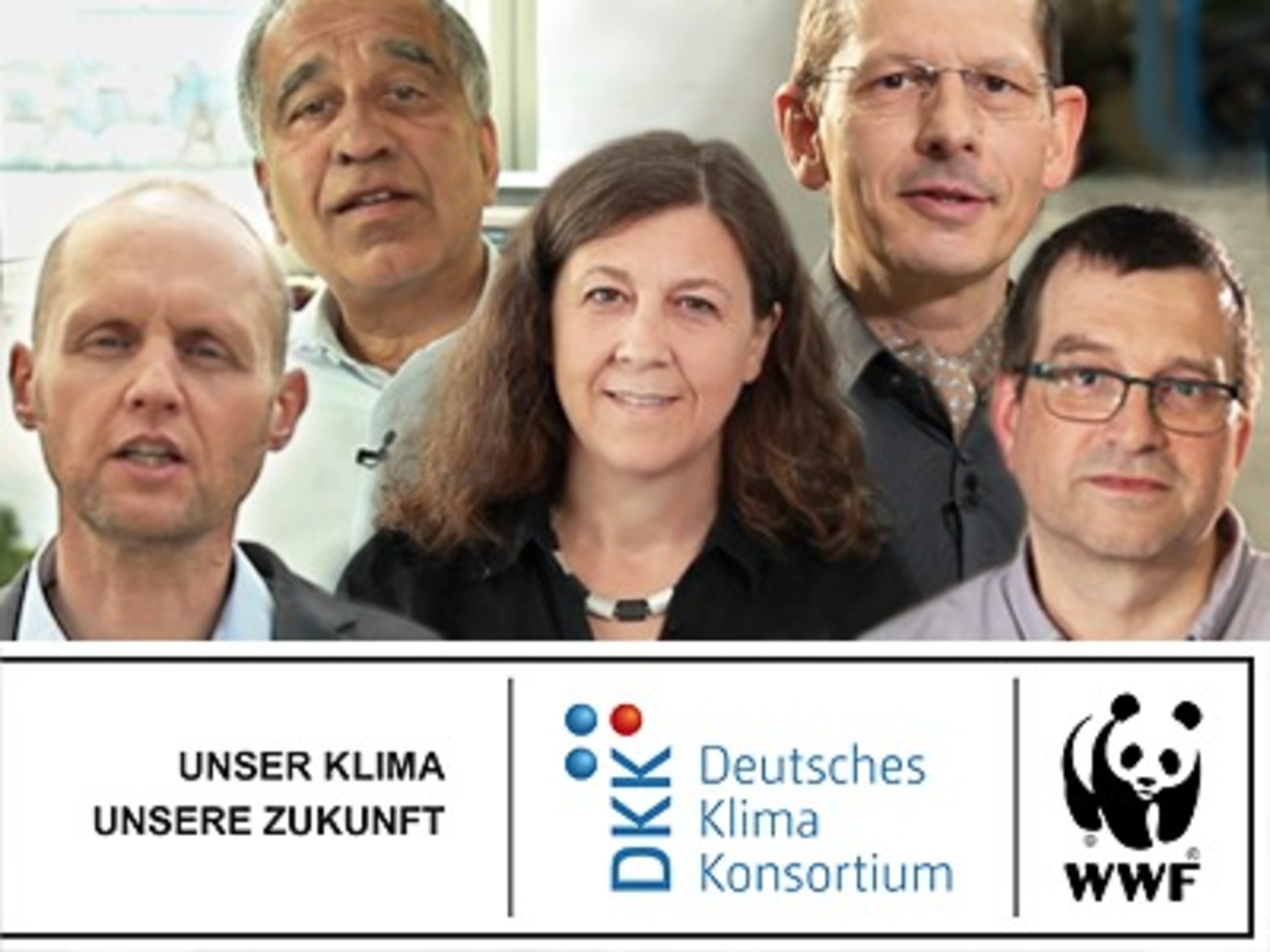
Hauptsprecher
• Prof. Dr. Mojib Latif, GEOMAR Helmholtz-Zentrum für Ozeanforschung Kiel
• Prof. Dr. Jochem Marotzke, Max-Planck-Institut für Meteorologie Hamburg
• Prof. Dr. Michael Schulz, MARUM – Zentrum für Marine Umweltwissenschaften an der Universität Bremen
• Prof. Dr. Hermann Lotze-Campen, Potsdam-Institut für Klimafolgenforschung
• Prof. Dr. Anita Engels, Exzellenzcluster „Integrated Climate System Analysis and Prediction“ (CliSAP) an der Universität Hamburg
Programmauswahl:
Einführung und Moderation: Dirk Steffens (Wissenschaftsjournalist und Filmemacher)
Kapitel 1: Klimasystem und Klimawandel
Dr. Paul Becker (Deutscher Wetter Dienst): Klima, Wetter, Witterung, Extremereignisse
Prof. Dr. Mojib Latif (GEOMAR): Das Klimasystem und seine Komponenten
Prof. Dr. Mojib Latif (GEOMAR): Wie funktioniert der (natürliche) Treibhauseffekt?
Prof. Dr. Mojib Latif (GEOMAR): Menschliche Emissionen verstärken den natürlichen Treibhauseffekt
Prof. Dr. Mojib Latif (GEOMAR): Weitere Antriebe und interne Variabilität
Dr. Sonja Peterson (Institut für Weltwirtschaft): Quellen+ Ursachen menschl.Treibhausgasemissionen
Dr. Sonja Peterson (Institut für Weltwirtschaft): Regionale Verteilung der Treibhausgasemissionen
Kapitel 2: Modelle und Szenarien
Prof. Dr. Jochem Marotzke (MPI met.): Die Modellierung des Klimasystems
Prof. Dr. Jochem Marotzke (MPI met.): Was ist ein Klimamodell?
Dr. Marco Giorgetta (MPI met.): Die wichtigsten Klimaszenarien
Dr. Tatiana Ilyina (MPI met.): Wie sieht das Klima in einer wärmeren Welt aus?
Prof. Dr. Jochem Marotzke (MPI met.): Warum 2 Grad?
Prof. Dr. Jochem Marotzke (MPI met.): Zusammenhang von Temperatur- und Emissionszielen
Dr. Christiane Textor (Deutsche IPCC-Koordinierungsstelle): Die Rolle des Weltklimarats IPCC
Kapitel 3: Klima der Vergangenheit
Prof. Dr. Michael Schulz (MARUM): Welche Informationen finden wir in einem Bohrkern?
Prof. Dr. Michael Schulz (MARUM): Vom Bohrkern zur Temperaturkurve der Vergangenheit
Dr. Ute Merkel (MARUM): Zusammenhang von CO2-Konzentration und Erdtemperatur
Prof. Dr. Gerald Haug (MPI Chemie): Klimawandel und die Maya
Dr. Ute Merkel (MARUM): Klimawandel der jüngeren Vergangenheit und der menschliche Einfluss
Prof. Dr. Michael Schulz (MARUM): Resümee: Botschaften aus der Klimageschichte
Kapitel 4: Folgen des Klimawandels
Prof. Dr. Hermann Lotze-Campen (PIK): Das Mosaik der Folgen des Klimawandels
Prof. Dr. Ulf Riebesell (GEOMAR): Ein Ökosystem unter Stress: Beispiel Ozeanversauerung
Prof. Dr. Hermann Lotze-Campen (PIK): Klimarisiken. Eine Definition
Prof. Dr. Hermann Lotze-Campen (PIK): Globale Folgen des Klimawandels in einzelnen Sektoren
Prof. Dr. Manfred Stock (PIK): Folgen des Klimawandels in Deutschland
Dr. Susanne Grossman-Clarke (PIK): Folgen des Klimawandels in Städten
Kapitel 5: Klimawandel und Gesellschaft
Prof. Dr. Anita Engels (CliSAP): Was bedeutet Klimawandel für die Gesellschaft und wie reagiert sie?
Prof. Dr. Beate Ratter (CliSAP): Anpassung an den Klimawandel
Prof. Dr. Michael Brzoska (CliSAP): Grenzen der Anpassung: Ressourcenkonflikte
Prof. Dr. Jürgen Scheffran (CliSAP): Grenzen der Anpassung: Migration
Prof. Dr. Hermann Held (CliSAP): Die 2 Grad-Grenze der Internationalen Klimapolitik
Prof. Dr. Anita Engels (CliSAP): Erfolge und Herausforderungen der Internationalen Klimapolitik
Prof. Dr. Hermann Held (CliSAP): Optionen und Instrumente im globalen Klimaschutz
Prof. Dr. Anita Engels (CliSAP): Europäische und deutsche Klimapolitik
Abschlussprüfung
Teilnehmer, die sich mit dem Zertifikats-Track angemeldet haben, können die Prüfung zwischen dem 05-19. Juli ablegen.
Add to calendar

Trusted paper writing service WriteMyPaper.Today will write the papers of any difficulty.