

Online courses directory (10358)

Learn How To Break And Dominate Linkedin!

We have built this course for beginners who have no experience with the Linux system and the command-line interface. In this course, you'll learn the basics of the command line interface of a Linux server: the terminal and shell (GNU Bash). This course includes an introduction to files and directories in the Linux filesystem.

Introduction to the basics of the linux command line, and learn how to create your own commands

Linux professionals are in high demand with >50K open jobs today. 97% of hiring managers want Linux talent because Linux is the #1 Internet, Cloud, mobile and CE OS.
Show employers you have the skills and the knowledge to be a top sysadmin with the Linux Foundation Certified System Administrator (LFCS).
This Linux course is for those just starting their career in IT as well as professionals with experience on other operating systems who want to add Linux to their portfolio.
This sysadmin course will help you develop the fundamental skills that employers look for in entry level Linux System Administrators by focusing heavily on hands-on practice via nearly 100 lab exercises.
Entry level certification is the best way for candidates who are new to Linux to show their capability. After finishing the course on edX, learners will be able to register for LFCS Exam for free. You will then have 12 months to complete the exam from registration date. You can also take advantage of a free exam retake, if needed.
Topics covered in the course include:
- System startup and kernel basics
- Working with disks and filesystems
- Process management and system monitoring
- Package management systems
- User and Group permissions
- Security and authentication
- Network addresses and devices
- Troubleshooting and system rescue
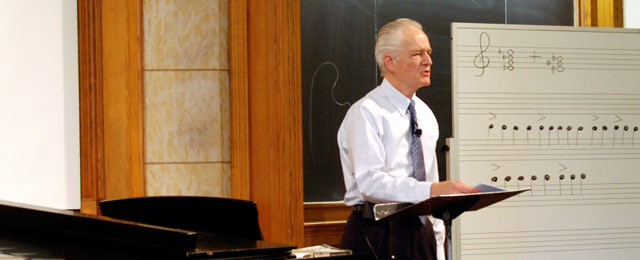
This course fosters the development of aural skills that lead to an understanding of Western music. The musical novice is introduced to the ways in which music is put together and is taught how to listen to a wide variety of musical styles, from Bach and Mozart, to Gregorian chant, to the blues.

The 15.821 and 15.822 Sequence
Marketing research may be divided into methods that emphasize understanding "the customer" and methods that emphasize understanding "the market." This course (15.821) deals with the customer and emphasizes qualitative methods (interviews, focus groups, Voice of the Customer, composing questions for a survey). The companion course (15.822) deals with the market and emphasizes quantitative methods (sampling, survey execution, quantitative data interpretation, conjoint analysis, factor analysis).
The methods covered in 15.821 are often used in the "front-end" of market research project, whose second-stage is a quantitative survey. The quality of information gathered in the second-stage is greatly enhanced in this way.
15.821 is designed for the nonspecialist, e.g., someone planning a career in general management, product or project management, R&D, advertising, or entrepreneurship. 15.822 teaches analytical techniques that are standard in consulting or marketing research, and is ideally suited for students planning careers in those fields.

Learn the ideas and vocabulary for listening to world music, and examine the music of several world music cultures and how they have entered into mainstream popular culture.

This course is designed for high-intermediate ESL students who need to develop better listening comprehension and oral skills, which will primarily be achieved by detailed instructions on pronunciation. Our focus will be on (1) producing accurate and intelligible English, (2) becoming more comfortable listening to rapidly spoken English, and (3) learning common expressions, gambits, and idioms used in both formal and informal contexts.
This course is designed for high-intermediate ESL students who need to develop better listening comprehension and oral skills, which will primarily be achieved by detailed instructions on pronunciation. Our focus will be on (1) producing accurate and intelligible English, (2) becoming more comfortable listening to rapidly spoken English, and (3) learning common expressions, gambits, and idioms used in both formal and informal contexts.

This course is designed for high-intermediate ESL students who need to develop better listening comprehension and oral skills, which will primarily be achieved by detailed instructions on pronunciation. Our focus will be on (1) producing accurate and intelligible English, (2) becoming more comfortable listening to rapidly spoken English, and (3) learning common expressions, gambits, and idioms used in both formal and informal contexts.

Alienation, overcrowding, sensory overload, homelessness, criminality, violence, loneliness, sprawl, blight. How have the realities of city living influenced literature's formal and thematic techniques? How useful is it to think of literature as its own kind of "map" of urban space? Are cities too grand, heterogeneous, and shifting to be captured by writers? In this seminar we will seek answers to these questions in key city literature, and in theoretical works that endeavor to understand the culture of cities.
Alienation, overcrowding, sensory overload, homelessness, criminality, violence, loneliness, sprawl, blight. How have the realities of city living influenced literature's formal and thematic techniques? How useful is it to think of literature as its own kind of "map" of urban space? Are cities too grand, heterogeneous, and shifting to be captured by writers? In this seminar we will seek answers to these questions in key city literature, and in theoretical works that endeavor to understand the culture of cities.

How does one writer use another writer's work? Does it matter if one author has been dead 300 years? What difference does it make if she's a groundbreaking twentieth-century feminist and the writer she values has come to epitomize the English literary tradition? How can a novelist borrow from plays and poems? By reading Virginia Woolf's major novels and essays in juxtaposition with some of the Shakespeare plays that (depending on one's interpretation) haunt, enrich, and/or shape her writing, we will try to answer these questions and raise others. Readings in literary criticism, women's studies, and other literary texts will complement our focus on the relationship--across time, media, and gender--between Shakespeare and Woolf. As a seminar, we will work to become more astute readers of literature within its historical, artistic, and political contexts, and consider how literature both reflects and contributes to these societal frameworks. Central texts will include Shakespeare's Othello, Antony and Cleopatra, Cymbeline, and The Winter's Tale, and Woolf's A Room of One's Own, Mrs. Dalloway, Orlando, To the Lighthouse, The Waves, and Between the Acts. This subject is an advanced seminar in both the Literature and the Women's Studies Program.
How does one writer use another writer's work? Does it matter if one author has been dead 300 years? What difference does it make if she's a groundbreaking twentieth-century feminist and the writer she values has come to epitomize the English literary tradition? How can a novelist borrow from plays and poems? By reading Virginia Woolf's major novels and essays in juxtaposition with some of the Shakespeare plays that (depending on one's interpretation) haunt, enrich, and/or shape her writing, we will try to answer these questions and raise others. Readings in literary criticism, women's studies, and other literary texts will complement our focus on the relationship--across time, media, and gender--between Shakespeare and Woolf. As a seminar, we will work to become more astute readers of literature within its historical, artistic, and political contexts, and consider how literature both reflects and contributes to these societal frameworks. Central texts will include Shakespeare's Othello, Antony and Cleopatra, Cymbeline, and The Winter's Tale, and Woolf's A Room of One's Own, Mrs. Dalloway, Orlando, To the Lighthouse, The Waves, and Between the Acts. This subject is an advanced seminar in both the Literature and the Women's Studies Program.

Topic: The English sense of humor. This course examines English literature across genre and historical periods. It is designed for students who want to study English literature or writing in some depth, or to know more about English literary culture and history. Students will also learn about the relationships between literary themes, forms, and conventions and the times in which they were produced. Materials include: Medieval tales, riddles, and character sketches; Renaissance lyrics and a play, 18th-century satires in words and images, 19th century irony, modern stories and film.

El curso Literatura y cultura tradicional de México, impartido por el El Colegio de México, te llevará por un recorrido que atraviesa las principales manifestaciones de la cultura tradicional mexicana para conocer sus raíces, antecedentes e incluso sus expresiones más modernas.
Durante estas seis semanas, Aurelio González, doctor en Literatura Hispánica y miembro de la Academia Mexicana de la Lengua, nos llevará a conocer los aspectos más relevantes de estas expresiones tradicionales de México:
- Cuentos tradicionales
- Canciones y bailes
- Corridos
- Fiestas, conmemoraciones y sus textos
- Leyendas
- Costumbres y artesanía
Cada uno de los módulos se acompañará de materiales visuales, textuales o bibliográficos.
El curso Literatura y cultura tradicional de México te llevará por un recorrido que atraviesa las principales manifestaciones de la cultura tradicional mexicana para conocer sus raíces, antecedentes e incluso sus expresiones más modernas.

The study of literary texts can be dramatically enriched if one takes into account the material form in which they are presented to the reader. In this course, we will focus on the relationships between the text and the other elements that may surround it (like illustrations) or between the text and the various material forms that shape it (like the digital hypertext format).

The aim of this subject is to acquaint the student with some important works of systematic ethical philosophy and to bring to bear the viewpoint of those works on the study of classic works of literature. This subject will trace the history of ethical speculation in systematic philosophy by identifying four major positions: two from the ancient world and the two most important traditions of ethical philosophy since the renaissance. The two ancient positions will be represented by Plato and Aristotle, the two modern positions by Immanuel Kant and John Stuart Mill. We will try to understand these four positions as engaged in a rivalry with one another, and we will also engage with the philosophy of Thomas Hobbes, which offers a bridge between ancient and modern conceptions and provides a source for the rivalry between the viewpoints of Kant and Mill. Further, we will be mindful that the modern positions are subject to criticism today by new currents of philosophical speculation, some of which argue for a return to the positions of Plato and Aristotle.

A journey through the literature of English country houses from the time of Thomas More to Oscar Wilde

Our subject is the ethics of leadership, an examination of the principles appealed to by executive authority when questions arise about its sources and its legitimacy. Most treatments of this subject resort to case-studies in order to illustrate the application of ethical principles to business situations, but our primary emphasis will be upon classic works of imaginative literature, which convey more directly than case-studies the ethical pressures of decision-making. Readings will include works by Shakespeare, Sophocles, Shaw, E.M. Forster, Joseph Conrad, George Orwell, Fyodor Dostoyevsky, and Henrik Ibsen, among others. Topics to be discussed include the sources of authority, the management of consensus, the ideal of vocation, the ethics of deception, the morality of expediency, the requirements of hierarchy, the virtues and vices of loyalty, the relevance of ethical principles in extreme situations.
Add to calendar

Trusted paper writing service WriteMyPaper.Today will write the papers of any difficulty.