

Online courses directory (10358)
Fractional reserve banking and the money supply. Overview of Fractional Reserve Banking. Weaknesses of Fractional Reserve Lending. Full Reserve Banking. Money Supply- M0 M1 and M2. Simple Fractional Reserve Accounting part 1. Simple Fractional Reserve Accounting (part 2). Interest as Rent for Money. Money Supply and Demand Impacting Interest Rates. Overview of Fractional Reserve Banking. Weaknesses of Fractional Reserve Lending. Full Reserve Banking. Money Supply- M0 M1 and M2. Simple Fractional Reserve Accounting part 1. Simple Fractional Reserve Accounting (part 2). Interest as Rent for Money. Money Supply and Demand Impacting Interest Rates.
Fractional reserve banking and the money supply. Overview of Fractional Reserve Banking. Weaknesses of Fractional Reserve Lending. Full Reserve Banking. Money Supply- M0 M1 and M2. Simple Fractional Reserve Accounting part 1. Simple Fractional Reserve Accounting (part 2). Interest as Rent for Money. Money Supply and Demand Impacting Interest Rates. Overview of Fractional Reserve Banking. Weaknesses of Fractional Reserve Lending. Full Reserve Banking. Money Supply- M0 M1 and M2. Simple Fractional Reserve Accounting part 1. Simple Fractional Reserve Accounting (part 2). Interest as Rent for Money. Money Supply and Demand Impacting Interest Rates.

This course presents a challenging multi-dimensional perspective on the causes of human disease and mortality. The course focuses on analyses of major causes of mortality in the US since 1900: cancer, cardiovascular and cerebrovascular diseases, diabetes, and infectious diseases. Students create analytical models to derive estimates for historically variant population risk factors and physiological rate parameters, and conduct analyses of familial data to separately estimate inherited and environmental risks. The course evaluates the basic population genetics of dominant, recessive and non-deleterious inherited risk factors.

Throughout the 1940s and 1950s, the Western was the most popular film genre in the United States. This course offers fascinating insights into American culture and the American frontier. Saddle up and ride with us into the Hollywood West.

This course begins with a comparative review of conventional and advanced multiple attribute decision making (MADM) models in engineering practice. Next, a new application of particular MADM models in reliable material selection of sensitive structural components as well as a multi-criteria Taguchi optimization method is discussed. Other specific topics include dealing with uncertainties in material properties, incommensurability in decision-makers opinions for the same design, objective ways of weighting performance indices, rank stability analysis, compensations and non-compensations.
This course is offered during the Independent Activities Period (IAP), which is a special 4-week term at MIT that runs from the first week of January until the end of the month.
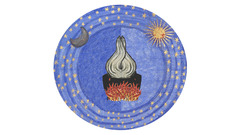
Want to learn about magic in the Middle Ages? Witches, heretics, inquisitors, the Holy Grail, alchemy, relics and much more are waiting for you in this course!

Spiritual, magical, and "occult" aspects of human behavior in anthropological and historical perspective: magic, ritual curing, trance, spirit possession, sorcery, and accusations of witchcraft. Material drawn from traditional nonwestern societies, medieval and early modern Europe, and colonial and contemporary North America.

This course will cover the following topics:
- Magnetostatics
-
Origin of magnetism in materials
-
Magnetic domains and domain walls
-
Magnetic anisotropy
-
Reversible and irreversible magnetization processes
-
Hard and soft magnetic materials
-
Magnetic recording
Special topics include magnetism of thin films, surfaces and fine particles; transport in ferromagnets, magnetoresistive sensors, and amorphous magnetic materials.

In this engineering course, you will learn about magnetic materials and devices. Applications presented include magnetic data storage, motors, transformers, and spintronics.
This course is part of a three-part series, which explains the basis of electrical, optical, and magnetic properties of materials including semiconductors, metals, organics, and insulators. We will show how devices are built to take advantage of these properties. This is illustrated with a wide range of devices, placing a strong emphasis on new and emerging technologies.
Part 1 - 3.15.1x: Electronic Materials and Devices
Part 2 - 3.15.2x: Optical Materials and Devices

This course is an introduction to basic NMR theory. Examples of biochemical data obtained using NMR are summarized along with other related experiments. Students participate in detailed study of NMR imaging techniques, including discussions of basic cross-sectional image reconstruction, image contrast, flow and real-time imaging, and hardware design considerations. Exposure to laboratory NMR spectroscopic and imaging equipment is included.

Modern living has introduced many new home appliances to the average home. From electric kettles to juice mixers, our homes are now full of electrical home appliances we say we cannot do without. However, home appliances often breakdown when not cared for or serviced on a regular basis. When this happens we usually call in a professional to service the home appliance which can very often be expensive no matter how small the task at hand. This free online home appliance course discusses some of the major home appliances commonly used today and how they should be used and cared for. With step by step demonstrations on how to service and care for each of the home appliances discussed, this course will be of great interest to budding DIY enthusiasts looking to do the work themselves. This free online home appliance course will also be of interest to professional service staff wishing to refresh their knowledge of home appliance care and maintenance along with the average lay person who wishes to know more about when and how often their home appliance should be serviced.<br />

This seminar provides intensive study of exciting texts by four influential American authors. In studying paired works, we can enrich our sense of each author's distinctive methods, get a deeper sense of the development of their careers, and shake up our preconceptions about what makes an author or a work "great." Students will get an opportunity to research an author in depth, as well as making broader comparisons across the syllabus.
This seminar provides intensive study of exciting texts by four influential American authors. In studying paired works, we can enrich our sense of each author's distinctive methods, get a deeper sense of the development of their careers, and shake up our preconceptions about what makes an author or a work "great." Students will get an opportunity to research an author in depth, as well as making broader comparisons across the syllabus.

hƿæt ƿe gardena in geardagum þeodcyninga þrym gefrunon hu ða æþelingas ellen fremedon…. Those are the first words of the Old English epic Beowulf, and in this class you will learn to read them.
Besides being the language of Rohan in the novels of Tolkien, Old English (also called Anglo-Saxon) is a language of long, cold, and lonely winters; of haunting beauty found in unexpected places; and of unshakable resolve in the face of insurmountable odds.
It is, in short, the perfect language for MIT students.
After learning the basics of grammar and vocabulary, we will read not just excerpts from the great Beowulf but also heartrending laments (The Wanderer, The Wife's Lament), an account of the Crucifixion as narrated by the Cross itself (The Dream of the Rood), and a host of riddles whose solutions range from the sacred to the obscene but are always ingenious. We will also try our hand at composing our own sentences—and maybe even poems—in Old English.

Illustrates the principles of public health applied to depressive disorder, including principles of epidemiology, transcultural psychiatry, health services research, and prevention.

In this class, you will read, think about, and (I hope) enjoy important examples of what has become one of the most popular literary genres today, if not the most popular: the novel. Some of the questions we will consider are: Why did so many novels appear in the eighteenth century? Why were they—and are they—called novels? Who wrote them? Who read them? Who narrates them? What are they likely to be about? Do they have distinctive characteristics? What is their relationship to the time and place in which they appeared? How have they changed over the years? And, most of all, why do we like to read them so much?

This subject traces the history of the European novel by studying texts that have been influential in connection with two interrelated ideas. (1) When serious fiction deals with matters of great consequence, it should not deal with the actions of persons of consequence—kings, princes, high elected officials and the like—but rather with the lives of apparently ordinary people and the everyday details of their social ambitions and desires. To use a phrase of Balzac's, serious fiction deals with "what happens everywhere". (2) This idea sometimes goes with another: that the most significant representations of the human condition are those dealing with persons who try to compel society to accept them as its destined agent, despite their absence of high birth or inheritance.

This class does intensive close study and analysis of historically significant media "texts" that have been considered landmarks or have sustained extensive critical and scholarly discussion. Such texts may include oral epic, story cycles, plays, novels, films, opera, television drama and digital works. The course emphasizes close reading from a variety of contextual and aesthetic perspectives. The syllabus varies each year, and may be organized around works that have launched new modes and genres, works that reflect upon their own media practices, or on stories that migrate from one medium to another. At least one of the assigned texts is collaboratively taught, and visiting lectures and discussions are a regular feature of the subject.

This course introduces students to twenty-four of the greatest mo(nu)ments in the history of Western art, and the forces that shaped the larger history of Western culture. Two dozen key monuments in different media, including visual arts, music and literature, will provide the focus for an evolving and ever more widely ranging discourse concerning the ways in which we define art. We will examine the way art has been (and can be) interpreted and re-interpreted; the infinitely complex relationships between art and the artist and the viewer; and the time and place in which it is made and the time and place in which it is subsequently seen, assessed, and interpreted.
The course begins with an examination of the fifth century BC Parthenon (1) on the Acropolis at Athens, the greatest example of Greek classical architecture and sculpture, followed by a discussion of the Hellenistic sculpture, Laokoön (2), a discussion that expands the notion of classicism and entails thoughtful consideration of the rapport between art and human suffering.
The Roman Pantheon (3), Emperor Hadrian’s temple to the planetary deities, by many scholars identified as the most perfect building in the world, will be the focus of the second session, leading to an examination of the sixth-century AD mosaics at San Vitale in Ravenna (4).
The Early Middle Ages in Europe will focus on the Lindisfarne Gospels (5), while the Sainte Chapelle (6) in Paris will be the conduit for a conversation on the Medieval ecclesiastical interior.
The Renaissance will pit Leonardo’s Last Supper (7) against Titian’s Rape of Europa (8) and Michelangelo’s David (9); Palladio’s Villa Rotonda (10), Caravaggio’s Beheading of Holofernes (11), and Gianlorenzo Bernini’s Cornaro Chapel (12) will extend that discussion into the Baroque period.
Northern art will be discussed in a session that moves from Jan van Eyck’s Ghent Altarpiece (13) to the etchings of Albrecht Durer (14) and the Bathsheba of Rembrandt (15). The complex of absolutist complexes that is the palace of Versailles (16) will be viewed from the perspective of Goya, as introduced by his Self Portrait with Doctor Arrieta (17).
Jacques Louis David’s Oath of the Horatii (17) will be viewed against the backdrop of the ancient regime. Romantic and Realist alternatives to Neoclassicism will be found in the “trialogue” between Thomas Jefferson’s Monticello (18), Gericault’s Raft of the Medusa (19) and Courbet’s Burial at Ornans (20). Monet’s Impression: Sunrise of 1872 (21) is the opening of a session which ends with a comparison of the Eiffel Tower (22) and the Ferris Wheel in Chicago (23).
The last session will consider a work by Jackson Pollock (24) as representative of the Modern notion of the end of the hegemony of traditional representation.

Learn how to manage Saga Swell from the founder to boost your audience by being more organized and writing consistently.
Add to calendar

Trusted paper writing service WriteMyPaper.Today will write the papers of any difficulty.