

Online courses directory (10358)

Everyday we are bombarded with the word "global" and encouraged to see globalization as the quintessential transformation of our age. But what exactly does "globalization" mean? How is it affecting the lives of people around the world, not only in economic, but social and cultural terms? How do contemporary changes compare with those from other historical periods? Are such changes positive, negative or simply inevitable? And, finally, how does the concept of the "global" itself shape our perceptions in ways that both help us understand the contemporary world and potentially distort it? This course begins by offering a brief overview of historical "world systems," including those centered in Asia as well as Europe. It explores the nature of contemporary transformations, including those in economics, media & information technologies, population flows, and consumer habits, not through abstractions but by focusing on the daily lives of people in various parts of the world. This course considers such topics as the day-to-day impact of computers in Silicon Valley and among Tibetan refugees; the dilemmas of factory workers in the US and rural Java; the attractions of Bombay cinema in Nigeria, the making of rap music in Japan, and the cultural complexities of immigrant life in France. This course seeks not only to understand the various forms globalization takes, but to understand its very different impacts world-wide.

This course explores markets with frictions. The goal is to sharpen our economic reasoning, add a few twists that you are unlikely to have seen in other courses, and apply the methods to interesting phenomena. This should improve the way you think analytically about the economy, and help address interesting issues that come up in the real world.

The topic of marriage in the movies has always provided a fascinating reflection of changing social attitudes, shifting morals and gender roles. We will explore how films have defined marriage, identified seven core problems, and varied its three narrative components -- a couple, their problems, their situation -- from decade to decade from the silent to the modern era.

NASA is preparing for a manned mission to Mars in 2030. Will you be prepared to join the crew? In this course, participants will learn basic facts about Mars and the essentials humans need for survival on the planet.

Learn the principles of sound design and synthesis by mastering the most powerful and robust VST on the planet: MASSIVE
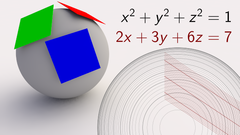
M2O2C2 provides a first taste of multivariable differential calculus. By introducing the machinery of linear algebra, this course provides helpful tools for understanding the derivative of a function of many variables.

Logistics and supply chain structures can be found in virtually any system. A supply chain is a complex environment with a multitude of forces and variables with various degrees of dependence. Unforeseen events are frequent and in order to achieve a competitive supply chain, constant supervision is needed.
In this business and management course, you will learn methods that are used to master control of supply chains, including how to forecast demand, how to determine the best order quantity for procurement, how to plan capacity and production and much more."
Many of the topics in the course will be illustrated using real companies and real logistics professionals as logistics is not a theoretical subject – it exists all around us – everywhere.
This MOOC is based on a widely popular university course that will give you a working knowledge on supply chain operations that can be applied in your organisation. By the end of this course, you will be able to better control and master your organisation’s system.
Regardless of your industry or organisation type, the concepts and methods from this course will help you become a logistics and supply chain professional. You will never look at a hotel breakfast buffet, a loading bay, a warehouse, a factory, an emergency room or even at a fast food restaurant the same way again…

Learn the 3 Golden Rules and 6 Principles of Polite Speaking in English.

An Introduction To Mastery As A Way Of Life

This six-week course is packed with essential information to maximize academic research processes. Current and prospective college students will learn strategies and best practices for using digital information to support academic work efficiently, effectively, and ethically. Course materials include links to open-access scholarly repositories, data archives, and other materials that are useful to all lifelong learners, regardless of your location in the universe.

Let us all Learn C/C++

1 solution for all problems of Excel and on all versions of Excel

For learners who have studied our first two French courses, this third course will further increase your understanding of the French language. You will build on your existing knowledge of French vocabulary and master important areas of grammar that will greatly improve your comprehension of the French language and your ability to communicate effectively with native French speakers. In this free online French language course you will be taken step by step through grammar topics such as using adverbs and prepositions, using relative and demonstrative pronouns and understanding the differences between 'depuis', 'pendant', 'pour' and 'il y a'. You will also cover a wide range of new topics and learn vocabulary related to jobs, professions, religion, law and order, driving and music to name just a few. This course will be of great interest to all learners of the French language who would like to take their knowledge and understanding to a new level and further deepen their comprehension of this language.<br />

File Transfer Protocol (FTP) is the standard network protocol which is used to transfer data from one host to another

Learn HTML5 using easy to follow and quick to master Edumobile way.

The definitive guide to iPhone programming.

Quick introduction to iPhone programming

By Jeff Zwiers, Sara Rutherford-Quach and Kenji Hakuta

This physics course offers a sophisticated view of quantum mechanics and its proper mathematical foundation. In this first module of three you will review the basics of wave mechanics and be introduced to the variational principle. You will learn about the technology of spin one-half states and spin operators and get an in-depth look into linear algebra to establish the mathematical foundation necessary to do quantum mechanics. This course concludes by developing the bra-ket notation of Dirac.
To follow this course you will need some basic familiarity with quantum mechanics. You must have seen the Schrödinger equation and studied its solutions for the square well potential, the harmonic oscillator, and the hydrogen atom. You must be proficient in calculus and have some knowledge of linear algebra.
Completing the 3-part Mastering Quantum Mechanics series will give you the necessary foundation to pursue advanced study or research at the graduate level in areas related to quantum mechanics.
Part 1: Wave Mechanics,
Part 3: Entanglement, and Angular Momentum.
The series will follow MIT’s on campus 8.05, the second semester of the three-course sequence on undergraduate quantum mechanics, and will be equally rigorous. 8.05 is a signature course in MIT's physics program and a keystone in the education of physics majors.
Learner Testimonial
“I’ve thought long and hard to come up with a better MOOC than this one (I’ve completed 25 of these things over the past 2 years) and can’t do it. 8.05x is #1 and I suspect will stay that way for some time to come.”
“Being an engineering student from India trying to shift to Physics, I am often faced with the requirement to study topics on my own. Very often this has led me to feel inadequate. 8.05x was the perfect opportunity for me to both gain knowledge and evaluate my understanding on a high quality international platform. It has really exceeded my expectations. Now, at the end of fifteen weeks, I feel more confident and hopefully I am more knowledgeable.”

This physics course covers Heisenberg’s uncertainty principle and the concept of compatible operators. You will also learn about the Schrödinger and Heisenberg pictures of quantum mechanics and the coherent and squeezed states of the harmonic oscillator. The course concludes with two state systems and their applications to NMR and masers.
This is the second of three courses offering a sophisticated view of quantum mechanics and its proper mathematical foundation.
- Part 1: Wave Mechanics
- Part 2: Quantum Dynamics
- Part 3: Entanglement and Angular Momentum
To understand the material in this course you should have taken Mastering Quantum Mechanics Part 1: Wave Mechanics.
Completing the 3-part Quantum Mechanics series will give you the necessary foundation to pursue advanced study or research at the graduate level in areas related to quantum mechanics
The series will follow MIT’s on campus 8.05, the second semester of the three-course sequence on undergraduate quantum mechanics, and will be equally rigorous. 8.05 is a signature course in MIT's physics program and a keystone in the education of physics majors.
Learner Testimonials
“I’ve thought long and hard to come up with a better MOOC than this one (I’ve completed 25 of these things over the past 2 years) and can’t do it. 8.05x is #1 and I suspect will stay that way for some time to come.”
“Being an engineering student from India trying to shift to Physics, I am often faced with the requirement to study topics on my own. Very often this has led me to feel inadequate. 8.05x was the perfect opportunity for me to both gain knowledge and evaluate my understanding on a high quality international platform. It has really exceeded my expectations. Now, at the end of fifteen weeks, I feel more confident and hopefully I am more knowledgeable.”
Add to calendar

Trusted paper writing service WriteMyPaper.Today will write the papers of any difficulty.