

Online courses directory (10358)

This course features directed composition of larger forms of original writing involving voices and/or instruments. It includes a weekly seminar in composition for the presentation and discussion of work in progress. Students are expected to produce at least one substantive work, performed in public, by the end of the term. Contemporary compositions and major works from 20th-century music literature are studied.
This course features directed composition of larger forms of original writing involving voices and/or instruments. It includes a weekly seminar in composition for the presentation and discussion of work in progress. Students are expected to produce at least one substantive work, performed in public, by the end of the term. Contemporary compositions and major works from 20th-century music literature are studied.

An introduction to data mining through the lens of music information retrieval. Topics explored include classification (genre, mood, instrument), multi-label classification (tagging), and regression (emotion/mood).

You love music. You listen to music all the time. Maybe you sing, play an instrument, or compose music. You don’t need to have musical talent to use music to enhance your well being, and even your health.
Learn simple techniques to enrich your mind, body, and spirit through music. The methods can be applied in your daily life, particularly when you are feeling down or stressed out. Developed by a board-certified music therapist and a vocalist/pianist/composer/recording artist specializing in Indian music, these strategies combine science with the wisdom of Eastern philosophy.
In the course, discover how to unlock your creativity. You will learn not only how to listen to music in a new way, but also how to listen to the impact that music has on you. You will find out how to care for yourself by practicing coping techniques that are supported by music that is special to you.

This course is an introduction to selected musical traditions of West Africa. A variety of musical practices and their cultural contexts will be explored through listening, reading, and written assignments, with an emphasis on class discussion. The course includes in-class instruction in West African drumming, song and dance, as well as lecture-demonstrations by guest artists.
After an introductory unit, the course will be organized around four main geographical areas: Senegal, Mali, Ghana, and Nigeria. An in-depth study of music from these countries will be interspersed with brief overviews of Southern, Central, and East Africa.

This course focuses on Hindustani classical music of North India, and also involves learning about the ancient foundations of the rich classical traditions of music and dance of all Indian art and culture. Students explore the practice the ragas and talas through learning songs, dance, and drumming compositions, and develop insights through listening, readings, and concert attendance.

This course is a survey of perceptual and cognitive aspects of the psychology of music, with special emphasis on underlying neuronal and neurocomputational representations and mechanisms. Basic perceptual dimensions of hearing (pitch, timbre, consonance/roughness, loudness, auditory grouping) form salient qualities, contrasts, patterns and streams that are used in music to convey melody, harmony, rhythm and separate voices. Perceptual, cognitive, and neurophysiological aspects of the temporal dimension of music (rhythm, timing, duration, temporal expectation) are explored. Special topics include comparative, evolutionary, and developmental psychology of music perception, biological vs. cultural influences, Gestaltist vs. associationist vs. schema-based theories, comparison of music and speech perception, parallels between music cognition and language, music and cortical action, and the neural basis of music performance.

Based on the concepts and algorithms explored in the previous 2 courses, "Extracting Information from Music Signal" and "Music Data Mining", we show how more complete and complex music retrieval systems, tasks, and algorithms can be developed. More specifically we will look at how four complete music retrieval systems are put together: audio fingerprinting, query-by-humming, chord-detection, polyphonic music-score alignment, and a visual music browser based on self-organizing maps.

This course begins with the premise that the 1960s mark a great dividing point in the history of 20th century Western musical culture, and explores the ways in which various social and artistic concerns of composers, performers, and listeners have evolved since that decade. It focuses on works by classical composers from around the world. Topics include the impact of rock, as it developed during the 1960s - 70s; the concurrent emergence of post serial, neotonal, minimalist, and new age styles; the globalization of Western musical traditions; the impact of new technologies; and the significance of music video, video games, and other versions of multimedia. The course interweaves discussion of these topics with close study of seminal musical works, evenly distributed across the four decades since 1960; works by MIT composers are included.

Technology has greatly altered how we write, listen to and enjoy music. This music course will show you how to apply new technologies to your own creative practice. Music Technology Foundations draws on Adelaide’s world-class pioneering expertise in making electronic music, to provide a great foundation to a career in music and to enable any learner to use technology in creative ways.
In Music Technology Foundations, you’ll learn about the core principles of music technology, including sound, audio, MIDI, effects and sequencing. Each week, you’ll complete creative practical tasks in freeware and browser based apps, and you’ll share the music you make with the course instructors and fellow learners. This practical work is underpinned with historical context and essential theory, so that you can gain even greater insight into your music.

Explores the factors — musical and cultural — that led to the birth of American rock 'n' roll music in the early 1950s.

This class is an introduction to the analysis of tonal music. Students develop analytical techniques based upon concepts learned in 21M.301-21M.302. Students study rhythm and form, harmony, line and motivic relationships at local and large scale levels of musical structure. Three papers (totaling 20 pages, one to be revised) and one oral presentation are required.

In this course, students study concepts and practice techniques of improvisation in solo and ensemble contexts. The course examines relationships between improvisation, composition, and performance based in traditional and experimental approaches. Hands-on music making will be complemented by discussion of the aesthetics of improvisation. Weekly lab sessions support work on musical technique. Guest artist / lecturers will engage students through mini-residencies in jazz with film, Indian music, electronic music, and blending improvisation with classic music; and an accompanying concert series will feature these artists in performance. Open by audition to instrumental or vocal performers.
WHAT IS THIS COURSE ABOUT?
Have you ever wondered why 90% of musicians (and artists) don't make a living in the digital era - although they want to?
The answer is simple: they are still stuck in the last century mindset. The truth is, if you want to become a full-time artist doing what you love, you have to structure a business around your art, not just merely hope!
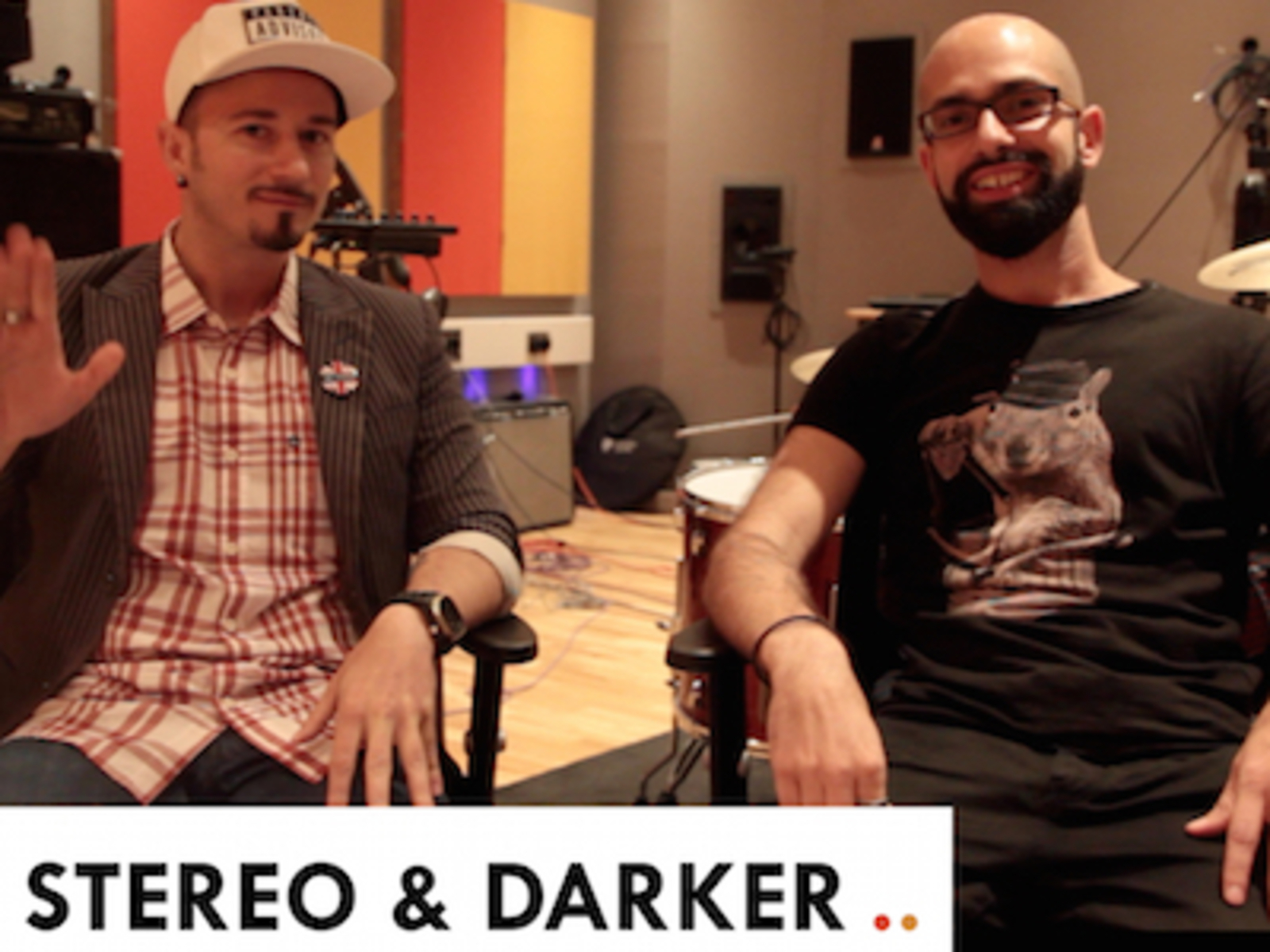
In this practical, 8-week course, two full-time practitioner musicians and academic educators, Tommy Darker and Stereo Mike, will guide you though the process of creating your very own business model, how to market yourself as a startup, how to be agile, motivated and productive, how to develop a work-in-progress brand, and how to adapt to the new mindset.
This is a course for all artists, and 'music' will be used as a case study. You will learn through practical assignments, so that you can implement what you learn in the real world, and get practical results.
This is the first MOOC in the world of its kind. It will be exciting. Shall we start?
WHO IS THIS COURSE FOR?
The course would be of interest to musicians and artists seeking entrepreneurial knowledge, as well as business practitioners working within an artistic context.
The specific target audience for the course includes practitioners in the field of music and arts, with an active interest in developing professional careers and becoming full-time artists.
WHAT DO I NEED TO KNOW?
There is no academic prerequisite necessary in order to be able to engage with and benefit from the course - just bring your appetite to learn.
However, an active musician or arts practitioner will be able to leverage the philosophy, practice and challenges set by directly applying the studied principles to their developing careers.
WHAT WILL I LEARN?
Upon completion of the course, the students should be able to:
1. Apply contemporary entrepreneurial approaches to their musical/artistic careers
2. Identify changing industry trends in order to define relevant opportunities for their practice
3. Balance artistic and business personal development, ensuring longevity
4. Discover scalable business models and recurring revenue streams
5. Produce actionable plans to exploit their art entrepreneurially, through practical assignments
6. Innovate, recognising future trends and technological progress
COURSE STRUCTURE
Week 1: Introduction
Historical Context | The New Ecosystem | Modern Concepts
Week 2 & 3: Business Models
Business Model Structure | Revenue models | Audience
Week 4: Lean Startup
Validated Learning | MVP | Prototyping | Management
Week 5: Agile Philosophy Principles
Productivity & Motivation | Startup Mindset | Communication
Week 6: Presence, Product, Process
Work-in-progress Brand | Demo | The Drip Method
Week 7: Digital Opportunities & Digital Paradigms
Power of Free | Digital-to-analogue | Network
Week 8: Deconstruction
Case Studies | Leadership & Innovation | What's Next?

Develop your understanding of Muslims and their faith through an exploration of communities in Britain.

My $5000/Month Amazon secret revealed.
This is a 3-week instructor-led course that will include a review of ethical principles and a description of an ethical decision-making model for health care professionals. Case studies and discussion will be the primary teaching route. Certificate route includes two short quizzes and a final assignment. Over the course of their careers, health care professionals face a variety of difficult decisions. At times, choosing between two courses of action presents an ethical dilemma. The health care professional must consider the consequences of each course of action. Simply following one's "gut" feeling is inappropriate and unprofessional. The purpose of this course is to develop core principles in philosophy and ethics to help health care professionals think about and evaluate their role in society.

How do computers work? What do computer scientists do? What does it take to make a computer or a computer program work? We answer these questions and more with MyCS: Computer Science for Beginners.
We believe that anyone can succeed in and enjoy computer science. This course is an early introduction to CS, designed for anyone who's completely new to the field. It explores a combination of the basic principles of how computers work and how we can use them to solve interesting problems and create amazing things. Lessons alternate between general exercises and assignments in Scratch, which offer a chance to both practice some basic concepts of computer programming and explore the many cool, creative, and useful applications of CS.
You don't need any CS or programming background to do this course - just a bit of basic math and a lot of creative thinking. The course is intended especially for middle school students and their teachers, but is good for learners of all ages.
This material is based upon work supported by the National Science Foundation under Grant No. 1240939. Any opinions, findings and conclusions or recommendations expressed in this material are those of the author(s) and do not necessarily reflect the views of the National Science Foundation (NSF).

Learn about MySQL and Databases with Bucky Roberts!

This course provides a conceptual study of integers and integer operations. Topics include integers, absolute value, exponents, square roots, perimeter and area of basic geometric figures, Pythagorean Theorem, and use of the correct order of operations.
Add to calendar

Trusted paper writing service WriteMyPaper.Today will write the papers of any difficulty.