

Online courses directory (10358)

Though accounting may seem like a dense and complex subject, this course is designed to present the accounting cycle in an accessible and logical manner. This course will provide you with a solid understanding of basic accounting principles and will introduce you to financial statement analysis. Please note that this course is the first of two courses on the principles of accounting and that each of these two courses is divided into 10 units. Each unit should take approximately three hours to complete and should be completed sequentially for the most logical progression of information. As you work through these units, you will encounter a range of examples and problem sets geared towards providing you with practical applications of the lessons you learn. By the end of this course, you will able to create accurate and appropriate financial statements to convey a company’s financial health. This course begins with an introduction to financial accounting and the various ways in which financial stat…
Management is an activity found in all organizations, made necessary by the need to determine the organization’s purpose and future activities, the nature of its organization and structure, to lead and motivate the workforce within the organization, and to evaluate and correct its course, if necessary. The organization accomplishes its purpose in part through its workforce, the people it employs. If you have just joined the ranks of management, you may need to quickly obtain hands-on knowledge for a brisk, successful start to your new position. Our objective in this course is to provide new supervisors or managers with just such basic, practical knowledge necessary for their new positions, such as making the transition to management, leadership, coaching, team building, communication skills, motivation and empowerment, organization, efficiency, time management, an appreciation for diversity, performance management, hiring, termination, discipline, decision making, and problem solving. The course will begi…
Welcome to the exciting world of Payroll Administration! What you’ll learn in this course is essential to your understanding of the human-resources concept of payroll as it is interpreted from a business perspective. In applying the theoretical principles of the course in real-world ways, you should gain a better understanding of yourself and your work environment. The goal of this course is to help you develop the fundamental skills critical to payroll operations, and to help you understand state and federal compliance. This will provide you with a foundation for becoming more versed on the depth of payroll as an intricate component of human-resource management, and business overall. Fundamentally, the concept of payroll is rooted in both human-resource management and accounting principles. From a human-resource management perspective, the concept of payroll embodies compliance, which includes the identification of the relationship between the employee and the employer. There are a number of…
The management and processing of information is an essential practice in a business environment. All organizations ranging from social groups, small businesses, non-profits, and large corporations have a need for information to be analyzed and processed. These organizations require that business analysts or other key employees demonstrate a mastery of information management and processing in order to address critical business problems such as business planning, inventory management, and organizational forecast planning. In particular, these skills are needed to perform data and information analyses and present the findings of such analyses to help guide business-related decisions. This course will provide you with a structured introduction to the key tools and techniques used in information management and processing. If you have ever been asked to organize information, analyze data, or create a presentation to help your organization make a business-related decision, then this course will help you develop or…
This course provides students with an introduction to the core technologies used to communicate information on the Web: Hypertext Markup Language (HTML) and Cascading Style Sheets (CSS). Whether managing an employer's website, producing an online resume, or starting a web-based business, knowing the fundamentals of how information is structured and presented on the internet is a crucial skill for the contemporary workplace. Today, many technologies exist to facilitate the creation and management of websites, including development environments like Adobe Dreamweaver and Content Management Systems like WordPress and Joomla! Even though mastery of the basics of HTML and CSS is easily attainable, these labor-saving technologies have discouraged many professionals from learning crucial coding skills. With a basic understanding of how HTML code is created and transformed, professionals are better able to produce or transform websites according to precise specifications, whether they use a fully-featured dev…
This class is intended for students who have a basic understanding of spreadsheets and are now ready to delve deeper into formatting, formulas and functions, multi-page spreadsheets, charting data, creating tables that have database features, and be introduced to pivot tables. This class was designed to be an active, hands-on class. You will be creating Excel® spreadsheets and have files to open and follow along as you progress through the units. This class is not intended for a specific occupation or activity, but when you are finished with this class, you will be able to use Excel® in a variety of circumstances to format and manipulate numerical data. Although the resources in this course use Microsoft Excel® 2010, it should be noted that all of the skills and tasks that you will be asked to complete can be done in any version of Excel®. If you stay flexible enough in your thinking and search out the commands and icons on whatever software you are using, you will succeed.
With the expansion of law and the legal process into so many areas of everyday life, the responsibilities of the legal profession have expanded to meet new challenges. For example, the advent of the Internet since the early 1990s has raised a multitude of new legal issues related to various areas of intellectual property, including copyright, patent law, and trademark law. In recognition of the fact that many law-related responsibilities can be handled by well-educated and trained non-lawyers, the legal profession has increasingly come to depend on the assistance of paralegals. Paralegals perform key functions within a law office from drafting legal documents to investigating cases and interviewing witnesses. While they are no replacement for lawyers, paralegals have become recognized as key components of a well-functioning legal office. This course will introduce you to the basic knowledge and skills required of paralegals. You will familiarize yourself with basics of the American legal system, a…
The purpose of Introduction to Human Resources Management is to provide a general overview of the concepts and applications of the many parts of Human Resources (HR). This course is for the entry level HR Generalist who wants to explore how the interdependence of the major topics in HR are created and implemented. Upon completion of this course, you will be able to apply your knowledge to real world HR issues. While general topics such as benefits and compensation will be covered in other Human Resource Management courses, this course will focus primarily on the employee life cycle and each of its phases. The employee life cycle is central to most of the functions and purposes of HR. It is important to start at the beginning of any life cycle in an effort to understand how each component is dependent on the next. To begin with, you will take a look at the history of HR and determine the major events and champion theorists who brought HR to its humble beginnings. The course will then cover the em…

The foundations of Pre-Algebra from The Khan Academy.

Review of basic arithmetic and introduction to algebraic concepts. Includes basic review of whole numbers and decimals, addition ,subtraction, multiplication and division of fractions, order of operations, and ratio and proportion...
Review of basic arithmetic and introduction to algebraic concepts. Includes basic review of whole numbers and decimals, addition ,subtraction, multiplication and division of fractions, order of operations, and ratio and proportion...

This free online course in Pre-Algebra mathematics for high school students will guide you through several different areas of mathematics such as integers, one-step equations, inequalities and equations, graphs and functions, percent, probabilities. There is also an introduction into geometry and right triangles. The course is divided into twelve modules and each module is divided into several lessons. Under each lesson you will find theory, examples and video lessons. This course is ideal for learners who want to gain a comprehensive knowledge and understanding of topics in pre-algebra which they can build on in later courses.
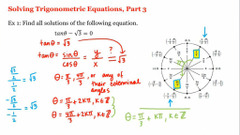
This course covers mathematical topics in algebra and trigonometry and is designed to prepare students to enroll for a first semester course in single variable calculus.

Curso diseñado para facilitar la entrada del estudiante en los cursos de cálculo de primer semestre de prácticamente cualquier grado universitario, con especial énfasis en Ciencias e Ingeniería.

Professional video productions involve a lot of planning. There is equipment to prepare and staff to schedule, and more importantly there is a creative vision which needs to be understood as your crew works together to make it all happen in camera. Pre-Production will get you ready for your first shoot – covering everything from storyboarding to managing the crew, location and lighting.

Mathematics is the language of Science, Engineering and Technology. Calculus is an elementary Mathematical course in any Science and Engineering Bachelor. Pre-university Calculus will prepare you for the Introductory Calculus courses by revising four important mathematical subjects that are assumed to be mastered by beginning Bachelor students: functions, equations, differentiation and integration. After this course you will be well prepared to start your university calculus course. You will learn to understand the necessary definitions and mathematical concepts needed and you will be trained to apply those and solve mathematical problems. You will feel confident in using basic mathematical techniques for your first calculus course at university-level, building on high-school level mathematics. We aim to teach you the skills, but also to show you how mathematics will be used in different engineering and science disciplines.
Education method
This is a course consisting of 6 modules (or weeks) and 1 final exam. The class will consist of a collection of 3-5 minute lecture videos, inspirational videos on the use of mathematics in Science, Engineering and Technology, (interactive) exercises, homework and exams.
Exercises, homework and the exams will determine the final grade. The course material will be available for the students online and free of charge.

This course was awarded the Open MOOC Award 2016 by the Open Education Consortium.
LICENSE
The course materials of this course are Copyright Delft University of Technology and are licensed under a Creative Commons Attribution-NonCommercial-ShareAlike (CC-BY-NC-SA) 4.0 International License.
Learn more about our High School and AP* Exam Preparation Courses
* Advanced Placement and AP are registered trademarks of the College Board, which was not involved in the production of, and does not endorse, these offerings.

In this college-level Precalculus course, you will prepare for calculus by focusing on quantitative reasoning and functions. You’ll develop the skills to describe the behavior and properties of linear, exponential, logarithmic, polynomial, rational, and trigonometric functions.
Content in this course will be adaptive, allowing you to achieve mastery in a certain concept before moving on to the next. Utilizing the ALEKS learning system, students in this personalized, self-paced course will be instructed on the topics they are most ready to learn while also providing individualized coaching as you move through each topic.
Before taking this course, you should already have a strong understanding of algebraic skills such as factoring, basic equation solving, and the rules of exponents and radicals.
This 3 credit hour course satisfies the Mathematical Studies (MA) general studies requirement at Arizona State University. This course may satisfy a general education requirement at other institutions; however, it is strongly encouraged that you consult with your institution of choice to determine how these credits will be applied to their degree requirements prior to transferring the credit.
Non-trigonometry pre-calculus topics. Solid understanding of all of the topics in the "Algebra" playlist should make this playlist pretty digestible. Introduction to Limits (HD). Introduction to Limits. Limit Examples (part 1). Limit Examples (part 2). Limit Examples (part3). Limit Examples w/ brain malfunction on first prob (part 4). Squeeze Theorem. Proof: lim (sin x)/x. More Limits. Sequences and Series (part 1). Sequences and series (part 2). Permutations. Combinations. Binomial Theorem (part 1). Binomial Theorem (part 2). Binomial Theorem (part 3). Introduction to interest. Interest (part 2). Introduction to compound interest and e. Compound Interest and e (part 2). Compound Interest and e (part 3). Compound Interest and e (part 4). Exponential Growth. Polar Coordinates 1. Polar Coordinates 2. Polar Coordinates 3. Parametric Equations 1. Parametric Equations 2. Parametric Equations 3. Parametric Equations 4. Introduction to Function Inverses. Function Inverse Example 1. Function Inverses Example 2. Function Inverses Example 3. Basic Complex Analysis. Exponential form to find complex roots. Complex Conjugates. Series Sum Example. Complex Determinant Example. 2003 AIME II Problem 8. Logarithmic Scale. Vi and Sal Explore How We Think About Scale. Vi and Sal Talk About the Mysteries of Benford's Law. Benford's Law Explanation (Sequel to Mysteries of Benford's Law).

Students often encounter grave difficulty in calculus if their algebraic knowledge is insufficient. This course is designed to provide students with algebraic knowledge needed for success in a typical calculus course. We explore a suite of functions used in calculus, including polynomials (with special emphasis on linear and quadratic functions), rational functions, exponential functions, and logarithmic functions. Along the way, basic strategies for solving equations and inequalities are reinforced, as are strategies for interpreting and manipulating a variety of algebraic expressions. Students enrolling in the course are expected to have good number sense and to have taken an intermediate algebra course.

Build your earth science vocabulary and learn about cycles of matter and types of sedimentary rocks through the Education Portal course Earth Science 101: Earth Science. Our series of video lessons and accompanying self-assessment quizzes can help you boost your scientific knowledge ahead of the Excelsior Earth Science exam . This course was designed by experienced educators and examines both science basics, like experimental design and systems of measurement, and more advanced topics, such as analysis of rock deformation and theories of continental drift.
Add to calendar

Trusted paper writing service WriteMyPaper.Today will write the papers of any difficulty.