

Online courses directory (10358)

This course provides students with the opportunity to develop a map of contemporary architectural practice and discourse. The seminar examines six themes in terms of their recent history: city and global economy, urban plan and map of operations, program and performance, drawing and scripting, image and surface, and utopia and projection. Students will study buildings and read relevant texts in order to place recent architectural projects in disciplinary and cultural context.

Intensive coverage of precision engineering theory, heuristics, and applications pertaining to the design of systems ranging from consumer products to machine tools. Topics covered include: economics, project management, and design philosophy; principles of accuracy, repeatability, and resolution; error budgeting; sensors; sensor mounting; systems design; bearings; actuators and transmissions; system integration driven by functional requirements, and operating physics. Emphasis on developing creative designs, which are optimized by analytical techniques applied via spreadsheets. This is a projects course with lectures consisting of design teams presenting their work and the class helping to develop solutions; thereby everyone learning from everyone's projects.
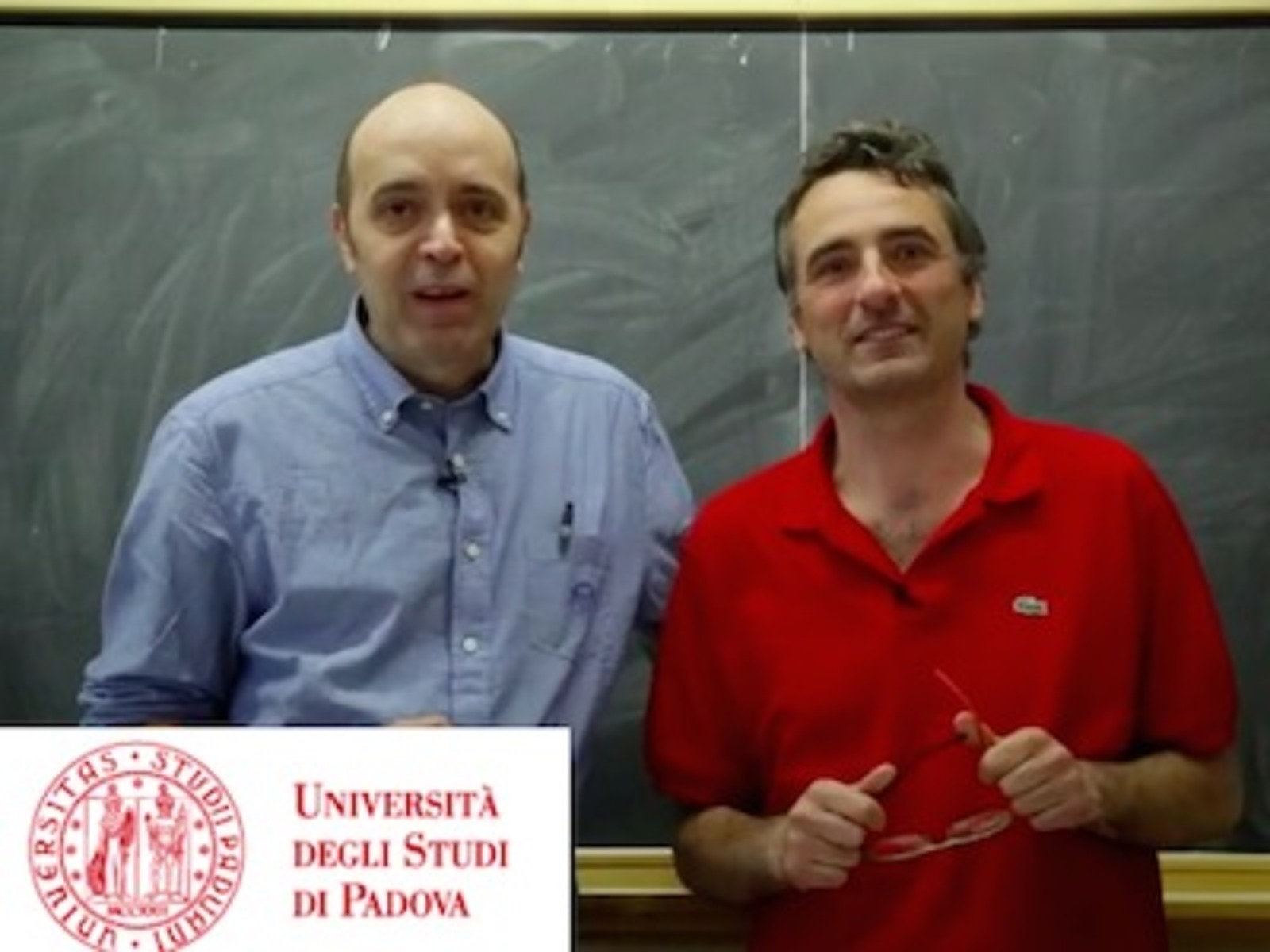
E' possibile studiare l'intero corso in pochi giorni: il test iniziale di ogni capitolo vi permette di capire su quali argomenti concentrarvi. L'intero corso sarà attivato nello stesso momento, e tutti i materiali saranno disponibili da subito. In questo modo gli iscritti potranno studiare seguendo il loro ritmo e focalizzare l'impegno per rafforzare i propri punti deboli.
Inoltre, per chi si registra al corso durante il periodo di apertura, tutti i materiali resteranno disponibili per ulteriori 6 mesi dopo la chiusura del corso stesso.
Riassunto del corso
Il corso consiste in un ripasso delle nozioni di Matematica di base viste nelle Scuole Superiori: insiemi, funzioni, grafici, numeri reali, equazioni e disequazioni, elementi di geometria piana, polinomi, funzioni esponenziali e logaritmi, trigonometria.
Obiettivi formativi
Fornire la preparazione per seguire con tranquillità i corsi di matematica al primo anno di Università.
Conoscenze richieste
L’algebra e la geometria di base delle scuole superiori.
Struttura del corso
L'intero corso sarà attivato nello stesso momento, e tutti i materiali saranno disponibili da subito. In questo modo gli iscritti potranno studiare seguendo il loro ritmo e focalizzare l'impegno per rafforzare i propri punti deboli.
All'inizio di ogni capitolo, ci sarà in quiz per la valutazione del proprio livello. In questo modo è possibile vedere da subito quali sono le proprie lacune e decidere se seguire tutte (o in parte) le video lezioni seguenti.
Capitoli:
Nozioni di base. Insiemi, prodotto cartesiano. Funzioni.
Geometria analitica del piano. Coordinate cartesiane. Grafici di funzioni e simmetrie. La retta. Il cerchio.
Polinomi. Monomi, polinomi, divisione tra polinomi, frazioni di polinomi.
Numeri reali. Numeri reali, valore assoluto, radici di numeri positivi.
Equazioni. Equazioni di primo e secondo grado, equazioni di ordine superiore a 2.
Sistemi di equazioni. Sistemi lineari. Sistemi di primo e secondo grado. Interpretazione grafica.
Disequazioni. Disequazioni di I grado. La regola del prodotto dei segni. Disequazioni di secondo grado. Disequazioni varie (fratte, con modulo/radici).
Esponenziali e logaritmi. Esponenziali. Logaritmi. Applicazione: equazioni e disequazioni con logaritmi/esponenziali.
Trigonometria 1. Le funzioni trigonometriche. Formule di addizione e sottrazione. Formule di prostaferesi.
Trigonometria 2. Funzioni trigonometriche inverse. Equazioni e disequazioni trigonometriche.
Università degli Studi di Padova
Fondata nel 1222, l'Università degli Studi di Padova è una delle più antiche e più prestigiose istituzioni accademiche europee. È un'università multidisciplinare che cerca di fornire ai suoi studenti sia un efficace training professionale, sia un solido background culturale. Un titolo di studio acquisito all'Università di Padova è un obiettivo ambizioso, riconosciuto e ricercato sia da studenti sia dal mondo delle imprese.
Se volete sapere di più sull'Univeristà di Padova, visitate il sito web all'indirizzo: http://www.unipd.it
Dipartimento di Matematica
Il Dipartimento di Matematica (DM) è il principale riferimento dell'Ateneo per la matematica sia sul piano della ricerca che su quello della didattica, e ospita al suo interno un gruppo di informatica numericamente limitato, ma di grande valore scientifico. La ricerca spazia in tutti gli ambiti della matematica, della matematica applicata e dell’informatica, proseguendo un'illustre tradizione testimoniata dalla considerazione della comunità scientifica internazionale e recentemente confermata dall’esito della prima Valutazione della Qualità della Ricerca (VQR).
Grazie all’impegno di 63 professori di area matematica, 11 di area informatica e 32 ricercatori, è il dipartimento di riferimento per i Corsi di Laurea di primo e secondo livello in Matematica ed in Informatica; inoltre coordina e parzialmente impartisce gli insegnamenti di matematica in più di 30 Corsi di Studio dell’Ateneo, nei quali la matematica costituisce uno strumento di base nonché una parte fondamentale della formazione scientifica.
Un compito importante del DM è anche la formazione alla ricerca dei giovani. Il DM persegue questo obiettivo ospitando il Corso di Dottorato in Scienze Matematiche e collaborando al Curriculum in Computer Science for societal challenges and innovation del Corso di Dottorato in Brain, Mind and Computer Science.
Maggiori informazioni su sito web http://www.math.unipd.it

Forecasting is the ultimate form of model validation. But even if a perfect model is in hand, imperfect forecasts are likely. This course will cover the factors that limit our ability to produce good forecasts, will show how the quality of forecasts can be gauged a priori (predicting our ability to predict!), and will cover the state of the art in operational atmosphere and ocean forecasting systems.

Prediction is at the heart of almost every scientific discipline, and the study of generalization (that is, prediction) from data is the central topic of machine learning and statistics, and more generally, data mining. Machine learning and statistical methods are used throughout the scientific world for their use in handling the "information overload" that characterizes our current digital age. Machine learning developed from the artificial intelligence community, mainly within the last 30 years, at the same time that statistics has made major advances due to the availability of modern computing. However, parts of these two fields aim at the same goal, that is, of prediction from data. This course provides a selection of the most important topics from both of these subjects.

Humans have always sought to know their own future, be it the destiny of an empire or an individual's fate. Across cultures and history, we find people trying to find their place in the Universe by attempting to gaze into the future.
Join us for this one-week, immersive learning experience as we explore “pre-scientific” prediction systems ranging from ancient Chinese bone burning to the Oracle of Delphi to modern astrology and tarot, with practitioners and Harvard faculty leading the journey. We will examine the details of over a dozen prediction systems as well as theoretical frameworks connecting them.
This module is a part of PredictionX, which examines our efforts to predict the future over all of recorded history. PredictionX courses will cover topics from omens and oracles in ancient civilizations, which this course discusses, to the evolution of the general approach to science most take today (which includes the course John Snow and the Cholera Outbreak of 1854) as well as modern computer simulations and the role they play in predicting our futures today.

In 1854, a cholera epidemic swept through the London neighborhood of Soho. In the course of about three weeks, over 600 people died. This incident was, tragically, not unusual in London or the rest of the 19th century world as a whole. The scourge of cholera seemed unstoppable and, even worse, unpredictable. But one doctor -- ignored by the scientific community at large -- set out to prove that he knew how cholera was spread.
Join us for this one-week, immersive learning experience. We will explore John Snow’s London, from the streets of Soho to the dataset that helped create the map that changed our understanding of cholera and epidemiology forever.
This course features interactive tools including an interactive ArcGIS map of the 1854 cholera outbreak and a Timeline JS of John Snow’s investigation.
This module is a part of PredictionX, which looks at the history of attempts to predict the future. PredictionX courses will cover topics from omens and oracles in ancient civilizations to modern computer simulations.

Decision makers often struggle with questions such as: What should be the right price for a product? Which customer is likely to default in his/her loan repayment? Which products should be recommended to an existing customer? Finding right answers to these questions can be challenging yet rewarding.
Predictive analytics is emerging as a competitive strategy across many business sectors and can set apart high performing companies. It aims to predict the probability of the occurrence of a future event such as customer churn, loan defaults, and stock market fluctuations – leading to effective business management.
Models such as multiple linear regression, logistic regression, auto-regressive integrated moving average (ARIMA), decision trees, and neural networks are frequently used in solving predictive analytics problems. Regression models help us understand the relationships among these variables and how their relationships can be exploited to make decisions.
This course is suitable for students/practitioners interested in improving their knowledge in the field of predictive analytics. The course will also prepare the learner for a career in the field of data analytics. If you are in the quest for the right competitive strategy to make companies successful, then join us to master the tools of predictive analytics.


The course develops critical thinking and analytic problem solving skills within a chemistry context in order to prepare students for success in college-level General Chemistry—a key gateway class required for many undergraduate majors.

Through this class you should be able to explain basic concepts in cellular and molecular biology using correct terminology, as well as develop critical thinking and problem-solving skills that can be applied to all of your studies of biology.

For anyone interested in becoming a nurse, this course provides an overview of the profession. Participants will learn about areas of nursing specialization, the application process for nursing schools, and scholarship programs.

The course topics include modern atomic theory, periodic table and trends, stoichiometry, bonding, molecular structure, kinetics, thermodynamics, equilibrium, acids and bases, gases, liquids and solids, electrochemistry and solubility. This material conveyed using video lectures, practice questions and review exams may be used for self-study by students and teachers. This is a self-paced, asynchronous course. It is meant to be a useful resource without much staff support or involvement. The quizzes and assignments will be auto-graded. While students are welcome to interact with fellow students on the discussion boards, there are no opportunities to interact with the course instructor or staff directly.
The course topics include modern atomic theory, periodic table and trends, stoichiometry, bonding, molecular structure, kinetics, thermodynamics, equilibrium, acids and bases, gases, liquids and solids, electrochemistry and solubility. This material conveyed video lectures, practice questions and review exams may be used for self-study by students and teachers. This is a self-paced, asynchronous course. It is meant to be a useful resource without much staff support or involvement. The quizzes and assignments will be auto-graded. While students are welcome to interact with fellow students on the discussion boards, there are no opportunities to interact with the course instructor or staff directly.

This is the first in a series of four courses aimed at helping students improve their scores on placement tests while preparing for college-level courses. This introductory course focuses on what to expect at the testing center.

This is the fourth in a series of four courses aimed at helping students improve their scores on placement tests while preparing for college-level courses. This course focuses on math skills.

This is the second in a series of four courses aimed at helping students improve their scores on placement tests while preparing for college-level courses. This course focuses on reading skills.

This is the third in a series of four courses aimed at helping students improve their scores on placement tests while preparing for college-level courses. This course focuses on writing skills.

Preparing for the AP Calculus AB exam requires a deep understanding of many different topics in calculus as well as an understanding of the AP exam and the types of questions it asks. This course is Part 1 of our XSeries: AP Calculus AB and it is designed to prepare you for the AP exam.
In Part 1, you will be learning about limits and derivatives. Limits are an integral part of calculus and many important ideas, definitions, formulas and theorems in calculus are derived from a limit. Derivatives are used to describe the rate of change of one variable with respect to another variable, allowing you to understand change in a variety of contexts. You will be learning to apply derivatives to real-world applications such as related rates, optimization, and growth/decay models.
As you work through this course, you will find lecture videos taught by expert AP calculus teachers, practice multiple choice questions and free response questions that are similar to what you will encounter on the AP exam and tutorial videos that show you step-by-step how to solve problems. By the end of the course, you should be ready to take on the AP exam!
Preparing for the AP Calculus AB exam requires a deep understanding of many different topics in calculus as well as an understanding of the AP exam and the types of questions it asks. This course is Part 1 of our XSeries: AP Calculus AB and it is designed to prepare you for the AP exam.
In Part 2, you will use and apply the meaning and interpretations of derivatives from Part 1 to the integral, antiderivatives and differential equations. You will learn some applications of integrals including finding volumes of solids and solids of revolution, volumes with known cross sections and applications to Velocity-Time graphs. We will close with an introduction to differential equations and see how they are used.
As you work through this course, you will find lecture videos taught by expert AP calculus teachers, practice multiple choice questions and free response questions that are similar to what you will encounter on the AP exam and tutorial videos that show you step-by-step how to solve problems. By the end of the course, you should be ready to take on the AP exam!
Add to calendar

Trusted paper writing service WriteMyPaper.Today will write the papers of any difficulty.