

Online courses directory (10358)

This second free course continues the introduction to Psychology. This free learning course approaches the topic from a ‘cognitive’ angle. This perspective likens the mind to an information-processing computer and uses the computer metaphor to examine complex human functions such as visual perception and memory. This online course is suitable for revising, exam preparation, and for those who often wondered how humans engage in complex mental functions!<br />

This third and final Psychology course examines experimentation and report writing in a Psychology context. This free learning course outlines protocols for experimentation in Psychology including how to structure and conduct experiments, how to interpret results and how to report findings. This course is ideal for students looking to enhance their knowledge of research methods or those who would like to acquaint themselves with psychological experimentation.<br />

This course is a brief introduction into public economics theory. It covers main economic functions of government, including taxation, regulation, and social service delivery, and touches upon economic, social, political and administrative aspects of government’s involvement in economy.

This course covers theory and evidence on government taxation policy. Topics include tax incidence, optimal tax theory, the effect of taxation on labor supply and savings, taxation and corporate behavior, and tax expenditure policy.

This course covers theory and evidence on government expenditure policy-- topics include: The theory of public goods; Education; State and local public goods; Political economy; Redistribution and welfare policy; Social insurance programs such as social security and unemployment insurance; and Health care policy.

Explores the role of government in the economy, applying tools of basic microeconomics to answer important policy questions such as government response to global warming, school choice by K-12 students, Social Security versus private retirement savings accounts, government versus private health insurance, setting income tax rates for individuals and corporations.

Upgrade your agency's ability to send documents to the Federal Register by moving to all-digital submissions using PKI.

This course will examine public opinion and assess its place in the American political system. The course will emphasize both how citizens' thinking about politics is shaped and the role of public opinion in political campaigns, elections, and government.

Want to learn how U.S. public policy is really made? Want to hear directly from political leaders on how things get done in Washington, DC? This University of Virginia course will provide discussions with top leaders, such U.S. Senator Tim Kaine, former Congressman Tom Davis, Congressman Gerry Connolly, former White House Press Secretary Dee Dee Myers and more.

Wild, wild web: Is the Internet a lawless no man’s land? Based on the recent public debate on data protection and massive privacy infringements, this course will explore the connection between cyber security and human rights.

The free online course Public Relations: Best Practices and Ethics guides you in a step-by-step manner through the best practices and ethics necessary for excellence in public relations.<br /><br />The course begins by walking you through the RACE process in public relations. In particular you will learn about conducting Research, strategic Action planning, Communication implementation, and Evaluating your results. These are all steps which will help you to implement the RACE system in your everyday working practices.<br /><br />You will then be introduced to the best practices in public relations which will help you to identify the different areas included in the field, as well as helping you understand the functions of each. To help you see how these best practices can be applied in the real world you will review case studies of the practices in action.<br /><br />Next, you will learn about the importance of ethics, moral analysis, and leadership in public relations, and their potential impact on your PR strategy. To do so you will explore the theory behind each area, and further examine the real life impacts which a good implementation of these practices can have on your company. Finally, you will look at the best practices of public relations. These best practices are vital to developing and maintaining excellent public relations within any organization. <br /><br />This free online course will be of great interest to learners who work in the area of PR and communications, and would like to learn more about excellence in PR. It is also be of interest to learners who would like to learn more about the best practices and ethics that drive PR, while also looking at examples of excellent PR in action. <br />

The free online course Public Relations: Optimize Systems Theory and Stakeholder Management Practices guides you in a step-by-step manner through the organizational principles, stakeholder prioritization, and research practices of modern public relations. <br /><br />This course begins by walking you through the organizational theory surrounding public relations. In particular this free course will look at organizational factors and structures, two areas vital in helping you to achieve excellent PR. The course also helps you to explore two of the main approaches used in PR today; the Systems Theory Approach, and the Stakeholder Management Approach.<br /><br />You will be introduced to methods that will help you to identify and prioritize stakeholders and publics, as well as helping you learn how to manage different stakeholders. To help you understand more about stakeholders and publics the Situational Theory of Publics, and the Contingency Approach to PR Strategy will also be discussed in detail. Finally, you will be walked through a case study that is aimed at helping you understand the real life applications and benefits of effective stakeholder management. <br /><br />You will learn about the importance of research in public relations, and its impact on your PR strategy. To do so you will explore the importance, purpose and forms of research. You will then build on this knowledge by learning about the different types of research.<br /><br />This free online course will be of great interest to you if you work in the area of PR and communications, and would like to learn more about effective PR. It will also be of interest to learners who would like to learn more about the organizational and research theory that drives PR, while simultaneously learning how to manage the stakeholders in your organization. <br /><br />This free Public Relations course will also be of interest to you if you would like to learn more about the optimization of PR within the modern business environment.


This course discusses the evolution and role of urban public transportation modes, systems and services, focusing on bus and rail. Technological characteristics are described, along with their impacts on capacity, service quality, and cost. Current practice and new methods for data collection and analysis, performance monitoring, route and network design, frequency determination, and vehicle and crew scheduling are covered. The course also discusses effects of pricing policy and service quality on ridership, methods for estimating costs associated with proposed service changes, organizational models for delivering public transportation service including finance and operations, and select transit management topics including labor relations, fare policy and technology, marketing and operations management.
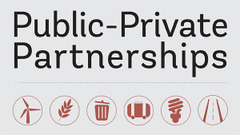
Public-Private Partnerships (PPP) are one tool that governments can employ to help deliver needed infrastructure services. PPPs are a way of contracting for services, using private sector innovation and expertise, and they often leverage private finance. PPPs can, implemented under the right circumstances, improve service provision and facilitate economic growth.

Everything you need to know to create, proof, publish and list your children's book in print on Amazon for free.

This course seeks to make students sensitive to and articulate about the ways in which moral and political values come into play in the American policy process, particularly as they affect non-elected public officials who work in a world shaped by politics. Topics covered include the tensions between ethics and politics, an introduction to various moral theories that figure in contemporary policy debates, a consideration of the principal values that animate American politics, and issues and dilemmas in professional ethics. The course addresses issues that affect international as well as U.S. policy and politics. Course Level: Graduate This Work, PubPol 580 - Values, Ethics, and Public Policy, by John Chamberlin is licensed under a Creative Commons Attribution license.
The Integrated Policy Exercise (IPE) is a school-wide policy simulation held in the first week of January each year. All master
The nonprofit sector has emerged as one of the cornerstones of American society, and yet remains very much a work in progress. The
Explores related and sometimes competing legal and policy frameworks for the development and dissemination of ideas and expression in the Information Age. The ways in which principles of free speech and expression compare and contrast with intellectual property rights are explored in relation to the advancement of knowledge and innovation, with particular focus on the impact of the Internet and new technology. The impact of other legal considerations and values on the development and dissemination of ideas and information (such as security, privacy, local control vs. national and international considerations, competition, and the protection of minors) are also examined. The course draws upon the contexts of education, business, and government. Course Level: Graduate This Work, PubPol 688/SI 519 - Intellectual Property and Information Law, by Bryce Pilz is licensed under a Creative Commons Attribution license.
Add to calendar

Trusted paper writing service WriteMyPaper.Today will write the papers of any difficulty.