

Online courses directory (10358)
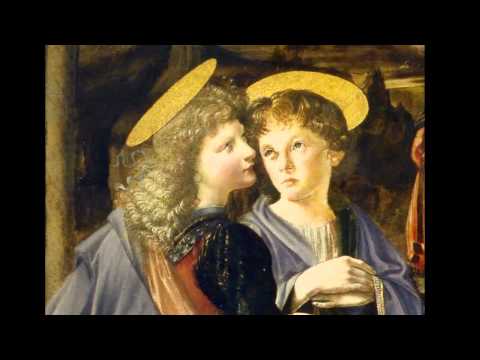
If there was one century in the past that saw radical changes in established ways of thinking comparable to the 20th Century, it would be the 16th. Before this, in Western Europe, there was only one type of Christianity
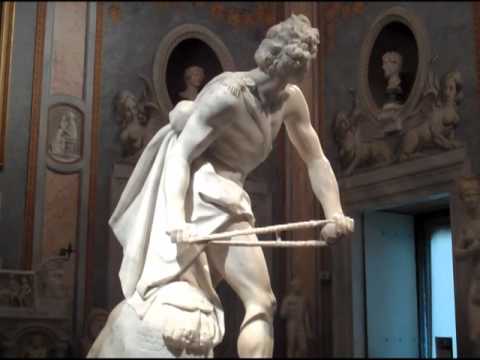
The 17th Century is the era of the Baroque style, characterized by energy, drama, and movement. The Church in Rome needed art that spoke to its resurgent power even as the conflict between Protestant and Catholics continued. A new realism
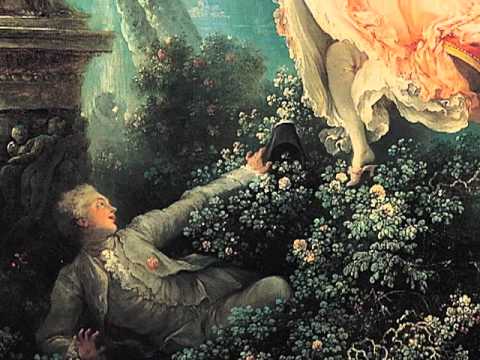
From the frivolous paintings of Fragonard to the politically-charged moralizing images of David, this tutorial brings us from the King of France and his court

With the failure of the French Revolution (Napoleon crowned himself Emperor, and after his defeat, a King was restored to power in France), there was a turn away from public, political life, toward personal, subjective experience. In large part, this turn characterizes the new style of Romanticism (don
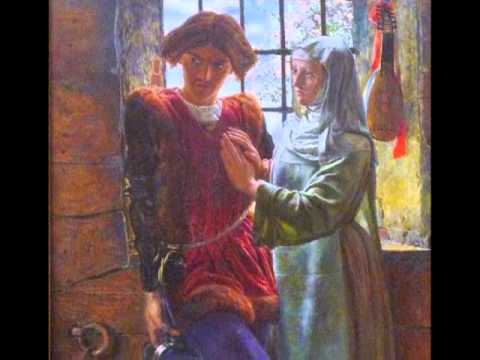
The art of this period is familiar, since the world of the Realists, Impressionists and Post-Impressionists is much like our own. More and more people lived in cities and worked in factories or shops for wages. Scientific and technological advances increased dramatically during this period and although there was dislocation and privation, standards of living increased sharply. In essence, modern mass culture was born. Artists responded sometimes by embracing these radical changes, and at other times by resisting them. Key here is understanding the authority of the various art academies in Europe, which controlled matters related to taste and art, and which were, to some extent, always connected to the government. A small number of artists rebelled against the strictures of the academy, and against the demand for art to tell clear stories for a middle class audience, and formed what we know as the

An Introduction to Contemporary Art. Why is this Art? Andy Warhol, Campbell's Soup Cans. Art as Concept: In Advance of the Broken Arm. Why Is That Important? Looking at Jackson Pollock. Art & Context: Monet's Cliff Walk at Pourville and Malevich's White on White. Representation & Abstraction: Millais's Ophelia and Newman's Vir Heroicus Sublimis. Interpreting Contemporary Art. Big Questions in Modern & Contemporary Art. Matisse, Luxe, calme et volupt
The Art of Our Time. Bacon, Triptych - August 1972. Freud, Standing by the Rags. Diane Arbus, Boy with a Toy Hand Grenade. William Eggleston, Red Ceiling, or Greenwood, Mississippi, 1973. Ed Kienholz and Nancy Reddin Kienholz Useful Art #5: The Western Hotel, 1992. Warhol, Gold Marilyn Monroe. Warhol, Campbell's Soup Cans. Oldenburg, Floor Cake. Lichtenstein, Rouen Cathedral Set V. Gerhard Richter, Betty. Gerhard Richter, The Cage Paintings (1-6). Gerhard Richter, September. Donald Judd, Untitled. Dan Flavin, Untitled (To Donna) II. Smithson, Spiral Jetty. Hesse, Untitled. Hesse, Untitled (Rope Piece), 1970. Chicago, Pasadena Lifesaver, Blue Series, No. 4 & Benglis, Omega. Winsor, #1 Rope. Joseph Beuys, Table with Accumulator. John Baldessari, I Will Not Make Any More Boring Art. Hans Haacke's Seurat's 'Les Poseuses' (small version). Interpreting Contemporary Art. Colescott, Beauty is in the Eye of the Beholder. Sherman, Untitled Film Still #21. Sherrie Levine, Untitled (After Edward Weston, ca. 1925). The Art of Our Time. Bacon, Triptych - August 1972. Freud, Standing by the Rags. Diane Arbus, Boy with a Toy Hand Grenade. William Eggleston, Red Ceiling, or Greenwood, Mississippi, 1973. Ed Kienholz and Nancy Reddin Kienholz Useful Art #5: The Western Hotel, 1992. Warhol, Gold Marilyn Monroe. Warhol, Campbell's Soup Cans. Oldenburg, Floor Cake. Lichtenstein, Rouen Cathedral Set V. Gerhard Richter, Betty. Gerhard Richter, The Cage Paintings (1-6). Gerhard Richter, September. Donald Judd, Untitled. Dan Flavin, Untitled (To Donna) II. Smithson, Spiral Jetty. Hesse, Untitled. Hesse, Untitled (Rope Piece), 1970. Chicago, Pasadena Lifesaver, Blue Series, No. 4 & Benglis, Omega. Winsor, #1 Rope. Joseph Beuys, Table with Accumulator. John Baldessari, I Will Not Make Any More Boring Art. Hans Haacke's Seurat's 'Les Poseuses' (small version). Interpreting Contemporary Art. Colescott, Beauty is in the Eye of the Beholder. Sherman, Untitled Film Still #21. Sherrie Levine, Untitled (After Edward Weston, ca. 1925).
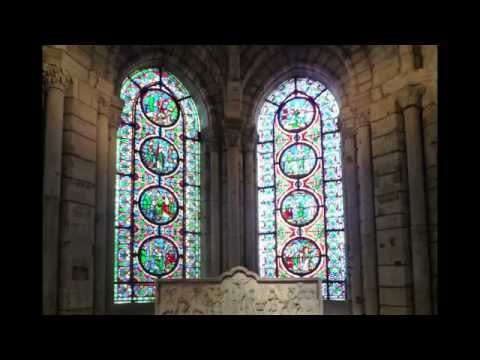
Birth of the Gothic: Abbot Suger and the Ambulatory at St. Denis. Two Royal Figures (Saljuq Period). Last Judgment Tympanum, Cathedral of St. Lazare, Autun. Sutton Hoo Ship Burial. Virgin from Ger. Wise and Foolish Virgins, Sant Quirze de Pedret. Coronation Mantle. Sarcophagus of Junius Bassus. Basilica of Santa Prassede (Praxedes). Santa Sabina. Byzantine Art: Justinian and His Attendants. Historiated Capitals, Church of Sant Miquel, Camarasa (Noguera). Santa Maria Maggiore. Ivory panel with Archangel. Berlinghieri's St. Francis Altarpiece. Cathedral of Notre Dame de Chartres. Ilkhanid Mihrab. Hebrew Astrolabe. Pre-Columbian Cup.
Were the Middle Ages really all that dark? Hardly! How could we call the period that saw the building of Chartres Cathedral with its stunning stained-glass windows, dark? Sure, the Roman empire collapsed, but with the Christianization of Europe came magnificent churches, illuminated bibles, and intricately designed broaches. This period also saw the birth of Islam, the third great monotheistic religion. Introduction. Medieval and Byzantine Art. A New Pictorial Language: The Image in Early Medieval Art. Iconoclasm. Medieval Manuscripts. The Bestiary. Beginner's Guide to Medieval Art. An Introduction to Christianity. Standard Scenes from the Life of Christ in Art. An Introduction to Early Christian Art. Early Christian Art & Architecture after Constantine. Sarcophagus of Junius Bassus. Santa Sabina. Santa Maria Maggiore. The Mausoleum of Galla Placidia, Ravenna. Early Christian. Sutton Hoo Ship Burial. The Lindesfarne Gospels. Medieval and Byzantine Art. San Vitale. Sant'Apollinare in Classe, Ravenna, Italy, c. 533-49. Hagia Sophia. Ivory panel with Archangel. Icon of Saint George (the "Black George"). Icon of the Triumph of Orthodoxy. Byzantine Art. Introduction to Islam. The Five Pillars of Islam. Arts of the Islamic World. Two Royal Figures (Saljuq Period). Coronation Mantle. Ilkhanid Mihrab. Hebrew Astrolabe. Qa'a: The Damascus Room. Carolingian Art: An Introduction. Charlemagne: An Introduction (1 of 2). Charlemagne and the Carolingian Revival (part 2 of 2). Saint Matthew from the Ebbo Gospel. Lindau Gospels Cover. Santa Prassede (Praxedes). Carolingian. Ottonian Art: An Introduction. Bronze doors, Saint Michael's, Hildesheim, commissioned by Bishop Bernward, 1015. Pilgrimage Routes and the Cult of the Relic. Pentecost and Mission to the Apostles Tympanum, V
New to art? If so, this is a good place to start. We often think we should understand what we see and that we know what we like, but art can be challenging. It has meant different things at different moments in history. Art gives us access to the way other people have seen the world. Jump in and explore!. A Beginner's Guide to the History of Western Culture. Common Questions about Dates. Why Look at Art?. The Skill of Describing. The Skill of Describing. The Classical Orders. How One-Point Linear Perspective Works. Art History Basics. Woodcuts and Etchings. Tempera Paint. Oil Paint. Oil Paint in Venice. Bronze Casting. Quarrying & Carving Marble. Art History - Media. A Beginner's Guide to the History of Western Culture. Common Questions about Dates. Why Look at Art?. The Skill of Describing. The Skill of Describing. The Classical Orders. How One-Point Linear Perspective Works. Art History Basics. Woodcuts and Etchings. Tempera Paint. Oil Paint. Oil Paint in Venice. Bronze Casting. Quarrying & Carving Marble. Art History - Media.

This seminar introduces, through studio projects, the basic principles regarding the use of color in the visual arts. Students explore a range of topics, including the historical uses of color in the arts, the interactions between colors, and the psychology of color.
This seminar introduces, through studio projects, the basic principles regarding the use of color in the visual arts. Students explore a range of topics, including the historical uses of color in the arts, the interactions between colors, and the psychology of color.

This seminar introduces, through studio projects, the basic principles regarding the use of color in the visual arts. Students explore a range of topics, including the historical uses of color in the arts, the interactions between colors, and the psychology of color.
Join thousands around the world in this free, six-week online course that is also a work of public art. Designed by artist and Duke University professor Pedro Lasch, and co-taught by Creative Time chief curator Nato Thompson, the course includes creative exercises and dozens of presentations by key figures in the field of art and social politics.

This subject focuses on the objects, history, context, and critical discussion surrounding art since World War II. Because of the burgeoning increase in art production, the course is necessarily selective. We will trace major developments and movements in art up to the present, primarily from the US; but we will also be looking at art from Europe, Asia, Africa, Latin America, and the Middle East, as well as art "on the margins" — art that has been overlooked by the mainstream critical press, but may have a broad cultural base in its own community. We will ask what function art serves in its various cultures of origin, and why art has been such a lightning rod for political issues around the world.

This course examines how people learn, practice, and evaluate traditional and contemporary craft techniques. Social science theories of design, embodiment, apprenticeship learning, skill, labor, expertise, and tacit knowledge are used to explore distinctions and connections among art, craft, and science. We will also discuss the commoditization of craft into market goods, collectible art, and tourism industries. Ethnographic and historical case studies include textiles, glassblowing, quilting, cheese making, industrial design, home cooking, factory and laboratory work, CAD-CAM. In-class demonstrations and hands-on craft projects will be included.

Recuperemos y aprendamos una tecnica artistica prehispanica mexicana, creando impresionantes obras de arte con plumas.

What impact can art and the humanities have on patient care? Can art enhance medical caregivers’ powers of observation and humanize their interactions with patients? Through presence alone, can caregivers heal what they cannot cure?
In Artful Medicine: Art’s Power to Enrich Patient Care, we will explore the meaning of medical professionalism, techniques for a humanistic approach to caregiving, and the positive impact of humanism on clinical outcomes.
By looking closely at works of art that portray empathy in human interaction, caregivers can discover their common humanity with patients. Caregivers can also hone observation skills that help paint a portrait of a patient as a person and not a collection of symptoms, lab tests, and scans. Through presence at the patient’s side, unmediated by technology, a caregiver can make the patient feel cared for in addition to being treated.
One needn’t be a caregiver to benefit from this course—though all of us have probably been cared for at some point and can therefore easily relate to the importance of a humanistic approach to caregiving. Anyone interested in how art can be used to enhance observational and empathic skills will find this application to medical humanism fascinating.
We will:
- Explore elements of professionalism and humanism, why they are critical to patient care, and how they are threatened by technology that increasingly distances caregivers from patients;
- Analyze art for form, narrative, and technique;
- Practice techniques used by art educators to enhance observation and improve diagnostic skills;
- Examine works of art for the professional behaviors they exemplify;
- Apply techniques to patient care that will help humanize interactions, so caregivers can refocus their attention on patients and families and enhance their understanding of behaviors critical to healing; and
- Identify with both the caregiver’s and the patient’s points of view.
This MOOC is inspired by residential seminar taught by Dr. Schiffman at Brown University's Warren Alpert School of Medicine under the name The Doc's HeArt: Reflecting on Professional Values Through Art, and is especially relevant for healthcare professionals who are interested in differentiating themselves in their given or prospective field.

This course is an exploration of visual art forms and their cultural connections for the student with little experience in the visual arts. It includes a brief study of art history, and in-depth studies of the elements, media, and methods used in creative thought and processes. In this course, you will learn how to develop a five-step system for understanding visual art in all forms, based on the following: Description: A work of art from an objective point of view its physical attributes, and formal construction. Analysis: A detailed look at a work of art that combines physical attributes with subjective statements based on the viewer’s reaction to the work. Context: Historical, religious, or environmental information that surrounds a particular work of art and which helps to understand the work’s meaning. Meaning: A statement of the work’s content. A message or narrative expressed by the subject matter. Judgment: A critical point of view about a work of art concerning its aesthetic or cultur…
Add to calendar

Trusted paper writing service WriteMyPaper.Today will write the papers of any difficulty.