

Online courses directory (10358)

Learn about the history of the Middle East for a deeper understanding of current regional developments!
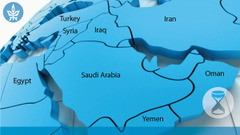
Learn about the history of the Middle East for a deeper understanding of current regional developments!

Learn how 9 different ways of thinking and behaving affect every aspect of our lives on a daily basis.
Learn to think like a futurist! Futurism is not about predicting the future, but making informed decisions today that will impact future developments. The Emerging Future: Technology Issues and Trends MOOC offered by the School of Library and Information Science at San José State University provides the planning skills and technology trends needed to create your personal and organization’s future. Knowing who and what to watch will keep you informed on the latest technology issues and trends that will impact the future. The Emerging Future MOOC is a professional development opportunity designed for information professionals and those interested in the topic. The MOOC is not offered for academic credit. SJSU SLIS graduate students who participate in the MOOC will not receive credit toward their master's degrees. The technology landscape changes rapidly, and these changes have economic, social, and ethical significance for individuals, organizations, and the entire world. The Emerging Future: Technology Issues and Trends MOOC brings focus to the planning skills that are needed, the issues that are involved, and the current trends as we explore the potential impact of technological innovations. Participants will experience an interactive online learning environment via a wide range of tools and diverse materials (e.g., freely accessible readings, recorded presentations, and online videos), and they will have an opportunity to: Explore the current technological environment Become immersed in the literature and practices of current futurists Select appropriate resources to use in planning for new technologies. Discuss key impact factors and trends affecting our personal and global existence Engage with peers and instructors, heightening their learning and taking full advantage of this professional development opportunity. Earn badges and MOOC certification on completion of activities related to each of the modules.

Chris Larsen, a veteran entrepreneur, CEO and co-founder of Prosper.com shares the ups and downs he faced during the fir

This course will explore how Americans have confronted energy challenges since the end of World War II. Beginning in the 1970s, Americans worried about the supply of energy. As American production of oil declined, would the US be able to secure enough fuel to sustain their high consumption lifestyles? At the same time, Americans also began to fear the environmental side affects of energy use. Even if the US had enough fossil fuel, would its consumption be detrimental to health and safety? This class examines how Americans thought about these questions in the last half-century. We will consider the political, diplomatic, economic, cultural, and technological aspects of the energy crisis. Topics include nuclear power, suburbanization and the new car culture, the environmental movement and the challenges of clean energy, the Middle East and supply of oil, the energy crisis of the 1970s, and global warming.

Numerous recent studies have shown that the U.S. has relatively low percentages of students who enter science and engineering and a high drop-out rate. Some other countries are producing many more scientists and engineers per capita than the U.S. What does this mean for the future of the U.S. and the global economy?
In this readings and discussion-based seminar you will meet weekly with the Dean of Undergraduate Education to explore the kind of education MIT and other institutions are and should be giving. Based on data from National Academy and other reports, along with what pundits have been saying, we'll see if we can decide how much the U.S. may or may not be at risk.

In this introductory course, you’ll learn some engineering principles that can be applied to structural systems everywhere: in nature, in furniture, in mechanical and aerospace systems, and in any solid object that resists a load.
Together we’ll explore how structures work, why they were designed the way they were designed, how they support loads, and where forces flow through them.
More specifically we’ll:
- Learn about funicular forms and how ropes and cables resist tension.
- Discuss how columns, arches, and anti-funicular forms resist compression.
- Discover how trusses, beams and walls resist loads. • Sketch the flow of forces through structures.
- Compare and contrast different structural forms and systems to answer a range of questions such as: Why might an engineer choose a beam over a truss? How do the dimensions of a structure affect its response? How do engineers choose forms and systems to create structures that are both elegant and functional?
Join us in exploring the engineering of structures around us.
The main course image, Kurilpa Bridge credited to: Alastair Smith, CC BY-NC-SA 2.0

Learn how to identify and address common organizational traps when introducing Lean Startup to large organizations.
Offered by Sonoma State University and taught by Dr. Paul Porter and Entrepreneur-in-Residence Mark Nelson, this course highlights the role of entrepreneurial thinking in contemporary education. Based on core modules, it covers defining features of entrepreneurialism in education, including becoming an economic unit of one, overcoming obstacles and failing forward, rethinking risk, and building alignment with business-education connections. Join us for an exciting introduction to edupreneurialism!

What does it really mean to think entrepreneurially?
The entrepreneurial process isn’t only for start-ups, it’s a comprehensive mindset that will teach you to identify, assess, shape, and act on opportunities in a variety of contexts, settings and organizations. In this entrepreneurship course, you will learn to implement the method of Entrepreneurial Thought & Action® (ETA) – which will give you a roadmap to create and add value for stakeholders and society.
ETATM is a tactical, results-oriented process that may be applied to new venture creation as well as to promote innovation within existing organizations – large, small or family owned – and across profit, not for profit and social ventures.
The ability to ‘think like an entrepreneur’ and ‘act like an innovator’ are critical skills for success across industries and are proven tools to help distinguish you in the workplace and to accelerate your career.
This course is part of the Business Principles and Entrepreneurial Thought XSeries.

A great variety of processes affect the surface of the Earth. Topics to be covered are production and movement of surficial materials; soils and soil erosion; precipitation; streams and lakes; groundwater flow; glaciers and their deposits. The course combines aspects of geology, climatology, hydrology, and soil science to present a coherent introduction to the surface of the Earth, with emphasis on both fundamental concepts and practical applications, as a basis for understanding and intelligent management of the Earth's physical and chemical environment.

Chemists, investors, software engineers, biomathematicians, etc., - and how they interact and build on one another'

You face a difficult moral decision every time you decide what to eat. What impact should animal rights have on your decision? Is the suffering involved in meat, egg and dairy production bad enough that you should go vegan? How do your food choices affect the economy and the environment? Should you become a locavore? Should you eat only sustainably produced, "farm to table" food? Or is factory-farmed food more efficient and ultimately better for the environment?
We also face difficult food-related questions at the political-social level. Should states restrict their citizens' food choices so as to encourage healthy eating? Should governments grant patents on genetically modified crops? And how do we, as a society, implement effective food policies for a rapidly expanding world population?
This class will provide the tools required to reflect clearly and effectively on these challenging questions.
Our goal is to provide a working understanding of some leading ethical theories as well as the central empirical issues related to food production, distribution and consumption. Along the way, students will hear from a variety of scientists, philosophers, activists, and industry participants:
- Carol Adams, author of The Sexual Politics of Meat
- T. Colin Campbell, Cornell nutritionist and author of The China Study
- Mark Bittman, cookbook author and New York Times food writer
- Marion Nestle, nutritionist and author of Food Politics
- Joe Regenstein, Cornell food scientist and director of the Kosher-Halal Food Initiative
- Joel Salatin, alternative farming advocate and author of 9 books
- Bryant Terry, award-winning chef, author of Vegan Soul Kitchen
- Brian Wansink, Cornell food and brand psychologist, author of Mindless Eating

What is memory? What’s the utility in exploring it and risking the activation of painful memories? What remembrance do we owe people we have lost and how is that reflected in the monuments we create to memorialize them? Why do different groups of people interpret the same event differently—even when the facts are not disputed?
In The Ethics of Memory, we will discuss these questions and more by exploring personal memory, collective memory and memorial culture, and conflicts of memory.
We begin early in the 20th century—the century of critical engagement with memory—when personal memory was plumbed as the basis of psychoanalysis and as a theme in the poetry and prose of World War I. Then we look at the ways in which a people, collectively, choose to memorialize those lost to war, injustice, or tragedy. Finally, we explore memory as a site of struggle, where the way we see ourselves currently implicated by a memory may depend on our group identity, such as in the case for reparations for slavery in the United States.
Throughout, we will share our own perspectives on personal and collective memory and wrestle with questions of ethical responsibility for remembrance and ownership of the narrative of a memory.
In this course, we will:
- Discover in the writing of Freud how the exploration of memory gave birth to psychoanalysis, and in Proust how such exploration was elevated to an art form;
- Examine poetry from WWI and the Harlem Renaissance that demonstrates the relevance of literature as a framework for understanding the ethics of memory;
- Reflect on examples of the many ways we collectively memorialize our losses; and
- Share examples of personal and public monuments to memory in order to reflect on the ethical responsibility that memorializing confers on us now.

Whether you are an EU citizen or not, this course concerns you! The EU is a major global actor in the field of human rights. EU treaties state that human rights are a fundamental value of the Union, which must be a silver thread in all its policies. The EU now acts within an impressive array of competences, and therefore has the potential to impact – positively or negatively – anyone’s human rights.
This EU and Human Rights course teaches the basics of human rights, placing the EU at the centre of investigation. The course will examine a number of key questions:
- What factors are key to making the EU a positive or a negative force for human rights? An example is the economic crisis: what impact has it had on people’s human rights in the EU and the world?
- Which actors, friends or foes, must the EU engage with to successfully promote human rights? Examples include NGOs, businesses, or other international organisations like the Council of Europe or the United Nations.
- In key policy sectors in which the EU is active, what is on balance the impact of the EU? Examples include trade, development, migration, social policy or international crisis management.
All of the course activities aim to improve your understanding of how the EU, alone or in combination with other local or global, state or non-state actors, can better promote and uphold human rights worldwide. The course is intended for anyone interested in human rights and the EU, human rights law, European law, European Studies, international relations, global governance, etc. It is divided into four modules:
- The EU and Human Rights: Value Promotion and Coherence
- Promoting Human Rights inside the EU
- Promoting Human Rights in EU External Action
- Capitalising on Success and Remedying Flaws
This course is taught by leading academics, and the content is illustrated through interviews of practitioners in the field of the EU and human rights. The course also comprises a wealth of bibliographical resources, and frequent exercises to test what you have learned.
This MOOC is based on the FRAME project (www.fp7-frame.eu), which has received funding from the European Union’s Seventh Framework Programme for research, technological development and demonstration. (Grant Agreement No. 320000)

Course Summary
The study of the EU as an international actor has become a key element in European and International Law, European Studies and International Relations. The EU represents the world’s largest trade power and aid donor, has a diplomatic service larger than that of most states, and has launched more than 20 civil-military operations. It has presented itself as a normative, global actor, and its emergence as a legal entity that is neither a state nor a classic international organization has both puzzled and fascinated legal scholars and political scientists alike. We represent a consortium consisting of the Global Governance Programme of the European University Institute in Florence, the Leuven Centre for Global Governance Studies and the Chair for European and International Economic Law at the University of Passau. We have joined forces guided by the vision of providing cutting-edge expertise on the many facets of this fast-evolving topic to the greatest number of students.
What will I learn?
At the end of the course you will …
- be able to identify and understand the main challenges of the EU and its Member States in the world today, and how they affect us personally
- understand the means which the EU has at its disposal to tackle these challenges, and learn ways to critically evaluate its performance.
- understand and be able to apply the key legal principles and political realities governing EU external relations, its relationship with its Member States and citizens, and the outside world.
- situate the EU as an international actor into the main theoretical approaches to International Relations, and harness these approaches to analyse current topics in global politics.
What do I have to know?
Basic knowledge in one or more of the following subjects is highly recommended:
- The EU and its institutions / EU politics
- EU / International law
- International relations / politics, foreign policy.
Course Schedule
05 May 2015: Chapter 1 - Introduction: The EU in the New World Order
11 May 2015: Chapter 2 - The EU and Sustainable Development
18 May 2015: Chapter 3 - The EU as an International Security Actor
25 May 2015: Chapter 4 - The EU and its Neighbourhood
01 June 2015: Chapter 5 - Promoting Human Rights and the Rule of Law
08 June 2015: Chapter 6 - The EU in the Global Economic Order
23 June 2015/29 June 2015: Proctored exam week
Line-up of contributors
Geert De Baere
is Associate Professor of International Law and EU Law at the Institute for European Law and the Leuven Centre for Global Governance Studies, KU Leuven. From 2007 to 2009, he worked as a référendaire at the Court of Justice of the EU. He is the author of Constitutional Principles of EU External Relations (Oxford University Press 2008).
Marise Cremona
is Professor of European Law at the European University Institute (EUI). She joined the EUI in 2006, was Head of the Law Department between October 2009 and June 2012, and President ad interim of the EUI between June 2012 and August 2013. She is a co-director of the Academy of European Law and a General Editor of the Collected Courses of the Academy (Oxford University Press); a member of the International Advisory Board of the Centre for European Research, University of Göteborg, Sweden; a member of the Advisory Board of the European Foreign Affairs Review; a member of the Editorial Board of the European Law Review, and a member of the Editorial Board, Studies in EU External Relations, Martinus Nijhoff Publishers.
Her areas of interest include EU external relations, trade and development policy, common foreign and security policy, European neighbourhood policy and enlargement, and the institutional and constitutional law of the EU.
Professor Cremona holds a BA honours degree from Somerville College, Oxford, and an LLM in International Law from Darwin College, Cambridge. Previously, she held the professorship of European Commercial Law at Queen Mary University of London.
Giorgia Giovannetti
Professor of Economics at the University of Florence and Visiting Fellow at the European University Institute. Scientific Director of the European Report on Development in 2009 and 2010 and former Director of the Research Centre of the Italian Trade Institute (2005-2007). Advising the Italian Treasury and Ministry of Foreign Trade (2002-2013).
Christoph Herrmann
Professor of European and International Economic Law at the University of Passau. His research focuses on the relationship between the EU and the international economic legal order, in particular EU trade policy as well as the Eurozone and its relations with the IMF and other international actors. Editor of the European Yearbook of International Economic Law (EYIEL), listed on the indicative list of panelists of the WTO and was the case author of the ELSA EMC2 WTO Law Moot Court (2012/13). Author of several monographs and textbooks on EU law and international trade law.
Joëlle Hivonnet
European External Acrion Service (EEAS), China Division, where she is contributing to the implementation of the EU-China strategic partnership. European Official since 1992. Worked previously in Brussels, New York and Geneva.
Frank Hoffmeister
Head of Unit at DG Trade in the European Commission. Formerly member of the Legal Service at the European Commission (2002-2009) and Deputy Head of Cabinet in Commissioner De Gucht’s Cabinet on International Trade (2010-2014). Part- time Professor at the Vrije Universiteit Brussels for International Economic Law.
Stephan Keukeleire
Jean Monnet Professor in European Integration and EU Foreign Policy, University of Leuven and Visiting Professor at the College of Europe (Bruges), Belgium. Director of the 'Master in European Studies: Transnational and Global Perspectives' and 'Master in European Politics and Policies' at the University of Leuven. His theoretical research focuses on the analysis of foreign policy in an era of globalisation, with the concept of 'structural foreign policy' being at the heart of his research. Coordinator of the Online Resource Guide 'Exploring EU Foreign Policy': www.eufp.eu. Co-author of ‘The BRICS and other Emerging Power Alliances in the Asia-Pacific and Global South: Challenges for the EU and its View on Multilateralism’ (Journal of Common Market Studies, 2014) and of the widely used textbook 'The Foreign Policy of the European Union' (Palgrave Macmillan 2014, 2nd ed.).
Joris Larik
is Senior Researcher at The Hague Institute for Global Justice and Associate Fellow at the Leuven Centre for Global Governance Studies, KU Leuven. His work focuses on global governance reform, global normative frameworks, the legal and policy aspects of EU external relations, comparative and multilevel constitutional law and comparative regional integration. Dr. Larik initiated the Massive Open Online Course (MOOC) on The EU & Global Governance and served as its Academic Coordinator during the first edition in 2014. He continues to be a contributor and adviser to the second edition.
Lei Liu
is an associate professor at the School of Public Administration of Sichuan University, China . He holds a Doctor’s degree from Peking University in Environmental Science. He was a Jean-Monnet postdoctoral fellow at the Robert Schuman Centre for Advanced Studies (Climate Governance research strand) of European University Institute (Sep. 2013- Sep. 2014), and also a visiting scholar of the Ostroms' Workshop in Political Theory and Policy Analysis at Indiana University in the US (Sep. 2009- Sep. 2010). His research interests include Environmental Governance, Energy Policy and Global Climate Policy.
Sabrina Marchetti
is the Academic Coordinator of this MOOC. She is currently Jean Monnet post-doctoral fellow at the Robert Schuman Centre of the European University Institute in Florence. She received her PhD in Gender and Ethnicity from the University of Utrecht in 2010. As visiting fellow, she has been at the University of Linköping, at the University of Southern California, and at Delhi University. She has worked for Kassel University and the Metropolitan University in London, and with various non-academic research centres such as ISFOL in Italy, and IIED in the UK. She has mainly specialised on issues of gender and migration, with a specific focus on the question of migrant domestic work. From a comparative perspective, she has studied the case of Filipino, Eritrean and Afro-Surinamese migrants in Italy and the Netherlands. Her current project focuses on the case of Eastern European home-carers in Italy on the basis of interviews with workers and their employers.
Frederik Naert
Member of the Legal Service of the Council of the European Union (external relations directorate) and Affiliated Senior Researcher at the Institute for International Law, KU Leuven. Member of the editorial board of the Military Law & Law of War Review / Revue de droit militaire et de droit de la guerre and a member of the Board of Directors of the International Society for Military Law & Law of War. Author of International Law Aspects of the EU’s Security and Defence Policy, with a Particular Focus on the Law of Armed Conflict and Human Rights (Intersentia 2009).
Timea Pal
Jean Monnet postdoctoral fellow at the Global Governance Programme of the EUI. She is also part of the Global Economics research group within the EUI’s Robert Schuman Centre for Advanced Studies (RSCAS). She is a political economist working on the governance of global production chains, and on their implications on sustainable economic development in emerging economies.
Roman Petrov
is Jean Monnet Chair in EU Law at the National University of Kyiv-Mohyla Academy since 2010 and Head of Jean Monnet Centre of Excellence in European Studies at the same university since 2011. Lectured the very first Jean Monnet Module in EU law in Ukraine at the Donetsk National University. Former Max Weber Fellow at the EUI 2006-2008. Author of one of the first Ukrainian textbooks on EU Law. Founder and first elected President of the Ukrainian European Studies Association. Frequently provides expertise on EU law to state institutions in Ukraine, including the Constitutional Court of Ukraine and Ministry of Justice.
Kolja Raube
Senior Researcher, Leuven Centre for Global Governance Studies and Programme Coordinator, Centre for European Studies, KU Leuven. Heads the interdisciplinary research project The Rule of Law – A Strategic Priority of the European Union’s External Action. Author of Die Verfassungsauβenpolitik der Europäischen Union (The constitutional foreign policy of the Europrean Union) (Nomos 2007).
Anna Triandafyllidou
is Professor at the Global Governance Programme (GGP) of the Robert Schuman Centre for Advanced Studies (RSCAS), European University Institute. Within the GGP she coordinates the Research Area on Cultural Pluralism. Before joining the Programme, she was part time professor at the RSCAS (2010-2012). During the period 2004-2012, she was Senior Fellow at the Hellenic Foundation for European and Foreign Policy (ELIAMEP) in Athens where she headed a successful migration research team. She has been Visiting Professor at the College of Europe in Bruges since 2002, and is the Editor-in-Chief of the Journal of Immigrant and Refugee Studies. Her main areas of research and teaching are the governance of cultural diversity, migration, and nationalism from a European and international perspective. Over the past 15 years, she co-ordinated 30 international research projects in these research fields. Her publications include five authored books and 19 edited and co-edited volumes. For a full list see www.annatriandafyllidou.com.
Jan Wouters
Director of the Leuven Centre for Global Governance Studies, Full Professor of International Law and International Organizations, and Jean Monnet Chair ad personam EU and Global Governance, KU Leuven. Visiting Professor at Sciences Po (Paris), Luiss University (Rome) and the College of Europe (Bruges). Inter alia, President of the United Nations Association Flanders Belgium, Of Counsel at Linklaters, Brussels, Member of the Royal Flemish Academy of Belgium for Sciences and Arts. Editor of the International Encyclopedia of Intergovernmental Organizations, Deputy Director of the Revue belge de droit international and an editorial board member in ten international journals. Widely published on international, EU, corporate and financial law (more than 50 books, 100 international journal articles and 150 international book chapters).

This is an introductory astronomy survey class that covers our understanding of the physical universe and its major constituents, including planetary systems, stars, galaxies, black holes, quasars, larger structures, and the universe as a whole. We will learn how modern astronomical observations and applications of physics we know from the planet Earth reveal the nature of these objects and explain their observed properties, and tell us how they form and evolve. We will also examine various cosmic phenomena, from variable or exploding stars to the expansion of the universe and the evidence for dark matter, dark energy, and the big bang. The universe as a whole and all of its major constituents are evolving, and we now have a fairly complete and consistent picture of these processes that is based on the objective evidence from observations and the laws of physics. The goal of this class is both to learn about the fascinating objects and phenomena that populate the universe, and to understand how we know all that.

Life on our planet is diverse. While we can easily recognize this in our everyday surroundings, an even more diverse world of life can be seen when we look under a microscope. This is the world of microorganisms. Microorganisms are everywhere, and although some are notorious for their roles in human disease, many play important roles in sustaining our global environment. Among the wide variety of microorganisms, here we will explore those that thrive in the most extreme environments, the extremophiles.
In this course, we will discover how diverse life is on our planet and consider the basic principles that govern evolution. We will also learn how we can classify organisms. Following this, we will have a look at several examples of extreme environments, and introduce the microorganisms that thrive under these harsh conditions. We will lay emphasis on the thermophiles, extremophiles that grow at high temperatures and will study how proteins from thermophiles can maintain their structure and function at high temperatures.

The destruction of the First Temple in Jerusalem and the Babylonian Exile were a great catastrophe in the history of the Jewish Nation. What really happened during that dark, fateful age, and how did new opportunities arise from the ashes?
Add to calendar

Trusted paper writing service WriteMyPaper.Today will write the papers of any difficulty.