

Online courses directory (10358)

This course can help more people in your community survive cardiac arrest. Based on Seattle and King County's highly regarded Resuscitation Academy, this program will arm you with information and tools to transform your approach to resuscitation.

Coups, civil wars, revolutions, and peaceful transitions are the "real stuff" of political science. They show us why politics matters, and they highlight the consequences of political choices in times of institutional crisis. This course will help you understand why democracies emerge and why they die, from ancient times to the recent wave of democratization in Southern Europe, Eastern Europe, and the developing world.
Few things are more dramatic than the collapse of a political system, whether through violent conflict or the peaceful negotiation of new political institutions. Explaining why regimes break down, why new ones emerge, and how these new regimes are consolidated are among the most important questions in political science. Not surprisingly, regime change has obsessed scholars for centuries, from Aristotle to Machiavelli to Marx to current theorists of democratization.
You will review several broad explanations for regime change before turning to more detailed examination of some of history's most famous and theoretically interesting political transitions: the collapse of the Weimar Republic in Germany; democratic breakdown, the consolidation of military dictatorship, and re-democratization in Chile; the breakdown of British colonial rule in the Massachussets Bay Colony; and protracted political transition in Mexico. There will be shorter discussions of democratization in Spain, South Africa, and South Korea; as well as democratic collapse in Brazil, Austria, and Italy.
Coups, civil wars, revolutions, and peaceful transitions are the "real stuff" of political science. They show us why politics matters, and they highlight the consequences of political choices in times of institutional crisis. This course will help you understand why democracies emerge and why they die, from ancient times to the recent wave of democratization in Southern Europe, Eastern Europe, and the developing world.
Few things are more dramatic than the collapse of a political system, whether through violent conflict or the peaceful negotiation of new political institutions. Explaining why regimes break down, why new ones emerge, and how these new regimes are consolidated are among the most important questions in political science. Not surprisingly, regime change has obsessed scholars for centuries, from Aristotle to Machiavelli to Marx to current theorists of democratization.
You will review several broad explanations for regime change before turning to more detailed examination of some of history's most famous and theoretically interesting political transitions: the collapse of the Weimar Republic in Germany; democratic breakdown, the consolidation of military dictatorship, and re-democratization in Chile; the breakdown of British colonial rule in the Massachussets Bay Colony; and protracted political transition in Mexico. There will be shorter discussions of democratization in Spain, South Africa, and South Korea; as well as democratic collapse in Brazil, Austria, and Italy.

This subject introduces the history of science from antiquity to the present. Students consider the impact of philosophy, art, magic, social structure, and folk knowledge on the development of what has come to be called "science" in the Western tradition, including those fields today designated as physics, biology, chemistry, medicine, astronomy and the mind sciences. Topics include concepts of matter, nature, motion, body, heavens, and mind as these have been shaped over the course of history. Students read original works by Aristotle, Vesalius, Newton, Lavoisier, Darwin, Freud, and Einstein, among others.

Join the Smithsonian, and comic book industry legend Stan Lee, in this self-paced course to explore the history of the comic book and the rise of superheroes.
The ancient gods of Egyptian, Greek and Roman myths still exist, but today, they have superpowers, human foibles and secret identities. They come from comic books and graphic novels, and have taken over pop culture on the stage, screen, video games, and animation.
From Superman® and Spider-Man®, to The Avengers® and The Hulk® and beyond, who are these heroes? And, how have they evolved from folklore and myth, across all cultures and religions?
Learn from Smithsonian and industry experts including:
- Stan Lee, who was one of the creators of the modern superhero template. His early comics featuring Spider-Man, Iron Man®, The Hulk, Thor®, and The Avengers led Marvel to success. He continues to reinvent himself to create modern global superheroes and appear in cameos in superhero films and TV, such as Avengers: Age of Ultron.
- Michael Uslan, executive producer of top grossing, award winning movies, including The Dark Knight series, Lego® Movie, the animated Batman films and Batman® VS Superman.
In this self-paced course, we explore the following questions:
- Why did superheroes first arise in 1938 and experience what we refer to as their “Golden Age” during World War II?
- Why did the superhero genre ebb and flow in popularity over the decades?
- How have comic books, published weekly since the mid-1930’s, mirrored a changing American society, reflecting our mores, slang, fads, biases and prejudices?
- Why was the comic book industry nearly shut down in the McCarthy Era of the 1950’s?
- How did our superheroes become super-villains in the eyes of the government, clergy, educators, and parents of the mid-20th Century?
- When and how did comic books become acceptable again, and eventually become valid teaching tools in universities and schools?
- When and how did comic book artwork become accepted as a true American art form as indigenous to this country as jazz?
- Finally, when and how did comic books become “cool” and the basis for blockbuster movies, hit TV series, top-selling video games, and acclaimed animation, while also impacting fashion and style- and even the moral and ethical codes of children- around the globe?
The Smithsonian's National Museum of American History is excited to offer the opportunity to go into the collection and see why superheroes are a dominant cultural force in today’s world.
As you learn about how cultural myths, world events, and personal experiences shaped the first superheroes, you will apply these frameworks to create your own superhero– or you can choose to do a deeper analysis on existing comic book heroes. This original project is required for certification and anything created by you as part of this self-paced course is the intellectual property of you and you alone.
At last, fans, students and seekers of knowledge have the opportunity to enroll in the ultimate comic book course.

In this course, we will investigate the diverse types and functions of different RNA species, with a focus on "non-coding RNAs," i.e. those that do not directly encode proteins. The course will convey both the exciting discoveries in and frontiers of RNA research that are propelling our understanding of cell biology as well as the intellectual and experimental approaches responsible.
The molecular biology revolution firmly established the role of DNA as the primary carrier of genetic information and proteins as the primary effector molecules of the cell. The intermediate between DNA and proteins is RNA, which initially was regarded as the "molecule in the middle" of the central dogma. This view has been transformed over the past two decades, as RNA has become recognized as a critical regulator of cellular processes.

The Road to Selective College Admissions is designed for students in 10th and 11th grade who are looking to navigate the college application process. Students will become well versed in the language of college admissions and participate in exercises aiming to broaden their access to available resources. At the end of this course, students will understand how to research schools as they build a list of colleges of interest. We will provide tools to help students plan their high school summers, and begin considering financing a college education. Students will learn how to build a support network and given tips on how to be successful in college once they matriculate. Most importantly, students will be led through the application itself, focusing on standardized testing, essays, and extracurricular activities.
The college counselors at St. Margaret’s Episcopal School bring a wealth of experience to the college admission process. Roland Allen has worked in independent schools for fifteen years (The Branson School, Sidwell Friends School, and St. Margaret’s). He has worked in selective college admissions at Stanford University, MIT, and Colby College. He currently is a reader for Presidential Scholars and serves on the Princeton Review’s Advisory Board. He earned his BA from Loyola University, New Orleans and his MS from the University of Scranton. Amy Warren has guided students through the college admission process in both Orange County, California and New York City. Her background also includes experience in admissions at Teachers College, Columbia University. She received her BA from Williams College and her MA and MEd from Teachers College, Columbia University.

In this course, participants will learn about how different markets around the world can interact to create value for, and effectively manage the risk of, corporations and their stakeholders. This is part of a Specialization in corporate finance created in partnership between the University of Melbourne and Bank of New York Mellon (BNY Mellon).

This course will discuss various aspects of the Renminbi internationalization, including the reform of the international monetary system, the opportunities and challenges to internationalize the Renminbi, the evolution of China's monetary and exchange rate policies, and the implications of the Renminbi internationalization for Hong Kong.
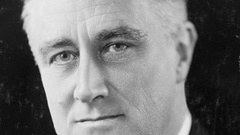
Who were Franklin, Eleanor, and Theodor Roosevelt? What values did they stand for? This course explores twentieth century US history through these three unique leaders. The 3Rs propelled the United States into a superpower. They changed the way we think about security, equality, and freedom. The Roosevelt Century takes you through their time, and connects it with our own

This course is an an exploration of British culture and politics, focusing on the changing role of the monarchy from the accession of the House of Hanover (later Windsor) in 1714 to the present. The dynasty has encountered a series of crises, in which the personal and the political have been inextricably combined: for example, George III's mental illness; the scandalous behavior of his son, George IV; Victoria's withdrawal from public life after the death of Prince Albert; the abdication of Edward VIII; and the public antagonism sparked by sympathy for Diana, Princess of Wales.

What exactly are genetically modified organisms (GMOs) and why do scientists develop them? Studying the science of GMOs helps us understand biotechnology’s potential role in addressing challenges in agriculture.
In this introductory Food and Nutrition course, you will learn the basics of genetic engineering, explore the political debate around the GMO and review the arguments for and against their use.
We will study the politics surrounding the GMO and its impact at both an individual level and to society as a whole; including the problems, perceptions, benefits, and risks associated with GMOs. Important to understanding the complexities around this topic we will not only be looking at the science behind how the GMO works, but also to the limitations of this science. We will also discuss the importance of information literacy as a tool for effectively identifying and evaluating issues.
Our goal is that this MOOC will impact people's understanding of science, what it can and can't do, and how information is transmitted. The intent is not to influence how people feel about GMOs, but to give them the critical thinking and scientific literacy tools necessary to make informed decisions — and to understand the broader impacts of those decisions.

This course introduces the origin and key concepts of sustainability and how to apply those to sustainable development practice.
Sustainable development will be explored through theories and case studies from a range of Disciplines. You also will learn about planetary boundaries, urbanisation and growing inequality, to show how integral sustainable development is to our everyday existence.
This course will attempt to provide key content knowledge to bridge the science and the practice of the application and enhancement of sustainable development. The course draws on contemporary examples from both The University of Queensland (UQ) and the Sustainable Development Solutions Network (SDSN) to address the world’s most urgent challenges, with emphasis on the linkages between science and policy.

Concerned about how the digital age is impacting your well-being? Looking for ways to find balance? This course takes the ancient practice of yoga and translates it into modern day science with practical applications.
You will learn how to practice yoga on the mat as well as in your everyday life using aspects of yoga that are immediately applicable to you. Having taught yoga to thousands of people just like you, we have reduced the practice down to the nectar of what really works.
Your team of instructors brings a dynamic blend of science and practice to the course. Stacy and Dave Dockins own four yoga studios in Texas and have trained hundreds of instructors to teach yoga as a life-transforming practice rooted in mindfulness. Dr. Catherine Spann and Dr. George Siemens are researching what it means to be human in a digital age at the University of Texas at Arlington’s LINK Research Lab. With years of experience in online education and psychological research, they bring expertise in learning and well-being in the digital age.
This course is for anyone interested in learning the science and practice of yoga. No previous yoga experience is needed! We welcome those who are interested in learning the basics of yoga postures as well as experienced yoga practitioners or instructors looking to deepen their practice.
By signing up for this course, you will have the opportunity to meet and discuss yoga and meditation with people from across the world. Encourage friends, family, and colleagues to sign up with you!

The science essay uses science to think about the human condition; it uses humanistic thinking to reflect on the possibilities and limits of science and technology. In this class we read and practice writing science essays of varied lengths and purposes. We will read a wide variety of science essays, ranging across disciplines, both to learn more about this genre and to inspire your own writing. This semester's reading centers on "The Dark Side," with essays ranging from Alan Lightman's "Prisoner of the Wired World" through Robin Marantz Henig's cautionary account of nano-technology ("Our Silver-Coated Future") to David Quammen's investigation of diseases that jump from animals to humans ("Deadly Contact").

We will explore the psychology of our everyday thinking: why people believe weird things, how we form and change our opinions, why our expectations skew our judgments, and how we can make better decisions. We’ll discuss and debate topics such as placebos, the paranormal, medicine, miracles, and more.
You will use the scientific method to evaluate claims, make sense of evidence, and understand why we so often make irrational choices. You will begin to rely on slow, effortful, deliberative, analytic, and logical thinking rather than fast, automatic, instinctive, emotional, and stereotypical thinking.
We will provide tools for how to think independently, how to be skeptical, and how to value data over personal experience. We will examine the mental shortcuts that people use and misuse, and apply this knowledge to help make better decisions, and improve critical thinking.

This course will introduce you to some of the science behind food preparation, cooking methods, and generally, the enjoyment of food. The ultimate goal is to inspire you to apply scientific principles in your everyday cooking, including the principles of manipulating the human perception of food.

By the end of this course, students will:
- Become familiar with key concepts in the emerging area of implementation science;
- Build problem-solving and implementation capacity in local and international global health settings;
- Develop generalisable insights and best implementation practices.
Who is this course for?
Researchers, practitioners and students in Europe, the US and around the world interested in successful implementation of complex health programs that involve multiple interrelated clinical and public health solutions. The target audience includes employees of Ministries of Health, program and project managers in non-governmental organisations and advanced undergraduate and graduate students in a variety of health disciplines (medicine, public health, dentistry, nursing, pharmacy) as well as in fields such as engineering, management and economics.
What do I need to know?
Students will come from a variety of disciplines, but the course is generally best suited for advanced undergraduate and graduate students.
Course Structure
Chapter 0: Welcome
Students will discover the MOOC, its organisation and its main objectives.
They will be introduced to the notion of implementation science, its definition and how it can be a powerful tools for their research projects. They will discover practical examples of why we need implementation science.
Chapter 1: Preparing for change
Students will discover how to prepare their organisation for change.
Explanations will be given about the Lewin Stage Model, the theory of organisational readiness for change. Students will dive deeper into the topic with a case study.
Chapter 2: Designing change
Students will discover design thinking, a systematic way of introducing innovation into an organisation.
Many videos will present practical tools and methods (brainswarming, thinking hats, etc.). Design thinking will be illustrated with case presentation in the field of social innovation.
Chapter 3 : Implementing change
Students will explore tools and methods to implement their innovative solution (Implementation drivers and stages as well as the Hexagon Tools).
Students will dive deeper into the topic with a case study.
Chapter 4 : Sustaining change
Students will explore how to ensure that implementation continues over time.
They will discover key concepts such as the Run Charts, the wastes in Lean as well as the PDSA cycle and the Impact effort Matrix. A last cast study will be presented.
Chapter 5 : Final assessment
The last chapter will be dedicated to the final assessment.
Credits:
This MOOC is developed by the Centre Virchow-Villerme (a joint initiative between Charité and USPC) and is produced in collaboration with Université Paris Descartes, University of North Carolina Gillings School of Global Public Health and Indiana University Richard M. Fairbanks School of Public Health.
Licences:
The content of this MOOC is under Creative Commins licence CC-BY-SA.

"A free eight-week Science of Happiness course that will offer practical, research-backed tips on living a happy and meaningful life." - The Huffington Post
We all want to be happy, and there are countless ideas about what happiness is and how we can get some. But not many of those ideas are based on science. That’s where this course comes in.
“The Science of Happiness” is the first MOOC to teach the ground-breaking science of positive psychology, which explores the roots of a happy and meaningful life. Students will engage with some of the most provocative and practical lessons from this science, discovering how cutting-edge research can be applied to their own lives. Created by UC Berkeley’s Greater Good Science Center, the course will zero in on a fundamental finding from positive psychology: that happiness is inextricably linked to having strong social connections and contributing to something bigger than yourself—the greater good. Students will learn about the cross-disciplinary research supporting this view, spanning the fields of psychology, neuroscience, evolutionary biology, and beyond.
What’s more, “The Science of Happiness” offers students practical strategies for tapping into and nurturing their own happiness, including trying several research-backed activities that foster social and emotional well-being, and exploring how their own happiness changes along the way.
The course’s co-instructors, Dacher Keltner and Emiliana Simon-Thomas, are not only leading authorities on positive psychology but also gifted teachers skilled at making science fun and personal. They’ll be joined by world-renowned experts discussing themes like empathy, mindfulness, and gratitude—experts including Barbara Fredrickson, Paul Ekman, Sonja Lyubomirsky, and Jon Kabat-Zinn. Health professionals who register can earn continuing education units for their participation.
Consider signing up for this course with a friend or group - tweet about your registration, share it on Facebook, and use the buddy system to stay on track. Join the conversation on The Greater Good Science Center Facebook page, or in the BerkeleyX: GG101x The Science of Happiness Facebook group.

This education course will show you, through current research, how we learn — the way our brain makes, stores, and retrieves memories.
You will examine common misconceptions and misunderstandings about learning that can prevent students from learning at their fullest capacity. Along the way you will explore the practical implications of cognitive science for classroom teaching in terms of choosing effective instructional strategies, developing useful assessments, motivating student effort, and designing learner-centered curricular units.
This course is aimed to enhance the practice of K-12 teachers.
Add to calendar

Trusted paper writing service WriteMyPaper.Today will write the papers of any difficulty.