Online courses directory (10358)

Apprenez les bases de WordPress, trucs et astuces pour créer et gérer votre site ou blog pour les débutants.

Step by Step training for the complete beginner

You will be able to gain and apply your knowledge and understanding of personal and professional awareness, organization and commitment, and use the tools, methods and techniques that you have learned in goal setting, prioritization, scheduling, and delegation to overcome time management challenges and enhance productivity.

This seminar will cover the multi-disciplinary theoretical and empirical foundations of research on work, employment, labor markets, and industrial relations. We begin by tracing the historical development of theory and research in the field, paying special attention to how the normative premises, concepts, and methodological traditions of industrial relations compare to those of other disciplines that contribute to the study of work and employment relations. Then we will review a number of current theoretical and policy debates shaping the field. This will be followed by a series of modules introducing different disciplinary perspectives used to study work and employment issues today. Emphasis will be given to recent research from different industries that illustrate the mix of methods—field work, qualitative and quantitative data collection and analysis, etc.—we encourage in this field of study.
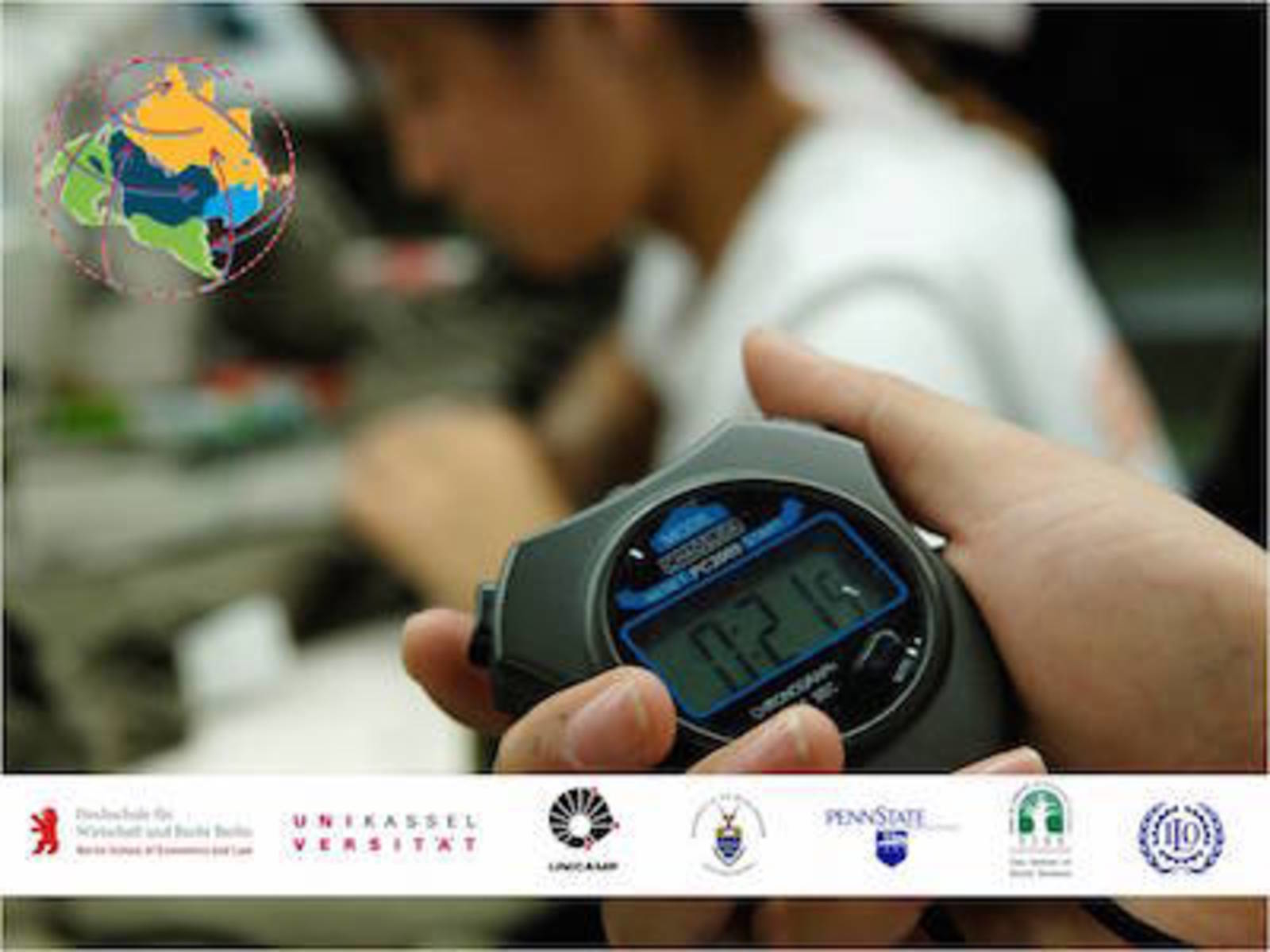
Rights and dignity at the workplace are fundamental human rights. However, workers’ rights continue to be violated every day - millions of people worldwide are facing exploitative working hours, poverty wages, humiliation and mistreatment at work. There are estimates that today’s world has a higher number of slaves than any other time in history.
This MOOC discusses what Global Workers’ Rights are and which instruments and strategies can be used to implement them. Based on a careful mix of video lectures, readings, online resources and interviews with activists and labour scholars from around the world, you will gain both knowledge and practical skills for furthering workers’ rights worldwide. In some countries, the online learning experience will be complemented with local workshops and the results of the local discussions will be uploaded into the MOOC for a truly global learning experience.
What will I learn
At the end of the course you will understand the history and concept of global workers’ rights and the institutional structure of the International Labour Organization (ILO) as the key player in setting International Labour Standards. You will be able to join the economic debate about labour standards and competitiveness, and understand the concepts behind the fundamental rights of Freedom of Association and Collective Bargaining. You will understand the different approaches for realizing decent work in the informal economy and gain an overview of instruments and initiatives beyond the ILO and trade union strategies in global supply chains. The course also allows you to apply this knowledge to a practical case from your country and gain skills and competencies for using the existing instruments and mechanisms for promoting workers’ rights worldwide.
What do I need to know?
The course requires a working level of English and draws on the fields of political science and law at the level of a Master's programme. However, theoretical concepts are explained in an accessible and well-illustrated way, so it is also possible to participate in the course based on skills and knowledge acquired outside formal education.
Course Structure
Chapter 1: The concept of Global Workers’ Rights
This chapter introduces the concept of Global Workers’ Rights and explains the history and functioning of the International Labour Organization (ILO) as the organization setting International Labour Standards (ILS). The prospects and challenges of the ILO approach to Global Workers’ Rights are debated, and you will learn about the mainstream economic arguments against ILS and how to assess them critically. Participants will be invited to share relevant material on labour rights issues in an interactive world map.
Chapter 2: Introduction to International Labour Standards (ILS)
Which types of International Labour Standards exist and how are they set? Which actors are involved and how are they interlinked? This chapter provides an overview on International Labour Standards and lays the foundation for understanding the standard setting mechanisms at the ILO. The role of trade unions in this process is illustrated through a concrete example of a recent and ground-breaking Convention for one of the most vulnerable groups of workers. In addition, an optional unit invites delegates to the International Labour Conference of the ILO to deepen their knowledge on the functioning of the Conference.
Chapter 3: Supervision of International Labour Standards (ILS)
This chapter aims at enabling you to understand and use the ILO supervisory mechanisms for the protection of workers’ rights. The elaborate process is illustrated in a concise and hands-on way, complemented by practical insights from insiders. At the end of the chapter, the mid-term assignment invites you to apply your newly acquired knowledge to a practical case from your country. The assignment is due at the end of chapter 4. This assignment will allow you to extend your knowledge on the labour rights situation in other countries and to learn from each other.
Chapter 4: Freedom of Association and Collective Bargaining
Freedom of Association and Collective Bargaining are ‘enabling rights’ at the heart of decent work. But what is the legal concept of Freedom of Association under Convention 87 and what makes it fundamental to the implementation of International Labour Standards? This chapter will also provide you with an overview on the current debate on the right to strike and show practical insights on Freedom of Association and Collective Bargaining.
Chapter 5: Access to rights for workers in informal and precarious employment
This chapter focuses on the challenge of realizing rights for workers in informal and precarious employment. We will explore the specific dynamics in the informal economy and innovative approaches for increasing workers’ protection in this challenging field, including examples of successful organising strategies in the informal economy from India, South Africa and Zimbabwe.
Chapter 6: Company responsibility to respect ILS: Norms, Standards, Principles
This chapter discusses key instruments and initiatives beyond the ILO in the struggle for global workers’ rights. What are the main instruments of Corporate Social Responsibility? How can the OECD Guidelines and the UN Guiding Principles on Business and Human Rights be used to promote workers’ rights? And what are legislative approaches to hold companies accountable for workers’ rights violations in global supply chains?
Chapter 7: Trade union strategies for promoting ILS in global supply chains
What are strategies of labour for realizing decent work in global supply chains? This concluding chapter looks at innovative trade union strategies in global supply chains and opens a space for discussion on the role of trade unions in the governance of workers’ rights in a global economy.
Final exam: Multiple-choice-test
Students choosing the certificate track will have one week study time before taking a multiple choice test on the course content.
If you complete the certificate track, you can apply for a GLU scholarship to participate in the 11th Global Labour University Conference, South Africa, 2016 on “The Just Transition and the Role of Labour: Our Ecological, Social, and Economic Future”, September 28 to 30, 2016, Johannesburg, South Africa. We will cast a lot among the applicants to select to MOOC certificate students for a GLU scholarship to participate in the conference (covering travel and accommodation at the Conference). For more information on the Conference keep an eye on http://www.global-labour-university.org.
Line-up of contributors
Prof. Paul Whitehead
- Professor of Practice in Labor Studies and Employment Relations at Penn State University, USA
- Main areas of interest: Trade unions, collective bargaining, labor and employment law, international labor law, international human resources, trade law, and programs for pensions, health care, and social security
Prof. Mark Anner, Ph.D.
- Associate Professor of Labor and Employment Relations, and Political Science at Penn State University, USA
- Main areas of interest: Global Apparel Industry, Labour movements in Latin America, Corporate Social Responsibility, Strikes in Vietnam
Esther Busser
- Deputy Director, Geneva Office of the International Trade Union Confederation (ITUC)
- Main areas of interest: social dialogue, training, research, employment, trade, migration, sectorial activities and policies, multinational enterprises, small and medium enterprises
Prof. Dr. Stefanie Lorenzen
- Professor of Employment and Labour Law at the Berlin School of Economics and Law, Department of Business and Economics, Germany
- Main areas of interest: employment law, co-determination, right to collective bargaining, international and European labour law
Fernando Lopes
- Assistant General Secretary of IndustriALL Global Union
- Main areas of interest: global labour movement, global framework agreements
Dr. Michael Fichter
- Senior Lecturer at the Global Labour University, Germany
- Main areas of interest: global labour relations, trade unions, political economy
Dr. Frank Hoffer
- Economist and Senior Research Officer, Bureau for Workers’ Activities, ILO.
- Main areas of interest: Wages Policies, Social Protection, International Research Cooperation
Victor Hugo Ricco
- Lawyer and Technical officer, Bureau for Workers’ Activities, ILO
- Main areas of interest: International Labour Standards, Informal Economy, Forced labour
Camilo Rubiano
- Trade union rights & national administration officer at Public Services International (PSI)
- Main areas of interest: international labour standards, freedom of association
Prof. Dr. Christoph Scherrer
- Professor for Globalization and Politics, Social Science Department of the University of Kassel, Germany
- Main areas of interest: International Political Economy: Governance of world markets, international labor standards, cross-national transfer of institutions, theories of the International Political Economy
Dr. Ben Scully
- Lecturer at the University of Witwatersrand, South Africa
- Main areas of interest: Precarious Work, Economic Development, Social Welfare in the Global South
Beatriz Vacotto
- Legal specialist and Coordinator of the Wages, Working Time, Maritime and Specific Workers Team, International Labour Standards Department, ILO
- Main areas of interest: Support to trade unions on issues related to International Labour Standards and the ILO supervisory mechanisms.
Jeffrey Vogt
- Legal Director, International Trade Union Confederation (ITUC)
- Main areas of interest: trade and labour standards, freedom of association, precarious work, comparative labour law
Further contributors:
Maria Helena André (Director of the Bureau for Workers’ Activities, ILO)
Zeynep Aklar (Trade union activist with DİSK/Sosyal-İs, Turkey)
Pratik Baviskar (Organiser at the trade union Learn Mahila Kaamgar Sangathan, India)
Magda Biavaschi, Ph.D. (Assistant Professor at University of Campinas, Brazil)
Karen Curtis (Chief of the Freedom of Association Branch, International Labour Standards Department, ILO)
Kirstine Drew (Senior policy advisor to the Trade Union Advisory Council to the OECD)
Eulogia Familia (Vice-President of the National Confederation of Trade Union Unity in the Dominican Republic)
Prof. Jayati Ghosh (Professor of Economics at the Jawaharlal Nehru University, India)
Tandiwe Gross (Associate Expert at the Bureau for Workers’ Activities, ILO)
Renana Jhabvala (National coordinator of the Self-employed Women’s Association, India)
Maité Llanos (Project coordinator at the Global Labour University)
Wisborn Malaya (Secretary General at Zimbabwe Chamber of Informal Economy Associations, Zimbabwe)
Luisa Nxumalo (Organiser at the Congress of South African Trade Unions, South Africa)
Isabel Ortiz (Director of the Social Protection Department, ILO)
Image Copyright (above): ILO/Crozet M

The course introduces the main debates about the "new" global economy and their implications for practice and policy. Experts from academia and business will share their findings about, and direct experiences with, different aspects of globalization.
The course introduces the main debates about the "new" global economy and their implications for practice and policy. Experts from academia and business will share their findings about, and direct experiences with, different aspects of globalization.

Teamwork is an essential component of most professional activities in the modern world. But what makes an effective team?
This course is an introduction to teamwork skills for all disciplines that will help you improve your own performance and that of your team.
It covers why teams are important, the roles of individuals in a team, systems and processes for effective teamwork and communication, and methods for addressing team conflict.
Throughout the course you will be provided with a range of tools and templates that you will be able to use with any team.
Join us and learn how to make teams work for everyone.

Waldorf underlines the importance of collaborating with great people; people with qualities similar to those of good tea

This class is a deep dive from photography to videography, and shows you how to think in motion. Many of the core concepts carried over from still photography are the same, but putting your camera and scene in motion opens up a new world of possibilities and demands. You will learn how to add motion where there is none, and to control focus, light and sound.

Special education addresses the individual differences and requirements of students with special educational needs. As a teacher or trainer, working with students with special educational needs requires specific skills and strategies to create and deliver effective programs. <br /><br />ALISON's free online education course serves as an introduction to the field of special education. The course begins by outlining core elements of special education, including the change in educational legalization in recent years with particular emphasis on legislation in the United States. The responsibilities of teachers and trainers are also detailed, along with the individual educational plan (IEP). The course describes the most frequent disabilities encountered in the classroom: learning disabilities, attention deficit hyperactivity disorder (ADHD), intellectual disabilities, behavioral disorders, and physical disabilities and sensory impairments. The course provides key information about each of these disabilities and describes practical strategies on how to assist and teach students with these disabilities. <br /><br />This education course will be of great interest to professionals in the education sector who would like a greater knowledge and understanding of working with students with special educational needs, and to all students who are interested in special education.<br />

With my help, spending 31 minutes you will learn how to create and edit some video and clips in the adobe photoshop cs6

This course fulfills the first half of the Comparative Media Studies workshop sequence requirement for entering graduate students. The workshop sequence provides an opportunity for a creative, hands-on project development experience and emphasizes intellectual growth as well as the acquisition of technical skills. The course is designed to provide practical, hands-on experience to complement students' theoretical studies.

This course focuses on a number of qualitative social science methods that can be productively used in media studies research including interviewing, participant observation, focus groups, cultural probes, visual sociology, and ethnography. The emphasis will primarily be on understanding and learning concrete techniques that can be evaluated for their usefulness in any given project and utilized as needed. Data organization and analysis will be addressed. Several advanced critical thematics will also be covered, including ethics, reciprocity, "studying up," and risk. The course will be taught via a combination of lectures, class discussions, group exercises, and assignments. This course requires a willingness to work hands-on with learning various social science methods and a commitment to the preparation for such (including reading, discussion, and reflection).