

Online courses directory (10358)
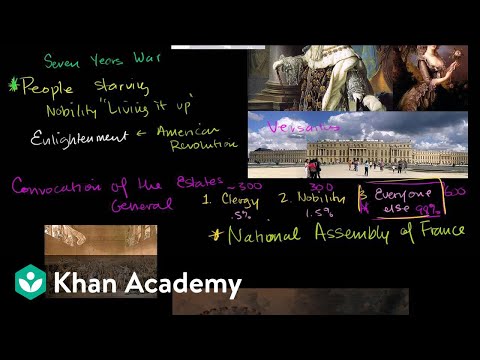
French Revolution (Part 1). French Revolution (Part 2). French Revolution (Part 3) - Reign of Terror. French Revolution (Part 4) - The Rise of Napoleon Bonaparte. French Revolution (Part 4) - The Rise of Napoleon Bonaparte. Napoleon and the Wars of the First and Second Coalitions. Napoleon and the War of the Third Coalition. Napoleon and the War of the Fourth Coalition. Napoleon's Peninsular Campaigns. French Invasion of Russia. Napoleon Forced to Abdicate. Hundred Days and Waterloo. Les Miserables and France's many revolutions. Haitian Revolution (Part 1). Haitian Revolution (Part 2). French Revolution (Part 1). French Revolution (Part 2). French Revolution (Part 3) - Reign of Terror. French Revolution (Part 4) - The Rise of Napoleon Bonaparte. French Revolution (Part 4) - The Rise of Napoleon Bonaparte. Napoleon and the Wars of the First and Second Coalitions. Napoleon and the War of the Third Coalition. Napoleon and the War of the Fourth Coalition. Napoleon's Peninsular Campaigns. French Invasion of Russia. Napoleon Forced to Abdicate. Hundred Days and Waterloo. Les Miserables and France's many revolutions. Haitian Revolution (Part 1). Haitian Revolution (Part 2).
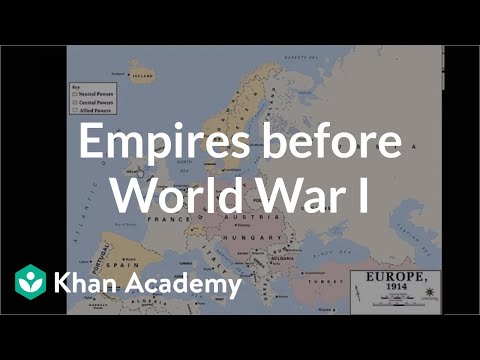
You cannot properly understand current world events without understanding the history of the 20th Century. This topic takes us on a journey from the end of Imperialism through two world wars and the Cold War and brings us to our modern world. Empires before World War I. German and Italian Empires in 1914. Alliances leading to World War I. Language and religion of the former Yugoslavia. Assassination of Franz Ferdinand by Gavrilo Princip. The Great War begins. Causes of World War I. Blockades, u-boats and sinking of the Lusitania. Zimmermann Telegram. United States enters World War I. Wilson's war message to Congress -- April 2, 1917. 1917 speech by Senator George Norris in opposition to American entry. WWI Blockades and America. Schlieffen Plan and the First Battle of the Marne. Comparing the Eastern and Western Fronts in WWI. World War I Eastern Front. Battles of Verdun, Somme and the Hindenburg Line. Closing stages of World War I. Technology in World War I. Eastern and Western Fronts of World War I. Serbian and Macedonian Fronts. Serbian losses in World War I. Italy backs out of Triple Alliance. Italian front in World War I. Japan in World War I. Secondary fronts of WWI. Theodor Herzl and the birth of political Zionism. Sinai, Palestine and Mesopotamia Campaigns. Sykes-Picot Agreement and the Balfour Declaration. Arabia after World War I. The Middle East during and after WWI. Gallipoli Campaign and ANZAC Day. Sinai, Palestine and Mesopotamia Campaigns. Armenian massacres before World War I. Young Turks and the Armenians. Mustafa Kemal Ataturk and the Turkish War for Independence. Ottoman Empire and birth of Turkey . Deaths in World War I. Woodrow Wilson's Fourteen Points. Paris Peace Conference and Treaty of Versailles. More detail on the Treaty of Versailles and Germany. Arabia after World War I. WWI Aftermath. World War I. Initial rise of Hitler and the Nazis. Hitler's Beer Hall Putsch. Hitler and the Nazis come to power. Night of the Long Knives. Nazi Aggression and Appeasement. Rise of Hitler. Fascism and Mussolini. Mussolini becomes Prime Minister. Mussolini becomes absolute dictator (Il Duce). Mussolini aligns with Hitler. Fascism and Mussolini. Overview of Chinese History 1911 - 1949. Communism. Korean War Overview. Bay of Pigs Invasion. Cuban Missile Crisis. Vietnam War. Allende and Pinochet in Chile. Pattern of US Cold War Interventions. Empires before World War I. German and Italian Empires in 1914. Alliances leading to World War I. Language and religion of the former Yugoslavia. Assassination of Franz Ferdinand by Gavrilo Princip. The Great War begins. Causes of World War I. Blockades, u-boats and sinking of the Lusitania. Zimmermann Telegram. United States enters World War I. Wilson's war message to Congress -- April 2, 1917. 1917 speech by Senator George Norris in opposition to American entry. WWI Blockades and America. Schlieffen Plan and the First Battle of the Marne. Comparing the Eastern and Western Fronts in WWI. World War I Eastern Front. Battles of Verdun, Somme and the Hindenburg Line. Closing stages of World War I. Technology in World War I. Eastern and Western Fronts of World War I. Serbian and Macedonian Fronts. Serbian losses in World War I. Italy backs out of Triple Alliance. Italian front in World War I. Japan in World War I. Secondary fronts of WWI. Theodor Herzl and the birth of political Zionism. Sinai, Palestine and Mesopotamia Campaigns. Sykes-Picot Agreement and the Balfour Declaration. Arabia after World War I. The Middle East during and after WWI. Gallipoli Campaign and ANZAC Day. Sinai, Palestine and Mesopotamia Campaigns. Armenian massacres before World War I. Young Turks and the Armenians. Mustafa Kemal Ataturk and the Turkish War for Independence. Ottoman Empire and birth of Turkey . Deaths in World War I. Woodrow Wilson's Fourteen Points. Paris Peace Conference and Treaty of Versailles. More detail on the Treaty of Versailles and Germany. Arabia after World War I. WWI Aftermath. World War I. Initial rise of Hitler and the Nazis. Hitler's Beer Hall Putsch. Hitler and the Nazis come to power. Night of the Long Knives. Nazi Aggression and Appeasement. Rise of Hitler. Fascism and Mussolini. Mussolini becomes Prime Minister. Mussolini becomes absolute dictator (Il Duce). Mussolini aligns with Hitler. Fascism and Mussolini. Overview of Chinese History 1911 - 1949. Communism. Korean War Overview. Bay of Pigs Invasion. Cuban Missile Crisis. Vietnam War. Allende and Pinochet in Chile. Pattern of US Cold War Interventions.
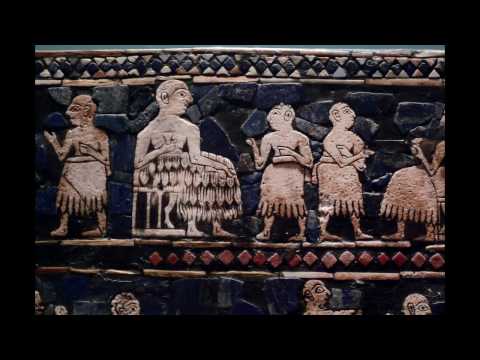
Sumerian Art: Standard of Ur. Ptolemaic: Rosetta Stone. Ancient Rome. Ara Pacis. Sutton Hoo Ship Burial. Charlemagne: An Introduction (1 of 2). Charlemagne and the Carolingian Revival (part 2 of 2). Coronation Mantle. Sumerian Art: Standard of Ur. Ptolemaic: Rosetta Stone. Ancient Rome. Ara Pacis. Sutton Hoo Ship Burial. Charlemagne: An Introduction (1 of 2). Charlemagne and the Carolingian Revival (part 2 of 2). Coronation Mantle.

Build your earth science vocabulary and learn about cycles of matter and types of sedimentary rocks through the Education Portal course Earth Science 101: Earth Science. Our series of video lessons and accompanying self-assessment quizzes can help you boost your scientific knowledge ahead of the Excelsior Earth Science exam . This course was designed by experienced educators and examines both science basics, like experimental design and systems of measurement, and more advanced topics, such as analysis of rock deformation and theories of continental drift.
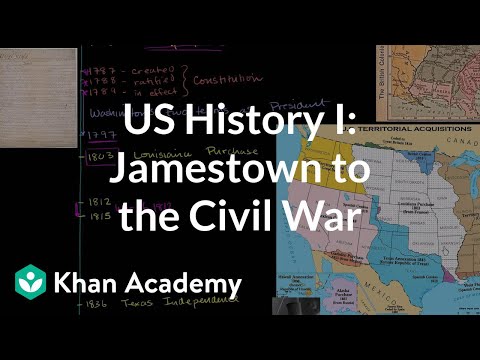
The tutorials in this topic will take you on sweeping journeys through time so that you can get the really BIG picture for how things fit together. US History Overview 1: Jamestown to the Civil War. US History Overview 2: Reconstruction to the Great Depression. US History Overview 3: WWII to Vietnam. Appomattox Court House and Lincoln's Assassination. When Capitalism is Great and Not-so-great. 20th Century Capitalism and Regulation in the United States. US History Overview 1: Jamestown to the Civil War. US History Overview 2: Reconstruction to the Great Depression. US History Overview 3: WWII to Vietnam. Appomattox Court House and Lincoln's Assassination. When Capitalism is Great and Not-so-great. 20th Century Capitalism and Regulation in the United States.

This semester, we will read writing about travel and place from Columbus's Diario through the present. Travel writing has some special features that will shape both the content and the work for this subject: reflecting the point of view, narrative choices, and style of individuals, it also responds to the pressures of a real world only marginally under their control. Whether the traveler is a curious tourist, the leader of a national expedition, or a starving, half-naked survivor, the encounter with place shapes what travel writing can be. Accordingly, we will pay attention not only to narrative texts but to maps, objects, archives, and facts of various kinds.
Our materials are organized around three regions: North America, Africa and the Atlantic world, the Arctic and Antarctic. The historical scope of these readings will allow us to know something not only about the experiences and writing strategies of individual travelers, but about the progressive integration of these regions into global economic, political, and knowledge systems. Whether we are looking at the production of an Inuit film for global audiences, or the mapping of a route across the North American continent by water, these materials do more than simply record or narrate experiences and territories: they also participate in shaping the world and what it means to us.
Authors will include Olaudah Equiano, Caryl Philips, Claude Lévi-Strauss, Joseph Conrad, Jamaica Kincaid, William Least Heat Moon, Louise Erdrich, Álvar Núñez Cabeza de Vaca.
Expeditions will include those of Lewis and Clark (North America), Henry Morton Stanley (Africa), Ernest Shackleton and Robert F. Scott (Antarctica).

Discover a world of music exploring your community or family to learn how music represents cultural identity.

Think about your favourite wine. Imagine the brilliance of its colour in the glass, the ripe fruit aromas on the nose, a hint of toasty oak and lingering tannins on the back palate. Perhaps you like a specific wine, but can’t pinpoint the reason why. The attributes that make wine so enjoyable are achieved through the expertise of viticulturists and winemakers, whose decision-making in the vineyard and winery is underpinned by science – to be precise, viticulture and oenology.
The finer details can take years to learn, but in a matter of weeks this course will give you a broad understanding of the principles and practices used to grow grapes and make wine, and their impact on wine appearance, aroma, flavour and taste. You’ll also gain an appreciation for how cutting-edge research is helping to secure the future sustainability of the global wine industry. Whether you’re a wine novice or a seasoned oenophile,, this course is for anyone who loves wine and wine tasting. You’ll even get to make your own wine-- virtually at least!
Confidently describe wine appearance, aroma, flavour and taste.

The Ultimate Guide to Writing a Resume

Need to transition from High School standardized essays to college level work? This is the course for you!

If you have a laptop, I will walk you through the tedious process of writing your first app on the Android cellphone. Yo

This course introduces students to strategies for style writing of common practice European art music. The issues of harmonic progression, voice leading, and texture are addressed in addition to relevant compositional concepts like repetition, variation, and elaboration. The course aims to offer a creative space even within the restrictions of stylistic emulation.

Students, scholars, bloggers, reviewers, fans, and book-group members write about literature, but so do authors themselves. Through the ways they engage with their own texts and those of other artists, sampling, remixing, and rethinking texts and genres, writers reflect on and inspire questions about the creative process. We will examine Mary Shelley's reshaping of Milton's Paradise Lost, German fairy tales, tales of scientific discovery, and her husband's poems to make Frankenstein (1818, 1831); Melville's redesign of a travel narrative into a Gothic novella in Benito Cereno (1856); and Alison Bechdel's rewriting of Oscar Wilde's The Importance of Being Earnest (1895) in her graphic novel Fun Home (2006). Showings of film versions of some of these works will allow us to project forward in the remixing process as well.

This course focuses on traditional nature writing and the environmentalist essay. Students will keep a Web log as a journal. Writings are drawn from the tradition of nature writing and from contemporary forms of the environmentalist essay.

Does race still matter, as Cornel West proclaimed in his 1994 book of that title, or do we now live, as others maintain, in a post-racial society? The very notion of what constitutes race remains a complex and evolving question in cultural terms. In this course we will engage this question head-on, reading and writing about issues involving the construction of race and racial identity as reflected from a number of vantage points and via a rich array of voices and genres. Readings will include literary works by such writers as Toni Morrison, Junot Diaz, and Sherman Alexie, as well as perspectives on film and popular culture from figures such as Malcolm Gladwell and Touré.

In this course we will read essays, novels, memoirs, and graphic texts, and view documentary and experimental films and videos which explore race from the standpoint of the multiracial. Examining the varied work of multiracial authors and filmmakers such as Danzy Senna, Ruth Ozeki, Kip Fulbeck, James McBride and others, we will focus not on how multiracial people are seen or imagined by the dominant culture, but instead on how they represent themselves. How do these authors approach issues of family, community, nation, language and history? What can their work tell us about the complex interconnections between race, gender, class, sexuality, and citizenship? Is there a relationship between their experiences of multiraciality and a willingness to experiment with form and genre? In addressing these and other questions, we will endeavor to think and write more critically and creatively about race as a social category and a lived experience.
In this course we will read essays, novels, memoirs, and graphic texts, and view documentary and experimental films and videos which explore race from the standpoint of the multiracial. Examining the varied work of multiracial authors and filmmakers such as Danzy Senna, Ruth Ozeki, Kip Fulbeck, James McBride and others, we will focus not on how multiracial people are seen or imagined by the dominant culture, but instead on how they represent themselves. How do these authors approach issues of family, community, nation, language and history? What can their work tell us about the complex interconnections between race, gender, class, sexuality, and citizenship? Is there a relationship between their experiences of multiraciality and a willingness to experiment with form and genre? In addressing these and other questions, we will endeavor to think and write more critically and creatively about race as a social category and a lived experience.

This free five-week course is dedicated to the life and work of U.S. food writing giants Judith Jones, Craig Claiborne, MFK Fisher, Clementine Paddleford, and Michael Batterberry and their work, from restaurant criticism to cookbooks and magazines.

MIT students bring rich cultural backgrounds to their college experience. This course explores the splits, costs, confusions, insights, and opportunities of living in two traditions, perhaps without feeling completely at home in either. Course readings include accounts of growing up Asian-American, Hispanic, Native American, and South-East Asian-American, and of mixed race. The texts include selections from Maxine Hong Kingston's The Woman Warrior, Kesaya E. Noda's "Growing Up Asian in America," Sandra Cisneros's Woman Hollering Creek, Gary Soto's "Like Mexicans," Sherman Alexie's The Toughest Indian in the World, Jhumpa Lahiri's Interpreter of Maladies, the movies Smoke Signals and Mississippi Masala, Danzy Senna's Caucasia, and others. We will also use students' writings as ways to investigate our multiple identities, exploring the constraints and contributions of cultural and ethnic traditions. Students need not carry two passports in order to enroll; an interest in reading and writing about being shaped by multiple influences suffices.

In this era of globalization, many of us have multi- or bi-cultural, multilingual or bilingual backgrounds, and even if we don't have such a background, we need urgently to understand the experiences of people who do. You will very likely work outside the United States at some point in your future; you will almost certainly work with people who speak more than one language, whose ancestry or origins are in a country other than the U.S., who have crossed borders of nation, language, culture, class to amalgamate into the large and diverse culture that is America. In this class we will read the personal narratives of bilingual and bicultural writers, some of whom have struggled to assimilate, others of whom have celebrated their own contributions to a culture of diversity. You will write four personal essays of your own for the class, each of which will receive workshop discussion in class and response from me; you will then revise the essays to polish them for possible publication. One of your essays will be an investigative one, where you will focus on a subject of your choice, investigate it thoroughly, and then write with authority about it. The process of the class will encourage you to both improve your writing significantly and gain a greater understanding of experiences of people who are in some way like you as well as those who are in some way different.
Add to calendar

Trusted paper writing service WriteMyPaper.Today will write the papers of any difficulty.