

Online courses directory (19947)
Why do you need Digital Marketing?
With budgets for digital marketing constantly growing, organisations are facing a major skills shortage. The need for individuals who understand business combined with technical knowledge in Digital Marketing has never been greater. This course is based on European case studies showing current digital and social media marketing practices across Europe. Europe is one of the largest regions for digital and social marketing used but there are many local preferences and this course will help you to navigate these complexities. This course combines practical skills and theoretical knowledge with the goal of teaching you the skills to improve digital and social media marketing in organisations.
Who is this course for?
This course is aimed at two audiences:
- Organisations who want to establish and improve their digital and social media marketing footprint.
- Everyone interested in digital and social media marketing who might consider studying or working in the field.
What do I need to know?
Basic computer knowledge and skills are necessary and a business background would be advantageous but is not essential.
Learning Objectives
- Introduce current and core practices of Digital and Social Media Marketing that will allow learners to analyse, plan, execute and evaluate a digital marketing strategy.
- Introduce core tools currently used in Digital and Social Media Marketing that will allow learners to analyse, plan, execute and evaluate a digital marketing strategy.
- Develop an understanding of Search Engine Optimisation (SEO), Social Media Optimisation, Affiliate and other relevant communication channels for engagement of digital communities.
Course Structure
1. Why is Digital and Social Media Marketing important today and in the future?
1.1. Introduction to strategic planning
1.2 SWOT analysis
1.3. Developing SMART objectives for strategy and campaigns
1.4. Digital Business Maturity Model
1.5. The consumer journey to online purchase
1.6. Introduction to core concepts of digital and social media marketing
1.7. Introduction to online branding
2. Understanding the different nature of digital channels based on geographic, demographic and digital fit for a campaign
2.1 Search Engines - differences in countries - based on the case study examples
2.2 Social Media platforms differences in countries and how to they can be used
2.3 Email marketing and how it can be used
2.4 Affiliate marketing and how it can be used
2.5 Mobile marketing and how it could be used
2.6 Paid channels overview - search and social
2.7 Communities focused engagement
3. Buyer persona development
3.1 The importance of understanding who the target audience is and how search and social help to develop this understanding
3.2 Planning integration of search and social media
3.3 Keyword research for buyer persona
3.4 Social media channels for buyer persona
3.5 Develop keyword plan for a campaign
3.6 PPC keyword vs organic keyword plan
3.7 Develop social media editorial calendar
4. How campaigns fit into a wider implementation of the overall organisation strategy
4.1 Example company campaign plan
4.2 Key elements of campaign management - Gantt chart
4.3 Risk management
4.4 Digital project management tools and techniques
4.5 Project plan monitoring and review
4.6 Marketing automation
4.7 PPC campaign planning
5. Choosing the right digital profiles for the right audience
5.1 Facebook
5.2 YouTube
5.3 Twitter
5.4 LinkedIn
5.5 PPC optimisation
5.6 What makes content to go Viral?
5.7 How to create content viral?
6. The importance of ongoing monitoring and learning from your engagement
6.1 Understanding of Social Capital and its importance case study
6.2 Accessing data in Google Analytics
6.3 Accessing data from Facebook
6.4 Accessing data from Twitter
6.5 Using spreadsheets to analyse and populate reports
6.6 Learning from digital results
6.7 PPC report
WHAT IS THIS COURSE ABOUT?
Have you ever wondered why 90% of musicians (and artists) don't make a living in the digital era - although they want to?
The answer is simple: they are still stuck in the last century mindset. The truth is, if you want to become a full-time artist doing what you love, you have to structure a business around your art, not just merely hope!
In this practical, 8-week course, two full-time practitioner musicians and academic educators, Tommy Darker and Stereo Mike, will guide you though the process of creating your very own business model, how to market yourself as a startup, how to be agile, motivated and productive, how to develop a work-in-progress brand, and how to adapt to the new mindset.
This is a course for all artists, and 'music' will be used as a case study. You will learn through practical assignments, so that you can implement what you learn in the real world, and get practical results.
This is the first MOOC in the world of its kind. It will be exciting. Shall we start?
WHO IS THIS COURSE FOR?
The course would be of interest to musicians and artists seeking entrepreneurial knowledge, as well as business practitioners working within an artistic context.
The specific target audience for the course includes practitioners in the field of music and arts, with an active interest in developing professional careers and becoming full-time artists.
WHAT DO I NEED TO KNOW?
There is no academic prerequisite necessary in order to be able to engage with and benefit from the course - just bring your appetite to learn.
However, an active musician or arts practitioner will be able to leverage the philosophy, practice and challenges set by directly applying the studied principles to their developing careers.
WHAT WILL I LEARN?
Upon completion of the course, the students should be able to:
1. Apply contemporary entrepreneurial approaches to their musical/artistic careers
2. Identify changing industry trends in order to define relevant opportunities for their practice
3. Balance artistic and business personal development, ensuring longevity
4. Discover scalable business models and recurring revenue streams
5. Produce actionable plans to exploit their art entrepreneurially, through practical assignments
6. Innovate, recognising future trends and technological progress
COURSE STRUCTURE
Week 1: Introduction
Historical Context | The New Ecosystem | Modern Concepts
Week 2 & 3: Business Models
Business Model Structure | Revenue models | Audience
Week 4: Lean Startup
Validated Learning | MVP | Prototyping | Management
Week 5: Agile Philosophy Principles
Productivity & Motivation | Startup Mindset | Communication
Week 6: Presence, Product, Process
Work-in-progress Brand | Demo | The Drip Method
Week 7: Digital Opportunities & Digital Paradigms
Power of Free | Digital-to-analogue | Network
Week 8: Deconstruction
Case Studies | Leadership & Innovation | What's Next?

This course will provide information on the science of Hydraulic Fracturing, a key process used to extract oil and gas resources, and its relationship with water resources. The purpose of this course is to provide a balanced and comprehensive understanding of the background, processes, and regulations related to Hydraulic Fracturing, its reliance on water and the protections used to safeguard water resources. Students taking this course will gain a fuller understanding of the role hydraulic fracturing plays in the production of oil and gas in the U.S. and particularly in Oklahoma. The course will expose students to industry experts, academic experts and people who regulate oil and gas operations. During this online course students will have the opportunity to review up-to-date policies and new directions in sustainable development of oil and gas resources.
Digital Branding is still an underrepresented and unexplored field in research and practice. The multiplicity of cultural differences within international brand management is vast.
Following a primer on brand management and the particulars of digital media and technologies, participants experience how to present a brand using digital brand storytelling. In the latter portion of the course, you will learn advanced methods and techniques used to generate strong, ownable emotions around a brand.
The course addresses the following questions:
• How can I use the unique attributes of digital media and digital technologies for my own digital brand management work?
• How do I stage – like a theater production – my brand effectively in digital media?
• How can I tell exciting, successful stories?
• How can I place my digital brand management (concept) in the minds of my consumers and other important stakeholder groups?
Who should take this course?
The course is aimed at those who believe in the digital future and actively want to shape it, which means that we should cover some basic premises at the outset.
What counts most is passion and the will to build strong digital brands. To be a pioneer. To search out new inspiration, input and to meet new people to share your passion and network with.
What do I need to know?
Some of you already have previous knowledge of branding or of digital media, which is welcome but not required. Interest and curiosity in digital brand management as well as in the unique attributes of digital media and technologies are all you need to participate.
What will I learn?
By the end of the course:
• You will have learned how to use the unique attributes of digital media and digital technologies for your own digital brand management work.
• You will be able to stage – like a theater production – your brand effectively in digital media.
• You will be able to tell exciting, successful stories.
• You will understand how to place your digital brand management (concept) in the minds of your consumers and other important stakeholder groups in an effective manner.
Course Structure
Chapter 1:
In the first chapter, we will define the most important terms of branding. You will be formulating your own Brand Reward Promise and you'll be dealing with the Limbic Map, which will guide you toward the possibilities for positioning your brand/product in an emotionally and rewarding manner.
Chapter 2:
We will learn about the unique attributes of digital media and digital technologies.
Chapter 3:
We will experience how to present a brand using digital brand storytelling.
Chapter 4:
We will deal with Emotional Brand Codes and learn advanced methods and techniques used to generate strong, ownable emotions around a brand.

This course examines Supreme Court decisions concerning the development of the 1st, 4th, 5th, 6th, 8th, and 14th Amendments to the United States Constitution. We will look specifically at establishment and free exercise; free speech, including obscene speech; 4th Amendment guarantees against unreasonable searches and seizures; the 5th Amendment right against self-incrimination; 8th Amendment prohibitions against cruel and usual punishment; as well as related cases that have recognized rights of historically marginalized groups in United States history, including African-Americans, women, and sexual minorities through these Amendments. Particular attention will be paid to how the Supreme Court has developed arguments which have expanded and contracted “rights” and “liberties.” We will also pay close attention to larger political contexts apart from court decisions that contribute to the overall development of “civil rights and civil liberties” in the United States.

What is the course about? What are Digital Arts? Questions to the digital.
Digital Arts focus on art that engages with, uses and is impacted by the digital. This course doesn’t focus on technology but presents it as a tool to facilitate ideas, placing emphasis upon its creative and artistic use. The program encourages students to explore the possibilities and potential of technologies within an art context. It offers the opportunity to develop a project from proposal to final exhibition. You will be asked to research content, materials and methods. Written work and practical work in the course combine as an investigation of the relationship to the subject and contemporary practice.
Let's understand Digital Arts together by exploring the topics above as well as experiencing interviews and art works from well-known artists.
Main theme of the art seminar: '90 minutes of life'
What is life? (Philosophically, artistically and conceptually)
Artistic work will be analysed from the perspective of motivation and the outcome of the work.
What message does the work communicate?
What kind of shapes or forms can you find?
What is the medium of the work?
What will you learn?
Throughout the course, you will learn the following:
• The work and concepts of contemporary photographic and video artists.
• To understand and articulate how meaning of images is visually communicated.
• The “language” of creative expression and how this can improve your own artistic work.
• The ability to identify and explain the basic visual and conceptual elements that are common to all works of art.
• The key contemporary photographic narratives.
YOU will learn to have direct access to the voice of the artist. The work of contemporary artists provides not only new art and ideas to introduce but also new approaches for making art.
Who should take this course?
If photography, video making, sound & theory based on art is your passion, then you fit perfectly to the course.
Using computers, visual artists can manipulate all forms of artefacts, whether video, photographic images, sound clips or text, to create exciting new experiences for audiences.
What do I need to know?
You do not need to be prepared. You need to be excited! Let the course experience lead you to more creative ideas.
At the end of the course, what will I make?
Create a cohesive body of exhibition-quality work that collectively explores the concept of the course “W_h_a_t_ i_s _l_i_f_e” and be able to explain the significance of subject, form, presentation and meaning your work.
Course structure
Chapter 1: (2 November - 8 November)
This chapter is an introduction to video art, performance art and photography. The starting point is: what is life? The motivation of creativity.
We are investigating each medium from its beginning through history to the present day, dissecting it to its components. What is the main motivation for artists? What message does the work communicate? What kind of shapes or forms can you find? What is the medium of the work?
Homework:
Art example in Second Life (virtual world), Video art presentation
Chapter 2: (9 November - 15 November)
What is life? Life and beauty: The work and concepts of contemporary photographic and video artists.
Starting from a philosophical viewpoint we examine the approaches on life, beauty and art illustrating our argument with various examples.
Homework:
Artistic work will be analysed from the perspective of motivation and the outcome of the work. What message does the work communicate? What kind of shapes or forms can you find? What is the medium of the work?
Chapter 3: (16 November - 22 November)
What is life? Life and death: To understand and articulate how meaning of images is visually communicated.
In this chapter we look into life, death and trauma. These moments in everybody’s life give cause to artists to delve into the core of human existence and wonder about the human condition.
Homework:
Artistic work will be analysed from the perspective of motivation and the outcome of the work.
What message does the work communicate? What kind of shapes or forms can you find? What is the medium of the work?
Chapter 4: (23 November - 29 November)
What is life? Life and documentation: The “language” of creative expression and how this can improve your own artistic work.
The boundaries of artistic expression are not confined in the studio or art gallery. Artists document life performed in its natural state and how people interact with their environment.
Homework:
Video presentation - Artistic work will be analysed from the perspective of motivation and the outcome of the work. What message does the work communicate? What kind of shapes or forms can you find? What is the medium of the work?
Chapter 5: (30 November - 6 December)
What is life? Life and Eros: The ability to identify and explain the basic visual and conceptual elements that are common to all works of art.
Many say that love is the motivating force of life. In worldwide mythology love and lust are responsible for cosmogonic events such as the birth of heroes and the beginning of wars among other circumstances. Art inspired by mythology, cinema or real (or virtual) life is a staple theme motivating artists since antiquity.
Homework:
Artistic work will be analysed from the perspective of motivation and the outcome of the work. What message does the work communicate? What kind of shapes or forms can you find? What is the medium of the work?
Chapter 6: (7 December - 13 December)
What is life? Life and memory: The key contemporary photographic and video-film narratives.
Memories are a key component of who we are. Its subjective and fragmentary nature forms our personality. It is a matter of philosophical debate since ancient times. Through art we record and preserve and try to dominate its fleeting state.
Homework:
(Plus exercises) Artistic work will be analyzed from the perspective of motivation and the outcome of the work.
What message does the work communicate? What kind of shapes or forms can you find? What is the medium of the work?
Chapter 7: (14 December - 20 December)
What is life? Celebrating life: An understanding of the history of video art and the impact of video on contemporary culture.
In this chapter, we recap on what we have discussed in the previous chapters. Life isn’t just one thing. It is beauty and death, love and memories. Here we celebrate the multifaceted thing that is life.
XMAS BREAK
Final chapter 8: Final show
Kursbeschreibung
Dieser MOOC bereitet die wissenschaftlichen Grundlagen des Klimawandels und dessen Folgen für Natur und Gesellschaft auf. Die Grundlage bildet der 5. Sachstandbericht des IPCC. Alle Interessierten können sich hier eingehend mit dem Thema verständlich aufbereiteter Wissenschaft beschäftigen. Lehrkräfte und Studierende können das Thema auch im Sinne einer Bildung für nachhaltige Entwicklung in den Unterricht aufnehmen und Energiemanager und -berater in Kommunen und Städten erhalten mit diesem Kurs eine einfache Möglichkeit, sich klimafit zu machen und bestehendes Wissen zu vertiefen.
Gefördert wird das Projekt von der Robert Bosch Stiftung.
Was lerne ich in diesem Kurs?
- Ein fundiertes Grundverständnis des Klimasystems und des Klimawandels erwerben und die Bedeutung komplexer Zusammenhänge im Klimasystem verstehen.
- Natürliche und anthropogene Einflüsse auf das Klimasystem sowie die natürliche interne Klimavariabilität unterscheiden können.
- Ursachen des anthropogenen Klimawandels verstehen.
- Verschiedene Szenarien für den Klimawandel im 21. Jahrhundert verstehen.
- Folgen des anthropogenen Klimawandels für Natur und Gesellschaft verstehen und einordnen sowie einen Überblick über Handlungsoptionen erwerben.
- Die wissenschaftliche Arbeitsweise in der Klimaforschung und ihre wichtigsten Methoden kennenlernen. Interessengeleitete Informationen von wissenschaftlich belastbarem Wissen unterscheiden können und inhärente Unsicherheiten richtig einordnen können.
- Verlässliche Quellen für wissenschaftliche Informationen und aufbereitete Darstellungen kennenlernen.
- Wissenschaftliche Institutionen in der Klimaforschung und Forscherpersönlichkeiten exemplarisch kennenlernen.
Welches Vorwissen brauche ich?
Du brauchst kein Vorwissen, um erfolgreich am Kurs teilzunehmen.
Kursstruktur
Hauptsprecher
• Prof. Dr. Mojib Latif, GEOMAR Helmholtz-Zentrum für Ozeanforschung Kiel
• Prof. Dr. Jochem Marotzke, Max-Planck-Institut für Meteorologie Hamburg
• Prof. Dr. Michael Schulz, MARUM – Zentrum für Marine Umweltwissenschaften an der Universität Bremen
• Prof. Dr. Hermann Lotze-Campen, Potsdam-Institut für Klimafolgenforschung
• Prof. Dr. Anita Engels, Exzellenzcluster „Integrated Climate System Analysis and Prediction“ (CliSAP) an der Universität Hamburg
Programmauswahl:
Einführung und Moderation: Dirk Steffens (Wissenschaftsjournalist und Filmemacher)
Kapitel 1: Klimasystem und Klimawandel
Dr. Paul Becker (Deutscher Wetter Dienst): Klima, Wetter, Witterung, Extremereignisse
Prof. Dr. Mojib Latif (GEOMAR): Das Klimasystem und seine Komponenten
Prof. Dr. Mojib Latif (GEOMAR): Wie funktioniert der (natürliche) Treibhauseffekt?
Prof. Dr. Mojib Latif (GEOMAR): Menschliche Emissionen verstärken den natürlichen Treibhauseffekt
Prof. Dr. Mojib Latif (GEOMAR): Weitere Antriebe und interne Variabilität
Dr. Sonja Peterson (Institut für Weltwirtschaft): Quellen+ Ursachen menschl.Treibhausgasemissionen
Dr. Sonja Peterson (Institut für Weltwirtschaft): Regionale Verteilung der Treibhausgasemissionen
Kapitel 2: Modelle und Szenarien
Prof. Dr. Jochem Marotzke (MPI met.): Die Modellierung des Klimasystems
Prof. Dr. Jochem Marotzke (MPI met.): Was ist ein Klimamodell?
Dr. Marco Giorgetta (MPI met.): Die wichtigsten Klimaszenarien
Dr. Tatiana Ilyina (MPI met.): Wie sieht das Klima in einer wärmeren Welt aus?
Prof. Dr. Jochem Marotzke (MPI met.): Warum 2 Grad?
Prof. Dr. Jochem Marotzke (MPI met.): Zusammenhang von Temperatur- und Emissionszielen
Dr. Christiane Textor (Deutsche IPCC-Koordinierungsstelle): Die Rolle des Weltklimarats IPCC
Kapitel 3: Klima der Vergangenheit
Prof. Dr. Michael Schulz (MARUM): Welche Informationen finden wir in einem Bohrkern?
Prof. Dr. Michael Schulz (MARUM): Vom Bohrkern zur Temperaturkurve der Vergangenheit
Dr. Ute Merkel (MARUM): Zusammenhang von CO2-Konzentration und Erdtemperatur
Prof. Dr. Gerald Haug (MPI Chemie): Klimawandel und die Maya
Dr. Ute Merkel (MARUM): Klimawandel der jüngeren Vergangenheit und der menschliche Einfluss
Prof. Dr. Michael Schulz (MARUM): Resümee: Botschaften aus der Klimageschichte
Kapitel 4: Folgen des Klimawandels
Prof. Dr. Hermann Lotze-Campen (PIK): Das Mosaik der Folgen des Klimawandels
Prof. Dr. Ulf Riebesell (GEOMAR): Ein Ökosystem unter Stress: Beispiel Ozeanversauerung
Prof. Dr. Hermann Lotze-Campen (PIK): Klimarisiken. Eine Definition
Prof. Dr. Hermann Lotze-Campen (PIK): Globale Folgen des Klimawandels in einzelnen Sektoren
Prof. Dr. Manfred Stock (PIK): Folgen des Klimawandels in Deutschland
Dr. Susanne Grossman-Clarke (PIK): Folgen des Klimawandels in Städten
Kapitel 5: Klimawandel und Gesellschaft
Prof. Dr. Anita Engels (CliSAP): Was bedeutet Klimawandel für die Gesellschaft und wie reagiert sie?
Prof. Dr. Beate Ratter (CliSAP): Anpassung an den Klimawandel
Prof. Dr. Michael Brzoska (CliSAP): Grenzen der Anpassung: Ressourcenkonflikte
Prof. Dr. Jürgen Scheffran (CliSAP): Grenzen der Anpassung: Migration
Prof. Dr. Hermann Held (CliSAP): Die 2 Grad-Grenze der Internationalen Klimapolitik
Prof. Dr. Anita Engels (CliSAP): Erfolge und Herausforderungen der Internationalen Klimapolitik
Prof. Dr. Hermann Held (CliSAP): Optionen und Instrumente im globalen Klimaschutz
Prof. Dr. Anita Engels (CliSAP): Europäische und deutsche Klimapolitik
Abschlussprüfung
Teilnehmer, die sich mit dem Zertifikats-Track angemeldet haben, können die Prüfung zwischen dem 05-19. Juli ablegen.

How can we think of culture as a tool to understand foreign societies?
Why emerging countries consider cultural values as instrumental in their quest for modernization?
How can art contribute to a country’s public image?
These are central questions in an increasingly globalized world. Through a case study on global culture, this online course on the first ever award for contemporary art in China named CCAA aims to address these questions and identify some possible answers.
While working through six chapters, you will receive exclusive reading material, supplementary videos and background information about the developments in the Chinese art scene of the last 40 years, the Chinese Contemporary Art Award established by Mr Uli Sigg as well as the Sigg Collection as part of the newly created museum M+ in Hong Kong.
Moreover, you get insights into contemporary Chinese art, first-hand information about the art scene in China, and a wide range of contacts with relevant local and international institutions and actors.
What will I learn?
In this online course you will learn about...
- ... the crucial stakeholders, institutions and networks that influence/d Chinese contemporary art.
- ...divergent terminological interpretations in a global context.
- ... how questions can be discussed and approached with the CCAA case study, by applying it to other topics in the field of global culture.
- ... the strategy of running an art award, as used by Uli Sigg to explore and describe the - to him unknown - field of Chinese contemporary art.
- ...the ambivalences of Chinese art historiography and how to build a sensorium for different interest groups and their agendas
- ... a method on how to study cultural milieus with the help of a specific model.
- and finally, you will develop criteria necessary for critically engaging with contemporary Chinese art.
By working through the entire online course, you will acquire the skills and knowledge needed to analyze and navigate the Chinese contemporary art scene.
What do I need to know?
If you opt for the Certification of Accomplishment track, you might have experience in a cultural or artistic field to bring in individual perspectives and your personal expertise. Such prior knowledge will help you while writing the assignment and applying models and methods.
With its audit track, the CCAA online course also welcomes curious individuals.
Course Structure
This online course will be accessible for one year, beginning on April 13, 2016. For the first six weeks, it will be released as a time-based MOOC with a new chapter launched every Wednesday. Later on, it will be available as a self-paced course.
The course includes six chapters:
1 - Chinese contemporary art in the context of cultural globalization
Chapter 1 gives you an insight into the complexity of how cultural globalization can be approached in form of a case study and why the example of China is appropriate to study these questions.
2 - Bringing up China – Uli Sigg, his collection and its internationalization
Chapter 2 «Bringing up China» leads to discussions on how culture can be understood as a tool in order to understand foreign societies and how Mr Sigg strategically approached China’s art scene.
3 - The west discovers contemporary Chinese Art — and so does China
Chapter 3 investigates how art can contribute to a country’s public image and how this has been used by different actors to promote a certain impression of Chinese society and cultural production.
4 - The Story of the Unknown Artist. From mapping the art scene to promoting excellency.
Chapter 4 broaches the subject on how the CCAA’s approach on promoting artists has changed over the years and why the model of the «unknown artist» is introduced to trace these changes.
5 - Locating the CCAA – From letter-box company to multi-purpose centre
Chapter 5 traces back the adaptations of the art prize and its institutional representation over the last 15 years. The learners find out about the enormous shifts in Chinese society, politics and also the art scene.
6 - 15 Years CCAA – Whom does Chinese contemporary art belong to?
Chapter 6 aims to discuss the question of independence in art on the occasion of the CCAA’s first encounter with government censorship during the 15-year anniversary show in Shanghai. Finally, the massive museum project M+ is presented.
The course features two different tracks. The Audit Track is for free and allows learners to get familiar with the subject. The Certificate Track costs €119. To obtain a Certificate of Accomplishment , participants must submit an assignment. The ZHdK Centre of Further Education evaluates assignments four times a year.
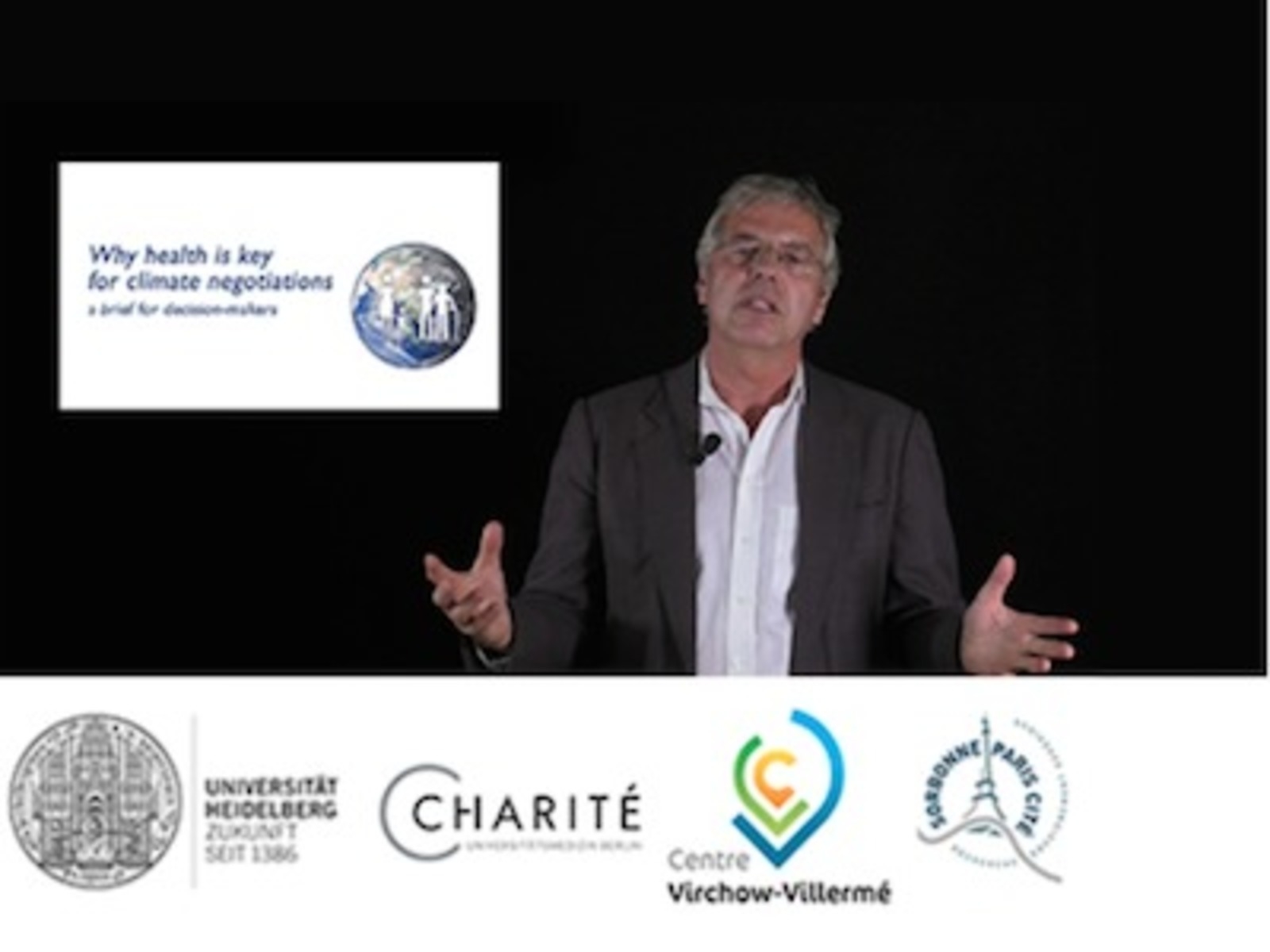
This MOOC was developed by four eminent scientists who together authored the health chapter in the recent 5th Assessment report of the IPCC. They offer you a short crash-course into the topic of climate change, tailored to senior policy-makers and negotiators of climate agreements, particularly as an input into the climate conference COP21 in Paris in December this year.
This 1 week MOOC requires 3 hours of investment time and provides hard evidence for four key arguments as to why health is and should be central in climate policy.
Two positive arguments:
1. Health is a positive motivator, a driving force for citizens and policy-makers to care about and act on climate change.
2. The huge health co-benefits must enter the risk-benefit calculations.
However, two arguments pertain to the restrictions that our health and physiology impose on humans under climate change, particularly in a world that is +4°C warmer:
1. There are health limits to adaptation.
2. Decreased work productivity in hot countries.
Finally, we should consider health as an indicator, not only for sustainable development, but also for climate policy.
Who should take this MOOC?
Senior, experienced members of climate negotiation teams from all 195 member states of the UNFCC. The course is launched to allow policy-makers involved in the Climate Conference COP21 in Paris 2015 to take it as part of their brief.
In addition, any policy maker at local, national, regional and global levels would benefit from the course, but in keeping with the philosophy of MOOCs, the course is open to any citizen interested in the topic.
What do I need to know?
Participants should be familiar with the essentials of the climate systems and the current debate on mitigation and adaptation policies, as well as proposals for fair financing of the shared but differentiated responsibilities of rich and poor countries, which are the agenda of the COP21 conference.
What will I learn?
(i) The participant will understand why health is not another sector but a key argument in developing climate policy and fair share of the burden and benefits of climate policies.
(ii) The participant will learn the scientific evidence behind the four key climate policy arguments based on human health:
1. Health is a positive motivator, a driving force for citizens.
2. The huge health co-benefits must enter the risk-benefit calculations.
3. There are health limits to adaptation.
4. Decreased work productivity in hot countries.
Course Structure
The course is organised in 4 lectures, each developing the evidence for the 4 health arguments, which we propose are inherent in all negotiations on climate policy:
1. Health is a positive motivator, a driving force for citizens.
2. The huge health co-benefits must enter the risk-benefit calculations.
3. There are health limits to adaptation.
4. Decreased work productivity in hot countries.
The four short lectures (8 minutes) are complementary and follow a common storyline. So it is desirable that the participants watch all of them. This would be an essential useful minimum of investment.
We offer 7 optional quiz questions for each lecture in case the participant wishes to check on his or her comprehension of the factual information provided.
Our discussion forums are key to our MOOC concept. This enables participants to engage in an exchange of views and information on any topic they wish related to the course topic. The course instructor and his assistant will actively participate in the forums.
Weekly YouTube feedback video: The course instructor will personally answer questions that are of great common interest or are frequently asked during a weekly youtube video, put on line each Friday at 2pm CET.
Personal email feedback: The instructor and our team will be available to respond to individual questions and comments directed at us through internal mail during the 3 months of the course will be online.

This course is intended for people who have no experience in computer science but would like to learn more about how computers work and how they can control them. It is designed to introduce learners to the power and elegance of computational thinking. You will learn basic computational principles and will have the opportunity to put them into practice. Computers and technology are driving phenomenal change in this world. This course will give you the power to help drive that change. No prior programming experience is assumed.

Social innovations, i.e. new social practices, are everywhere and largely influence our lives: they change the rules of the game in business, civil society and politics. With social innovations, we can design social practices that are more beneficial, sustainable or just.
But what are social innovations? And what effects can they have? This course is an introduction to the topic. You will gain an overview of what social innovations are, how they function and how they can be developed.
What will I learn?
You will learn what social innovations are and understand how they can help solve societal problems. You will get an overview of important literature and debates on social innovation.
You will also learn and apply methods to develop, implement and scale social innovations. Exercises will allow you to apply the methods, develop your own ideas and gather first-hand experiences.
What do I need to know?
This is an introductory course. Previous knowledge is not required. The course is designed for people interested in understanding and/or designing societal change.
Course Structure
This is a self-paced course. This means that once the course initially begins, you can make your way through the course chapters at your own pace, without time pressure or deadlines.
Chapter 1: A New Innovation Paradigm
In this chapter, you will learn what “social innovation” means. You will get an overview of how social innovations can be developed and implemented. Also, we explain the differences between all the “social” something-concepts like social business, social entrepreneurship, and corporate social responsibilities.
Chapter 2: The Spectrum of Social Innovation
There are different forms and formats of social innovation. Gain an overview of the variety of social innovations in this chapter. Specifically, you learn about social innovations that origin in civil society, business, and the social sector. Moreover, you will learn about cross-sector social innovations.
Chapter 3: Broaden your Horizon: Questioning the Existing and Recognising Challenges
Social innovators see opportunities where others see problems. Learn to change your perspective in order to recognise opportunities to solve societal problems with social innovations.
Chapter 4: Designing and Implementing Social Innovations: Tools
Design Thinking and Lean Start-up will help you to design social innovations together with your (future) beneficiaries. Furthermore, you learn how you can convince others by using effective storytelling.
Chapter 5: Designing and Implementing Social Innovations: Learning from Others
You will learn how others developed and implemented social innovations and how they learned to overcome resistance. Also, you learn about typical mechanisms of social value creation.
Chapter 6: Impact and Vision
In this chapter, you learn how to analyse the impact of social innovations and how you can increase the impact of social innovations using specific strategies of scaling and replication. Also, our experts will provide some suggestions and tips for future social innovators.

This course is about the fundamental concepts of sociology; foundations of group life; social change, processes, and problems. This class describes the discipline of sociology—the study of social life. It is a fundamental social science (in good company with Economics, Psychology, History, Anthropology, Communication, and Political Science). What is interesting about sociology is that it actually tackles fundamental questions in each of these sub-disciplines. You might even call it the “father” of the social sciences. That said, it is a pretty new discipline (younger than our country). Still, we have done a lot in just a very short time. It is very likely that you have heard of some of its early founders—the most famous is Karl Marx but others include Max Weber and Emile Durkheim.

In diesem MOOC lernst du die grundlegenden Inhalte der Wirtschaftsinformatik kennen. Mach dich fit für das digitale Zeitalter und erfahre mehr über die technologischen und wirtschaftlichen Grundlagen moderner digitaler Unternehmenslösungen!
In 25 Videoeinheiten und begleitenden Texten werden Schritt für Schritt folgende Lerninhalte vorgestellt:
- die Bausteine der IT-Infrastruktur
- Grundlagen betrieblicher Anwendungssysteme
- Vorgehens- und Management-Modelle in der Software-Entwicklung
- die Führungsaufgaben des Informationsmanagements
- digitale Geschäftsmodelle und Produkte
Neben klassischen Inhalten und Konzepten der Wirtschaftsinformatik geht der Kurs auch auf aktuelle Entwicklungen ein, wie z.B. Cloud Computing, Electronic Business oder agile Vorgehensmodelle. Die Kursinhalte basieren inhaltlich auf der Vorlesung "Einführung in die Wirtschaftsinformatik" an der Technischen Universität Berlin, die in den letzten Jahren von über 1.000 Studierenden erfolgreich besucht wurde.
An wen richtet sich dieser Kurs?
Der Kurs richtet sich an alle, die Interesse an der Wirtschaftsinformatik haben. Er ist sowohl für Studierende als auch für Praktiker geeignet.
Was muss ich wissen?
Für den Kurs sind keine spezifischen Vorkenntnisse erforderlich.
Was lerne ich?
Nach erfolgreicher Teilnahme an diesem Kurs:
- Kennst du die grundlegenden Inhalte und Ansätze der Wirtschaftsinformatik.
- Weißt du, welche Rolle Informationstechnologien im digitalen Unternehmen spielen.
- Verstehst du die technologischen und wirtschaftlichen Zusammenhänge bei der Gestaltung digitaler Geschäftslösungen.
- Kennst du die Führungs- und Managementaufgaben im Bereich der IT und der Software-Entwicklung.
- Besitzt du die erforderlichen Grundkenntnisse für den Besuch vertiefender Veranstaltungen im Bereich der Wirtschaftsinformatik.
Kursstruktur
Der Kurs besteht aus 6 Kapiteln:
Kapitel 1: Einführung und Grundlagen Kapitel 2: IuK-Infrastruktur - Das digitale Zeitalter - Bedeutung von Informations- und Kommunikationstechnik (IuK) für Unternehmen - Anwendungs- und Informationssysteme - Entwicklung der Wirtschaftsinformatik - Grundlagen - Hardware und Software - IuK-Architekturen & Datenbanken - Cloud Computing - Kommunikationssysteme & Internet Kapitel 3: Inner- und überbetriebliche Informationsverarbeitung Kapitel 4: Gestaltung von Informationssystemen - Anwendungssysteme im Unternehmen - Enterprise Resource Planning Systeme - Customer Relationship Management Systeme - Supply Chain Management Systeme - Electronic Business - Entwurfskonzepte - Traditionelle und Agile Vorgehensmodelle des Software Engineering - Software-Projektmanagement - Change Management Kapitel 5: Informationsmanagement Kapitel 6: Innovationen, Geschäftsmodelle und Produkte - Wertbeitrag und ökonomische Bewertung von IuK - Aufbauorganisation der IT - Outsourcing - Innovation durch IuK - Digitale Geschäftsmodelle - Digitale Produkte
This course focuses on the organization and administration of adult and higher education from legislative, legal, structural-functional, power, political, bureaucratic, and social perspectives. Topics covered include: governance, central office organization, administrative position analysis, faculty organization, faculty participation in policy formation and decision making, academic freedom, goals analysis, budgetary policies and methods, and decision strategies in handling a representative set of administrative problems presented in a variety of formats.

This course covers the process of brewing from grain to final bottle product and the chemical and biochemical process involved in each step. Students will be required to utilize previous knowledge in General and Organic chemistry to understand: analytical techniques in brewing, chemistry of the ingredients and products, and the molecules involved in the biochemical processes. During the course, students will also learn the similarities and differences between beer styles, home and commercial brewing processes, and analytical techniques. There is a great deal of Biochemistry and Organic Chemistry involved in the malting, mashing and fermentation process and understanding the chemistry behind the flavor, aroma, and color of beer. Students should have a basic knowledge of general and organic chemistry.

Kursbeschreibung
Dieser Kurs gibt einen Überblick über grundlegende Modelle, Theorien und Prinzipien der Betriebswirtschaftslehre. Er basiert auf einer mehrfach ausgezeichneten äquivalenten Lehrveranstaltung an der RWTH Aachen und wurde bislang von über 10.000 Studierenden erfolgreich in Aachen absolviert. Der Kurs beginnt mit den Fragen, warum es Unternehmen gibt und was der Kern unternehmerischer Wertschöpfung ist. Anschließend wird analysiert, welche Alternativen und Theorien es zur Organisation von Unternehmen gibt. Ein Schwerpunkt auf die neue Institutionenökonomie erlaubt dabei einen Einblick in einen der Ansätze, der das moderne Management entscheidend geprägt hat. In den letzten beiden Teilen werden Prinzipien der operativen und der strategischen Planung sowie Wettbewerbsstrategien behandelt. Anhand ausgewählter Konzepte lernen die Teilnehmenden die wichtigsten Ansätze des strategischen Managements kennen.
Planspiel
Als besonderes Feature gibt es zu der Veranstaltung das BWL-MOOC Planspiel der Firma Simucate. Das Planspiel: Es bietet Ihnen eine interaktive Möglichkeit, die Studieninhalte gleich praktisch anzuwenden und so besser zu verstehen. Das Planspiel ist in allen Klausurpaketen enthalten. Zusätzlich kann es während des Kurses für 19 Euro hinzu gebucht werden. Sollten Sie sich dazu entscheiden, den ECTS-Track zu belegen ist das Planspiel für Sie bereits inklusive. Die Ergebnisse des Planspiels fließen dann zu 20% in die Endnote der Veranstaltung mit ein.
Was lerne ich in diesem Kurs?
- Du kennst grundlegende Denkweisen der Betriebswirtschaftslehre.
- Du kannst wesentliche Fachbegriffe ebenso wie grundlegende Konzepte auf aktuelle Fragestellungen übertragen.
- Du kannst einen Bezug zwischen den theoretisch vermittelten Kursinhalten und der unternehmerischen Praxis herstellen.
- Du bekommst eine kritisch-reflektierte Herangehensweise an wirtschaftliche Fragestellungen.
- Du bekommst einen Rahmen für weitere vertiefende Vorlesungen im Bereich BWL.
Welche Vorkenntnisse benötige ich?
Die Teilnahme ist ohne spezielle Vorkenntnisse möglich. Mathematik auf mind. Oberstufenniveau ist für Modul 5 erforderlich.
Kursstruktur
Dieser Kurs besteht aus 7 Modulen von jeweils 2 Wochen:
Modul 1: Grundzüge und Funktionen der Unternehmung
Videos ab 02. Nov, interaktive Vorlesung in Aachen am 02. Nov 2015
Modul 2: Organisationstheorien: Der Weg zum Taylorismus und dessen Überwindung
Videos ab 16. Nov, interaktive Vorlesung in Aachen am 16. Nov 2015
Modul 3: Gestaltung der Organisationsstruktur
Videos ab 30. Nov, interaktive Vorlesung in Aachen am 30. Nov 2015
Modul 4: Neue Institutionenökonomik
Videos ab 14. Dez, interaktive Vorlesung in Aachen am 14. Dez 2015
Modul 5: Operative Planung
Videos ab 11. Jan, interaktive Vorlesung in Aachen am 11. Jan 2016
Modul 6: Strategische Planung & Wettbewerbsstrategie
Videos ab 25. Jan, interaktive Vorlesung in Aachen am 25. Jan 2015

This course is an interdisciplinary study of the methods of human deception detection from the perspectives of law enforcement, national security and intelligence analysis, criminal justice, psychology, sociology, and communication. How to accurately determine when someone is lying is a multi-disciplinary problem and requires a variety of technological and data analytic solutions. Our primary goal will be to comprehend a representative picture of the traditional and contemporary theory regarding the intersection of communication, cognition, and emotion in deception detection. This is a fully online course that will require interaction in the digital platform with the Professor and other students.
Kursbeschreibung
Der Kurs dient zur Einführung in den wissenschaftlichen Charakter eines Geschichtsstudiums. Als Leitlinien eines Zugangs zur Geschichte dienen grundlegende Kategorien, die das menschliche Handeln und Denken in Raum und Zeit erfassen und beschreiben. Vermittelt werden traditionelle Epocheneinteilungen sowie die methodische Vielfalt des Faches. Die Diskussion von epochalen Brüchen führt in einen kritischen Umgang mit Geschichtsbildern ein. Der Kurs konzentriert sich dabei auf europäische Geschichte, wobei in der Neuzeit exemplarisch die deutsche Geschichte in den Vordergrund rückt.
Was lerne ich in diesem Kurs?
- Unterschied zwischen Geschichte und Geschichtswissenschaft
- Zentrale Kategorien geschichtswissenschaftlicher Zugänge
- Leitlinien des historischen Kontinuums und epochale Brüche
- Einführung in die Breite des historischen Gegenstandsbereichs, in Teildisziplinen und Methoden des Faches
- Allgemeine Kenntnisse von historischen Prozessen von der Antike bis zur Gegenwart
- Selbstständiger, methodisch reflektierter und kritischer Umgang mit Primärquellen und Forschungsmeinungen
Welches Vorwissen brauche ich?
Historische Vorkenntnisse oder propädeutische Grundlagen sind nicht erforderlich. Der Kurs richtet sich an Studierende der Geschichte bzw. an alle, die ein Studium der Geschichtswissenschaft erwägen. Daneben richtet er sich auch an ein breiteres, geschichtsinteressiertes Publikum. Inhalte und Umgang mit Instrumenten der Forschung werden schrittweise erläutert. Zentrale Quellen werden in deutschen Übersetzungen präsentiert. Unverzichtbar: Interesse an Geschichte als Wissenschaft.
Kursstruktur
| Kapitel & Thema |
|---|
| Kapitel 1 |
| Was ist Geschichte? |
| Kapitel 2 |
| Geschichte als Wissenschaft |
| Kapitel 3 |
| Geschichtswissenschaft und Quellen |
| Kapitel 4 |
| Orientierung Alte Geschichte |
| Kapitel 5 |
| Alte Geschichte – Epochenbegriff, Quellen, Themen und Methoden |
| Kapitel 6 |
| Orientierung Mittelalter |
| Kapitel 7 |
| Mittelalter – Quellen, Geschichtsbilder, Weltbilder, Epochenbegriff |
| Kapitel 8 |
| Orientierung Frühe Neuzeit |
| Kapitel 9 |
| Frühe Neuzeit – Epochendiskussion und Alternativbegriffe |
| Kapitel 10 |
| Orientierung Neuere Geschichte |
| Kapitel 11 |
| Neuzeit und Zeitgeschichte – Begriffs‐ und Epochendiskussion, Quellen‐ und Methodenprobleme, Zeitgeschichte als Streitgeschichte |
| Kapitel 12 |
| Landes‐ und Regionalgeschichte – Formen, Funktionen und Themen |
| Kapitel 13 |
| Geschichte und Gegenwart – Nachleben und Rezeption, Funktionen der Geschichte in der Erkenntnis der Gegenwart |

This course is designed as an introduction to computer programming using Java. Students will learn how to a) analyze a problem, and identify and define the computing requirements appropriate to its solution b) design, implement, and evaluate a computer-based system, process, component, or program to meet desired needs, and c) apply design and development principles in the construction of software systems of varying complexity. Topics include Computers, programs, Java, input and output, identifiers, variables, assignment statements, constants, memory diagrams, primitive data types, conditional statements, repetition, methods, parameters, arguments, return values, one dimensional arrays, objects, classes, and classes from the Java Application Programmers Interface (API).

Climate change is currently at the center of the world’s attention, with delegations from more than 190 countries meeting in Paris for the COP21 to negotiate an agreement how to reduce greenhouse gas emissions to keep global warming under 2°C.
There are not many world citizens who do not have their children’s and their own health as a top priority. So why is health not more prominent topic in the debate on climate change and its impacts? We hear a lot about polar bears and smokestacks in the media, but very little on the many and the large health impacts of climate change. With this MOOC, we want to provide state-of-the art evidence of the link between climate change and the health of populations.
Who is this course for?
We address the general public from all parts of the world.
Health professionals may have a special interest and are very welcome, so are teachers and journalists, who may use this MOOC to disseminate the evidence provided. People working in meteorology and climate sciences, too, may be interested in health impacts and are welcome.
In this interface between health and climate, there are few experts. So every interested global citizen, whether expert or not, is welcome to chime in.
What do I need to know?
The course does not require any knowledge about the climate system and climate change. You do not have to be a health person to follow as we cover ground on the link between climate change and health that will be new even for medical doctors. Of course you should be reasonably comfortable with English, not the least to be able to participate in the many interactive platforms and exercises offered during this MOOC.
What will I learn?
Knowledge:
You will become familiar with the nature of health impacts worldwide, and for your country in particular. Further you will get to know best practices from around the world in adaptation strategies and the promotion of health co-benefits. There will be discussion forums for disease- and target-group specific interest groups, e.g. a forum on child malnutrition from climate change or health effects on the elderly.
Skills:
You will analyse your country as a case study throughout the course and share this work with other course participants on our country-specific platforms. You will understand the limits and strengths of your own country’s climate adaptation plan.
Action:
Hence you will be able to engage national and local policy makers to improve health protection from climate change in your country. Interviews with national policy-makers will be part of the course.
Prize:
For the three best participants, I will wave the course fees (travel costs will be at your own expense) to participate in my 3 ECTS credit, in-depth presence course at Heidelberg University “Climate change and health: impacts and adaptations”, running from July 18-29, 2016.
Course structure
Chapter 1: What is climate change and how can it affect health?
Chapter 2: What health effects do we expect?
Chapter 3: Reducing emissions - in health terms: prevention
Chapter 4: The good news: doing something to reduce emissions is good for your health
Chapter 5: Adapting to the effects of already occurring climate change - "therapy"
Outlook: A climate friendly world is healthier, more equitable, sustainable and fun
Add to calendar

Trusted paper writing service WriteMyPaper.Today will write the papers of any difficulty.