

Online courses directory (19947)

This course is a general introduction to the history, cultural traditions, and current condition of many of the 38 Native American tribes who reside in Oklahoma. To increase awareness and appreciation of the manners in which the Native American population of Oklahoma contributes to the unique character and capacities of our state, through cultural values, political relationships between sovereign governments, social relations in a diverse place, and enriching artistic expressions. Learners will further understand the roles that indigenous people in Oklahoma have played in national and global contexts.

Course Summary
We know that political decisions are made by governments and/or parliaments. But who provides these bodies with the information they need and shows them the strategic options they have? Who frames political action before the wider public even takes notice of the issue? How does political agenda setting work and what do certain policy outcomes tell us about the future of the issue at stake?
This course is designed to outline key features of policy advice and political consulting and their impact on governance.
We will observe the key players on the spot as well as those behind the scenes and we will analyze their patterns of interaction. Moreover, we will provide insights regarding essential questions to which there are no single right answers: What role does policy advice play in different democracies? What is good policy advice? What makes an expert? In sum: Whom do (and should) politicians and society listen to, and what do (and should) they make of the advice they receive?
What will I learn?
By the end of the course, students will know the key concepts of policy advice as well as the main actors in the field and their patterns of interaction. They will understand how and by whom a certain political decision is framed, shaped and implemented. And they will be able to apply this knowledge to a given political event which may affect their own professional or personal life. So, first and foremost, they will be able to ask the right questions.
What do I need to know?
The course is designed to cater for students and professionals interested in decision-making, political communication, policy advice and consulting. Course participants are expected to follow current politics and be keen on looking at the matter from different (and sometimes unusual) perspectives. Basic knowledge in political science would be an asset.
Course Structure
Chapter 1: Introduction and Course Overview
Convener: Prof. Dr. Andrea Römmele, Professor for Communication in Politics & Civil Society, Hertie School of Governance
Chapter 2: Truth to Power? Scientific Advisers Seeking Truth, Decision-Makers Seeking Power?
Convener: PD Dr. Martin Thunert, Senior Lecturer, Heidelberg Center for American Studies, University of Heidelberg
Chapter 3: Political Communication and Political Consulting
Convener: Prof. Dr. Andrea Römmele, Professor for Communication in Politics & Civil Society, Hertie School of Governance
Chapter 4: Economic and Financial Policy
Convener: Prof. Dr. Thomas König, Chair of Political Science, University of Mannheim
Chapter 5: Social Policy
Convener: Prof. Dr. Kent Weaver, Senior Fellow at the Brookings Institution and Professor of Public Policy and Government at Georgetown University
Chapter 6: Foreign and Security Policy
Convener: Dr. Nicole Renvert, Research Fellow, German Institute for International and Security Affairs (SWP – Stiftung Wissenschaft und Politik)
Chapter 7: Energy and Environment
Convener: Prof. Dr. Karen Smith Stegen, KAEFER Professor of Renewable Energy and Environmental Politics, Jacobs University, Bremen
Chapter 8: Policy Advice and International Cooperation
Convener: Katharina Hübner, Senior Manager, Division Good Governance and Human Rights, Deutsche Gesellschaft für Internationale Zusammenarbeit (GIZ)
Chapter 9: Citizens’ Involvement in Policy Advice
Convener: Henrik Schober, Head Editor, Zeitschrift für Politikberatung (Journal for Political Consulting and Policy Advice), Hertie School of Governance
Chapter 10: Best Practices: Guidelines for Policy Advice?
Convener: Prof. Dr. Andrea Römmele, Professor for Communication in Politics & Civil Society, Hertie School of Governance
Workload
Approx. 3 hours per week, not including exam preparation
This course is a general introduction to the history, cultural traditions, and current condition of many of the 38 Native American tribes who reside in Oklahoma. To increase awareness and appreciation of the manners in which the Native American population of Oklahoma contributes to the unique character and capacities of our state, through cultural values, political relationships between sovereign governments, social relations in a diverse place, and enriching artistic expressions. Learners will further understand the roles that indigenous people in Oklahoma have played in national and global contexts.

Are you an international student or graduate planning to embark on a career in Germany? That’s great! Germany is among the most attractive destinations for international young professionals. An abundance of opportunities awaits a well-prepared candidate, and ceasing yours is much easier if you know the ins and outs of the German job market and work culture.
This MOOC enhances some key skills that you will need for a successful transition from studies to employment. In the seven-week course, you will learn about the German job market, career identities and strategies, job application skills, workplace competences and the psychology of employability. You will also create your personal career development plan to give you immediate guidance for your next steps.
Ready to change your backpack into a briefcase? Enrol on our employability skills MOOC today!
Who should take this course?
The primary audience of this course is international postgraduate level students of engineering or business, but all students may benefit from the learning.
What do I need to know and what will I learn?
No prior knowledge is required.
After completing the MOOC, you will be familiar with many crucial employability skills in particular in the German context. Thus, you will be more prepared when applying for jobs and able to turn a job opportunity into career success in Germany.
Course Structure
Chapter 1 - Introduction. In the first chapter, you will meet the instructors, gain an overview of the course. You will also learn what employability means and how higher education develops it. After the first week, we will also offer a free webinar about getting your career started as a foreign graduate in Germany.
Chapter 2 - Career identity. Your career identity means the understanding of self on the labour market. This is determined by various factors such as your competences, motivations and values. In this chapter, you will learn how understanding and reflecting such factors can form a coherent career identity and help you toward greater self-confidence.
Chapter 3 - Job application skills. This chapter will give you an overview of the German job market and a variety of skills in identifying job opportunities, writing your application documents and carrying out an effective job application process. You will also gain free CV and cover letter templates in English and German.
Chapter 4 - Workplace Analysis. Daily work within an organisation is different in every country. The contents of this chapter guide you in analysing the structures and interpersonal aspects of your workplace in order to make integration easier and improve your performance early on.
Chapter 5 - Psychology of Employability. Employability is often linked to the psychology of self. How well you tackle workplace challenges and develop professionally significantly depends on your attitudes, efficacy beliefs and self-confidence. This chapter will discuss the meaning of these concepts to your personal employability.
Chapter 6 - Career development project. The course also involves a career development project assignment. If you sign up for the certificate track, completing the assignment is a passing criterion; otherwise completing it is voluntary but useful. Chapter 6 will focus on supporting the project by providing advice and answering learner questions.
Chapter 7 - Evaluation and goodbye. Our course is now over and it is time to look back at how we did. At this point, your feedback would be very much appreciated and helpful in improving the course. The certificate track students will receive a personal review appointment by one of the team members at this point.

This course covers the process of brewing from grain to final bottle product and the chemical and biochemical process involved in each step. Students will be required to utilize previous knowledge in General and Organic chemistry to understand: analytical techniques in brewing, chemistry of the ingredients and products, and the molecules involved in the biochemical processes. During the course, students will also learn the similarities and differences between beer styles, home and commercial brewing processes, and analytical techniques. There is a great deal of Biochemistry and Organic Chemistry involved in the malting, mashing and fermentation process and understanding the chemistry behind the flavor, aroma, and color of beer. Students should have a basic knowledge of general and organic chemistry.
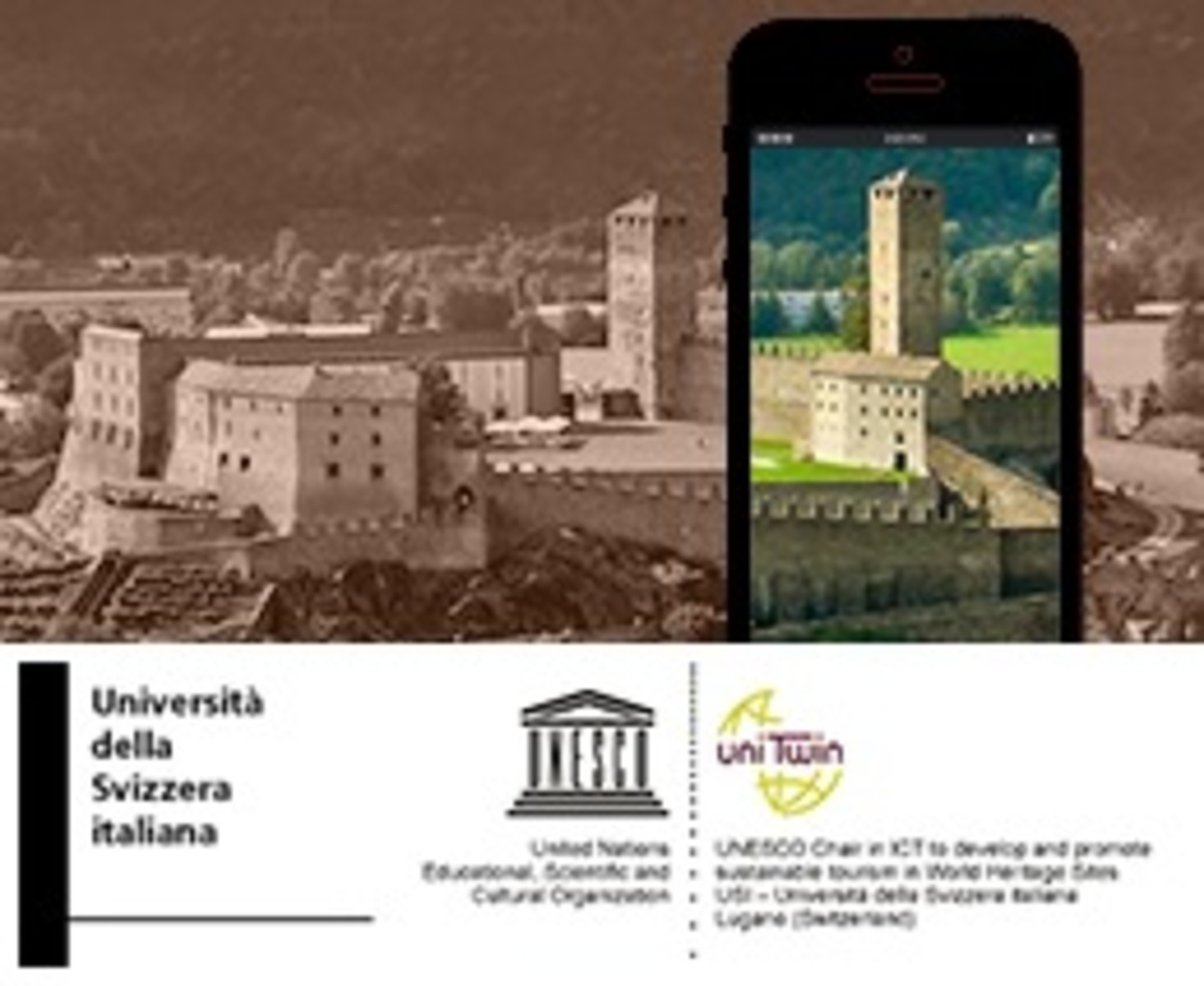
An introduction course to a fascinating travel into the eTourism world, which crosses both space and time, and is always closely connected with communication. In fact, we are embarking to create a great study experience, which explores how Information and Communication Technologies (ICTs) do matter for tourism – both for our personal experience, and for the tourism industry at large. In other words, we will together explore eTourism by using tools and models of the Communication Sciences.
Key concepts and theories covered include: Online Communication Model (OCM); Roman Jakobson's Communication Model; Quality of online contents; User Generated Content (UGC); Web 2.0; Reputation in online Media; Intercultural communication and localisation; eLearning; Argumentation; World Heritage Sites.
Who is this course for?
We expect the following publics to be attracted by the course in order to update their skills and knowledge on a very hot topic:
- Students, in particular within tourism and hospitality programs
- Academia and researchers
- Destination managers
- People active in the industry
- Policy makers
What do I need to know?
No prerequisite knowledge necessary to understand the concepts and experiences shared in the course.
What will I learn?
By the end of the course, learners:
- Know current eTourism applications, technologies and practices
- Know what is communication, and its major components, ICTs and their relevance to the tourism field
- Know what kinds of online training courses can be used within tourism and hospitality
- Know how to map different communication activities within the tourism sector
- Know how to run a usability test and how to make usages analysis of a website or mobile app
- Know how to plan, run and evaluate eTourism related activities, especially when it comes to the analysis of online reputation of a tourism destination
- Are aware of the crucial role played by communication and ICTs within the tourism and hospitality sectors
Course structure
Chapter 1. Communication: an introduction to its nature and history
Instructor: Prof. Lorenzo Cantoni
① Theoretical part:
The etymology of communication and its major components
② Case study:
UNESCO World Heritage Sites and eTourism
Chapter 2. The Online Communication Model (OCM) and the quality of online contents
Instructor: Prof. Lorenzo Cantoni
① Theoretical part:
The Online Communication Model
② Case study:
Analysis of the content quality in online communication
Chapter 3. Usability analysis and web analytics
Instructor: Prof. Lorenzo Cantoni
① Theoretical part:
Usability and usages analysis of tourism websites, mobile apps and other online communication tools
② Case study:
Strategies to assess usability
Chapter 4. Localisation of online content
Instructor: Prof. Lorenzo Cantoni
Assistant: Emanuele Mele
① Theoretical part:
Cultural translation / localization of messages for people with different cultural backgrounds and experiences
② Case study:
Localized website for domestic and international visitors. Case of Quito (Ecuador)
Chapter 5. B2B activities and eLearning within the hospitality and tourism domain
Instructor: Dr. Nadzeya Kalbaska
① Theoretical part:
The notion of eLearning and its use in the hospitality and tourism field
② Case study:
eLearning courses about Destination Management Organizations. Case of “Ticino Switzerland Travel Specialist” online course
Chapter 6. User Generated Contents (UGCs) & Web 2.0
Instructors: Dr. Silvia de Ascaniis; Dr. Elena Marchiori
① Theoretical part:
Communication opportunities given by UGCs and Web 2.0
② Case study:
Hotels’ communication strategies to respond to online reviews
Chapter 7. Reputation in online media
Instructor: Dr. Elena Marchiori
① Theoretical part:
The definition of the reputation construct and its relevance in the online domain
② Case study:
How to analyze the online reputation of a tourist destination
Chapter 8. Argumentation in online travel reviews
Instructor: Dr. Silvia de Ascaniis
Assistant: Jingjing Lin
① Theoretical part:
Definition of argumentation
② Case study:
Argumentative analysis of Online Travel Reviews of a Chinese National Park
Suggested readings
You are welcome to visit the following websites before the course starts:
- UNESCO chair - http://www.unescochair.usi.ch/
- IFITT - http://www.ifitt.org/
- elearning4tourism - http://www.elearning4tourism.com/
- Webatelier - http://www.webatelier.net/
Highlights in the second edition
- Video subtitles in English, Simplified Chinese, Spanish and Italian
- Chinese translation is provided by Eduinfinity Translation Group (教育无边界字幕组)
- Italian translation is provided by Fondazione ITS del Turismo e dell’ Ospitalità - IATH
- Spanish translation is provided by CETT Barcelona
- Monthly Google Hangouts with the instructors and assistants
- Updated additional materials
Social communities
Join our Facebook Group: https://www.facebook.com/groups/472859206207898/
Please, if you tweet about this MOOC, use the following hashtag: #eTourismMOOC. Hereafter the relevant accounts:
- Prof. Lorenzo Cantoni: @lorenzocantoni
- Nadzeya Kalbaska: @nadzenka
- Silvia De Ascaniis: @SilviaDeAscanis
- Elena Marchiori: @elena_
- Emanuele Mele: @EmanueleMele2
- Jingjing Lin: @linjingjing
- UNESCO Chair USI: @UNESCO_USI
- eLab USI: @eLab_USI

This MOOC questions what European identity is and what we understand and promote as European culture. It explains fundamental European policies on culture, creativity and the media, with a specific focus on urban settings. The course critically explores the formation of diverse identities and cultures in Europe, by shedding light on the importance of memories and shared heritages in this process. Finally, it illustrates the policy dimension behind European cultural and media industries and questions dominant economistic approaches to cultural creativity.
Who is this course for?
This course is meant as a general introduction to the issue of "European identity and culture" for students and practitioners in the field of arts, culture and heritage. The core of the course will resemble a BA level course, yet extra materials will be provided to students who want more in-depth information on theories and case studies.
What will I learn?
Students who take the course will acquire knowledge on:
• Current debates on what is the 'European identity' and what is 'European culture' and what it means to talk of them in the singular or in the plural (cultures, identities).
• Relevant terms and understand the relationship between notions of identity, memory, heritage, and culture.
• Main approaches to cultural heritage and the public use of history.
• European policies in the media and cultural sector.
• Critical approaches to cultural industries: what are they? And why urban settings are so important for their development?
What do I need to know?
Knowledge of English is essential. Previous knowledge of basic sociological or economic debates on art, diversity and culture can be an advantage, although it is not a compulsory prerequisite.
Course structure
CHAPTER 1 - WELCOME
Unit 1.1 – Welcome and instructions
Unit 1.2 – Where are you from?
CHAPTER 2 – WHAT IS EUROPE?
Unit 2.1 – Is there a European identity? (Interview with Anna Triandafyllidou)
Unit 2.2 – What is European culture?
Unit 2.3 - Europe seen from the outside
Unit 2.4 – Art challenging what Europe is about (Interview with Ulrike H. Meinhof)
CHAPTER 3 – DIVERSITY IN EUROPE
Unit 3.1 – European identity and national identities
Unit 3.2 – Diversity policies in EU institutions: intercultural cities (Interview with Irena Guidikova)
Unit 3.3 – “Unity in diversity”: really?
Unit 3.4 – Cosmopolitanism in Europe and the Venice Biennale (Interview with Monica Sassatelli)
CHAPTER 4 – THE ROLE OF MEMORY AND HERITAGE
Unit 4.1 – The past in the present of Europe
Unit 4.2 – Memory vs. history: the role of Museums (Interview with Dominique Poulot)
Unit 4.3 – Contested cultural heritages: the case of Holocaust (Interview with Jasper Chalcraft)
Unit 4.4 – A transnational cultural heritage: the case of UNESCO (Interview with Gerard Delanty)
CHAPTER 5 – CULTURAL INDUSTRIES IN EUROPE
Unit 5.1 – What are cultural industries?
Unit 5.2 – Culture, creativity and urban spaces
Unit 5.3 – Culture in urban spaces, today (Interview with Arturo Rodríguez Morató)
Unit 5.4 – Pluralism in European media information (Interview with Pier Luigi Parcu)
CHAPTER 6 – CULTURAL CREATIVITY AND EUROPEAN FUTURES
Unit 6.1 – “European culture” as a brand
Unit 6.2 – Beyond cultural creativity as innovation (Interview with Matías Zarlenga)
Unit 6.3 – The EU “Creative Europe” program: what’s next? (Interview with Philip Schlesinger)

This course is an interdisciplinary study of the methods of human deception detection from the perspectives of law enforcement, national security and intelligence analysis, criminal justice, psychology, sociology, and communication. How to accurately determine when someone is lying is a multi-disciplinary problem and requires a variety of technological and data analytic solutions. Our primary goal will be to comprehend a representative picture of the traditional and contemporary theory regarding the intersection of communication, cognition, and emotion in deception detection. This is a fully online course that will require interaction in the digital platform with the Professor and other students.

Les droits des travailleurs sont des droits de l'homme. Les normes internationales du travail visent à prévoir des niveaux minima de protection dont devrait bénéficier chaque travailleur.
Elles servent de garanties contre les conditions de travail dangereuses et relevant de l’exploitation. Réaffirmés par les objectifs des Nations Unies pour le développement durable, les droits fondamentaux et la dignité au travail sont une condition préalable à l'édification de sociétés inclusives et durables. Cependant, traduire le respect des droits des travailleurs dans les faits reste une lutte quotidienne pour beaucoup.
Cette courte formation en ligne combine des cours vidéo, du matériel de lecture, des questions de discussion et des options d'auto-apprentissage. Ces outils vous permettront d’acquérir des connaissances et des compétences pratiques sur l’utilisation des normes internationales du travail afin de promouvoir et de défendre les droits des travailleurs dans le monde entier.
Que vais-je apprendre?
À la fin du cours, vous comprendrez le concept qui sous-tend les normes internationales du travail, ainsi que le processus d’élaboration des normes à l'Organisation internationale du Travail (OIT).
Vous aurez un aperçu clair du fonctionnement des mécanismes de contrôle de l'OIT et de la façon dont vous pouvez vous en servir pour promouvoir et défendre les droits des travailleurs dans votre pays ou au niveau international. Vous parviendrez également à une bonne compréhension des principes fondamentaux de la liberté syndicale et de la négociation collective, ainsi que du droit de grève, élément clé de la réalisation des droits des travailleurs.
Structure du cours
Chapitre 1 : Introduction aux normes internationales du travail (NIT)
Quel est le concept qui sous-tend les normes internationales du travail ? Quels sont les différents types de normes internationales du travail, et comment sont-elles élaborées ? Quels acteurs entrent en jeu, et comment sont-ils liés entre? Ce chapitre offre un aperçu des normes internationales du travail et jette les bases pour comprendre les mécanismes d'établissement des normes à l'OIT. En particulier, nous examinerons de près le rôle des syndicats dans l'établissement des normes internationales du travail.
Chapitre 2 : Contrôle des normes internationales du travail (NIT)
Ce chapitre vise à vous permettre de comprendre et à utiliser les mécanismes de contrôle de l'OIT pour la protection des droits des travailleurs. Ce processus complexe est illustré de manière concise et pratique, et nous le parcourons avec vous, étape par étape. En outre, nous prêtons une attention particulière à ce que les syndicats peuvent faire pour utiliser efficacement les mécanismes de contrôle de l'OIT.
Chapitre 3 : La liberté syndicale, la négociation collective et le droit de grève
La liberté syndicale et la négociation collective sont au cœur du travail décent en tant que droits essentiels à la réalisation d’autres droits. Mais quel est le concept juridique de la liberté syndicale dans le cadre de la Convention n° 87, qu'est-ce qui le rend fondamental dans la mise en œuvre des normes internationales du travail ? Ce chapitre vous offre également un aperçu du débat actuel sur le droit de grève, élément clé de la liberté syndicale.
Contributeurs et orateurs
Beatriz Vacotto
- Spécialiste en droit et coordonnatrice de l'équipe en charge des salaires, de la durée de travail, des questions maritime et des catégories spécifiques de travailleurs, Département des normes internationales du travail, BIT
- Auteur des cours vidéos sur les systèmes de contrôle de l’OIT
- Principaux domaines d'intérêt: Soutien aux syndicats sur les questions relatives aux normes internationales du travail et les mécanismes de contrôle de l'OIT.
Prof. Paul Whitehead
- Professeur en études sociales et relations de travail à Penn State University, États-Unis
- Auteur des cours vidéos sur mécanismes d'établissement des normes à l'OIT
- Principaux domaines d'intérêt : Syndicats, négociation collective, droit du travail et de l'emploi, droit international du travail, ressources humaines internationales, droit commercial et programmes de pensions, de soins de santé et de sécurité sociale
Jeffrey Vogt
- Directeur juridique, Confédération syndicale internationale (CSI)
- Auteur du cours vidéo sur le droit de grève
- Principaux domaines d'intérêt: commerce et normes du travail, liberté syndicale, emploi précaire, droit du travail comparé
Prof. Dr. Stefanie Lorenzen
- Professeur en droit de l'emploi et du travail à l'École d'économie et de droit de Berlin, Département du commerce et de l'économie, Allemagne
- Auteur des cours vidéos sur la liberté syndicale et la négociation collective
- Principaux domaines d'intérêt : droit du travail, co-détermination, droit à la négociation collective, droit international et européen du travail
Mélanie Jeanroy
- Spécialiste pour la protection du travail, Bureau des activités pour les travailleurs, ILO
- Oratrice de la version française de cette formation en ligne
Janet Johnson
- Collaboratrice Externe, Centre international de formation (CIF-OIT)
- Oratrice de la version française de cette formation en ligne
Maité Llanos
- Coordinatrice international de projet, Global Labour University
- Tuteur en ligne de la Global Labour University
Tandiwe Gross
- Expert Associé et coordinatrice des programmes de formation en ligne de la Global Labour University, Bureau des activités pour les travailleurs, OIT
Droit d'auteur sur l'image (ci-dessus) : OIT/Crozet M.

Los derechos de los trabajadores y trabajadoras son derechos humanos. Las Normas Internacionales del Trabajo están diseñadas para ofrecer niveles mínimos de protección de los cuales debería gozar todo trabajador/a. Sirven como salvaguarda frente a la explotación y las condiciones de trabajo peligrosas. Los derechos fundamentales y la dignidad en el trabajo, reafirmados por los Objetivos de Desarrollo Sostenible de Naciones Unidas, son una precondición para la creación de sociedades inclusivas y sostenibles. Sin embargo, hacer realidad el respeto de los derechos de los trabajadores, sigue siendo la lucha diaria de muchas personas.
Este breve curso online está compuesto por una combinación de clases en vídeo, textos, preguntas para el debate y opciones de autoaprendizaje con el objetivo de brindarte contenidos y competencias prácticas para el uso de las Normas Internacionales del Trabajo en la promoción y defensa de los derechos de los trabajadores y trabajadoras en todo el mundo.
Qué aprenderé
Al finalizar el curso comprenderás el concepto subyacente a las Normas Internacionales del Trabajo, así como el proceso de elaboración de normas de la Organización Internacional del Trabajo (OIT).
Contarás con una visión general sólida sobre el funcionamiento de los mecanismos de control de la OIT y sobre cómo pueden utilizarse para promover y defender los derechos de los trabajadores/as en tu país y a escala internacional. Asimismo tendrás una buena comprensión de los fundamentos de la libertad sindical, la negociación colectiva y el derecho de huelga como elemento clave para hacer cumplir los derechos de los trabajadores.
Estructura del curso
Capítulo 1: Introducción a las Normas Internacionales del Trabajo (NIT)
¿Qué concepto subyace a las Normas internacionales del trabajo? ¿Qué tipo de Normas Internacionales del Trabajo existen y cómo se elaboran? ¿Qué actores participan y cómo se vinculan? Este capítulo ofrece una visión general de las Normas Internacionales del Trabajo y sienta las bases para entender el mecanismo de elaboración de normas de la OIT. A su vez, el capítulo explora el papel de los sindicatos en la elaboración de las Normas Internacionales del Trabajo.
Capítulo 2: Mecanismos de control de las Normas Internacionales del Trabajo (NIT)
Este capítulo pretende ayudarte a entender y emplear los mecanismos de control de la OIT para la protección de los derechos de los y las trabajadores/as. Este proceso complejo se ilustra de forma concisa y práctica, paso a paso. Nuevamente, se presta especial atención al papel que pueden desempeñar los sindicatos a la hora de emplear los mecanismos de control de la OIT de forma efectiva.
Capítulo 3: Libertad sindical, negociación colectiva y derecho a huelga
La libertad sindical y la negociación colectiva son derechos necesarios fundamentales para el trabajo decente. Pero, ¿cuál es el concepto legal de la libertad sindical según el Convenio núm. 87 y por qué es fundamental para la aplicación de las Normas Internacionales del Trabajo? Este capítulo también ofrece una visión general del debate actual sobre el derecho de huelga como elemento fundamental de la libertad sindical.
Listado de colaboradores y presentadores
Jesús García Jiménez
- Especialista en Formación para los Trabajadores en la Oficina de Actividades para los Trabajadores, Centro Internacional de Formación de la OIT (CIF-OIT)
- Presentador de los videos en español de este curso
Víctor Hugo Ricco
- Abogado y Especialista Principal, Oficina de las Actividades para los Trabajadores, OIT
- Presentador de los videos en español de este curso
Jeffrey Vogt
- Director Jurídico, Confederación Sindical Internacional (CSI)
- Principales ámbitos de interés: sindicalismo y normas laborales, libertad sindical, trabajo precario, derecho laboral comparado
- Autor del video sobre el Derecho a Huelga
Beatriz Vacotto
- Especialista jurídica y Coordinadora del equipo de Salarios, Horario de Trabajo, Trabajadores Marítimos y Específicos, Departamento de Normas Internacionales del Trabajo (OIT)
- Principales ámbitos de interés: Apoyo a los sindicatos en cuestiones relacionadas con las Normas internacionales del trabajo y los mecanismos de control de la OIT
- Autora de las presentaciones en video del curso sobre mecanismos de control de la OIT
Prof. Dr. Stefanie Lorenzen
- Profesora de Derecho Laboral y del Empleo en la Escuela de Economía y Derecho de Berlín, Departamento de Empresa y Economía (Alemania)
- Principales ámbitos de interés: legislación laboral, co-determinación, derecho de negociación colectiva, derecho laboral internacional y europeo
- Autora de los videos de Libertad Sindical y Negociación Colectiva de este curso
Prof. Paul Whitehead
- Profesor de Práctica en Estudios Laborales y Relaciones Laborales en la Penn State University (EE.UU.)
- Principales ámbitos de interés: sindicatos, negociación colectiva, derecho laboral, derecho laboral internacional, recursos humanos internacionales, derecho mercantil y programas de pensiones, sanidad y seguridad social
- Autor de los videos sobre elaboración de NIT de este curso
Maité Llanos
- Coordinadora internacional de projectos, Global Labour University
- Tutora de los cursos online de la Global Labour University
Tandiwe Gross
- Especialista asociada y coordinadora internacional de los programas de formación online de Global Labour University, OIT

Have you ever dreamed about starting your own business? Are you dedicated to sustainability but don't know how to put this passion into practice? Do you see challenges in your community which you want to change? If the answer to one or all of these questions is yes, then this is the course for you!
In this course, you will systematically explore and build your own New Business Model around your own idea. In a systematic manner, we will present you with five building blocks that will help you develop a viable and valuable model. By using the knowhow and experience of your peers in this course, you gain insight into what others are doing and get feedback on your own results. Step by step, you will build and test the model, leading to a mature result than can be put to practice instantly after the course. Enrol and invest in new adventures that will help you to create a lasting impact for yourself and the community around you.
Who is this course for?
This course is open to anyone interested in the subject. Particular groups include:
- Students of management programmes
- People/groups working on the development of a new business model
- Companies wanting to transform their existing business model
What do I need to know?
No prior knowledge is required.
What will I learn?
By the end of the course, you will know:
- the role of business models in a changing economy, against the background of trends and developments.
- understand how the economy and society is changing and how to use this as input for your value proposition.
- how to make making an initial design for your NBM.
- who and what you will need for your NBM and how to design your own NBM.
- how to improve your value proposition, based on three principles of value creation.
- how to develop a community of people who actively participate in your NBM.
- how to distinguish and assess the values your NBM is creating.
If you successfully complete the course, you will have your own NBM.
Course Structure
Chapter 1: Introduction
1.0 Introduction: Part of the first video, welcome to the week, learning objectives and assignments.
1.1 What is sustainability: Understand the notion of sustainability from a organisational and business wise perspective.
1.2 The great transition: Identify the transition from a linear to a circular economy and what this implies.
1.3 Business Models & why do we need new business models?: What is a business model and why a changing economy needs a new generation of business models.
1.4 Living in a changing economy: Identify seven trends and developments of a changing economy
1.5 Let’s talk about your NBM: What are you going to do? At the end of this course you will have your own new business model. Note to self: Isn’t this the right time to start your own community for your NBM?
Chapter 2: WEconomy
2.1 WEconomy: Understand how the economy and society is changing and how to use this as input for your value proposition.
2.2 Bio-based, functional and circular economy: Describe how we can shift from a commodity-based economy to one based on natural materials.Understand how the economy is changing from a linear to a circular model and what this implies when it comes to design. Explain the notion of selling functions instead of products and how this impacts ownership / legal structures.
2.3 Sharing and Collaborative economy: Understand what “asset management” is and how it offers tremendous possibilities for the sustainable economy. Understand how a changing economy requires new concepts of collaboration.
2.4 Self-production (3D) economy: Envision the rise of self-production through 3D print technology.
2.5 Internet of Things + Let’s talk about your NBM: Understand how people and things and things are exponentially connected and what this implies for transition. Write down your value proposition for the first time, upload and ask for feedback.
Chapter 3: New Business Model Design
3.1 Pitching your NBM team: Identify and describe the people with whom you want to develop the initial value proposition.
3.2 Organising your NBM?: Describe what kind of organisational concept you have in mind.
3.3 Resources needed for your NBM? Make an inventory of the things you need to structure your value proposition.
3.4 Case-study: Study several real world examples and analyse how they have shaped their value proposition.
3.5 Let’s talk about your NBM: This week we concentrated on the who, how and what. Write this down for your NBM, upload it and ask for feedback.
Chapter 4: Principles & Value proposition
4.1 What is value creation? Understand the nature of value creation from a co-creation perspective.
4.2 Comparing conventional and new business models: Recognise the difference in value creation between conventional and new business models.
4.3 Principles: Understand how business models are based on principles and what the principles are at play in new business models.
4.4 Reassessing the value proposition: Analyse your initial value proposition in the light of principles of value creation.
4.5 Let’s talk about your NBM: Write down your new value proposition, upload it and ask for feedback.
Chapter 5: Community building
5.1 What is a community?: Identify the key elements that make up a community.
5.2 Communities come in different shapes and sizes: Describe the different character of communities.
5.3 Building a community means building a value network: Create a value network based on diversity, scope and the nature of membership.
5.4 How to build your own community? Structure a community based on role division, principles and membership.
5.5 Let’s talk about your NBM: Start looking for a limited number of people who will help you elaborate the model, either on the internet or in your psychical environment. Ask them for feedback on your value proposition and upload the feedback.
Chapter 6 Assessing value creation
6.1 What is the value created? Understand the nature of values and which role they play in business models.
6.2 How do we assess values: Understanding the difference monetisation and valuation.
6.3 Assessing the value created by your NBM: Understand how valuation and monetisation are embedded in your NBM
6.4 Missed chances: Assess your business model from a non-monetary perspective.
6.5 Let’s talk about your NBM: At the end of this week you will have a complete clover canvas and you will hand this in as a text (100 words).
6.6 Make a video of your NBM: Make a video of your NBM and upload it.

This course is designed as an introduction to computer programming using Java. Students will learn how to a) analyze a problem, and identify and define the computing requirements appropriate to its solution b) design, implement, and evaluate a computer-based system, process, component, or program to meet desired needs, and c) apply design and development principles in the construction of software systems of varying complexity. Topics include Computers, programs, Java, input and output, identifiers, variables, assignment statements, constants, memory diagrams, primitive data types, conditional statements, repetition, methods, parameters, arguments, return values, one dimensional arrays, objects, classes, and classes from the Java Application Programmers Interface (API).

This course focuses on the organization and administration of adult and higher education from legislative, legal, structural-functional, power, political, bureaucratic, and social perspectives. Topics covered include: governance, central office organization, administrative position analysis, faculty organization, faculty participation in policy formation and decision making, academic freedom, goals analysis, budgetary policies and methods, and decision strategies in handling a representative set of administrative problems presented in a variety of formats.

This course is an introductory course on the significance of water in our world. The title of the course makes reference to (1) water as a global and local natural resource (Water), (2) water as a chemical compound with important properties and characteristics (H20), and (3) the science and technology of bringing clean water to peoples in need (WaTER, an acronym for “Water Technologies for Emerging Regions”). The course is designed to generate awareness of water’s beneficial uses as well as the challenges associated with water quality, degradation, scarcity, over-abundance (flooding), and inequities in access to clean water. It will also introduce the students to the need to consider both technological options and cultural context in determining sustainable solutions to water problems.

This course will provide information on the science of Hydraulic Fracturing, a key process used to extract oil and gas resources, and its relationship with water resources. The purpose of this course is to provide a balanced and comprehensive understanding of the background, processes, and regulations related to Hydraulic Fracturing, its reliance on water and the protections used to safeguard water resources. Students taking this course will gain a fuller understanding of the role hydraulic fracturing plays in the production of oil and gas in the U.S. and particularly in Oklahoma. The course will expose students to industry experts, academic experts and people who regulate oil and gas operations. During this online course students will have the opportunity to review up-to-date policies and new directions in sustainable development of oil and gas resources.

In this course we will trace the development of science in diverse cultural contexts from antiquity to early modern times. We will explore the growth and interaction of a wide variety of subject areas in science, including astronomy, biology, chemistry, geology, meteorology, mathematics, medicine and technology. We will seek to understand how scientific discoveries and methods were rooted in specific geographical, artistic, literary, philosophical, religious and political traditions. We will ponder how they were transmitted across cultures as diverse as the ancient empires of Mesopotamia, Greece and Rome, the civilizations of India, China, and the Islamic Middle East, as well as in medieval and Renaissance Europe. The connections we identify between science and culture in pre-modern eras will throw light upon the nature of science and society today.

This course examines Supreme Court decisions concerning the development of the 1st, 4th, 5th, 6th, 8th, and 14th Amendments to the United States Constitution. We will look specifically at establishment and free exercise; free speech, including obscene speech; 4th Amendment guarantees against unreasonable searches and seizures; the 5th Amendment right against self-incrimination; 8th Amendment prohibitions against cruel and usual punishment; as well as related cases that have recognized rights of historically marginalized groups in United States history, including African-Americans, women, and sexual minorities through these Amendments. Particular attention will be paid to how the Supreme Court has developed arguments which have expanded and contracted “rights” and “liberties.” We will also pay close attention to larger political contexts apart from court decisions that contribute to the overall development of “civil rights and civil liberties” in the United States.

This course is about the fundamental concepts of sociology; foundations of group life; social change, processes, and problems. This class describes the discipline of sociology—the study of social life. It is a fundamental social science (in good company with Economics, Psychology, History, Anthroplogy, Communication, and Political Science). What is interesting about sociology is that it actually tackles fundamental questions in each of these sub-disciplines. You might even call it the “father” of the social sciences. That said, it is a pretty new discipline (younger than our country). Still, we have done a lot in just a very short time. It is very likely that you have heard of some of its early founders—the most famous is Karl Marx but others include Max Weber and Emile Durkheim.

This course covers the process of brewing from grain to final bottle product and the chemical and biochemical process involved in each step. Students will be required to utilize previous knowledge in General and Organic chemistry to understand: analytical techniques in brewing, chemistry of the ingredients and products, and the molecules involved in the biochemical processes. During the course, students will also learn the similarities and differences between beer styles, home and commercial brewing processes, and analytical techniques. There is a great deal of Biochemistry and Organic Chemistry involved in the malting, mashing and fermentation process and understanding the chemistry behind the flavor, aroma, and color of beer. Students should have a basic knowledge of general and organic chemistry.

The common acceptance of globalization in today's world demonstrates the importance of understanding what happens in the global community. This course, therefore, introduces students to key concepts and principles relevant in international studies. We will explore and analyze global actors, trends, issues, challenges and concerns, as well as their interactions and the resulting implications. Moreover, we will examine and debate various critical international issues and explore a range of theoretical approaches that help us understand relations within and among the global community.
Add to calendar

Trusted paper writing service WriteMyPaper.Today will write the papers of any difficulty.