

Online courses directory (19947)

本课程以通俗的语言介绍粒子物理的主要内容和最前沿的研究。课程涉及的主要内容包括: 物质和反物质, 夸克和强相互作用,中微子和弱相互作用,对称性和它的作用, 粒子物理的标准模型,粒子天文学, 暗物质。 This course gives an brief introduction of the main content and the frontier of particle physics in popular language. It includes: matter and antimatter, quark and strong interaction, neutrino and weak interaction, symmetry and its applications, standard model of particle physics, particle astronomy, dark matter etc.

Art can be a powerful catalyst for building skills and understanding a range of subjects. Intended for primary and secondary teachers of all disciplines, Art & Activity builds upon the inquiry-based approaches of Art and Inquiry: Museum Teaching Strategies for Your Classroom, while delving into activity-based strategies that will make your students empowered participants.

As the world grows more socially and economically interdependent, Global Health has developed from an ethical dimension to an issue that now dominates global security. A diverse team of experts has designed an introductory course to give you a primer of the field and a dazzling view of one of the emerging disciplines of the 21st century. This course also serves as a prerequisite to the hands-on 'Global Health Responder' certification from the CU School of Medicine.

This is a survey course on the principles of Clinical Toxicology. The emphasis will be pre-hospital and emergency hospital management of poisonings with a case-oriented lecture format. The topics are prioritized by prevalence of human poisoning, natural and synthetic toxins, and target organ effects.

A critical, unbiased introduction to using new genomic tools for diagnosing and managing disease.
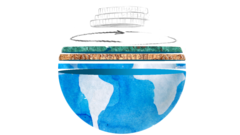
Population and welfare are growing. Providing the world with metals is becoming a major challenge. Only by closing the loop will metals be available in sufficient quantities, not just now but also in the future: urban mining, the substantial re-use and recycling of metals. In this MOOC we will explore the challenges related to metals supply, both scarcity and environmental impacts, and the conditions and consequences of a circular economy for metals, based on the reports of UNEP's International Resource Panel.

This is an introduction to formal logic and how it is applied in computer science, electronic engineering, linguistics and philosophy. You will learn propositional logic—its language, interpretations and proofs, and apply it to solve problems in a wide range of disciplines.

This is an introduction to predicate logic and how it is applied in computer science, electronic engineering, linguistics, mathematics and philosophy. Building on your knowledge of propositional logic, you will learn predicate logic—its language, interpretations and proofs, and apply it to solve problems in a wide range of disciplines.

Gain a rigorous introduction to physical chemistry suitable for undergraduates starting university. The course provides a unique, in-depth introduction to the three main pillars of physical chemistry: thermodynamics, kinetics and quantum mechanics.

El curso es bilingüe español-inglés, con videos y materiales en ambos idiomas. Lectures and materials are provided both in Spanish and English.
This two-part course introduces the basic mathematical and programming principles that underlie much of Computer Science. Students will refine their programming skills as well as learn the basics of creating efficient solutions to common computational problems.

This course is designed to look at the topics covered in advanced high school chemistry courses, correlating to the standard topics as established by the American Chemical Society. Engaging instruction and supplemental video demonstrations are designed to help prepare students for college level chemistry.

This advanced course considers how to design interactions between agents in order to achieve good social outcomes. Three main topics are covered: social choice theory (i.e., collective decision making), mechanism design, and auctions.

An introduction to the basics of marine science and conservation, brought to you with the help of sea turtles, marine mammals, seabirds and many more of the most compelling creatures in the ocean.
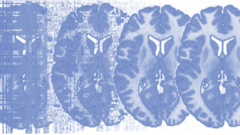
This course covers the analysis of Functional Magnetic Resonance Imaging (fMRI) data. It is a continuation of the course “Principles of fMRI, Part 1”

"The Age of Sustainable Development" gives students an understanding of the key challenges and pathways to sustainable development - that is, economic development that is also socially inclusive and environmentally sustainable. NOTE: Course will launch at noon on September 9, 2014.

What does the future hold for global markets? How are societies and cultures evolving? Who will be global powers of the 21st century? Take this class and find out how global trends are transforming business and society.

Did you miss the course when it ran in 2014? Now you can join up for the next offering. Learn about ways to assess and teach new and emerging 21st century skills: we cover the nature of these skills, methods of assessment, interpretation and reporting of assessments, and their implications for teaching.

An overview of the relevant aspects of the epidemiology, clinical presentation, basic disease mechanisms, diagnostic approaches and treatment options of the most common neurological diseases.

Learn how to elevate your teaching by studying what some of the most successful virtual teachers are doing to propel their students forward. We will investigate what teaching strategies make the biggest impact in virtual education, connect with innovative and experienced teachers, and apply core strategies to the key areas of K-12 virtual instruction.
Add to calendar

Trusted paper writing service WriteMyPaper.Today will write the papers of any difficulty.