

Online courses directory (19947)
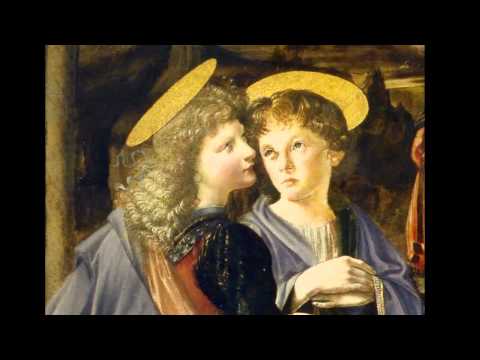
If there was one century in the past that saw radical changes in established ways of thinking comparable to the 20th Century, it would be the 16th. Before this, in Western Europe, there was only one type of Christianity

In Part 2 of Science and Cooking (Part 1 is available here), we will be visited by more world-famous chefs who use a number of different styles and techniques in their cooking. Each chef will demonstrate how he or she prepares delicious and interesting creations, and we will explore how fundamental scientific principles make them possible.
Topics will include:
- How cooking changes food texture
- Making emulsions and foams
- Phase changes in cooking
You will also have the opportunity to become an experimental scientist in your very own laboratory — your kitchen! By following along with the recipes of the week, taking precise measurements, and making skillful observations, you will learn to think like both a chef and a scientist. This practice will prepare you for the final project, when you will design and perform an experiment to analyze a recipe of your choice from a scientific perspective.
The lab is certainly one of the most unique components of this course — after all, in what other science course can you eat your experiments?
This course focuses on the physical changes that occur during cooking. If you are interested in signing up for “Part 1,” which focuses more on the chemistry of cooking, you can do so here.

How can you improve your understanding of Islam and its most important holy text, the Quran? How can you make sense of a tradition and a text that have been interpreted in different ways across vast geographical spaces for nearly a millennium and a half?
Using a multimedia and student-centered approach, this religion course provides tools and perspectives for understanding the role of the Quran in the Islamic tradition. Learners will develop the skills and context to read the text themselves, while also being introduced to some of the issues classical and contemporary interpreters have addressed. This approach enables learners to explore the influence of the Quran on diverse Muslim understandings of Islam.
No previous knowledge of Islam or Religious Studies is required.
This course is part of the World Religions Through Their Scriptures XSeries Program.

The world as it presents itself to dogs is not the same as the world humans experience. While dogs are far from blind, the experience of smell and sound plays a far more important role in their lives than ours.
In this course, you will learn how dogs think and comprehend the world around them. You will learn how simple relationships between objects like strings and tubes are completely incomprehensible to dogs, but social relationships are powerfully salient to both species.
This course is part of the Dog Behavior and Cognition XSeries.
This course is approved for CEUs by the following organizations:
- Certification Council for Professional Dog Trainers (CCPDT)
- Students who pass will receive a certificate for a total of 7.5 CEUs for behavior consultants. Additional CEUs are available by taking the remaining two courses in the series: Dog Origins (7 CEUs) and Dog Behavior: Problems and Solutions (6 CEUs).
- International Association of Animal Behavior Consultants (IAABC)
- Students who pass will receive a certificate for a total of 6.5 CEUs. Additional CEUs are available by taking the remaining two courses in the series: Dog Origins (6.125 CEUs) and Dog Behavior: Problems and Solutions (5.375 CEUs).
- Pet Professional Accreditation Board (PPAB) for Pet Professional Guild (PPG)
- Students who pass will receive a certificate for a total of 3.5 CEUs. Additional CEUs are available by taking the remaining two courses in the series: Dog Origins (3.5 CEUs) and Dog Behavior: Problems and Solutions (3 CEUs).
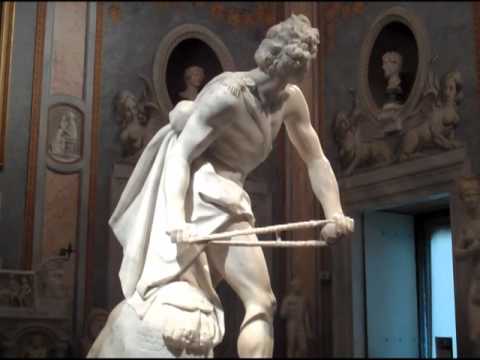
The 17th Century is the era of the Baroque style, characterized by energy, drama, and movement. The Church in Rome needed art that spoke to its resurgent power even as the conflict between Protestant and Catholics continued. A new realism

From the frivolous paintings of Fragonard to the politically-charged moralizing images of David, this tutorial brings us from the King of France and his court

With the failure of the French Revolution (Napoleon crowned himself Emperor, and after his defeat, a King was restored to power in France), there was a turn away from public, political life, toward personal, subjective experience. In large part, this turn characterizes the new style of Romanticism (don

Most people have had the flu virus at least once in their lives, and it

Christianity is a global religion. From modest beginnings 2,000 years ago, it has grown to encompass nearly a third of the human population. Diverse in languages, cultures, histories and creeds, Christians nonetheless share a common collection of sacred scripture called the Bible.
This religion course introduces you to the Bible and its scripture and asks the questions:
- What are the contents, languages, and forms of Bibles in various times and places?
- How have Christians lived out their stories and teachings?
- How does Christian history reflect the contested and varied uses of scripture—in the ancient Roman world where Christianity began, in its spread through European and American colonialism, in the diverse forms it takes in varied locations around the globe?
You will begin to explore these questions and others while learning about the content and interpretations of these sacred texts.
No previous knowledge of Christianity or the Bible required.
This course is part of the World Religions Through Their Scriptures XSeries Program.

Whether you are new to the study of Buddhism or have been studying it or practicing it for years, this course will provide you with the opportunity to become acquainted with a variety of Buddhist teachings while guiding you to think about them, and yourself, in new ways.
Through a combination of carefully selected readings, both scriptural and informational, as well as exposure to various forms of Buddhist practice such as art, devotional acts, and literary works, you will learn how to interpret, reflect upon, and apply the teachings of the Buddha to your own life and deepen your understanding of Buddhism.
No previous knowledge of Buddhism or religious study required.
This religion course is part of the World Religions Through Their Scriptures XSeries Program.

This education and teacher training course provides teaching strategies for health professional teachers that can be applied directly and immediately to their teaching context and practice.
Clinical teaching tools will be discussed through videos and helpful resources will be provided. Participants will also learn about asking effective questions in order to help promote active learning.
View Health Professional Teaching Skills – Level 1 – Foundational
View Health Professional Teaching Skills – Level 3 - Professionalism

Interested in learning how to quickly automate basic administrative functions? Windows PowerShell is rapidly becoming the solution that Operators turn to with its powerful combination of a scripting language, command line speed, and GUI tools.
This course is an introduction to Windows PowerShell where you'll have an opportunity to learn how to replace manual, repetitive, and time-consuming operations with an automated solution.
In this course, you'll be introduced to the Windows PowerShell console and the Integrated Scripting Environment (ISE) as the main command line interfaces you'll use to work with PowerShell commands. Learn the importance of the Windows PowerShell Help system as the quickest way to discover the commands and associated syntax you need for the particular task you want to accomplish. Take advantage of the ISE's Intellisense features to learn PowerShell through syntax completion and sorting and filtering commands with the Show Command add-on.
This course focuses on using the pipeline in Windows PowerShell to construct both simple and more complex commands that you can use to do things like obtaining Active Directory data, and then processing and reporting on that data. Also, learn also how PSProviders and PSDrives work with disparate data sources, such as registry keys, certificates, files, folders, and more.
For creating reports in Windows PowerShell, you'll learn how to do basic formatting to produce lists and tables and then some more advanced formatting functionality. You'll additionally see how to create custom formatting options like sorting and grouping, and using a grid view to display regular objects in an interactive, graphical grid.
By the end of this course, you should be well on your way to creating scripts that save you time, accomplish tasks with greater efficiency, and allow you to be even more productive on the job.
Introduction to Evolution and Natural Selection. Ape Clarification. Intelligent Design and Evolution. Evolution Clarification. Natural Selection and the Owl Butterfly. DNA. Variation in a Species. Introduction to Evolution and Natural Selection. Ape Clarification. Intelligent Design and Evolution. Evolution Clarification. Natural Selection and the Owl Butterfly. DNA. Variation in a Species.
Diffusion and Osmosis. Parts of a cell. Chromosomes, Chromatids, Chromatin, etc.. Mitosis, Meiosis and Sexual Reproduction. Phases of Mitosis. Phases of Meiosis. Embryonic Stem Cells. Cancer. Diffusion and Osmosis. Parts of a cell. Chromosomes, Chromatids, Chromatin, etc.. Mitosis, Meiosis and Sexual Reproduction. Phases of Mitosis. Phases of Meiosis. Embryonic Stem Cells. Cancer.

Imagine that you are a bank and a main part of your daily business is to lend money. Unfortunately, lending money is a risky business - there is no 100% guarantee that you will get all your money back. If the borrower defaults, you will face losses in your portfolio. Or, in a bit less extreme scenario, if the credit quality of your counterparty deteriorates according to some rating system, the loan will become more risky. These are typical situations in which credit risk manifests itself.
According to the Basel Accord, a global regulation framework for financial institutions, credit risk is one of the three fundamental risks a bank or any other regulated financial institution has to face when operating in the markets (the two other risks being market risk and operational risk). As the 2008 financial crisis has shown us, a correct understanding of credit risk and the ability to manage it are fundamental in today’s world.
This course offers you an introduction to credit risk modelling and hedging. We will approach credit risk from the point of view of banks, but most of the tools and models we will overview can be beneficial at the corporate level as well.
At the end of the course, you will be able to understand and correctly use the basic tools of credit risk management, both from a theoretical and, most of all, a practical point of view. This will be a quite unconventional course. For each methodology, we will analyse its strengths as well as its weaknesses. We will do this in a rigorous way, but also with fun: there is no need to be boring.
Thanks to the wonderful feedback of last year’s students, the course has been further improved.
Follow us on Twitter @CRMooc for updates and hints about the course.
FAQs
What is the estimated effort for course?
The total effort is 48 hours. You can decide for yourself when you will work on the course.
How much does it cost to take the course?
Nothing! The course is free.
Will the text of the lectures be available?
Yes. All of our lectures will have transcripts synced to the videos.
Do I need to watch the lectures live?
No. You can watch the lectures at your leisure.
Is this course related to campus courses of Delft University of Technology?
Yes, this course can be seen as an evolution of the WI3421TU Risk Management course, a compulsory course of the Minor Finance at TU Delft.

Are you finding it difficult to start the conversation, or find the right words when communicating in English? Do you know how to start and end conversations in a polite way? Do you want to learn more about American, British, Canadian, Australian, South Korean, Colombian, and Chinese cultures? If so, you’ve come to the right course!
语言最重要的功能就是交流。在交流中我们要知道如何开始一个对方感兴趣的话题,回答别人的提问,自然、流畅地完成一个对话。本课程选取了8个主题,由50多位来自美国、英国、加拿大、澳大利亚、哥伦比亚、中国的老师及各个年龄段的学生,在真实的场景中,用最地道的表达和最纯正的英语,带你谈论日常生活、学习的方方面面。
本课程分为八个单元,每个单元有一个主题,分别是:
1、个人信息的介绍与交换
2、我们的家人和朋友
3、饮食与用餐
4、英语学习的目的和方法
5、假日活动和难忘的经历
6、兴趣爱好
7、情感表达
8、保持健康
每个主题由十余组对话和小组讨论,外籍老师的中西方文化差异介绍,中国老师的重点词汇、句型讲解,听力理解练习和口语测试构成。通过学习和练习,你将可以和讲英语的朋友们自如地交谈、讨论与主题相关的任何问题。本课程的学习方法有很多。英语学习者可以在反复地听和跟读对话的过程中,不断积累语言素材,和你身边的朋友或同课程的学习者进行对话练习;英语教师可以选用本课程中适合的主题,组织学生进行听说训练,组织高效课堂。也许你不能理解每段对话的全部内容,只需听懂大意,随着课程的进展,你听懂的内容会越来越多。让我们一起实现一次英语听说的飞跃吧。
本门课程在制作过程中得到了香港伟新教育基金和Google公司的资助,特此鸣谢。
ATP: Adenosine Triphosphate. Photosynthesis. Photosynthesis: Light Reactions 1. Photosynthesis: Light Reactions and Photophosphorylation. Photosynthesis: Calvin Cycle. Photorespiration. C-4 Photosynthesis. CAM Plants. ATP: Adenosine Triphosphate. Photosynthesis. Photosynthesis: Light Reactions 1. Photosynthesis: Light Reactions and Photophosphorylation. Photosynthesis: Calvin Cycle. Photorespiration. C-4 Photosynthesis. CAM Plants.
Elements and Atoms. Introduction to the atom. Elements and Atoms. Introduction to the atom.
Orbitals. More on orbitals and electron configuration. Electron configurations. Electron configurations 2. Valence Electrons. Orbitals. More on orbitals and electron configuration. Electron configurations. Electron configurations 2. Valence Electrons.

When you meet a new person, it is hard to know what to expect. You may not be able to read the person or understand what they mean. Even if you want to have a good relationship with them, this lack of understanding can make interactions tense, unpredictable and scary! The same is true for a lot of people as they encounter statistics and mathematical ways of working with data. Statistics can be confusing and opaque. Symbols, Greek letters, very large and very small numbers, and how to interpret all of this can leave to feeling cold and disengaged—even fearful and resentful.
But in the modern information age, having a healthy relationship with statistics can make life a whole lot easier. We are constantly faced with an onslaught of data and claims about it—from news articles, to Facebook and blog posts, casual and professional conversations, reports at our workplace, advertising, and claims from politicians and public officials. How can we process that information, make sense of it, evaluate truth claims, and put ourselves in a position to act on the information? One of the most important ways is by befriending statistics and consistently using statistical ways of thinking.
The purpose of this course, then is to help you develop a functional, satisfying, and useful life-long relationship with statistics. To achieve that goal, we will take a non-technical approach—you will learn how statistics work and why they are so helpful in evaluating the world of information that is around us. You will learn about the logic of statistical thinking and the concepts (rather than the mathematical details and probability theory) that guide statistical inferences and conclusions.
You do not need to be a math whiz to take this course. If you can add, subtract, multiply, and divide (or just be able to use a calculator to do that!), you will be more than able to handle what will happen as this relationship develops.
By the end of the course you will be able to:
- Identify the most important features of a data set
- Select a statistical test based on the features of the data
- Think like a statistical detective
- Understand the relationship between two different characteristics or variables
- Perform some simple statistical calculations and draw some conclusions from real data
- Hopefully, love stats!
We’ll do all of this using entertaining examples related to real-life situations we all encounter in everyday life.
Add to calendar

Trusted paper writing service WriteMyPaper.Today will write the papers of any difficulty.