

Online courses directory (19947)

Videos exploring the way things work. What is inside an alarm clock radio?. What is inside a coffee maker?. What is inside a tap light?. What is inside a hair dryer? (1 of 2). What is inside a hair dryer? (2 of 2). Compare the hair dryer motor to the one you can build. What is inside a DVD player? (1 of 5). What is inside a DVD player? (2 of 5). What is inside a DVD player? (3 of 5). What is inside a DVD player? (4 of 5). What is inside a DVD player? (5 of 5). What is inside a universal remote control?. What is inside a digital camera? (1 of 2). What is inside a digital camera? (2 of 2). What is inside an alarm clock radio?. What is inside a coffee maker?. What is inside a tap light?. What is inside a hair dryer? (1 of 2). What is inside a hair dryer? (2 of 2). Compare the hair dryer motor to the one you can build. What is inside a DVD player? (1 of 5). What is inside a DVD player? (2 of 5). What is inside a DVD player? (3 of 5). What is inside a DVD player? (4 of 5). What is inside a DVD player? (5 of 5). What is inside a universal remote control?. What is inside a digital camera? (1 of 2). What is inside a digital camera? (2 of 2).

1. Bit-zee. 2. Bit-zee (long version). 3. Bit-zee Bot Introduction. 4. Bit-zee planning and propulsion. 5. Bit-zee's bits. 6. Bit-zee's chassis/frame. 7. Bit-zee's wheel mounts and fenders. 8. Bit-zee's component mounting holes. 9. Bit-zee's batteries. 10. Improving the battery wires. 11. Connecting Bit-zee's power wires and on-off switch. 12. Bit-zee's motors. 13. Why does Bit-zee need a motor controller?. 14. Bit-zee's motor controller. 15. Attaching and wiring Bit-zee's motor controller. 16. Attaching Bit-zee's Arduino. 17. How to hotwire a digital camera. 18. Attaching Bit-zee's digital camera. 19. Bit zee's 5 Volt power distribution board. 20. Hacking and attaching a digital recorder/player to Bit-zee. 21. Making a power connector for the Arduino. 22. Attaching Bit-zee's prototype board. 23. Connecting the motor controller to the Arduino. 24. Connecting Bit-zee's camera to the Arduino. 25. Bit-zee's bumper switches. 26. Bit-zee's eyes. 27. Bit-zee's IR sensor. 28. Bit-zee's shell. 29. Camera wiring update.

We've always been communicating.... as we moved from signal fires, to alphabets & electricity the problems remained the same. What is Information Theory?. Prehistory: Proto-writing. Ptolemaic: Rosetta Stone. Ancient History: The Alphabet. Source Encoding. Visual Telegraphs (case study). Decision Tree Exploration. Electrostatic Telegraphs (case study). The Battery & Electromagnetism. Morse Code & The Information Age. Morse code Exploration. What's Next?. Symbol Rate. Symbol Rate Exploration. Introduction to Channel Capacity. Message Space Exploration. Measuring Information. Galton Board Exploration. Origin of Markov Chains. Markov Chain Exploration. A Mathematical Theory of Communication. Markov Text Exploration. What's Next?. What is Information Theory?. Prehistory: Proto-writing. Ptolemaic: Rosetta Stone. Ancient History: The Alphabet. Source Encoding. Visual Telegraphs (case study). Decision Tree Exploration. Electrostatic Telegraphs (case study). The Battery & Electromagnetism. Morse Code & The Information Age. Morse code Exploration. What's Next?. Symbol Rate. Symbol Rate Exploration. Introduction to Channel Capacity. Message Space Exploration. Measuring Information. Galton Board Exploration. Origin of Markov Chains. Markov Chain Exploration. A Mathematical Theory of Communication. Markov Text Exploration. What's Next?.

This course covers topics on the engineering of computer software and hardware systems: techniques for controlling compl

Aim is to analyze important current events for what they reveal about the nature and working of our technological world.

How have humans protected their secret messages through history? What has changed today?. What is Cryptography?. Probability Space. The Caesar Cipher. Caesar Cipher Exploration. Frequency Fingerprint Exploration . Polyalphabetic Cipher. Polyalphabetic Exploration. The One-Time Pad. Perfect Secrecy Exploration. Frequency Stability. Coin flip sequences. Frequency Stability Exploration. The Enigma Encryption Machine (case study). Perfect Secrecy. Pseudorandom Number Generators. Random Walk Exploration. Ciphers vs. Codes. Shift Cipher. Caesar cipher encryption. Caesar Cipher Decryption. Caesar cipher frequency analysis. Vigenere cipher encryption. XOR Bitwise Operation. XOR & the One-Time Pad. XOR Exploration. Bitwise Operators. What's Next?. The Fundamental Theorem of Arithmetic. Public Key Cryptography: what is it?. The Discrete Logarithm Problem. Diffie-Hellman Key Exchange. RSA Encryption: step 1. RSA Encryption: step 2. RSA Encryption: step 3. Time Complexity (Exploration). Euler's Totient Function. Euler Totient Exploration. RSA Encryption: step 4. What should we learn next?. What is Modular Arithmetic?. Modulo Operator. Congruence Modulo. Congruence Relation. Equivalence Relations. The Quotient Remainder Theorem. Modular Addition & Subtraction. Modular Addition. Modular Multiplication. Modular Multiplication. Modular Exponentiation. Fast Modular Exponentiation. Fast Modular Exponentiation. Modular Inverses. Introduction. Primality Test Challenge. Trial Division. Level 1: Primality Test. Running Time. Level 2: measuring running time. Computer Memory (space). Binary Memory Exploration. Algorithmic Efficiency. Level 3: Challenge. Sieve of Eratosthenes. Level 4: Sieve of Eratosthenes. Primality Test with Sieve. Level 5: Trial division using sieve. The Prime Number Theorem. Prime density spiral. Prime Gaps. Time Space Tradeoff. Summary (what's next?). Randomized Algorithms (intro). Conditional Probability (Bayes Theorem) Visualized. Guess the coin. Random Primality Test (warm up). Level 9: Trial Divison vs Random Division. Fermat's Little Theorem. Fermat Primality Test. Level 10: Fermat Primality Test. What's Next?. What is Cryptography?. Probability Space. The Caesar Cipher. Caesar Cipher Exploration. Frequency Fingerprint Exploration . Polyalphabetic Cipher. Polyalphabetic Exploration. The One-Time Pad. Perfect Secrecy Exploration. Frequency Stability. Coin flip sequences. Frequency Stability Exploration. The Enigma Encryption Machine (case study). Perfect Secrecy. Pseudorandom Number Generators. Random Walk Exploration. Ciphers vs. Codes. Shift Cipher. Caesar cipher encryption. Caesar Cipher Decryption. Caesar cipher frequency analysis. Vigenere cipher encryption. XOR Bitwise Operation. XOR & the One-Time Pad. XOR Exploration. Bitwise Operators. What's Next?. The Fundamental Theorem of Arithmetic. Public Key Cryptography: what is it?. The Discrete Logarithm Problem. Diffie-Hellman Key Exchange. RSA Encryption: step 1. RSA Encryption: step 2. RSA Encryption: step 3. Time Complexity (Exploration). Euler's Totient Function. Euler Totient Exploration. RSA Encryption: step 4. What should we learn next?. What is Modular Arithmetic?. Modulo Operator. Congruence Modulo. Congruence Relation. Equivalence Relations. The Quotient Remainder Theorem. Modular Addition & Subtraction. Modular Addition. Modular Multiplication. Modular Multiplication. Modular Exponentiation. Fast Modular Exponentiation. Fast Modular Exponentiation. Modular Inverses. Introduction. Primality Test Challenge. Trial Division. Level 1: Primality Test. Running Time. Level 2: measuring running time. Computer Memory (space). Binary Memory Exploration. Algorithmic Efficiency. Level 3: Challenge. Sieve of Eratosthenes. Level 4: Sieve of Eratosthenes. Primality Test with Sieve. Level 5: Trial division using sieve. The Prime Number Theorem. Prime density spiral. Prime Gaps. Time Space Tradeoff. Summary (what's next?). Randomized Algorithms (intro). Conditional Probability (Bayes Theorem) Visualized. Guess the coin. Random Primality Test (warm up). Level 9: Trial Divison vs Random Division. Fermat's Little Theorem. Fermat Primality Test. Level 10: Fermat Primality Test. What's Next?.

Fractional reserve banking and the money supply. Overview of Fractional Reserve Banking. Weaknesses of Fractional Reserve Lending. Full Reserve Banking. Money Supply- M0 M1 and M2. Simple Fractional Reserve Accounting part 1. Simple Fractional Reserve Accounting (part 2). Interest as Rent for Money. Money Supply and Demand Impacting Interest Rates. Overview of Fractional Reserve Banking. Weaknesses of Fractional Reserve Lending. Full Reserve Banking. Money Supply- M0 M1 and M2. Simple Fractional Reserve Accounting part 1. Simple Fractional Reserve Accounting (part 2). Interest as Rent for Money. Money Supply and Demand Impacting Interest Rates.
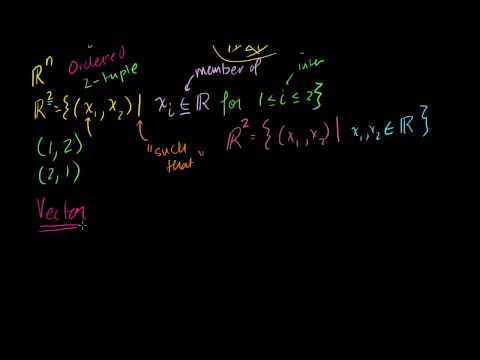
Let's get our feet wet by thinking in terms of vectors and spaces. Introduction to Vectors. Vector Examples. Scaling vectors. Adding vectors. Parametric Representations of Lines. Linear Combinations and Span. Introduction to Linear Independence. More on linear independence. Span and Linear Independence Example. Linear Subspaces. Basis of a Subspace. Vector Dot Product and Vector Length. Proving Vector Dot Product Properties. Proof of the Cauchy-Schwarz Inequality. Vector Triangle Inequality. Defining the angle between vectors. Defining a plane in R3 with a point and normal vector. Cross Product Introduction. Proof: Relationship between cross product and sin of angle. Dot and Cross Product Comparison/Intuition. Vector Triple Product Expansion (very optional). Normal vector from plane equation. Point distance to plane. Distance Between Planes. Matrices: Reduced Row Echelon Form 1. Matrices: Reduced Row Echelon Form 2. Matrices: Reduced Row Echelon Form 3. Matrix Vector Products. Introduction to the Null Space of a Matrix. Null Space 2: Calculating the null space of a matrix. Null Space 3: Relation to Linear Independence. Column Space of a Matrix. Null Space and Column Space Basis. Visualizing a Column Space as a Plane in R3. Proof: Any subspace basis has same number of elements. Dimension of the Null Space or Nullity. Dimension of the Column Space or Rank. Showing relation between basis cols and pivot cols. Showing that the candidate basis does span C(A). Introduction to Vectors. Vector Examples. Scaling vectors. Adding vectors. Parametric Representations of Lines. Linear Combinations and Span. Introduction to Linear Independence. More on linear independence. Span and Linear Independence Example. Linear Subspaces. Basis of a Subspace. Vector Dot Product and Vector Length. Proving Vector Dot Product Properties. Proof of the Cauchy-Schwarz Inequality. Vector Triangle Inequality. Defining the angle between vectors. Defining a plane in R3 with a point and normal vector. Cross Product Introduction. Proof: Relationship between cross product and sin of angle. Dot and Cross Product Comparison/Intuition. Vector Triple Product Expansion (very optional). Normal vector from plane equation. Point distance to plane. Distance Between Planes. Matrices: Reduced Row Echelon Form 1. Matrices: Reduced Row Echelon Form 2. Matrices: Reduced Row Echelon Form 3. Matrix Vector Products. Introduction to the Null Space of a Matrix. Null Space 2: Calculating the null space of a matrix. Null Space 3: Relation to Linear Independence. Column Space of a Matrix. Null Space and Column Space Basis. Visualizing a Column Space as a Plane in R3. Proof: Any subspace basis has same number of elements. Dimension of the Null Space or Nullity. Dimension of the Column Space or Rank. Showing relation between basis cols and pivot cols. Showing that the candidate basis does span C(A).
The core ideas in microeconomics. Supply, demand and equilibrium. Introduction to Economics. Law of Demand. Change in Expected Future Prices and Demand. Price of Related Products and Demand. Changes in Income, Population, or Preferences. Normal and Inferior Goods. Inferior Goods Clarification. Law of Supply. Factors Affecting Supply. Long Term Supply Curve. Market Equilibrium. Changes in Market Equilibrium. Breakdown of Gas Prices. Short-Run Oil Prices. Introduction to Economics. Law of Demand. Change in Expected Future Prices and Demand. Price of Related Products and Demand. Changes in Income, Population, or Preferences. Normal and Inferior Goods. Inferior Goods Clarification. Law of Supply. Factors Affecting Supply. Long Term Supply Curve. Market Equilibrium. Changes in Market Equilibrium. Breakdown of Gas Prices. Short-Run Oil Prices.

Price elasticity of demand and supply. How sensitive are things to change in price. Price Elasticity of Demand. More on Elasticity of Demand. Perfect Inelasticity and Perfect Elasticity of Demand. Constant Unit Elasticity. Total Revenue and Elasticity. More on Total Revenue and Elasticity. Cross Elasticity of Demand. Elasticity of Supply. Elasticity and Strange Percent Changes. Price Elasticity of Demand. More on Elasticity of Demand. Perfect Inelasticity and Perfect Elasticity of Demand. Constant Unit Elasticity. Total Revenue and Elasticity. More on Total Revenue and Elasticity. Cross Elasticity of Demand. Elasticity of Supply. Elasticity and Strange Percent Changes.

Understanding how we can map one set of vectors to another set. Matrices used to define linear transformations. A more formal understanding of functions. Vector Transformations. Linear Transformations. Matrix Vector Products as Linear Transformations. Linear Transformations as Matrix Vector Products. Image of a subset under a transformation. im(T): Image of a Transformation. Preimage of a set. Preimage and Kernel Example. Sums and Scalar Multiples of Linear Transformations. More on Matrix Addition and Scalar Multiplication. Linear Transformation Examples: Scaling and Reflections. Linear Transformation Examples: Rotations in R2. Rotation in R3 around the X-axis. Unit Vectors. Introduction to Projections. Expressing a Projection on to a line as a Matrix Vector prod. Compositions of Linear Transformations 1. Compositions of Linear Transformations 2. Matrix Product Examples. Matrix Product Associativity. Distributive Property of Matrix Products. Introduction to the inverse of a function. Proof: Invertibility implies a unique solution to f(x)=y. Surjective (onto) and Injective (one-to-one) functions. Relating invertibility to being onto and one-to-one. Determining whether a transformation is onto. Exploring the solution set of Ax=b. Matrix condition for one-to-one trans. Simplifying conditions for invertibility. Showing that Inverses are Linear. Deriving a method for determining inverses. Example of Finding Matrix Inverse. Formula for 2x2 inverse. 3x3 Determinant. nxn Determinant. Determinants along other rows/cols. Rule of Sarrus of Determinants. Determinant when row multiplied by scalar. (correction) scalar multiplication of row. Determinant when row is added. Duplicate Row Determinant. Determinant after row operations. Upper Triangular Determinant. Simpler 4x4 determinant. Determinant and area of a parallelogram. Determinant as Scaling Factor. Transpose of a Matrix. Determinant of Transpose. Transpose of a Matrix Product. Transposes of sums and inverses. Transpose of a Vector. Rowspace and Left Nullspace. Visualizations of Left Nullspace and Rowspace. Rank(A) = Rank(transpose of A). Showing that A-transpose x A is invertible. A more formal understanding of functions. Vector Transformations. Linear Transformations. Matrix Vector Products as Linear Transformations. Linear Transformations as Matrix Vector Products. Image of a subset under a transformation. im(T): Image of a Transformation. Preimage of a set. Preimage and Kernel Example. Sums and Scalar Multiples of Linear Transformations. More on Matrix Addition and Scalar Multiplication. Linear Transformation Examples: Scaling and Reflections. Linear Transformation Examples: Rotations in R2. Rotation in R3 around the X-axis. Unit Vectors. Introduction to Projections. Expressing a Projection on to a line as a Matrix Vector prod. Compositions of Linear Transformations 1. Compositions of Linear Transformations 2. Matrix Product Examples. Matrix Product Associativity. Distributive Property of Matrix Products. Introduction to the inverse of a function. Proof: Invertibility implies a unique solution to f(x)=y. Surjective (onto) and Injective (one-to-one) functions. Relating invertibility to being onto and one-to-one. Determining whether a transformation is onto. Exploring the solution set of Ax=b. Matrix condition for one-to-one trans. Simplifying conditions for invertibility. Showing that Inverses are Linear. Deriving a method for determining inverses. Example of Finding Matrix Inverse. Formula for 2x2 inverse. 3x3 Determinant. nxn Determinant. Determinants along other rows/cols. Rule of Sarrus of Determinants. Determinant when row multiplied by scalar. (correction) scalar multiplication of row. Determinant when row is added. Duplicate Row Determinant. Determinant after row operations. Upper Triangular Determinant. Simpler 4x4 determinant. Determinant and area of a parallelogram. Determinant as Scaling Factor. Transpose of a Matrix. Determinant of Transpose. Transpose of a Matrix Product. Transposes of sums and inverses. Transpose of a Vector. Rowspace and Left Nullspace. Visualizations of Left Nullspace and Rowspace. Rank(A) = Rank(transpose of A). Showing that A-transpose x A is invertible.

Demand Curve as Marginal Benefit Curve. Consumer Surplus Introduction. Total Consumer Surplus as Area. Producer Surplus. Rent Control and Deadweight Loss. Minimum Wage and Price Floors. Taxation and Dead Weight Loss. Percentage Tax on Hamburgers. Taxes and Perfectly Inelastic Demand. Taxes and Perfectly Elastic Demand. Negative Externalities. Taxes for Factoring in Negative Externalities. Positive Externalities. Tragedy of the Commons. Demand Curve as Marginal Benefit Curve. Consumer Surplus Introduction. Total Consumer Surplus as Area. Producer Surplus. Rent Control and Deadweight Loss. Minimum Wage and Price Floors. Taxation and Dead Weight Loss. Percentage Tax on Hamburgers. Taxes and Perfectly Inelastic Demand. Taxes and Perfectly Elastic Demand. Negative Externalities. Taxes for Factoring in Negative Externalities. Positive Externalities. Tragedy of the Commons.

We explore creating and moving between various coordinate systems. Orthogonal Complements. dim(V) + dim(orthogonal complement of V)=n. Representing vectors in Rn using subspace members. Orthogonal Complement of the Orthogonal Complement. Orthogonal Complement of the Nullspace. Unique rowspace solution to Ax=b. Rowspace Solution to Ax=b example. Projections onto Subspaces. Visualizing a projection onto a plane. A Projection onto a Subspace is a Linear Transforma. Subspace Projection Matrix Example. Another Example of a Projection Matrix. Projection is closest vector in subspace. Least Squares Approximation. Least Squares Examples. Another Least Squares Example. Coordinates with Respect to a Basis. Change of Basis Matrix. Invertible Change of Basis Matrix. Transformation Matrix with Respect to a Basis. Alternate Basis Transformation Matrix Example. Alternate Basis Transformation Matrix Example Part 2. Changing coordinate systems to help find a transformation matrix. Introduction to Orthonormal Bases. Coordinates with respect to orthonormal bases. Projections onto subspaces with orthonormal bases. Finding projection onto subspace with orthonormal basis example. Example using orthogonal change-of-basis matrix to find transformation matrix. Orthogonal matrices preserve angles and lengths. The Gram-Schmidt Process. Gram-Schmidt Process Example. Gram-Schmidt example with 3 basis vectors. Introduction to Eigenvalues and Eigenvectors. Proof of formula for determining Eigenvalues. Example solving for the eigenvalues of a 2x2 matrix. Finding Eigenvectors and Eigenspaces example. Eigenvalues of a 3x3 matrix. Eigenvectors and Eigenspaces for a 3x3 matrix. Showing that an eigenbasis makes for good coordinate systems. Orthogonal Complements. dim(V) + dim(orthogonal complement of V)=n. Representing vectors in Rn using subspace members. Orthogonal Complement of the Orthogonal Complement. Orthogonal Complement of the Nullspace. Unique rowspace solution to Ax=b. Rowspace Solution to Ax=b example. Projections onto Subspaces. Visualizing a projection onto a plane. A Projection onto a Subspace is a Linear Transforma. Subspace Projection Matrix Example. Another Example of a Projection Matrix. Projection is closest vector in subspace. Least Squares Approximation. Least Squares Examples. Another Least Squares Example. Coordinates with Respect to a Basis. Change of Basis Matrix. Invertible Change of Basis Matrix. Transformation Matrix with Respect to a Basis. Alternate Basis Transformation Matrix Example. Alternate Basis Transformation Matrix Example Part 2. Changing coordinate systems to help find a transformation matrix. Introduction to Orthonormal Bases. Coordinates with respect to orthonormal bases. Projections onto subspaces with orthonormal bases. Finding projection onto subspace with orthonormal basis example. Example using orthogonal change-of-basis matrix to find transformation matrix. Orthogonal matrices preserve angles and lengths. The Gram-Schmidt Process. Gram-Schmidt Process Example. Gram-Schmidt example with 3 basis vectors. Introduction to Eigenvalues and Eigenvectors. Proof of formula for determining Eigenvalues. Example solving for the eigenvalues of a 2x2 matrix. Finding Eigenvectors and Eigenspaces example. Eigenvalues of a 3x3 matrix. Eigenvectors and Eigenspaces for a 3x3 matrix. Showing that an eigenbasis makes for good coordinate systems.

How do you decide what to produce or trade? How can you maximize happiness in a world of scarcity. What are you giving up when you choose something (i.e., opportunity cost)?. Production Possibilities Frontier. Opportunity Cost. Increasing Opportunity Cost. Allocative Efficiency and Marginal Benefit. Economic Growth through Investment. Comparative Advantage Specialization and Gains from Trade. Comparative Advantage and Absolute Advantage. Marginal Utility. Equalizing Marginal Utility per Dollar Spent. Deriving Demand Curve from Tweaking Marginal Utility per Dollar. Budget Line. Indifference Curves and Marginal Rate of Substitution. Optimal Point on Budget Line. Types of Indifference Curves. Production Possibilities Frontier. Opportunity Cost. Increasing Opportunity Cost. Allocative Efficiency and Marginal Benefit. Economic Growth through Investment. Comparative Advantage Specialization and Gains from Trade. Comparative Advantage and Absolute Advantage. Marginal Utility. Equalizing Marginal Utility per Dollar Spent. Deriving Demand Curve from Tweaking Marginal Utility per Dollar. Budget Line. Indifference Curves and Marginal Rate of Substitution. Optimal Point on Budget Line. Types of Indifference Curves.
Economic profit vs. accounting profit. Average total cost (ATC) and marginal cost (MC). Marginal product of labor (MPL). Price discrimination. Economic Profit vs Accounting Profit. Depreciation and Opportunity Cost of Capital. Marginal Cost and Average Total Cost. Marginal Revenue and Marginal Cost. Marginal Revenue Below Average Total Cost. Long Term Supply Curve and Economic Profit. Fixed, Variable, and Marginal Cost.. Visualizing Average Costs and Marginal Costs as Slope. A Firm's Marginal Product Revenue Curve. How Many People to Hire Given the MPR curve. Adding Demand Curves. First Degree Price Discrimination. Economic Profit vs Accounting Profit. Depreciation and Opportunity Cost of Capital. Marginal Cost and Average Total Cost. Marginal Revenue and Marginal Cost. Marginal Revenue Below Average Total Cost. Long Term Supply Curve and Economic Profit. Fixed, Variable, and Marginal Cost.. Visualizing Average Costs and Marginal Costs as Slope. A Firm's Marginal Product Revenue Curve. How Many People to Hire Given the MPR curve. Adding Demand Curves. First Degree Price Discrimination.

Perfect Competition. Monopoly Basics. Monopolist Optimizing Price (part 1)- Total Revenue.. Monopolist Optimizing Price (part 2)- Marginal Revenue. Monopolist Optimizing Price (part 3)- Dead Weight Loss.avi. Optional Calculus Proof to Show that MR has Twice Slope of Demand. Review of Revenue and Cost Graphs for a Monopoly. Oligopolies and Monopolistic Competition. Monopolistic Competition and Economic Profit. Oligopolies, Duopolies, Collusion, and Cartels. Perfect Competition. Monopoly Basics. Monopolist Optimizing Price (part 1)- Total Revenue.. Monopolist Optimizing Price (part 2)- Marginal Revenue. Monopolist Optimizing Price (part 3)- Dead Weight Loss.avi. Optional Calculus Proof to Show that MR has Twice Slope of Demand. Review of Revenue and Cost Graphs for a Monopoly. Oligopolies and Monopolistic Competition. Monopolistic Competition and Economic Profit. Oligopolies, Duopolies, Collusion, and Cartels.
A review of hybrid orbitals, dot structures, electronegativity, and polarity. sp3 Hybridized Orbitals and Sigma Bonds. Pi bonds and sp2 Hybridized Orbitals. dot structures I: single bonds. dot structures II: multiple bonds. sp3 hybrid orbitals. tetrahedral bond angle proof. sp2 hybrid orbitals. sp hybrid orbitals. more hybridization. electronegativity. electronegativity and intermolecular forces. sp3 Hybridized Orbitals and Sigma Bonds. Pi bonds and sp2 Hybridized Orbitals. dot structures I: single bonds. dot structures II: multiple bonds. sp3 hybrid orbitals. tetrahedral bond angle proof. sp2 hybrid orbitals. sp hybrid orbitals. more hybridization. electronegativity. electronegativity and intermolecular forces.

bond-line structures, functional groups, formal charges, resonance structures, oxidation and reduction, acid/base chemistry. bond-line structures. 3-D bond-line structures. structural (constitutional) isomers. functional groups I. functional groups II. formal charge I. formal charge II. resonance structures I. resonance structures II. resonance structures III. oxidation states I. oxidation states II. Acid/Base Definitions. Ka and pKa Derivation. Stabilization of Conjugate Base I. Stabilization of Conjugate Base II. Stabilization of Conjugate Base III. Stabilization of Conjugate Base IV. bond-line structures. 3-D bond-line structures. structural (constitutional) isomers. functional groups I. functional groups II. formal charge I. formal charge II. resonance structures I. resonance structures II. resonance structures III. oxidation states I. oxidation states II. Acid/Base Definitions. Ka and pKa Derivation. Stabilization of Conjugate Base I. Stabilization of Conjugate Base II. Stabilization of Conjugate Base III. Stabilization of Conjugate Base IV.

Tutorial for Beginners: This course will be offered for FREE for a limited time! Register now before the price increase!
naming alkanes and cycloalkanes, conformations of alkanes and cycloalkanes, and free radical reactions. Representing Structures of Organic Molecules. Naming Simple Alkanes. Naming Alkanes with Alkyl Groups. Correction - 2-Propylheptane should never be the name!. Common and Systematic Naming-Iso, Sec and Tert Prefixes. Organic Chemistry Naming Examples 1. Organic Chemistry Naming Examples 2. Organic Chemistry Naming Examples 3. Organic Chemistry Naming Examples 4. Organic Chemistry Naming Examples 5. Newman Projections. Newman Projections 2. Chair and Boat Shapes for Cyclohexane. Double Newman Diagram for Methcyclohexane. alkane and cycloalkane nomenclature I. alkane and cycloalkane nomenclature II. alkane and cycloalkane nomenclature III. bicyclic compounds. naming cubane. conformations of ethane and propane. conformations of butane. conformations of cyclohexane I: chair and boat. conformations of cyclohexane II: monosubstituted. conformations of cyclohexane III: disubstituted. conformations of cyclohexane IV: trisubstituted. Free Radical Reactions. Representing Structures of Organic Molecules. Naming Simple Alkanes. Naming Alkanes with Alkyl Groups. Correction - 2-Propylheptane should never be the name!. Common and Systematic Naming-Iso, Sec and Tert Prefixes. Organic Chemistry Naming Examples 1. Organic Chemistry Naming Examples 2. Organic Chemistry Naming Examples 3. Organic Chemistry Naming Examples 4. Organic Chemistry Naming Examples 5. Newman Projections. Newman Projections 2. Chair and Boat Shapes for Cyclohexane. Double Newman Diagram for Methcyclohexane. alkane and cycloalkane nomenclature I. alkane and cycloalkane nomenclature II. alkane and cycloalkane nomenclature III. bicyclic compounds. naming cubane. conformations of ethane and propane. conformations of butane. conformations of cyclohexane I: chair and boat. conformations of cyclohexane II: monosubstituted. conformations of cyclohexane III: disubstituted. conformations of cyclohexane IV: trisubstituted. Free Radical Reactions.
Add to calendar

Trusted paper writing service WriteMyPaper.Today will write the papers of any difficulty.