Online courses directory (19947)

This course introduces students to the principles of computation. Upon completion of 6.001, students should be able to explain and apply the basic methods from programming languages to analyze computational systems, and to generate computational solutions to abstract problems. Substantial weekly programming assignments are an integral part of the course. This course is worth 4 Engineering Design Points.

This course covers the emergence of modern France. Topics include the social, economic, and political transformation of France; the impact of France's revolutionary heritage, of industrialization, and of the dislocation wrought by two world wars; and the political response of the Left and the Right to changing French society.
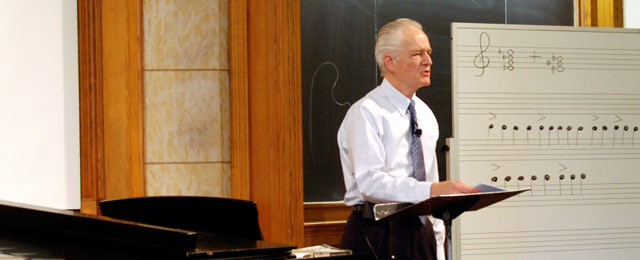
This course fosters the development of aural skills that lead to an understanding of Western music. The musical novice is introduced to the ways in which music is put together and is taught how to listen to a wide variety of musical styles, from Bach and Mozart, to Gregorian chant, to the blues.
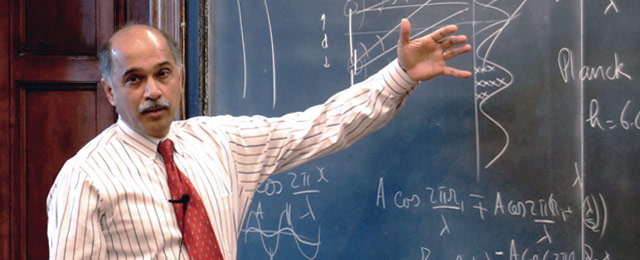
This course provides a thorough introduction to the principles and methods of physics for students who have good preparation in physics and mathematics. Emphasis is placed on problem solving and quantitative reasoning. This course covers Newtonian mechanics, special relativity, gravitation, thermodynamics, and waves.
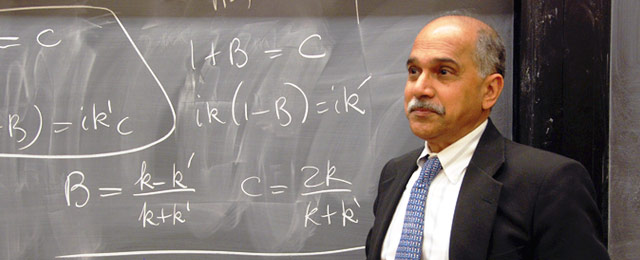
This is a continuation of Fundamentals of Physics, I (PHYS 200), the introductory course on the principles and methods of physics for students who have good preparation in physics and mathematics. This course covers electricity, magnetism, optics and quantum mechanics.
This course provides an overview of major works of social thought from the beginning of the modern era through the 1920s. Attention is paid to social and intellectual contexts, conceptual frameworks and methods, and contributions to contemporary social analysis. Writers include Hobbes, Locke, Rousseau, Montesquieu, Adam Smith, Marx, Weber, and Durkheim.

This subject is aimed at students with little or no programming experience. It aims to provide students with an understanding of the role computation can play in solving problems. It also aims to help students, regardless of their major, to feel justifiably confident of their ability to write small programs that allow them to accomplish useful goals. The class will use the Python programming language.
Course Format
 This course has been designed for independent study. It provides everything you will need to understand the concepts covered in the course. The materials include:
- A complete set of Lecture Videos by Prof. Guttag.
- Resources for each lecture video, such as Handouts, Slides, and Code Files.
- Recitation Videos by course TA's to review content and problem solving techniques.
- Homework problems with sample student solutions.
- Further Study collections of links to supplemental online content.
- Self-Assessment tools, including lecture questions with answers and unit quizzes with solutions, to assess your subject mastery.
Other Versions
Other OCW Versions
OCW has published multiple versions of this subject.