

Online courses directory (19947)
In "The American Novel Since 1945" students will study a wide range of works from 1945 to the present. The course traces the formal and thematic developments of the novel in this period, focusing on the relationship between writers and readers, the conditions of publishing, innovations in the novel's form, fiction's engagement with history, and the changing place of literature in American culture. The reading list includes works by Richard Wright, Flannery O'Connor, Vladimir Nabokov, Jack Kerouac, J. D. Salinger, Thomas Pynchon, John Barth, Maxine Hong Kingston, Toni Morrison, Marilynne Robinson, Cormac McCarthy, Philip Roth and Edward P. Jones. The course concludes with a contemporary novel chosen by the students in the class.
The American Revolution entailed some remarkable transformations--converting British colonists into American revolutionaries, and a cluster of colonies into a confederation of states with a common cause--but it was far more complex and enduring than the fighting of a war. As John Adams put it, "The Revolution was in the Minds of the people... before a drop of blood was drawn at Lexington"--and it continued long past America's victory at Yorktown. This course will examine the Revolution from this broad perspective, tracing the participants' shifting sense of themselves as British subjects, colonial settlers, revolutionaries, and Americans.
This course explores the causes, course, and consequences of the American Civil War, from the 1840s to 1877. The primary goal of the course is to understand the multiple meanings of a transforming event in American history. Those meanings may be defined in many ways: national, sectional, racial, constitutional, individual, social, intellectual, or moral. Four broad themes are closely examined: the crisis of union and disunion in an expanding republic; slavery, race, and emancipation as national problem, personal experience, and social process; the experience of modern, total war for individuals and society; and the political and social challenges of Reconstruction.
This course offers a broad survey of modern European history, from the end of the Thirty Years' War to the aftermath of World War II. Along with the consideration of major events and figures such as the French Revolution and Napoleon, attention will be paid to the experience of ordinary people in times of upheaval and transition. The period will thus be viewed neither in terms of historical inevitability nor as a procession of great men, but rather through the lens of the complex interrelations between demographic change, political revolution, and cultural development. Textbook accounts will be accompanied by the study of exemplary works of art, literature, and cinema.
This course consists of an international analysis of the impact of epidemic diseases on western society and culture from the bubonic plague to HIV/AIDS and the recent experience of SARS and swine flu. Leading themes include: infectious disease and its impact on society; the development of public health measures; the role of medical ethics; the genre of plague literature; the social reactions of mass hysteria and violence; the rise of the germ theory of disease; the development of tropical medicine; a comparison of the social, cultural, and historical impact of major infectious diseases; and the issue of emerging and re-emerging diseases.
This course is intended to provide an up-to-date introduction to the development of English society between the late fifteenth and the early eighteenth centuries. Particular issues addressed in the lectures will include: the changing social structure; households; local communities; gender roles; economic development; urbanization; religious change from the Reformation to the Act of Toleration; the Tudor and Stuart monarchies; rebellion, popular protest and civil war; witchcraft; education, literacy and print culture; crime and the law; poverty and social welfare; the changing structures and dynamics of political participation and the emergence of parliamentary government.
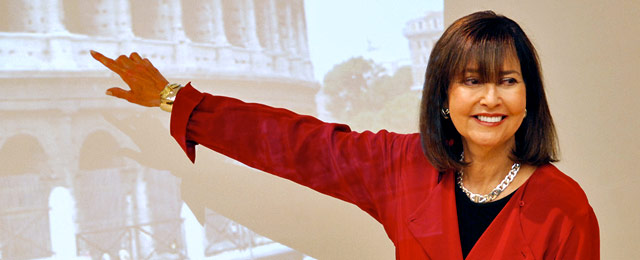
This course is an introduction to the great buildings and engineering marvels of Rome and its empire, with an emphasis on urban planning and individual monuments and their decoration, including mural painting. While architectural developments in Rome, Pompeii, and Central Italy are highlighted, the course also provides a survey of sites and structures in what are now North Italy, Sicily, France, Spain, Germany, Greece, Turkey, Croatia, Jordan, Lebanon, Libya, and North Africa. The lectures are illustrated with over 1,500 images, many from Professor Kleiner's personal collection.
The course is an introduction to Dante and his cultural milieu through a critical reading of the Divine Comedy and selected minor works (Vita nuova, Convivio, De vulgari eloquentia, Epistle to Cangrande). An analysis of Dante's autobiography, the Vita nuova, establishes the poetic and political circumstances of the Comedy's composition. Readings of Inferno, Purgatory and Paradise seek to situate Dante's work within the intellectual and social context of the late Middle Ages, with special attention paid to political, philosophical and theological concerns. Topics in the Divine Comedy explored over the course of the semester include the relationship between ethics and aesthetics; love and knowledge; and exile and history.
This survey course introduces students to the important and basic material on human fertility, population growth, the demographic transition and population policy. Topics include: the human and environmental dimensions of population pressure, demographic history, economic and cultural causes of demographic change, environmental carrying capacity and sustainability. Political, religious and ethical issues surrounding fertility are also addressed. The lectures and readings attempt to balance theoretical and demographic scale analyzes with studies of individual humans and communities. The perspective is global with both developed and developing countries included.
There is one thing I can be sure of: I am going to die. But what am I to make of that fact? This course will examine a number of issues that arise once we begin to reflect on our mortality. The possibility that death may not actually be the end is considered. Are we, in some sense, immortal? Would immortality be desirable? Also a clearer notion of what it is to die is examined. What does it mean to say that a person has died? What kind of fact is that? And, finally, different attitudes to death are evaluated. Is death an evil? How? Why? Is suicide morally permissible? Is it rational? How should the knowledge that I am going to die affect the way I live my life?
This course is intended as an introduction to political philosophy as seen through an examination of some of the major texts and thinkers of the Western political tradition. Three broad themes that are central to understanding political life are focused upon: the polis experience (Plato, Aristotle), the sovereign state (Machiavelli, Hobbes), constitutional government (Locke), and democracy (Rousseau, Tocqueville). The way in which different political philosophies have given expression to various forms of political institutions and our ways of life are examined throughout the course.
This course explores main answers to the question, "When do governments deserve our allegiance?" It starts with a survey of major political theories of the Enlightenment—Utilitarianism, Marxism, and the social contract tradition—through classical formulations, historical context, and contemporary debates relating to politics today. It then turns to the rejection of Enlightenment political thinking. Lastly, it deals with the nature of, and justifications for, democratic politics, and their relations to Enlightenment and Anti-Enlightenment political thinking. Practical implications of these arguments are covered through discussion of a variety of concrete problems.
In this course, we will seek to interpret capitalism using ideas from biological evolution: firms pursuing varied strategies and facing extinction when those strategies fail are analogous to organisms struggling for survival in nature. For this reason, it is less concerned with ultimate judgment of capitalism than with the ways it can be shaped to fit our more specific objectives--for the natural environment, public health, alleviation of poverty, and development of human potential in every child. Each book we read will be explicitly or implicitly an argument about good and bad consequences of capitalism.
What do your dreams mean? Do men and women differ in the nature and intensity of their sexual desires? Can apes learn sign language? Why can’t we tickle ourselves? This course tries to answer these questions and many others, providing a comprehensive overview of the scientific study of thought and behavior. It explores topics such as perception, communication, learning, memory, decision-making, religion, persuasion, love, lust, hunger, art, fiction, and dreams. We will look at how these aspects of the mind develop in children, how they differ across people, how they are wired-up in the brain, and how they break down due to illness and injury.
This course examines the Old Testament (Hebrew Bible) as an expression of the religious life and thought of ancient Israel, and a foundational document of Western civilization. A wide range of methodologies, including source criticism and the historical-critical school, tradition criticism, redaction criticism, and literary and canonical approaches are applied to the study and interpretation of the Bible. Special emphasis is placed on the Bible against the backdrop of its historical and cultural setting in the Ancient Near East.
This course provides a historical study of the origins of Christianity by analyzing the literature of the earliest Christian movements in historical context, concentrating on the New Testament. Although theological themes will occupy much of our attention, the course does not attempt a theological appropriation of the New Testament as scripture. Rather, the importance of the New Testament and other early Christian documents as ancient literature and as sources for historical study will be emphasized. A central organizing theme of the course will focus on the differences within early Christianity (-ies).
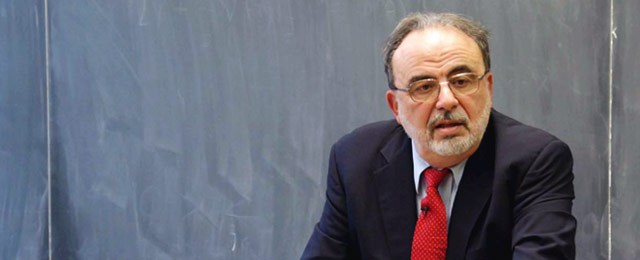
The course facilitates a close reading of Don Quixote in the artistic and historical context of renaissance and baroque Spain. Students are also expected to read four of Cervantes' Exemplary Stories, Cervantes' Don Quixote: A Casebook, and J.H. Elliott's Imperial Spain. Cervantes' work will be discussed in relation to paintings by Velázquez. The question of why Don Quixote is read today will be addressed throughout the course. Students are expected to know the book, the background readings and the materials covered in the lectures and class discussions.
The purpose of this course is to examine the African American experience in the United States from 1863 to the present. Prominent themes include the end of the Civil War and the beginning of Reconstruction; African Americans’ urbanization experiences; the development of the modern civil rights movement and its aftermath; and the thought and leadership of Booker T. Washington, Ida B. Wells-Barnett, W.E.B. Du Bois, Marcus Garvey, Martin Luther King Jr., and Malcolm X.
Warning: Some of the lectures in this course contain graphic content and/or adult language that some users may find disturbing.
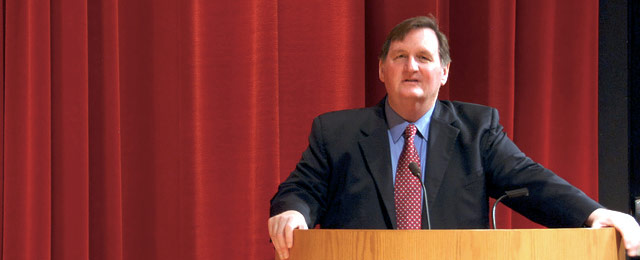
This course encompasses the study of eating as it affects the health and well-being of every human. Topics include taste preferences, food aversions, the regulation of hunger and satiety, food as comfort and friendship, eating as social ritual, and social norms of blame for food problems. The politics of food discusses issues such as sustainable agriculture, organic farming, genetically modified foods, nutrition policy, and the influence of food and agriculture industries. Also examined are problems such as malnutrition, eating disorders, and the global obesity epidemic; the impact of food advertising aimed at children; poverty and food; and how each individual's eating is affected by the modern environment.

Build your earth science vocabulary and learn about cycles of matter and types of sedimentary rocks through the Education Portal course Earth Science 101: Earth Science. Our series of video lessons and accompanying self-assessment quizzes can help you boost your scientific knowledge ahead of the Excelsior Earth Science exam . This course was designed by experienced educators and examines both science basics, like experimental design and systems of measurement, and more advanced topics, such as analysis of rock deformation and theories of continental drift.
Add to calendar

Trusted paper writing service WriteMyPaper.Today will write the papers of any difficulty.