

Online courses directory (19947)

This Wharton course will teach the fundamentals of marketing by getting to the root of customer decision making. The course will focus on branding strategies, customer centricity and new market entry.

You will learn the 6 major life style areas that integrate ancient wisdom and modern science for health and happiness!

Equip yourself with the latest research that underpins your field.

This course will teach you how to analyze and improve business processes, be it in services or in manufacturing. You will learn how to improve productivity, how to provide more choice to customers, how to reduce response times, and how to improve quality.
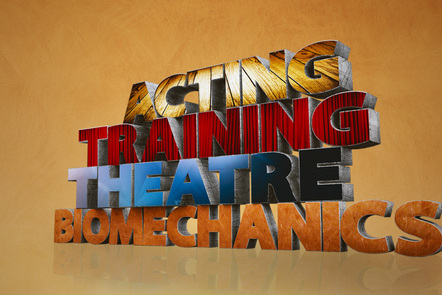
Explore the history and practice of physical theatre training using internationally recognised approach to acting: biomechanics.

This course provides an introduction to Pot-Limit Omaha Hi-Lo Split Eight-or-Better (PLO8). The course is introductory i

RE: LAUNCHING ON JUNE 7TH 2016. This MOOC is aimed at anyone wishing to understand the basics of population health. It provides a general introduction to some of the key themes, topics and discussion relevant to population health across the world. Primarily aimed for the general public, the course will also help those already working in health and social care who wish to improve their knowledge and understanding on this topic.

You will be introduced to Security Culture, and learn why culture is a vital part of your security program.

An Introduction to SketchUp, a powerful, yet simple 3D Modelling software.

Learn the basics required to get involved with the Stock, Futures, Forex & Options markets today!

Learn how to be an effective English language teacher from an expert in the field.

Explore how food intersects with public health and the environment as it moves from field to plate.

This course will introduce you to Geographic Information Systems (GIS). QGIS is used in this training course

The aim of this class is to introduce the exciting and often under appreciated discoveries in RNA biology by exploring the diversity of RNAs—encompassing classical molecules such as ribosomal RNAs (rRNAs), transfer RNAs (tRNAs) and messenger RNAs (mRNAs) as well as newer species, such as microRNAs (miRNAs), long-noncoding RNAs (lncRNAs), and circular RNAs (circRNAs). For each new class of RNA, we will evaluate the evidence for its existence as well as for its proposed function. Students will develop both a deep understanding of the field of RNA biology and the ability to critically assess new papers in this fast-paced field.
This course is one of many Advanced Undergraduate Seminars offered by the Biology Department at MIT. These seminars are tailored for students with an interest in using primary research literature to discuss and learn about current biological research in a highly interactive setting. Many instructors of the Advanced Undergraduate Seminars are postdoctoral scientists with a strong interest in teaching.

Por que os corpos se movem? Entenda como ocorreu a evolução da ideia do movimento dos corpos e aprenda a prever e a analisar o movimento de um objeto de forma moderna e interessante.

Aprende a analizar cuando converge y cuando diverge una serie.

Become part of the analog audio resurgence! Learn how these machines work with step- by-step alignment instructions.

Ce cours contient les 7 premiers chapitres d'un cours donné aux étudiants bachelor de l'EPFL. Il est basé sur le livre "Introduction à l'analyse numérique", J. Rappaz M. Picasso, Ed. PPUR. Des outils de base sont décrits dans les 5 premiers chapitres. Les deux derniers chapitres abordent la question de la résolution numérique d'équations différentielles.

This course is a comprehensive introduction to control system synthesis in which the digital computer plays a major role, reinforced with hands-on laboratory experience. The course covers elements of real-time computer architecture; input-output interfaces and data converters; analysis and synthesis of sampled-data control systems using classical and modern (state-space) methods; analysis of trade-offs in control algorithms for computation speed and quantization effects. Laboratory projects emphasize practical digital servo interfacing and implementation problems with timing, noise, and nonlinear devices.

6.374 examines the device and circuit level optimization of digital building blocks. Topics covered include: MOS device models including Deep Sub-Micron effects; circuit design styles for logic, arithmetic and sequential blocks; estimation and minimization of energy consumption; interconnect models and parasitics; device sizing and logical effort; timing issues (clock skew and jitter) and active clock distribution techniques; memory architectures, circuits (sense amplifiers) and devices; testing of integrated circuits. The course employs extensive use of circuit layout and SPICE in design projects and software labs.
Add to calendar

Trusted paper writing service WriteMyPaper.Today will write the papers of any difficulty.