

Online courses directory (19947)

6.867 is an introductory course on machine learning which gives an overview of many concepts, techniques, and algorithms in machine learning, beginning with topics such as classification and linear regression and ending up with more recent topics such as boosting, support vector machines, hidden Markov models, and Bayesian networks. The course will give the student the basic ideas and intuition behind modern machine learning methods as well as a bit more formal understanding of how, why, and when they work. The underlying theme in the course is statistical inference as it provides the foundation for most of the methods covered.

Do you want to build systems that learn from experience? Or exploit data to create simple predictive models of the world?
In this course, part of the Data Science MicroMasters program, you will learn a variety of supervised and unsupervised learning algorithms, and the theory behind those algorithms.
Using real-world case studies, you will learn how to classify images, identify salient topics in a corpus of documents, partition people according to personality profiles, and automatically capture the semantic structure of words and use it to categorize documents.
Armed with the knowledge from this course, you will be able to analyze many different types of data and to build descriptive and predictive models.
All programming examples and assignments will be in Python, using Jupyter notebooks.

Machine Learning is a growing field that is used when searching the web, placing ads, credit scoring, stock trading and for many other applications.
This data science course is an introduction to machine learning and algorithms. You will develop a basic understanding of the principles of machine learning and derive practical solutions using predictive analytics. We will also examine why algorithms play an essential role in Big Data analysis.

Have you ever wanted to build a new musical instrument that responded to your gestures by making sound? Or create live visuals to accompany a dancer? Or create an interactive art installation that reacts to the movements or actions of an audience? If so, take this course!
In this course, students will learn fundamental machine learning techniques that can be used to make sense of human gesture, musical audio, and other real-time data. The focus will be on learning about algorithms, software tools, and best practices that can be immediately employed in creating new real-time systems in the arts.
Specific topics of discussion include:
• What is machine learning?
• Common types of machine learning for making sense of human actions and sensor data, with a focus on classification, regression, and segmentation
• The “machine learning pipeline”: understanding how signals, features, algorithms, and models fit together, and how to select and configure each part of this pipeline to get good analysis results
• Off-the-shelf tools for machine learning (e.g., Wekinator, Weka, GestureFollower)
• Feature extraction and analysis techniques that are well-suited for music, dance, gaming, and visual art, especially for human motion analysis and audio analysis
• How to connect your machine learning tools to common digital arts tools such as Max/MSP, PD, ChucK, Processing, Unity 3D, SuperCollider, OpenFrameworks
• Introduction to cheap & easy sensing technologies that can be used as inputs to machine learning systems (e.g., Kinect, computer vision, hardware sensors, gaming controllers)

This course introduces students to the real world challenges of implementing machine learning based trading strategies including the algorithmic steps from information gathering to market orders. The focus is on how to apply probabilistic machine learning approaches to trading decisions. We consider statistical approaches like linear regression, KNN and regression trees and how to apply them to actual stock trading situations.

*This is the second course in the 3-course Machine Learning Series and is offered at Georgia Tech as CS7641. Taking this class here does not earn Georgia Tech credit.* Ever wonder how Netflix can predict what movies you'll like? Or how Amazon knows what you want to buy before you do? The answer can be found in Unsupervised Learning! Closely related to pattern recognition, Unsupervised Learning is about analyzing data and looking for patterns. It is an extremely powerful tool for identifying structure in data. This course focuses on how you can use Unsupervised Learning approaches -- including randomized optimization, clustering, and feature selection and transformation -- to find structure in unlabeled data. **Series Information**: Machine Learning is a graduate-level series of 3 courses, covering the area of Artificial Intelligence concerned with computer programs that modify and improve their performance through experiences. - [Machine Learning 1: Supervised Learning](https://www.udacity.com/course/ud675) - [Machine Learning 2: Unsupervised Learning](https://www.udacity.com/course/ud741) (this course) - [Machine Learning 3: Reinforcement Learning](https://www.udacity.com/course/ud820) If you are new to Machine Learning, we suggest you take these 3 courses in order. The entire series is taught as an engaging dialogue between two eminent Machine Learning professors and friends: Professor Charles Isbell (Georgia Tech) and Professor Michael Littman (Brown University).

Machine Vision provides an intensive introduction to the process of generating a symbolic description of an environment from an image. Lectures describe the physics of image formation, motion vision, and recovering shapes from shading. Binary image processing and filtering are presented as preprocessing steps. Further topics include photogrammetry, object representation alignment, analog VLSI and computational vision. Applications to robotics and intelligent machine interaction are discussed.
Machine Vision provides an intensive introduction to the process of generating a symbolic description of an environment from an image. Lectures describe the physics of image formation, motion vision, and recovering shapes from shading. Binary image processing and filtering are presented as preprocessing steps. Further topics include photogrammetry, object representation alignment, analog VLSI and computational vision. Applications to robotics and intelligent machine interaction are discussed.

Learn how to analyze and profit from global economic trends.

15.015 Macro and International Economics focuses on the policy and economic environment of firms. This subject divided in three parts. The first part of the course is a study of the closed economy and how monetary and fiscal policy interacts with employment, GNP, inflation, and interest rates. Next, the course provides an examination of national economic strategies for development and growth and recent financial and currency crises in emerging markets. Finally, the course addresses the problems faced by transition economies and the role of institutions both as the engine of growth, and as the constraints for policy.

Analyzing Trends In Credit, Liquidity And Asset Prices

Analyzing Trends In Credit, Liquidity And Asset Prices

In this macroeconomics course, you will learn to predict macroeconomic variables such as inflation, growth or consumption, and to create statistical models in economics and use them to predict responses to economic policy.
You will learn from hands-on demonstrations of model-building, forecasting and policy analysis, using data sets from a wide variety of countries. Demonstrations and applications will be conducted using EViews—a popular software for estimating and simulating forecasting models on Windows. Free, temporary licenses for EViews will be made available for the duration of the course.
Macroeconometric Forecasting is offered by the IMF with financial support from the Government of Belgium.

The macroeconomy is the sum of all our productive efforts, spending, and income. Economic outcomes are the result of our complex interactions with other people, businesses, the government, as well as with people and businesses globally. In this economics course, you will learn the basic stylized framework that economists use to think about, account for, measure and explain these complex interactions and outcomes.
In the first half of the course, we consider how households decide how much to work and how to spend and save money. We will also look at how businesses make economic decisions such as how many workers to hire and how many machines and buildings to use to produce their products.
In the second half of the course, we consider how different policies can potentially enhance or distort market outcomes by offsetting, alleviating, or amplifying these inefficiencies. Our focus will be on five aspects of economic policy:
- labor market policies and unemployment
- R&D and innovation policies
- fiscal policies and taxation
- monetary policy and inflation
- free-trade policies
This course satisfies the Social-Behavioral Sciences (SB) general studies requirement at Arizona State University. This course may satisfy a general education requirement at other institutions; however, it is strongly encouraged that you consult with your institution of choice to determine how these credits will be applied to their degree requirements prior to transferring the credit.
This course covers issues in the theory of consumption, investment and asset prices. We lay out the basic models first, and then examine the empirical facts that motivate extensions to these models.
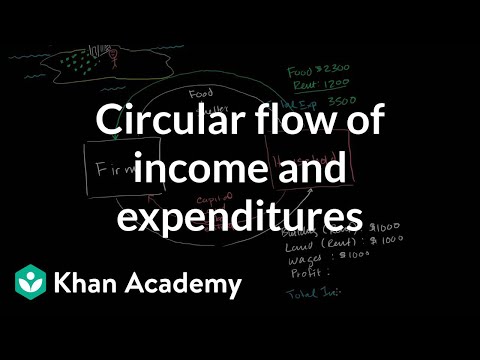
Topics covered in a traditional college level introductory macroeconomics course. Circular Flow of Income and Expenditures. Parsing Gross Domestic Product. More on Final and Intermediate GDP Contributions. Investment and Consumption. Income and Expenditure Views of GDP. Components of GDP. Examples of Accounting for GDP. Real GDP and Nominal GDP. GDP Deflator. Example Calculating Real GDP with a Deflator. Introduction to Inflation. Actual CPI-U Basket of Goods. Inflation Data. Moderate Inflation in a Good Economy. Stagflation. Real and Nominal Return. Calculating Real Return in Last Year Dollars. Relation Between Nominal and Real Returns and Inflation. Deflation. Velocity of Money Rather than Quantity Driving Prices. Deflation Despite Increases in Money Supply. Deflationary Spiral. Hyperinflation. Unemployment Rate Primer. Phillips Curve. Interest as Rent for Money. Money Supply and Demand Impacting Interest Rates. The Business Cycle. Aggregate Demand. Shifts in Aggregate Demand. Long-Run Aggregate Supply. Short Run Aggregate Supply. Demand-Pull Inflation under Johnson. Real GDP driving Price. Cost Push Inflation. Monetary and Fiscal Policy. Tax Lever of Fiscal Policy. Breakdown of Gas Prices. Short-Run Oil Prices. Keynesian Economics. Risks of Keynesian Thinking. Overview of Fractional Reserve Banking. Weaknesses of Fractional Reserve Lending. Full Reserve Banking. Money Supply- M0 M1 and M2. Simple Fractional Reserve Accounting part 1. Simple Fractional Reserve Accounting (part 2). MPC and Multiplier. Mathy Version of MPC and Multiplier (optional). Consumption Function Basics. Generalized Linear Consumption Function. Consumption Function with Income Dependent Taxes. Keynesian Cross. Details on Shifting Aggregate Planned Expenditures. Keynesian Cross and the Multiplier. Investment and Real Interest Rates. Connecting the Keynesian Cross to the IS-Curve. Loanable Funds Interpretation of IS Curve. LM part of the IS-LM model. Government Spending and the IS-LM model. Balance of Payments- Current Account. Balance of Payments- Capital Account. Why Current and Capital Accounts Net Out. Accumulating Foreign Currency Reserves. Using Reserves to Stabilize Currency. Speculative Attack on a Currency. Financial Crisis in Thailand Caused by Speculative Attack. Math Mechanics of Thai Banking Crisis.
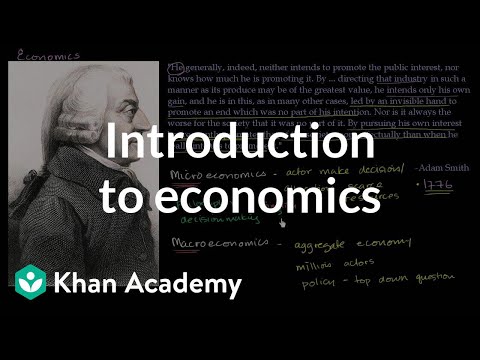
Topics covered in a traditional college level introductory macroeconomics course. Introduction to Economics. Circular Flow of Income and Expenditures. Parsing Gross Domestic Product. More on Final and Intermediate GDP Contributions. Investment and Consumption. Income and Expenditure Views of GDP. Components of GDP. Examples of Accounting for GDP. Real GDP and Nominal GDP. GDP Deflator. Example Calculating Real GDP with a Deflator. Introduction to Inflation. Actual CPI-U Basket of Goods. Inflation Data. Moderate Inflation in a Good Economy. Stagflation. Real and Nominal Return. Calculating Real Return in Last Year Dollars. Relation Between Nominal and Real Returns and Inflation. Deflation. Velocity of Money Rather than Quantity Driving Prices. Deflation Despite Increases in Money Supply. Deflationary Spiral. Hyperinflation. Unemployment Rate Primer. Phillips Curve. Interest as Rent for Money. Money Supply and Demand Impacting Interest Rates. The Business Cycle. Aggregate Demand. Shifts in Aggregate Demand. Long-Run Aggregate Supply. Short Run Aggregate Supply. Demand-Pull Inflation under Johnson. Real GDP driving Price. Cost Push Inflation. Monetary and Fiscal Policy. Tax Lever of Fiscal Policy. Breakdown of Gas Prices. Short-Run Oil Prices. Keynesian Economics. Risks of Keynesian Thinking. Overview of Fractional Reserve Banking. Weaknesses of Fractional Reserve Lending. Full Reserve Banking. Money Supply- M0 M1 and M2. Simple Fractional Reserve Accounting part 1. Simple Fractional Reserve Accounting (part 2). MPC and Multiplier. Mathy Version of MPC and Multiplier (optional). Consumption Function Basics. Generalized Linear Consumption Function. Consumption Function with Income Dependent Taxes. Keynesian Cross. Details on Shifting Aggregate Planned Expenditures. Keynesian Cross and the Multiplier. Investment and Real Interest Rates. Connecting the Keynesian Cross to the IS-Curve. Loanable Funds Interpretation of IS Curve. LM part of the IS-LM model. Government Spending and the IS-LM model. Balance of Payments- Current Account. Balance of Payments- Capital Account. Why Current and Capital Accounts Net Out. Accumulating Foreign Currency Reserves. Using Reserves to Stabilize Currency. Speculative Attack on a Currency. Financial Crisis in Thailand Caused by Speculative Attack. Math Mechanics of Thai Banking Crisis.
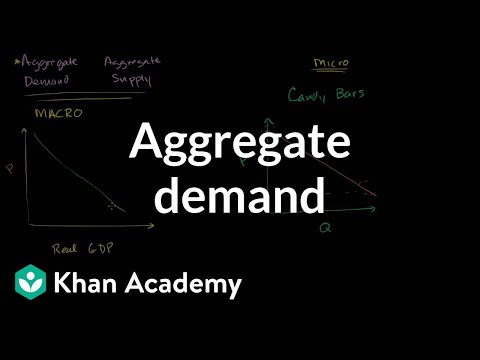
Aggregate demand and aggregate supply. Keynesian thinking. Demand-pull and cost-push inflation. Fiscal and monetary policy. Aggregate Demand. Shifts in Aggregate Demand. Long-Run Aggregate Supply. Short Run Aggregate Supply. Demand-Pull Inflation under Johnson. Real GDP driving Price. Cost Push Inflation. The Business Cycle. Monetary and Fiscal Policy. Tax Lever of Fiscal Policy. Keynesian Economics. Risks of Keynesian Thinking. Aggregate Demand. Shifts in Aggregate Demand. Long-Run Aggregate Supply. Short Run Aggregate Supply. Demand-Pull Inflation under Johnson. Real GDP driving Price. Cost Push Inflation. The Business Cycle. Monetary and Fiscal Policy. Tax Lever of Fiscal Policy. Keynesian Economics. Risks of Keynesian Thinking.
Aggregate demand and aggregate supply. Keynesian thinking. Demand-pull and cost-push inflation. Fiscal and monetary policy. Aggregate Demand. Shifts in Aggregate Demand. Long-Run Aggregate Supply. Short Run Aggregate Supply. Demand-Pull Inflation under Johnson. Real GDP driving Price. Cost Push Inflation. The Business Cycle. Monetary and Fiscal Policy. Tax Lever of Fiscal Policy. Keynesian Economics. Risks of Keynesian Thinking. Aggregate Demand. Shifts in Aggregate Demand. Long-Run Aggregate Supply. Short Run Aggregate Supply. Demand-Pull Inflation under Johnson. Real GDP driving Price. Cost Push Inflation. The Business Cycle. Monetary and Fiscal Policy. Tax Lever of Fiscal Policy. Keynesian Economics. Risks of Keynesian Thinking.
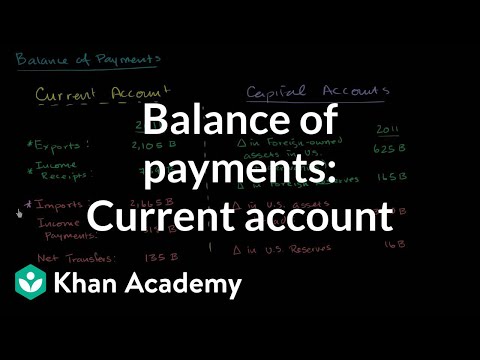
Balance of payments. Current account. Capital account. Currency reserves and speculative attacks. Balance of Payments- Current Account. Balance of Payments- Capital Account. Why Current and Capital Accounts Net Out. Accumulating Foreign Currency Reserves. Using Reserves to Stabilize Currency. Speculative Attack on a Currency. Financial Crisis in Thailand Caused by Speculative Attack. Math Mechanics of Thai Banking Crisis. Balance of Payments- Current Account. Balance of Payments- Capital Account. Why Current and Capital Accounts Net Out. Accumulating Foreign Currency Reserves. Using Reserves to Stabilize Currency. Speculative Attack on a Currency. Financial Crisis in Thailand Caused by Speculative Attack. Math Mechanics of Thai Banking Crisis.
Add to calendar

Trusted paper writing service WriteMyPaper.Today will write the papers of any difficulty.