

Online courses directory (19947)

This Physical Education course continues our free online Phys Ed training. The course outlines the various coaching styles and techniques, influences on fitness, motivational factors, injuries, sports psychology and the role of the coach. The free online course will be of interest to physical education teachers, students studying for a qualification in health or fitness, trainers or managers in fitness, health or sports related activities, and any sports man or woman interested in coaching styles and techniques. <br />

This Physical Education (PE or Phys Ed) course offers a comprehensive introduction to the topic and investigates the basics: from muscle response to the physiology, biology, and the science of sports. It covers the scientific basis of fitness and concludes with training principals and methods. It is an ideal course for those studying for a qualification in health or fitness or for sports enthusiasts. It is also an excellent resource for trainers or managers in fitness, health or sports related activities. <br />

The free online course Physical Fitness - Fitness Tips and Workout Routines has been designed to teach you how to improve your physical health and well-being. The course will introduce you to the theoretical apsects of physical fitness and provide you with practical workouts that can help you develop and maintain it. Obesity is becoming a global epidemic in developed countries across the world and is associated with many chronic diseases such as diabetes, heart disease and some forms of cancer. Research has consistently proven that maintaining a high level of physical activity and fitness can have significant benefits on many aspects of your life including your physical health and mental health. The course begins by introducing you to the basics of exercise physiology – the branch of science which studies how the body responds and adapts to physical exercise. Firstly, you will be introduced to definitions and terminology that are central to exercise physiology. This will help you obtain a strong grounding in the subject and benefit your learning throughout the course. You will then study the cardiovascular system and the skeletal muscular system. You will learn how the cardiovascular system functions and how the heart supplies oxygen-rich blood to the active skeletal muscles during exercise. Finally, you will examine various activities and workouts that have been shown to increase cardiovascular fitness. This course will be of great interest to professionals who work in the health and fitness industry and to anyone who wants to learn more about improving their physical fitness. <br />

The free online course Physical Fitness - How to Avoid Injuries and Train Safely is designed to show you how to train safely in challenging environments, how to prevent and treat a range of injuries and what effects performance enhancing substances can have on your health. The course begins by focusing on three specific environments in which it is difficult to safely train: extreme heat, extreme cold and high altitude. You will learn the necessary precautions that must be taken in order to ensure that you stay safe in each environment. First you will learn how the body adapts to protect itself in each environment, next you will study the external factors that can make it difficult for your body to adapt to each environment and to conclude you will study a range of conditions that can be acquired from failing to take the necessary precautions to remain safe in each environment. The course then continues to examine something which individuals who regularly engage in physical training will experience, namely, injuries. You will learn how to identify common indicators of injury such as swelling, inflammation and reduced range of motion. Next, you will study the most common injuries that are experienced by those who engage in regular physical activity. Finally, you will learn how to prevent and treat a range of injuries including fractures, sprains and shin splints. The course concludes by examining the effects performance enhancing substances such as anabolic steroids can have on your body. You will study both the positive and negative effects of anabolic steroids and examine the legal implications of taking them. You will also examine a range of other performance enhancing substances including human growth hormone, erythropoietin and ephedrine. You will learn about the effects that they can have on your overall performance and long-term health. This course will be of great interest to anyone who wishes to gain a greater insight into the necessary steps that must be taken to remain safe while training. The course will also be of interest to professionals who work in the health and fitness industry or individuals who may be interested in pursuing a career in the health and fitness.<br />

This course is an introduction to the basic principles of geology and is a general education course for science and engineering majors. It serves both as an introduction for those planning to continue in geology and as a comprehensive overview of geology for students in other fields. This course will also emphasize the social, economic, and political implications of geology processes. Students will complete this course using online resources and activities as well as in class activities.
This course is an introduction to the basic principles of geology and is a general education course for science and engineering majors. It serves both as an introduction for those planning to continue in geology and as a comprehensive overview of geology for students in other fields. This course will also emphasize the social, economic, and political implications of geology processes. Students will complete this course using online resources and activities as well as in class activities.

For all of the bodies attached to the many great minds that walk the Institute's halls, in the work that goes on at MIT the body is present as an object of study, but is all but unrecognized as an important dimension of our intelligence and experience. Yet the body is the basis of our experience in the world; it is the very foundation on which cognitive intelligence is built. Using the MIT gymnastics gym as our laboratory, the Physical Intelligence activity will take an innovative, hands-on approach to explore the kinesthetic intelligence of the body as applicable to a wide range of disciplines. Via exercises, activities, readings and discussions designed to excavate our physical experience, we will not only develop balance, agility, flexibility and strength, but a deep appreciation for the inherent unity of mind and body that suggests physical intelligence as a powerful complement to cognitive intelligence.

The central point of this course is to provide a physical basis that links the structure of materials with their properties, focusing primarily on metals. With this understanding in hand, the concepts of alloy design and microstructural engineering are also discussed, linking processing and thermodynamics to the structure and properties of metals.
The central point of this course is to provide a physical basis that links the structure of materials with their properties, focusing primarily on metals. With this understanding in hand, the concepts of alloy design and microstructural engineering are also discussed, linking processing and thermodynamics to the structure and properties of metals.
The central point of this course is to provide a physical basis that links the structure of materials with their properties, focusing primarily on metals. With this understanding in hand, the concepts of alloy design and microstructural engineering are also discussed, linking processing and thermodynamics to the structure and properties of metals.

An introduction to Physical Metallurgy. Metallurgy can be described as a branch of material science focused on metals.

An introduction to Physical Metallurgy. Metallurgy can be described as a branch of material science focused on metals.

Build your earth science vocabulary and learn about cycles of matter and types of sedimentary rocks through the Education Portal course Earth Science 101: Earth Science. Our series of video lessons and accompanying self-assessment quizzes can help you boost your scientific knowledge ahead of the Excelsior Earth Science exam . This course was designed by experienced educators and examines both science basics, like experimental design and systems of measurement, and more advanced topics, such as analysis of rock deformation and theories of continental drift.
Build your earth science vocabulary and learn about cycles of matter and types of sedimentary rocks through the Education Portal course Earth Science 101: Earth Science. Our series of video lessons and accompanying self-assessment quizzes can help you boost your scientific knowledge ahead of the Excelsior Earth Science exam . This course was designed by experienced educators and examines both science basics, like experimental design and systems of measurement, and more advanced topics, such as analysis of rock deformation and theories of continental drift.

Learn to conduct effective job searches, productive interviews, and successful negotiations with the help of an expert.

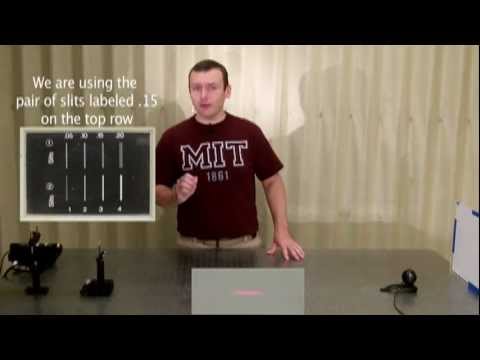
Watch fun, educational videos on all sorts of Physics questions. Thomas Young's Double Slit Experiment. Newton's Prism Experiment. Bridge Design and Destruction! (part 1). Bridge Design (and Destruction!) Part 2. Shifts in Equilibrium. The Marangoni Effect: How to make a soap propelled boat!. The Invention of the Battery. The Forces on an Airplane. Bouncing Droplets: Superhydrophobic and Superhydrophilic Surfaces. A Crash Course on Indoor Flying Robots. Heat Transfer. Thomas Young's Double Slit Experiment. Newton's Prism Experiment. Bridge Design and Destruction! (part 1). Bridge Design (and Destruction!) Part 2. Shifts in Equilibrium. The Marangoni Effect: How to make a soap propelled boat!. The Invention of the Battery. The Forces on an Airplane. Bouncing Droplets: Superhydrophobic and Superhydrophilic Surfaces. A Crash Course on Indoor Flying Robots. Heat Transfer.

Using vectors to study motion is a fundamental skill to have when studying physics. Vector quantities used to describe the physical world include displacement, velocity, acceleration, and force. In this free online physics course the standard way to represent vectors and their axes as well as unit vector notation are explained in a clear and step-by-step manner. Examples show how to work out the angle or distance necessary to get the desired displacement. Using two known variables you will learn how to work through the process of calculating the remaining value, such as time in air or horizontal displacement using a variety of techniques. This free online physics course will be of great interest to students who are studying physics, chemistry, engineering, mathematics, and to students who wish to pursue a career in any of the sciences or engineering fields, and even the sportsperson who wants to plan for a specific outcome when hitting a golf ball or batting a ball.<br />
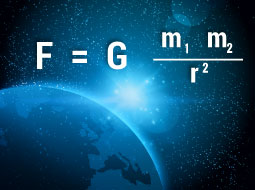
Gravity is the force that keeps us on the ground and understanding how gravity works is very important as it has a great influence on the upward and downward movement of objects. This free online course about gravity will explain Newton’s Second Law of Motion, the universal constant, which is used to work out the force of gravity throughout the universe. You will also learn what the effect of the earth's force of gravity, or little g as it is known, has on an object and why mass is not the same as weight. To fully understand gravity this course will take you step-by-step through the relevant formulas, showing you how to calculate velocity or distance based on time and then plot these changes so you will have a visual concept of what is happening. This course will be of great interest to students who are studying physics, chemistry, engineering, mathematics, and to students who wish to pursue a career in any of the sciences or engineering fields.<br />
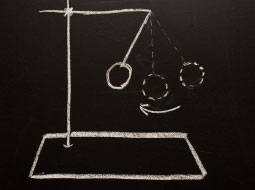
Calculating change in motion is a very important concept to master in physics. When change happens in one dimension it is relatively easy to calculate the variable. However, change rarely happens in just one direction so you need to learn how to manage more than one variable. This free online physics course explains how to visually represent each change in a dimension as a vector so that it can be easily understood. You will learn how to add two vectors together and calculate all the relevant information for the resulting third vector. Working through various examples, including different elevations and inclines, you will learn how to solve for any variable through the use of the right-angled triangle and then use trigonometry and quadratic equations to calculate the relevant variables. This free online physics course will be of great interest to students who are studying physics, chemistry, engineering and mathematics and to any individual who wants to learn more about the movement of objects in two dimensions.<br />
Add to calendar

Trusted paper writing service WriteMyPaper.Today will write the papers of any difficulty.