

Online courses directory (19947)

We can read a city in a number of ways: in its plan, in the buildings that make its streets and public spaces, in the skyline. We can ask, what are the buildings or spaces saying? How do they say it? How does it all stitch together?
In this architecture course you will learn how to “read” Rome, an ancient city, reborn in the fifteenth century and reshaped substantially in the following three centuries. You will discover how Renaissance and Baroque Rome’s urban form, art, and architecture projected the city’s image of itself to its citizens (urbi) and the world (orbi).
Popes, architects, scholars and sculptors invested in Rome a variety of narratives that strove to explain the city’s history, convince its citizens and visitors of its harmony, and exhort society at large to share in and shape its destiny. The city that resulted became a destination for pilgrims and Grand Tourists, and still is today.
The Meaning of Rome: The Renaissance and Baroque City is organized around three themes—the city and memory, the city as reliquary, and the city as theater. In uncovering some of the meaning of Rome, you will be equipped with the skills necessary to consider how our own cities and communities are, or could be, meaningful. You will come away from this course not only better informed about the cities of the past, but also better equipped to think about the cities of the present and the future.
Students who successfully complete all of the required course assignments will have the opportunity to compile a Digication ePortfolio and earn a digital badge.

The Meat We Eat is a course designed to create a more informed consumer about the quality, safety, healthfulness and sustainability of muscle foods and address current issues in animal agriculture in developed and developing countries.

This course explores the 20th-century history of the Middle East, concentrating on the Fertile Crescent, Egypt, Turkey, the Arabian peninsula, and Iran. We will begin by examining the late Ottoman Empire and close with the events of 9/11 and their aftermath. Readings will include historical surveys, novels, and primary source documents.

This course surveys the history of the Middle East, from the end of the 19th century to the present. It examines major political, social, intellectual and cultural issues and practices. It also focuses on important events, movements, and ideas that prevailed during the last century and affect its current realities.

Make better personal and professional decisions and consider the psychological dimension to key ethical and political choices.

Grasp the real role of metaphor in thought, and learn to hear the hidden metaphors which reveal so much

A Job FINDER course by Angela Loeb & Jay Markunas

While taking time away from her day job on bed rest, Cuil Co-founder Anna Patterson eventually found herself volunteerin

This course examines how the idea of "the modern" develops at the end of the 18th century in European philosophy and literature, and how being modern (or progressive, or hip) became one of the crucial criteria for understanding and evaluating cultural change. Are we still in modernity, or have we moved beyond the modern to the postmodern?

This Art History course investigates the role of the French avant-garde in developing and showcasing new modern forms and approaches to art and visual culture in the 19th century. The material addresses the most critical issues of modernity from Realism through Post-Impressionism. We will cover the stylistic changes that challenged academic art, the new subjects that confounded modern audiences, and the new roles and authority of the modern artist. To do this, we will focus on the European world through a series of video podcasts and online readings over five weeks. By the end of the course, you will understand the issues of modernity and the way that art and art-making addressed these issues as well as recognize the profound impact that 19th century Europe had in shaping our contemporary ideas of being “modern.”

This Art History course investigates the role of the French avant-garde in developing and showcasing new modern forms and approaches to art and visual culture in the 19th century. The material addresses the most critical issues of modernity from Realism through Post-Impressionism. We will cover the stylistic changes that challenged academic art, the new subjects that confounded modern audiences, and the new roles and authority of the modern artist. To do this, we will focus on the European world through a series of video podcasts and online readings over five weeks. By the end of the course, you will understand the issues of modernity and the way that art and art-making addressed these issues as well as recognize the profound impact that 19th century Europe had in shaping our contemporary ideas of being “modern.”

The role of the music technologist has changed throughout history, though one trait has stayed consistent: the necessity for the individual to operate across multiple mediums and disciplines. This project-based course provides an opportunity to synthesize the key concepts and skills learned in the Foundations of Music Technology Program, and enables students to establish meaningful connections between the contents of each course. The course will have students acquire real-world artistic experience, through the critical examination of historical works, and the completion of a final project, which demonstrates their ability show how they themselves have become The Modern Music Technologist.

This is a survey of modern history from a global perspective. It begins with the revolutions of the late 1700s, tracks the transformation of the world during the 1800s, and analyzes the cataclysms of last century, concluding with the new phase of world history we are experiencing today.

How to make money online with list building using wordpress. This course will teaching you how you can build your list.
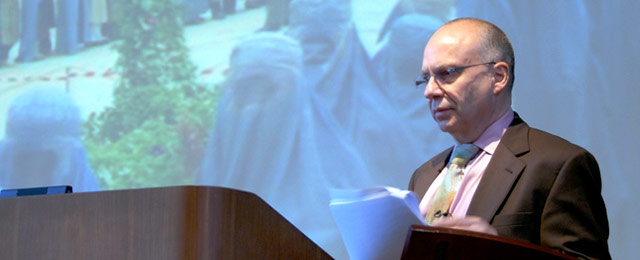
This course explores main answers to the question, "When do governments deserve our allegiance?" It starts with a survey of major political theories of the Enlightenment—Utilitarianism, Marxism, and the social contract tradition—through classical formulations, historical context, and contemporary debates relating to politics today. It then turns to the rejection of Enlightenment political thinking. Lastly, it deals with the nature of, and justifications for, democratic politics, and their relations to Enlightenment and Anti-Enlightenment political thinking. Practical implications of these arguments are covered through discussion of a variety of concrete problems.

MBA level learning on Creativity, Innovation, Business, Leadership and Change taught through the medium of music

The Music of the Beatles will track the musical development of the band, starting from the earliest days in Liverpool and Hamburg, moving through the excitement of Beatlemania, the rush of psychedelia, and the musical maturity of Abbey Road.
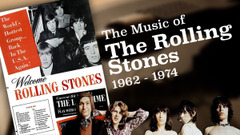
This course will survey the music of the Rolling Stones, beginning with the roots and first formation of the band in the early 1960s, and following the group through the release of It's Only Rock 'n' Roll in late 1974.

Learn how to organize the code for your web apps, and why it's important. You’ll be using the MVC Design Pattern in the web application micro-framework, Sinatra.

Master "The Trader's Holy Grail" system and start making money trading indices, stocks, forex or commodities.
Add to calendar

Trusted paper writing service WriteMyPaper.Today will write the papers of any difficulty.