

Online courses directory (19947)

Enviar mensajes, fotos, encontrar amigos, compartir vídeos... Todo lo que necesitas para usar WhatsApp con tu iPhone..

Whether your interest lies in solving the world’s biggest problems, creating the next commercial success or addressing something closer to home, this course will give you a toolbox to vet your ideas and test them in the real world.

According to the United States Agency for International Development, 20 million people in developing countries require wheelchairs, and the United Nations Development Programme estimates below 1% of their need is being met in Africa by local production. Wheelchair Design in Developing Countries (WDDC) gives students the chance to better the lives of others by improving wheelchairs and tricycles made in the developing world. Lectures will focus on understanding local factors, such as operating environments, social stigmas against the disabled, and manufacturing constraints, and then applying sound scientific/engineering knowledge to develop appropriate technical solutions. Multidisciplinary student teams will conduct term-long projects on topics such as hardware design, manufacturing optimization, biomechanics modeling, and business plan development. Theory will further be connected to real-world implementation during guest lectures by MIT faculty, Third-World community partners, and U.S. wheelchair organizations.
This class is made possible by an MIT Alumni Sponsored Funding Opportunities grant with additional support from the National Collegiate Inventors and Innovators Alliance, the MIT Public Service Center, and the MIT Edgerton Center; special thanks to CustomInk.com.

According to the United States Agency for International Development, 20 million people in developing countries require wheelchairs, and the United Nations Development Programme estimates below 1% of their need is being met in Africa by local production. Wheelchair Design in Developing Countries (WDDC) gives students the chance to better the lives of others by improving wheelchairs and tricycles made in the developing world. Lectures will focus on understanding local factors, such as operating environments, social stigmas against the disabled, and manufacturing constraints, and then applying sound scientific/engineering knowledge to develop appropriate technical solutions. Multidisciplinary student teams will conduct term-long projects on topics such as hardware design, manufacturing optimization, biomechanics modeling, and business plan development. Theory will further be connected to real-world implementation during guest lectures by MIT faculty, Third-World community partners, and U.S. wheelchair organizations.
This class is made possible by an MIT Alumni Sponsored Funding Opportunities grant with additional support from the National Collegiate Inventors and Innovators Alliance, the MIT Public Service Center, and the MIT Edgerton Center; special thanks to CustomInk.com.

Population and welfare are growing. Providing the world with metals is becoming a major challenge. Only by closing the loop will metals be available in sufficient quantities, not just now but also in the future: urban mining, the substantial re-use and recycling of metals. In this MOOC we will explore the challenges related to metals supply, both scarcity and environmental impacts, and the conditions and consequences of a circular economy for metals, based on the reports of UNEP's International Resource Panel.

Use the fact that bodies, as well as brains, think to become more credible, authoritative and persuasive - honestly

Learn how to get control of your money once and for all.

Learn exactly how to build a brand to market and sell information products online.

Learn four detailed reasons belief in the Bible is scientific and belief in atheism is unscientific.

Learn four detailed reasons belief in the Bible is scientific and belief in atheism is unscientific.

As entrepreneur or innovator you are trained to run fast, but… are you running in the right direction?
Choosing the right market for your innovation is the biggest, and trickiest, question for innovators. Research has shown that all too often entrepreneurs don’t spend enough time identifying and researching their market opportunities – instead they jump at the first opportunity that looks good, and fail to properly evaluate and leverage other opportunities. This common mistake often leads them to choose the wrong market or lock themselves into one specific direction.
In this course, you will learn how to set a promising strategy, by using a business tool called the Market Opportunity Navigator.
This tool offers an easy to apply framework to better identify, evaluate and focus on the right market opportunities.
It encompasses three simple steps, with dedicated worksheets to guide you through the process:
- Search broadly- to generate your set of market opportunities
- Assess deeply- to evaluate your options and compare their attractiveness
- Strategize smartly- to focus on the most attractive opportunity while remaining agile
This structured tool works for entrepreneurs and managers in established companies, when-ever they need to plan or rethink their strategy.

The use of interactive whiteboards has become common place in many school classrooms and training rooms. Interactive whiteboards give teachers and trainers an enormous capability in terms of the type of teaching techniques they can engage in and the kind of materials they can present as part of their teaching programs. One advantage of interactive whiteboards is that they allow a teacher to prepare lessons in advance and the SMART Technologies application provides a number of templates to help with this. This free online SMART Technologies course follows on from our Introduction to Using Whiteboards course and goes into much more detail about the use of the Lesson Activity Toolkit and also gives the learner useful tips and techniques to help with editing and using the application. You will be shown examples of the different templates from image sequencing and matching to timelines and anagrams, and where there is flexibility in the use of an activity such as using the timeline for more than dates. The course also provides tips on editing and managing the objects and text on the pages as well as showing you how to use the Paperclip feature to quickly access resources and the camera to capture information from the Web. This free online SMART Technologies course will be of great interest to teachers and trainers looking to make full use of the flexibility, interactivity and student participation allowed by an interactive whiteboard within the classroom or training room, and to all learners who would like to learn more about the functionality of interactive whiteboards within an educational setting.<br />

Learn how to test and protect your network using Ethical Hacking and Penetration Testing Techniques.

Common Core Common Sense

This course will help new Courserans learn the names and faces of other employees.

Maximise you brain's potential by using it in a more balanced way

In this interactive guide we will go over the reason that we use Podio for CRM and show you one of our workflows.

This course provides a general introduction to the conditions of refugees, asylum seekers and irregular migrants worldwide (data, regions, etc.) and an overview of the terminology used. It then analyses specific cases in the most relevant geographical contexts, including the asylum seekers arriving in Europe through the Mediterranean, the undocumented Mexican migrants crossing the US border, the Syrian refugees in Turkey and the Rohingya in Australia. In discussing these cases, we will explore the dilemmas behind humanitarian protection and irregular migration for labour purposes.
The course is based on video lectures, didactic videos and podcast interviews with international experts. Assignments consist of short quizzes for each unit and a journal exercise at the end of the course. Suggestions for further reading will be included in order to achieve a more in-depth understanding.
To learn more about the theories that explain international migration, check out Part 2: Theories
What will I learn?
By the end of the course, students will be able to:
- identify the fundamental terminology and concepts used to discuss about irregular migrants and asylum seekers;
- describe key case studies of irregular migration and asylum seeking in the world;
- discuss possible future scenarios and the social challenges posed by these migrations.
Who is this course for?
This course is meant as a general introduction to migration issues for students and practitioners.
What do I need to know?
Knowledge of English language is essential. Previous knowledge of basic sociological or economic debates can be an advantage, although this is not a compulsory prerequisite. The only other requirement is enthusiasm and interest in the topic.
Course Structure
CHAPTER 1 – INTRODUCTION
Unit 1.1 – What are irregular migration and asylum?
Unit 1.2 – Let us talk about words!
CHAPTER 2 – EUROPE AND THE MIDDLE EAST
Unit 2.1 – Irregular border crossings towards the EU
Unit 2.2 – Refugee status in Europe (podcast with Lilian Tsourdi)
Unit 2.3 – The case of Syrian refugees in Turkey (podcast with Fulya Memisoglu)
CHAPTER 3 – AMERICAS
Unit 3.1 – Irregular Latin-American migrants in US agriculture (podcast with Philip Martin)
Unit 3.2 – Gender and irregular migration in Latin America (podcast with Tanja Bastia)
CHAPTER 4 – ASIA AND OCEANIA
Unit 4.1 – Maritime arrivals in Australia
Unit 4.2 – The case of Rohingya refugees (podcast with Marie McAuliffe)
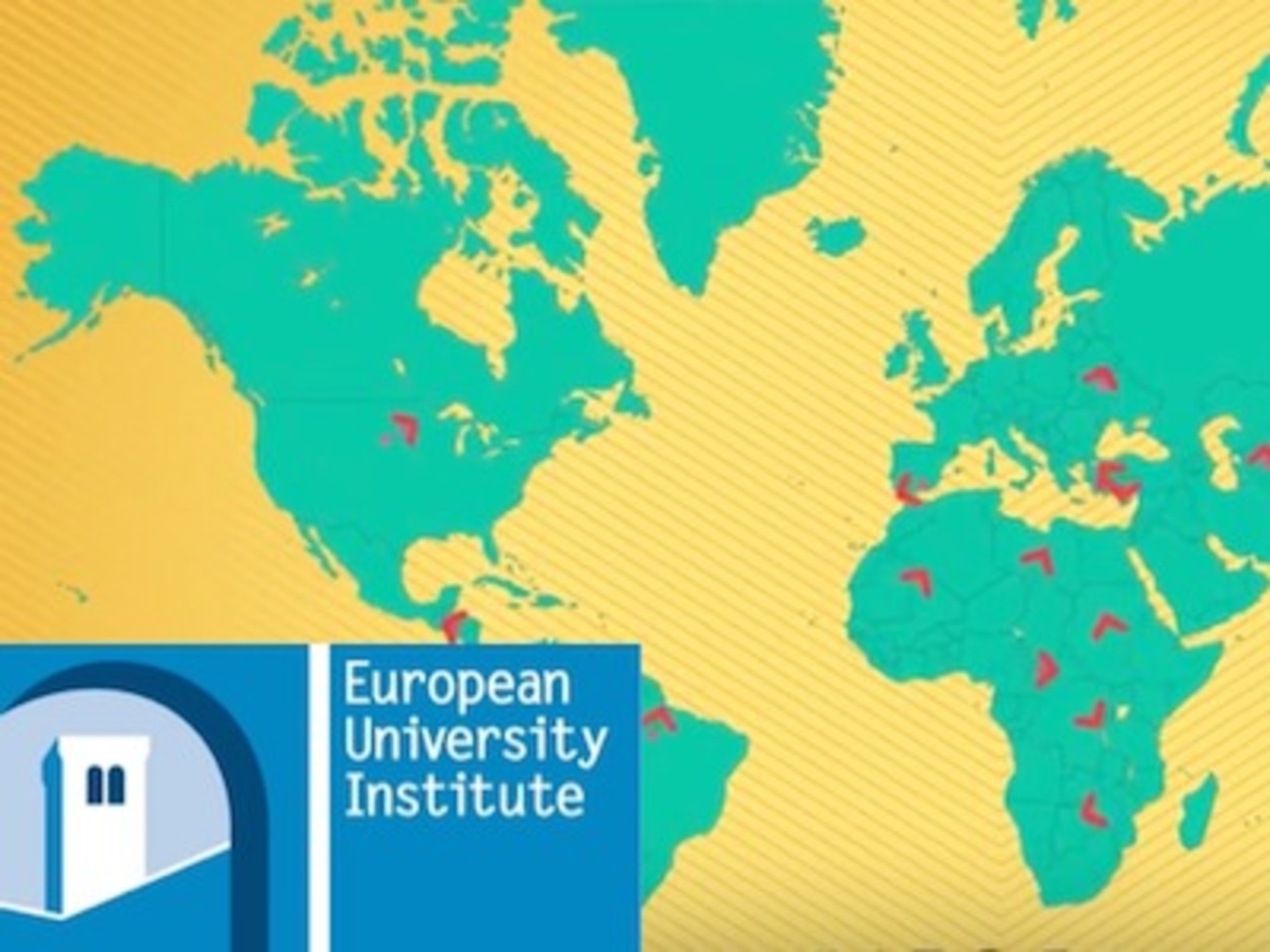
The course approaches migration as a constant phenomenon in human history and examines its main supporting theories. It illustrates theories about people's individual decisions to migrate and also the factors of migration as a structural feature of our societies. It explains the role social networks and institutions play in making people move to another country, or return to their own. Finally, it includes interviews with international experts that describe how migration theories can help to understand some topical case studies of labour migrations in the world.
The course is based on video lectures, didactic videos and podcast interviews with international experts. Assignments consist of short quizzes for each unit and a journal exercise at the end of the course. Suggestions for further reading will be included in order to achieve a more in-depth understanding.
To learn more about irregular migration and asylum seeking, check out Part 1: Facts
What will I learn?
At the end of the course, students will be able to:
- identify the fundamental terminology used in theoretical debates on migration;
- illustrate the main theoretical approaches that explain the motivations for people to move and settle outside their home countries;
- apply main theories to the interpretation of real case studies.
Who is this course for?
This course is meant as a general introduction to migration issues for students and practitioners.
What do I need to know?
We encourage you to take Part 1: The Facts of this MOOC series. Knowledge of English language is essential. Previous knowledge of basic sociological or economic debates can be an advantage, although this is not a compulsory prerequisite. The only other requirement is enthusiasm and interest in the topic.
Course Structure
CHAPTER 1 – MIGRATION AS A GLOBAL PHENOMENON
Unit 1.1 – Migration in human history
Unit 1.2 – Contemporary trends
CHAPTER 2 - WHY MIGRATION STARTS?
Unit 2.1 – Migration as a choice
Unit 2.2 – Migration as a consequence
CHAPTER 3 – WHY MIGRATION CONTINUES?
Unit 3.1 – The importance of networks
Unit 3.2 – The role of institutions
Unit 3.2 – Return migration (podcast with Jean-Pierre Cassarino)
CHAPTER 4 – EXAMPLES
Unit 5.1 – Migration and development in Africa (podcast with Giorgia Giovannetti)
Unit 5.2 – Care and domestic workers in Italy (podcast with Maurizio Ambrosini)
Unit 5.4 – Indian migrants in Gulf region (podcast with Chinmay Tumbe)

Donna Novitsky has many years of experience as both an entrepreneur and venture capitalist. She is CEO of Big Tent Design and was formerly venture capitalist at Mohr Davidow Ventures. Her motto is “Go big or don’t go!” and this has driven her work as both entrepreneur and venture capitalist. In this course, you can listen to Donna Novitsky as she explains why entrepreneurs should think big when they are investing so much of their time, energy and passion into creating a business. She also explains how to differentiate between the roles of entrepreneurs and venture capitalists in areas such as business strategy and execution, technology and team building, business diversity and singular focus. You will also learn about the importance of teamwork as nobody can do it all alone, and she also has advice and guidance in terms of naming a company and marketing start-up companies. This course will be of great interest to business professionals who are starting their own businesses, particularly high-potential start-ups in the technology space, and would like to benefit from Donna’s advice and guidance on thinking big and achieving extraordinary personal success in business.<br />
Add to calendar

Trusted paper writing service WriteMyPaper.Today will write the papers of any difficulty.