

Online courses directory (19947)

This course deals with a more advanced treatment of the biochemical mechanisms that underlie biological processes. Emphasis will be given to the experimental methods used to unravel how these processes fit into the cellular context as well as the coordinated regulation of these processes. Topics include macromolecular machines for energy and force transduction, regulation of biosynthetic and degradative pathways, and the structure and function of nucleic acids.

This course illustrates how knowledge and principles of biology, biochemistry, and engineering are integrated to create new products for societal benefit. It uses a case study format to examine recently developed products of pharmaceutical and biotechnology industries: how a product evolves from initial idea, through patents, testing, evaluation, production, and marketing. Emphasizes scientific and engineering principles; the responsibility scientists, engineers, and business executives have for the consequences of their technology; and instruction and practice in written and oral communication.
The topic focus of this class will vary from year to year. This version looks at inflammation underlying many diseases, specifically its role in cancer, diabetes, and cardiovascular disease.

This course covers sensing and measurement for quantitative molecular/cell/tissue analysis, in terms of genetic, biochemical, and biophysical properties. Methods include light and fluorescence microscopies; electro-mechanical probes such as atomic force microscopy, laser and magnetic traps, and MEMS devices; and the application of statistics, probability and noise analysis to experimental data. Enrollment preference is given to juniors and seniors.
This course covers sensing and measurement for quantitative molecular/cell/tissue analysis, in terms of genetic, biochemical, and biophysical properties. Methods include light and fluorescence microscopies; electro-mechanical probes such as atomic force microscopy, laser and magnetic traps, and MEMS devices; and the application of statistics, probability and noise analysis to experimental data. Enrollment preference is given to juniors and seniors.
This course covers sensing and measurement for quantitative molecular/cell/tissue analysis, in terms of genetic, biochemical, and biophysical properties. Methods include light and fluorescence microscopies; electro-mechanical probes such as atomic force microscopy, laser and magnetic traps, and MEMS devices; and the application of statistics, probability and noise analysis to experimental data. Enrollment preference is given to juniors and seniors.

In this course problems from biological engineering are used to develop structured computer programming skills and explore the theory and practice of complex systems design and construction.
The official course Web site can be viewed at: BE.180 Biological Engineering Programming.

Living cells have unique functions that can be harnessed by engineers to tackle human problems in energy, water, food, and health.
Historically living cells were considered too difficult to predictably engineer because of their complexity, vulnerability, and continuous change in state. The elucidation of the design principles that underlie cell function along with increasing numbers of examples of hybrid cell based devices are slowly erasing that notion.
In this class you will be learn about these established and emerging cellular design principles and begin to view cells as machines. This knowledge can also then be applied to non-living devices that mimic and communicate with cells. You will also be introduced to current and emerging living/non-living biohybrid devices such as biohybrid robots and neural implants.
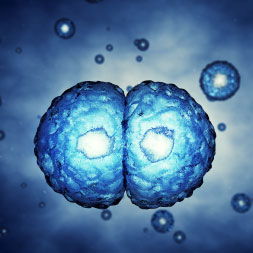
Cell division and replication are fundamental biological processes that occur in all organisms. This free online course about cell division will explain the complex processes of cell division in detail. You will learn about mitosis and meiosis and the phases that occur in each of these processes. You will learn that in the early stages of development embryonic cells can generate all cell types in the body. You will also look at how cells divide and replicate allowing us grow and repair body tissues, and if damage occurs, how some cells can replicate faster than surrounding cells to form tumours. This free course will be of great interest to all students who wish to pursue a career in the sciences, medicine, pharmacy, nursing, biology or biodiversity or the individual learner who simply wants to learn more about mitosis, meiosis and their role in cell division and replication.<br />
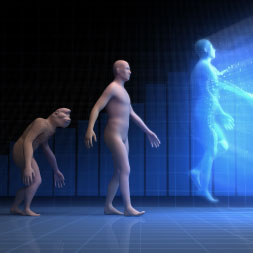
Evolution and natural selection are very important concepts that have revolutionised our understanding of biology. Natural selection is a process resulting in the evolution of organisms that are best adapted to their environment, usually occurring over thousands, and even millions of years. In this free online biology course you will be introduced to the concepts of evolution and natural selection, the causes of these fundamental biological processes and how the success of a species can depend on changes to just one allele on one gene in one chromosome. You will study the naturally occurring variation within species and how mutations and reproduction continues this process. You will also be introduced to DNA, the blueprint of life forms on earth, by looking both at its physical structure and how it copies itself, and turns into the proteins that make up all living organisms. This free online biology course will be of great interest to all learners who wish to pursue a career in the sciences and medicine, to learners who are already studying subjects such as biology, biodiversity and biochemistry, and the individual who simply wants to learn more about how and why there is such diversity among plants and animals today.<br />
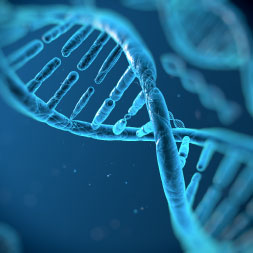
It is over sixty years since the structure of DNA was first discovered by Watson and Crick. Since then work in genetics and gene technology has expanded to the point where the entire human genome has been sequenced, and there is now hope of being able to cure diseases using gene therapy. There is also on-going work in the area of modifying plant DNA to produce pest-resistant crops that give bigger harvests for more food. Today, people need a thorough knowledge and understanding of genetics and gene therapy so that they can make up their own minds as to the potential benefits and drawbacks of what this field of science can offer us. In this free online course you will discover what genes do and explore and come to understand reference terms such as meiosis and mitosis. The course also covers evolutionary aspects of DNA and the genome. You will also learn about gene technology which includes gene testing, gene therapy and the controversial area of genetic modification in plants. This course will be of great interest to professionals working in the areas of biology, medicine and development, to learners who would like a career in the areas of genetics and gene technology, and to anyone interested in understanding the basic area of science that underpins all living existence.<br />
Heredity is the genetic transmission of characteristics from parent to offspring. Many of these characteristics, particularly the dominant ones, have a physical manifestation like hair colour or colour blindness, but other traits can skip generations until the right combination of genes allows a regressive trait to appear. This free online course about heredity will look at how traits are passed on, why some traits form part of our physical makeup and why we only carry others in our genes but never express them. You will learn how to work out ratios of traits that are present in both the genotype and phenotype using the Punnett Square method and the Hardy-Weinberg Principle. You will also learn how bacteria change their DNA over time and how this impacts on human health. Similarly you will learn how viruses replicate and how they can change human DNA. This free online heredity course will be of great interest to all learners who wish to pursue a career in sciences such as biology, medicine, zoology or botany and to any individual who simply wants to learn more about how traits are inherited and changed.<br />

Biology 101: Intro to Biology is designed to be used to prepare you to earn real college credit by passing the Biology CLEP exam . This course covers topics that are included on the exam, such as genetics, physiology, plant and animal biology, ecology and evolution. Use it to help you learn what you need to know about biology topics to succeed on the exam.
The biology instructors are experienced and knowledgeable educators who have put together comprehensive video lessons in categories ranging from Mendel's first law to the anatomy of the brain. Each category is broken down into smaller chapters that will cover topics more in-depth. These video lessons make learning fun and interesting. You get the aid of self-graded quizzes and practice tests to allow you to gauge how much you have learned.
Learn to differentiate between DNA and RNA and between mitosis and meiosis through Education Portal's chapter on basic genetics. Our team of professional educators, who have experience in biology, designed the video lessons in this chapter to be brief and easy to follow. You'll get an overview of genetics before exploring more complex topics, like DNA mutation and comparative genomics. Other topics covered in this chapter include cloning and genetic modification. To be sure you've mastered the material covered in each video lesson, you can take the accompanying self-assessment quiz. Biology 102: Basic Genetics can help you prepare for the Excelsior College Basic Genetics exam ; passing this exam can earn you actual college credit.
Get a basic overview of microbiology before exploring advanced topics like bacterial cell morphology, nitrogen fixation and protozoan diseases through this online Education Portal course, Biology 103: Microbiology. Watch our video lessons on STDs, bacterial diseases and foodborne illnesses as you prepare to earn real college credit through the Microbiology Excelsior Exam . Though the subjects covered in these lessons are somewhat intense, our experienced, knowledgeable instructors have kept the videos brief, engaging and easy to follow. You also can benefit from the multiple-choice quizzes and written transcripts that complement each video.
Get a basic overview of microbiology before exploring advanced topics like bacterial cell morphology, nitrogen fixation and protozoan diseases through this online Education Portal course, Biology 103: Microbiology. Watch our video lessons on STDs, bacterial diseases and foodborne illnesses as you prepare to earn real college credit through the Microbiology Excelsior Exam . Though the subjects covered in these lessons are somewhat intense, our experienced, knowledgeable instructors have kept the videos brief, engaging and easy to follow. You also can benefit from the multiple-choice quizzes and written transcripts that complement each video.
Get a basic overview of microbiology before exploring advanced topics like bacterial cell morphology, nitrogen fixation and protozoan diseases through this online Education Portal course, Biology 103: Microbiology. Watch our video lessons on STDs, bacterial diseases and foodborne illnesses as you prepare to earn real college credit through the Microbiology Excelsior Exam . Though the subjects covered in these lessons are somewhat intense, our experienced, knowledgeable instructors have kept the videos brief, engaging and easy to follow. You also can benefit from the multiple-choice quizzes and written transcripts that complement each video.

Introduction to cell structure & function, molecular & organism genetics, animal development, form & function.
This free online learning course introduces the learner to the basic principles of Psychology from both a behavioural and biological perspective. The topics include classical and operant conditioning, the brain and the nervous system, stress and states of consciousness. All ALISON graduates are entitled to certification. This free Psychology course is an excellent complement to face-to-face classes and as a study guide or for those who would like to familiarise themselves with the fundamentals of Psychology.<br />

Are you interested in learning how to program (in Python) within a scientific setting? This course will cover algorithms for solving various biological problems along with a handful of programming challenges helping you implement these algorithms in Python. It offers a gentler-paced alternative to the first course in our Bioinformatics Specialization (Finding Hidden Messages in DNA).
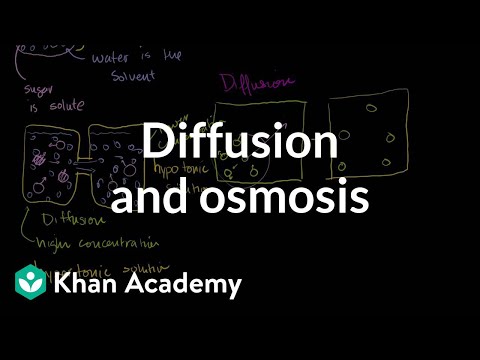
Diffusion and Osmosis. Parts of a cell. Chromosomes, Chromatids, Chromatin, etc.. Mitosis, Meiosis and Sexual Reproduction. Phases of Mitosis. Phases of Meiosis. Embryonic Stem Cells. Cancer. Diffusion and Osmosis. Parts of a cell. Chromosomes, Chromatids, Chromatin, etc.. Mitosis, Meiosis and Sexual Reproduction. Phases of Mitosis. Phases of Meiosis. Embryonic Stem Cells. Cancer.
Add to calendar

Trusted paper writing service WriteMyPaper.Today will write the papers of any difficulty.