

Online courses directory (19947)

This course is an intensive introduction to the techniques of experimental chemistry and gives first year students an opportunity to learn and master the basic chemistry lab techniques for carrying out experiments. Students who successfully complete the course and obtain a "Competent Chemist" (CC) or "Expert Experimentalist" (EE) rating are likely to secure opportunities for research work in a chemistry lab at MIT.
Acknowledgements
The laboratory manual and materials for this course were prepared by Dr. Katherine J. Franz and Dr. Kevin M. Shea with the assistance of Professors Rick L. Danheiser and Timothy M. Swager. Materials have been revised by Dr. J. Haseltine, Dr. Kevin M. Shea, Dr. Sarah A. Tabacco, Dr. Kimberly L. Berkowski, Anne M. (Gorham) Rachupka, and Dr. John J. Dolhun.
WARNING NOTICE
The experiments described in these materials are potentially hazardous and require a high level of safety training, special facilities and equipment, and supervision by appropriate individuals. You bear the sole responsibility, liability, and risk for the implementation of such safety procedures and measures. MIT shall have no responsibility, liability, or risk for the content or implementation of any of the material presented.
Legal Notice

This course covers the process of brewing from grain to final bottle product and the chemical and biochemical process involved in each step. Students will be required to utilize previous knowledge in General and Organic chemistry to understand: analytical techniques in brewing, chemistry of the ingredients and products, and the molecules involved in the biochemical processes. During the course, students will also learn the similarities and differences between beer styles, home and commercial brewing processes, and analytical techniques. There is a great deal of Biochemistry and Organic Chemistry involved in the malting, mashing and fermentation process and understanding the chemistry behind the flavor, aroma, and color of beer. Students should have a basic knowledge of general and organic chemistry.
This course covers the process of brewing from grain to final bottle product and the chemical and biochemical process involved in each step. Students will be required to utilize previous knowledge in General and Organic chemistry to understand: analytical techniques in brewing, chemistry of the ingredients and products, and the molecules involved in the biochemical processes. During the course, students will also learn the similarities and differences between beer styles, home and commercial brewing processes, and analytical techniques. There is a great deal of Biochemistry and Organic Chemistry involved in the malting, mashing and fermentation process and understanding the chemistry behind the flavor, aroma, and color of beer. Students should have a basic knowledge of general and organic chemistry.

This course covers the process of brewing from grain to final bottle product and the chemical and biochemical process involved in each step. Students will be required to utilize previous knowledge in General and Organic chemistry to understand: analytical techniques in brewing, chemistry of the ingredients and products, and the molecules involved in the biochemical processes. During the course, students will also learn the similarities and differences between beer styles, home and commercial brewing processes, and analytical techniques. There is a great deal of Biochemistry and Organic Chemistry involved in the malting, mashing and fermentation process and understanding the chemistry behind the flavor, aroma, and color of beer. Students should have a basic knowledge of general and organic chemistry.

5.451 is a half-semester introduction to natural product biosynthetic pathways. The course covers the assembly of complex polyketide, peptide, terpene and alkaloid structures. Discussion topics include chemical and biochemical strategies used to elucidate natural product pathways.

This seminar will focus on three sports: swimming, cycling and running. There will be two components to the seminar: classroom sessions and a "laboratory" in the form of a structured training program. The classroom component will introduce the students to the chemistry of their own biological system. With swimming, running and cycling as sample sports, students are encouraged to apply their knowledge to complete a triathlon shortly after the term.
This seminar will focus on three sports: swimming, cycling and running. There will be two components to the seminar: classroom sessions and a "laboratory" in the form of a structured training program. The classroom component will introduce the students to the chemistry of their own biological system. With swimming, running and cycling as sample sports, students are encouraged to apply their knowledge to complete a triathlon shortly after the term.

The seminar is designed to look at the science of triathlons and sports from a molecular/chemical biological point of view. We will be able to use our own bodies to see how exercise affects the system, through observations written in a training journal. We will also improve the overall fitness of the class through maintaining a physical fitness program over the course of the term. The end of the term will have us all participate in a mini-triathlon.

Discover a world built by atoms, shaped by molecules and kept running with chemical reactions!
Acid Base Introduction. pH, pOH of Strong Acids and Bases. pH of a Weak Acid. pH of a Weak Base. Conjugate Acids and Bases. pKa and pKb Relationship. Buffers and Hendersen-Hasselbalch. Strong Acid Titration. Weak Acid Titration. Half Equivalence Point. Titration Roundup. Acid Base Titration. Acid Base Introduction. pH, pOH of Strong Acids and Bases. pH of a Weak Acid. pH of a Weak Base. Conjugate Acids and Bases. pKa and pKb Relationship. Buffers and Hendersen-Hasselbalch. Strong Acid Titration. Weak Acid Titration. Half Equivalence Point. Titration Roundup. Acid Base Titration.
Molecular and Empirical Formulas. The Mole and Avogadro's Number. Formula from Mass Composition. Another mass composition problem. Balancing Chemical Equations. Stoichiometry. Stoichiometry Example Problem 1. Stoichiometry Example Problem 2. Stoichiometry: Limiting Reagent. Limiting Reactant Example Problem 1. Spectrophotometry Introduction. Spectrophotometry Example. Molecular and Empirical Formulas. The Mole and Avogadro's Number. Formula from Mass Composition. Another mass composition problem. Balancing Chemical Equations. Stoichiometry. Stoichiometry Example Problem 1. Stoichiometry Example Problem 2. Stoichiometry: Limiting Reagent. Limiting Reactant Example Problem 1. Spectrophotometry Introduction. Spectrophotometry Example.

This introduction to fundamental chemical concepts of atomic and molecular structure will emphasize the development of these concepts from experimental observations and scientific reasoning.

This course is the second semester of the two semester sequence, Chemistry Concept Development and Application. This course will cover the topics of a typical second semester General Chemistry course at most colleges and universities. We will use the Chemistry Concept Development Study approach, developed and used in our courses at Rice and used in Part I of this course.

Build your earth science vocabulary and learn about cycles of matter and types of sedimentary rocks through the Education Portal course Earth Science 101: Earth Science. Our series of video lessons and accompanying self-assessment quizzes can help you boost your scientific knowledge ahead of the Excelsior Earth Science exam . This course was designed by experienced educators and examines both science basics, like experimental design and systems of measurement, and more advanced topics, such as analysis of rock deformation and theories of continental drift.

Ideal Gas Equation: PV=nRT. Ideal Gas Equation Example 1. Ideal Gas Equation Example 2. Ideal Gas Equation Example 3. Ideal Gas Equation Example 4. Partial Pressure. Vapor Pressure Example. Ideal Gas Equation: PV=nRT. Ideal Gas Equation Example 1. Ideal Gas Equation Example 2. Ideal Gas Equation Example 3. Ideal Gas Equation Example 4. Partial Pressure. Vapor Pressure Example.
Elements and Atoms. Introduction to the atom. Elements and Atoms. Introduction to the atom.
Orbitals. More on orbitals and electron configuration. Electron configurations. Electron configurations 2. Valence Electrons. Orbitals. More on orbitals and electron configuration. Electron configurations. Electron configurations 2. Valence Electrons.
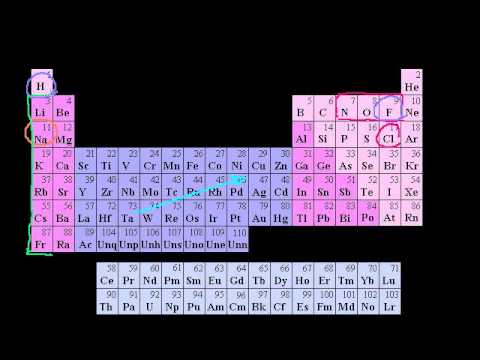
Introduction to Oxidation States. More on Oxidation States. Hydrogen Peroxide Correction. Redox Reactions. Galvanic Cells. Introduction to Oxidation States. More on Oxidation States. Hydrogen Peroxide Correction. Redox Reactions. Galvanic Cells.
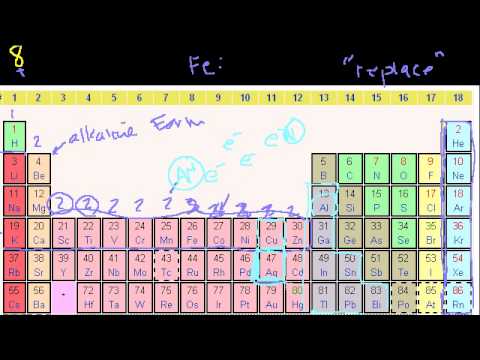
Groups of the Periodic Table. Valence Electrons. Periodic Table Trends: Ionization Energy. Other Periodic Table Trends. Ionic, Covalent, and Metallic Bonds. Groups of the Periodic Table. Valence Electrons. Periodic Table Trends: Ionization Energy. Other Periodic Table Trends. Ionic, Covalent, and Metallic Bonds.

Types of Decay. Half-Life. Exponential Decay Formula Proof (can skip, involves Calculus). Introduction to Exponential Decay. More Exponential Decay Examples. Types of Decay. Half-Life. Exponential Decay Formula Proof (can skip, involves Calculus). Introduction to Exponential Decay. More Exponential Decay Examples.
Add to calendar

Trusted paper writing service WriteMyPaper.Today will write the papers of any difficulty.