

Online courses directory (19947)
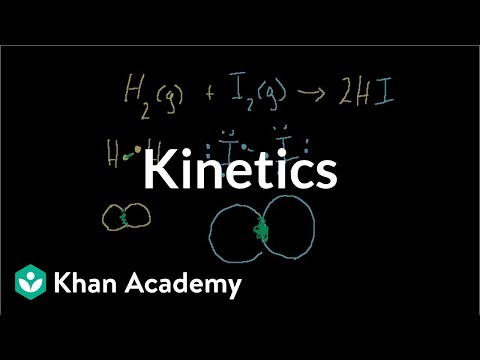
Introduction to Kinetics. Reactions in Equilibrium. Mini-Video on Ion Size. Keq Intuition (mathy and not necessary to progress). Keq derivation intuition (can skip; bit mathy). Heterogeneous Equilibrium. Le Chatelier's Principle. Introduction to pH, pOH, and pKw. Introduction to Kinetics. Reactions in Equilibrium. Mini-Video on Ion Size. Keq Intuition (mathy and not necessary to progress). Keq derivation intuition (can skip; bit mathy). Heterogeneous Equilibrium. Le Chatelier's Principle. Introduction to pH, pOH, and pKw.
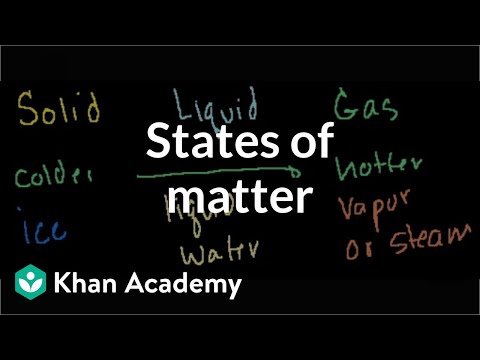
States of Matter. States of Matter Follow-Up. Specific Heat, Heat of Fusion and Vaporization. Chilling Water Problem. Phase Diagrams. Van Der Waals Forces. Covalent Networks, Metallic, and Ionic Crystals. Vapor Pressure. Suspensions, Colloids and Solutions. Solubility. Boiling Point Elevation and Freezing Point Suppression. Change of State Example. States of Matter. States of Matter Follow-Up. Specific Heat, Heat of Fusion and Vaporization. Chilling Water Problem. Phase Diagrams. Van Der Waals Forces. Covalent Networks, Metallic, and Ionic Crystals. Vapor Pressure. Suspensions, Colloids and Solutions. Solubility. Boiling Point Elevation and Freezing Point Suppression. Change of State Example.

Learn everything you need to know to beat strong chess players

This course explains the general principles of chicken behaviour and welfare, and the behavioural and physiological indicators that can be used to assess welfare in chickens kept in hobby flocks through to commercial farms.

An ever expanding program of courses helping financial professionals aspire to the top levels of financial leadership

Learn the basics of child nutrition and how to make healthy meals for healthy children and families in version 2.0 of the "Just Cook" class.

This course will review challenges for maternal and newborn health in the developing world, where a great many women and babies are suffering from complications during pregnancy, childbirth, and the days following birth. Themes covered include the epidemiology of maternal and newborn mortality and morbidity, relevant issues for the global health workforce, community-based interventions to improve maternal and newborn health and survival, and sociocultural dynamics surrounding birth.

This course studies the transformation of childhood and youth since the 18th century in France, as well as the development of sentimentality within the family in a francophone context. Students will examine the personification of children, both as a source of inspiration for artistic creation and a political ideal aimed at protecting future generations, and consider various representations of childhood and youth in literature (e.g., Pagnol, Proust, Sarraute, Lave, Morgievre), movies (e.g., Truffaut), and songs (e.g., Brel, Barbara). This course is taught entirely in French.

This course studies the transformation of childhood and youth since the 18th century in France, as well as the development of sentimentality within the family in a francophone context. Students will examine the personification of children, both as a source of inspiration for artistic creation and a political ideal aimed at protecting future generations, and consider various representations of childhood and youth in literature (e.g., Pagnol, Proust, Sarraute, Lave, Morgievre), movies (e.g., Truffaut), and songs (e.g., Brel, Barbara). This course is taught entirely in French.

This course will survey fundamental principles of language acquisition and learning to read. We will explore the possibility of becoming literate without formal schooling and instruction. No prior background in behavioral science, neuroscience, or technology is required.

China (Part 1): Political and Intellectual Foundations: From the Sage Kings to Confucius and the Legalists is the first of ten parts of ChinaX, that collectively span over 6,000 years of history. Each part consists of 4 to 8 weekly "modules," each with videos, readings, interactive engagements, assessments, and discussion forums. There are a total of 52 modules in ChinaX.
Parts 1-5 make up China: Civilization and Empire, taught by Professor Peter K. Bol. Parts 6-10 make up China and the Modern World, taught by Professor William C. Kirby.
For more information about ChinaX, please visit the ChinaX page.
HarvardX requires individuals who enroll in its courses on edX to abide by the terms of the edX honor code. HarvardX will take appropriate corrective action in response to violations of the edX honor code, which may include dismissal from the HarvardX course; revocation of any certificates received for the HarvardX course; or other remedies as circumstances warrant. No refunds will be issued in the case of corrective action for such violations. Enrollees who are taking HarvardX courses as part of another program will also be governed by the academic policies of those programs.
HarvardX pursues the science of learning. By registering as an online learner in an HX course, you will also participate in research about learning. Read our research statement to learn more.
Harvard University and HarvardX are committed to maintaining a safe and healthy educational and work environment in which no member of the community is excluded from participation in, denied the benefits of, or subjected to discrimination or harassment in our program. All members of the HarvardX community are expected to abide by Harvard policies on nondiscrimination, including sexual harassment, and the edX Terms of Service. If you have any questions or concerns, please contact harvardx@harvard.edu and/or report your experience through the edX contact form.

China (Part 1) is one of ten courses in the ChinaX Series. Part 1 remains open for enrollment to serve as a preview for new learners who are interested in exploring ChinaX. Please note, you will not receive a certificate as the series already closed. The next iteration of the ChinaX series will launch in the coming months. Stay tuned! To learn more about ChinaX, we hope you will join us and ChinaX learners world-wide on this ChinaX Community Page.
This course is presented in English with limited video subtitles in Chinese.
Modern China presents a dual image: a society transforming itself through economic development and infrastructure investment that aspires to global leadership; and the world's largest and oldest bureaucratic state, with multiple traditions in its cultural, economic, and political life. The modern society and state that is emerging in China bears the indelible imprint of China's historical experience, of its patterns of philosophy and religion, and of its social and political thought. These themes are discussed in order to understand China in the twenty-first century and as a great world civilization that developed along along lines different from those of the Mediterranean.
ChinaX introduces new features to make the riches of Harvard's visual collections and the expertise of its faculty more accessible to learners worldwide. We will engage intellectual and religious trends, material and political culture, the local diversity and the national unity, art and literature, and China’s economic and political transformation— past, present and future.
This is the first of ten ChinaX "Mini-Courses" that collectively span over 6,000 years of history. Each mini-course consists of 4 to 8 weekly "modules," each with videos, readings, interactive engagements, assessments, and discussion forums.
HarvardX requires individuals who enroll in its courses on edX to abide by the terms of the edX honor code. HarvardX will take appropriate corrective action in response to violations of the edX honor code, which may include dismissal from the HarvardX course; revocation of any certificates received for the HarvardX course; or other remedies as circumstances warrant. No refunds will be issued in the case of corrective action for such violations. Enrollees who are taking HarvardX courses as part of another program will also be governed by the academic policies of those programs.
HarvardX pursues the science of learning. By registering as an online learner in an HX course, you will also participate in research about learning. Read our research statement to learn more.
Harvard University and HarvardX are committed to maintaining a safe and healthy educational and work environment in which no member of the community is excluded from participation in, denied the benefits of, or subjected to discrimination or harassment in our program. All members of the HarvardX community are expected to abide by Harvard policies on nondiscrimination, including sexual harassment, and the edX Terms of Service. If you have any questions or concerns, please contact harvardx@harvard.edu and/or report your experience through the edX contact form.

China (Part 10): Greater China Today: The People's Republic, Taiwan, and Hong Kong is the tenth of ten parts of ChinaX, that collectively span over 6,000 years of history. Each part consists of 4 to 8 weekly "modules," each with videos, readings, interactive engagements, assessments, and discussion forums. There are a total of 52 modules in ChinaX.
Parts 6 - 10 make up China and the Modern World, taught by Professor William C. Kirby. Parts 1 - 5 make up China: Civilization and Empire, taught by Professor Peter K. Bol.
For more information about ChinaX, please visit the ChinaX page.
HarvardX requires individuals who enroll in its courses on edX to abide by the terms of the edX honor code. HarvardX will take appropriate corrective action in response to violations of the edX honor code, which may include dismissal from the HarvardX course; revocation of any certificates received for the HarvardX course; or other remedies as circumstances warrant. No refunds will be issued in the case of corrective action for such violations. Enrollees who are taking HarvardX courses as part of another program will also be governed by the academic policies of those programs.
HarvardX pursues the science of learning. By registering as an online learner in an HX course, you will also participate in research about learning. Read our research statement to learn more.
Harvard University and HarvardX are committed to maintaining a safe and healthy educational and work environment in which no member of the community is excluded from participation in, denied the benefits of, or subjected to discrimination or harassment in our program. All members of the HarvardX community are expected to abide by Harvard policies on nondiscrimination, including sexual harassment, and the edX Terms of Service. If you have any questions or concerns, please contact harvardx@harvard.edu and/or report your experience through the edX contact form.

Please note that this course is self-paced and you can enroll at any time. The course will take 6 weeks to complete.
This course is presented in English with limited video subtitles in Chinese.
Modern China presents a dual image: a society transforming itself through economic development and infrastructure investment that aspires to global leadership; and the world's largest and oldest bureaucratic state, with multiple traditions in its cultural, economic, and political life. The modern society and state that is emerging in China bears the indelible imprint of China's historical experience, of its patterns of philosophy and religion, and of its social and political thought. These themes are discussed in order to understand China in the twenty-first century and as a great world civilization that developed along lines different from those of the Mediterranean. ChinaX introduces new features to make the riches of Harvard's visual collections and the expertise of its faculty more accessible to learners worldwide. We will engage intellectual and religious trends, material and political culture, the local diversity and the national unity, art and literature, and China’s economic and political transformation— past, present and future.
This is the second of ten ChinaX "Mini-Courses" that collectively span over 6,000 years of history. Each Mini-Course consists of 4 to 8 weekly "modules," each with videos, readings, interactive engagements, assessments, and discussion forums.
HarvardX pursues the science of learning. By registering as an online learner in an HX course, you will also participate in research about learning. Read our research statement to learn more.

China (Part 3): Cosmopolitan Tang: Aristocratic Culture is the third of ten parts of ChinaX, that collectively span over 6,000 years of history. Each part consists of 4 to 8 weekly "modules," each with videos, readings, interactive engagements, assessments, and discussion forums. There are a total of 52 modules in ChinaX.
Parts 1 - 5 make up China: Civilization and Empire, taught by Professor Peter K. Bol. Parts 6 - 10 make up China and the Modern World, taught by Professor William C. Kirby.
For more information about ChinaX, please visit the ChinaX page.
HarvardX requires individuals who enroll in its courses on edX to abide by the terms of the edX honor code. HarvardX will take appropriate corrective action in response to violations of the edX honor code, which may include dismissal from the HarvardX course; revocation of any certificates received for the HarvardX course; or other remedies as circumstances warrant. No refunds will be issued in the case of corrective action for such violations. Enrollees who are taking HarvardX courses as part of another program will also be governed by the academic policies of those programs.
HarvardX pursues the science of learning. By registering as an online learner in an HX course, you will also participate in research about learning. Read our research statement to learn more.
Harvard University and HarvardX are committed to maintaining a safe and healthy educational and work environment in which no member of the community is excluded from participation in, denied the benefits of, or subjected to discrimination or harassment in our program. All members of the HarvardX community are expected to abide by Harvard policies on nondiscrimination, including sexual harassment, and the edX Terms of Service. If you have any questions or concerns, please contact harvardx@harvard.edu and/or report your experience through the edX contact form.

Please note that this course is self-paced and you can enroll at any time. The course will take 4 weeks to complete.
This course is presented in English with limited video subtitles in Chinese.
Modern China presents a dual image: a society transforming itself through economic development and infrastructure investment that aspires to global leadership; and the world's largest and oldest bureaucratic state, with multiple traditions in its cultural, economic, and political life. The modern society and state that is emerging in China bears the indelible imprint of China's historical experience, of its patterns of philosophy and religion, and of its social and political thought. These themes are discussed in order to understand China in the twenty-first century and as a great world civilization that developed along along lines different from those of the Mediterranean.
ChinaX introduces new features to make the riches of Harvard's visual collections and the expertise of its faculty more accessible to learners worldwide. We will engage intellectual and religious trends, material and political culture, the local diversity and the national unity, art and literature, and China’s economic and political transformation— past, present and future.
This is the fourth of ten ChinaX "Mini-Courses" that collectively span over 6,000 years of history. Each mini-course consists of 4 to 8 weekly "modules," each with videos, readings, interactive engagements, assessments, and discussion forums.
HarvardX pursues the science of learning. By registering as an online learner in an HX course, you will also participate in research about learning. Read our research statement to learn more.

China (Part 5): From a Global Empire under the Mongols to a Global Economy under the Ming Dynasty is the fifth of ten parts of ChinaX, that collectively span over 6,000 years of history. Each part consists of 4 to 8 weekly "modules," each with videos, readings, interactive engagements, assessments, and discussion forums. There are a total of 52 modules in ChinaX.
Parts 1 - 5 make up China: Civilization and Empire, taught by Professor Peter K. Bol. Parts 6 - 10 make up China and the Modern World, taught by Professor William C. Kirby.
For more information about ChinaX, please visit the ChinaX page.
HarvardX requires individuals who enroll in its courses on edX to abide by the terms of the edX honor code. HarvardX will take appropriate corrective action in response to violations of the edX honor code, which may include dismissal from the HarvardX course; revocation of any certificates received for the HarvardX course; or other remedies as circumstances warrant. No refunds will be issued in the case of corrective action for such violations. Enrollees who are taking HarvardX courses as part of another program will also be governed by the academic policies of those programs.
HarvardX pursues the science of learning. By registering as an online learner in an HX course, you will also participate in research about learning. Read our research statement to learn more.
Harvard University and HarvardX are committed to maintaining a safe and healthy educational and work environment in which no member of the community is excluded from participation in, denied the benefits of, or subjected to discrimination or harassment in our program. All members of the HarvardX community are expected to abide by Harvard policies on nondiscrimination, including sexual harassment, and the edX Terms of Service. If you have any questions or concerns, please contact harvardx@harvard.edu and/or report your experience through the edX contact form.

China (Part 6): The Manchus and the Qing Dynasty is the sixth of ten parts of ChinaX, that collectively span over 6,000 years of history. Each part consists of 4 to 8 weekly "modules," each with videos, readings, interactive engagements, assessments, and discussion forums. There are a total of 52 modules in ChinaX.
Parts 6 - 10 make up China and the Modern World, taught by Professor William C. Kirby. Parts 1 - 5 make up China: Civilization and Empire, taught by Professor Peter K. Bol.
For more information about ChinaX, please visit the ChinaX page.
HarvardX requires individuals who enroll in its courses on edX to abide by the terms of the edX honor code. HarvardX will take appropriate corrective action in response to violations of the edX honor code, which may include dismissal from the HarvardX course; revocation of any certificates received for the HarvardX course; or other remedies as circumstances warrant. No refunds will be issued in the case of corrective action for such violations. Enrollees who are taking HarvardX courses as part of another program will also be governed by the academic policies of those programs.
HarvardX pursues the science of learning. By registering as an online learner in an HX course, you will also participate in research about learning. Read our research statement to learn more.
Harvard University and HarvardX are committed to maintaining a safe and healthy educational and work environment in which no member of the community is excluded from participation in, denied the benefits of, or subjected to discrimination or harassment in our program. All members of the HarvardX community are expected to abide by Harvard policies on nondiscrimination, including sexual harassment, and the edX Terms of Service. If you have any questions or concerns, please contact harvardx@harvard.edu and/or report your experience through the edX contact form.

China (Part 7): Invasions, Rebellions and the Fall of Imperial China is the seventh of ten parts of ChinaX, that collectively span over 6,000 years of history. Each part consists of 4 to 8 weekly "modules," each with videos, readings, interactive engagements, assessments, and discussion forums. There are a total of 52 modules in ChinaX.
Parts 6 - 10 make up China and the Modern World, taught by Professor William C. Kirby. Parts 1 - 5 make up China: Civilization and Empire, taught by Professor Peter K. Bol.
For more information about ChinaX, please visit the ChinaX page.
HarvardX requires individuals who enroll in its courses on edX to abide by the terms of the edX honor code. HarvardX will take appropriate corrective action in response to violations of the edX honor code, which may include dismissal from the HarvardX course; revocation of any certificates received for the HarvardX course; or other remedies as circumstances warrant. No refunds will be issued in the case of corrective action for such violations. Enrollees who are taking HarvardX courses as part of another program will also be governed by the academic policies of those programs.
HarvardX pursues the science of learning. By registering as an online learner in an HX course, you will also participate in research about learning. Read our research statement to learn more.
Harvard University and HarvardX are committed to maintaining a safe and healthy educational and work environment in which no member of the community is excluded from participation in, denied the benefits of, or subjected to discrimination or harassment in our program. All members of the HarvardX community are expected to abide by Harvard policies on nondiscrimination, including sexual harassment, and the edX Terms of Service. If you have any questions or concerns, please contact harvardx@harvard.edu and/or report your experience through the edX contact form.

China (Part 8): Creating Modern China: The Birth of a Nation is the eighth of ten parts of ChinaX, that collectively span over 6,000 years of history. Each part consists of 4 to 8 weekly "modules," each with videos, readings, interactive engagements, assessments, and discussion forums. There are a total of 52 modules in ChinaX.
Parts 6 - 10 make up China and the Modern World, taught by Professor William C. Kirby. Parts 1 - 5 make up China: Civilization and Empire, taught by Professor Peter K. Bol.
For more information about ChinaX, please visit the ChinaX page.
HarvardX requires individuals who enroll in its courses on edX to abide by the terms of the edX honor code. HarvardX will take appropriate corrective action in response to violations of the edX honor code, which may include dismissal from the HarvardX course; revocation of any certificates received for the HarvardX course; or other remedies as circumstances warrant. No refunds will be issued in the case of corrective action for such violations. Enrollees who are taking HarvardX courses as part of another program will also be governed by the academic policies of those programs.
HarvardX pursues the science of learning. By registering as an online learner in an HX course, you will also participate in research about learning. Read our research statement to learn more.
Harvard University and HarvardX are committed to maintaining a safe and healthy educational and work environment in which no member of the community is excluded from participation in, denied the benefits of, or subjected to discrimination or harassment in our program. All members of the HarvardX community are expected to abide by Harvard policies on nondiscrimination, including sexual harassment, and the edX Terms of Service. If you have any questions or concerns, please contact harvardx@harvard.edu and/or report your experience through the edX contact form.
Add to calendar

Trusted paper writing service WriteMyPaper.Today will write the papers of any difficulty.