

Online courses directory (19947)

6 Virtues to Help Navigate and Illuminate Your Way

Ao longo da história do pensamento, diversos filósofos, teístas ou não, detiveram-se diante

In the 21st century, embedded systems are the systems of future with cellular phones, smart-phones, tablets becoming the dominant platforms for computing and communication. The ubiquity of information and the associated need for the computation that accompanies it is driving this revolution only to be accelerated by the new paradigms such as the Internet-of-Things (IoT). These platforms are clearly very different in terms of their processing requirements which are very unique: real-time needs, high performance but at low energy, compact-code and data segments, and most importantly ever changing software stack. Such unique requirements have led to a complete redesign and reinvention of the both hardware and the software stack from ground up, for example, brand new processors such as ARM, DSPs, network processors were invented all the way up to new virtual machines such as Dalvik, new operating systems such as Android and new programming models and compiler optimizations.

Learn how electronic gadgets are designed, developed, and built as embedded systems that shape the world.
This is part one of a two part sequence. Together these are hands-on, learn-by-doing courses that show you how to build solutions to real-world problems using embedded systems. In this course, we take a bottom-up approach to problem solving, building gradually from simple interfacing of switches and LEDs to complex concepts like a microcontroller-based pacemaker, digital lock, and a traffic light controller. We will present both general principles and practical tips for building circuits and programming the microcontroller in the C programming language. You will develop debugging skills using oscilloscopes, logic analyzers, and software instrumentation. Laboratory assignments are first performed in simulation, and then you will build and debug your system on the real microcontroller. At the conclusion of this part 1 you will possess the knowledge to build your own traffic light controller from the ground up.
This is the fourth time we have offered this course. Since the reviews have been overwhelmingly positive we do not plan major changes over the previous offerings of the course. We did however break the large class into two smaller classes. There are eight labs in part 1 and six labs in part 2. Students can pick and choose a subset of labs to achieve certification. The three labs that students found most rewarding in this part were designing the software algorithm for a demand pacemaker, interfacing switches and LEDS, and the finite state machine traffic light controller.
To complete this course, you will be required to purchase a Texas Instruments TM4C123 microcontroller kit and a few electronic components.
This microcontroller has a state-of-the-art ARM Cortex-M4 processor.
We will provide instructions about purchasing the kit and installing required software at: http://edx-org-utaustinx.s3.amazonaws.com/UT601x/index.html.
Learn how electronic gadgets are designed, developed, and built as embedded systems that shape the world.
This is part two of a two part sequence. In this class, we will use interrupts to design a range of real-time systems including an audio player, a data acquisition system, a control system, and an interactive game. This is a hands-on, learn-by-doing course that shows you how to build solutions to real-world problems using embedded systems. These courses use a bottom-up approach to problem solving, building gradually from simple interfacing of switches and LEDs to complex concepts like display drivers, digital to analog conversion, generation of sound, analog to digital conversion, motor control, graphics, interrupts, and communication. We will present both general principles and practical tips for building circuits and programming the microcontroller in the C programming language. You will develop debugging skills using oscilloscopes, logic analyzers, and software instrumentation. Laboratory assignments are first performed in simulation, and then you will build and debug your system on the real microcontroller. At the conclusion of this course you will possess the knowledge to build your own arcade-style game from the ground up.
This is the fourth time we have offered this course. Since the reviews have been overwhelmingly positive we do not plan major changes over the previous offerings of the course. We did however break the large class into two smaller classes. There are eight labs in part 1 and six labs in this class. Students can pick and choose a subset of labs to achieve certification. The three labs that students found most rewarding were the hand-held video game, generating sound using a digital to analog convertor, and creating a smart object using Wifi communication.
To complete this course, you will be required to purchase a Texas Instruments TM4C123 microcontroller kit and a few electronic components. This microcontroller has a state-of-the-art ARM Cortex-M4 processor.
We will provide instructions about purchasing the kit and installing required software at: http://edx-org-utaustinx.s3.amazonaws.com/UT601x/index.html.

Faculty examine how their own experiences have shaped their perspectives and the importance of valuing different viewpoints.

Accessing the Source and Enjoying the Privilege of Becoming

How did life emerge on Earth? How have life and Earth co-evolved through geological time? Is life elsewhere in the universe? Take a look through the 4-billion-year history of life on Earth through the lens of the modern Tree of Life!

Learn the concepts, principles and practice of Emergency Management through real-world case studies

You need to figure out how to retouch images, and you need to do it now! All you want is some simple directions.

Forget every argument and industry lobby previously put forward regarding the evolution of green energy alternatives. Fo

'Emerging Topics in Operations & Technology' is a series of interviews with Darden School of Business alum

Learn about emerging trends and technologies in K-12 virtual instruction. Join us as we explore this dynamic landscape and investigate how we can more deeply engage students in the virtual classroom through the use of innovative practices and technologies.

Video based training for horses, delivering fast, effective relief from muscular pain due to stress, strain or overwork.

MOOCs are opening new opportunities for faculty members to flip their classroom. Can we apply this educational innovation to scientific conferences by flipping the conference room?
ConfX is a MOOC for a conference on MOOCs. It gives voice to several researchers who build sense from MOOCs. Each of them will explore a particular question from their own perspective: faculty members, instructors, instructional designers, researchers, and others. They will share their experience and research results based papers they will present at the EMOOCs 2015 Conference.
Whether or not you intend to attend the EMOOCs Conference in Mons (Belgium)—May 18-20, 2015—you are invited to join ConfX and participate in establishing innovative ways to think about scientific conferences!
Are you curious about MOOCs but are not planning to attend the live conference in May? ConfX will give you the opportunity to:
- Get a sense of the ongoing research on MOOCs.
- Engage with the community of practice in the MOOC field.
- Have a voice in the conversation by contributing to current debates on online education.
ConfX will give you access to high quality papers before they are discussed by experts and eventually published by scientific editors.
Are you planning to attend the EMOOCs conference in Belgium? ConfX will allow you to do the following:
- Before the conference: discover the papers through video presentations and quizzes made by their authors; then start online preliminary discussions.
- During the conference: discuss further with the authors, share your opinions and own experiences.
We hope this “flipped-conference” model will enrich your presence in sessions at the conference, and enable high-value scientific debates and knowledge co-construction to take place amongst attendees.

Develop Emotional Intelligence and Resilience: become better equipped to deal with emotional challenges of working life

learn the secret of classroom management

This course is designed for anyone interested in developing greater emotional awareness as a means of becoming more effective at work, in sport, or in any aspect of life.
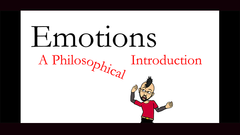
Emotions are the backbone of social activities as well as they drive the cognitive processes of several living entities. This course tries to elucidate the controversial nature of emotions and their evolutionary meaning. Several animals, including humans, have emotions but…what about machines? This is a course to feel and think about.

Conoce cómo esta red profesional puede ayudarte en tu desarrollo profesional y a mejorar tu negocio.
Add to calendar

Trusted paper writing service WriteMyPaper.Today will write the papers of any difficulty.