

Online courses directory (19947)

Spiritual Healing for Modern Single Women

The Basics of GIS: This is a free online GIS course the fall semester. ArcGIS is the platform. Student can create a portfolio of maps to get a certificate upon completion. This 12-week course begins September 9th.

Learn Effective Source Control Management with Git. Taught by Tony Hillerson. Learn how to use Git practically.

This course covers the essentials of working with remote repositories. You'll be able to connect to a remote repository, get changes from a remote repository, and send changes to a remote repository. You'll also learn how to work collaboratively. You'll fork another developer's repository, make changes to it, and then send them a pull request. You'll also pick up some Git tips and tricks that make working with collaborators a breeze.

Learn Versioning and to Manage Your Code with GitHub

Learn basic skills to negotiate effectively to get the results you want.

A philanthropist is anyone who gives anything — time, money, experience, skills, and networks — in any amount, to create a better world. This course will empower you to practice philanthropy more effectively and make your giving more meaningful to both you and those you strive to help.

Learn how to give feedback that gets fantastic results.
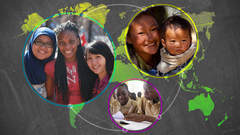
This course will explore the dynamic factors affecting the health and wellbeing of young people around the world, and how important it is for individuals, communities and nations that we improve the health and life chances of this important population group.

This Final Project course is only available to learners who have earned a Verified Certificate in each course of the Challenges in Global Affairs Specialization (The Changing Global Order, Configuring the World, and International Organizations Management). You won't be able to enroll in this course if you do not have a Verified Certificate in each of those three courses.

Global Business in Practice helps you understand the impact globalization has on global trade and how companies need to react. Business schools are very good at compiling theories; we add value by combining those theories with the practical realities faced by top executives and exploring the management of global business from their perspectives. Leading industry experts will be featured throughout the course, including:
- Joseph P. Baratta, Global Head of Private Equity at Blackstone;
- Maximo J. Blandon, Managing Director at Stephens Inc.;
- Mark G. Del Rosso, Executive Vice President & COO of Audi of America;
- Thomas J. DeRosa, CEO and Director of Welltower;
- Fabrizio Freda, President & CEO of The Estée Lauder Companies;
- Franck J. Moison, Vice Chairman at Colgate-Palmolive;
- Roxana Pierce, Of Counsel at Robbins Geller Rudman & Dowd LLP;
- Monica Vidal, Partner at MVS Global Consulting Services;
- Stephanie von Friedeburg, CIO and VP for Information and Technology Solutions at the World Bank Group.
You will understand the horizontal nature of practical problem solving rather than the vertical work and learning that traditionally happens in functional silos.
Our goal is that, through this course, you will come to explicitly understand that globalization affects every country regardless of its economic, political or social situation. In this context, as countries endeavor to adapt their policies to new demands, companies deploy strategies to attain an increasingly globally integrated production system. The globalized world forces us to seek and develop appropriate ways to undergo this process. Today, discussions about the advantages and disadvantages of globalization are insignificant and unimportant in the face of the great need to determine the essential conditions for countries, companies and individuals to really benefit from it.
A fundamental knowledge of core business disciplines is clearly a “must” for aspiring global leaders, but the complexity of the global world requires us to push the envelope and extend the limits of what is possible. Join us as we explore the future of global business leadership.

This class introduces scientific, economic, and ecological issues underlying the threat of global climate change, and the institutions engaged in negotiating an international response. It also develops an integrated approach to analysis of climate change processes, and assessment of proposed policy measures, drawing on research and model development within the MIT Joint Program on the Science and Policy of Global Change.

15.389A Global Entrepreneurship Lab: Asia-Pacific enables teams of students to work with the top management of global start-ups and gain experience in running, and consulting to, a new enterprise outside the United States. The focus is on start-ups operating in emerging markets throughout the world, with a special focus on the Asia-Pacific region. The course combines an internship in a growing firm with in-class discussions of the issues and policies that affect the climate for innovation and start-up success around the world.
Special Features
15.389A is part of a two-section course and includes materials that cover entrepreneurship in the Asia-Pacific region. 15.389B Global Entrepreneurship Lab: Latin America, the Middle East, and Africa is also available on OpenCourseWare and covers topics pertinent to these additional regions.

15.389B Global Entrepreneurship Lab: Latin America, the Middle East, and Africa enables teams of students to work with the top management of global start-ups and gain experience in running, and consulting to, a new enterprise outside the United States. The focus is on start-ups operating in emerging markets throughout the world, with a special focus on Latin America, the Middle East, and Africa. The course combines an internship in a growing firm with in-class discussions of the issues and policies that affect the climate for innovation and start-up success around the world.
Special Features
15.389B is part of a two-section course and includes materials that cover entrepreneurship in Latin America, the Middle East, and Africa. 15.389A Global Entrepreneurship Lab: Asia-Pacific is also available on OpenCourseWare and covers topics pertinent to these additional regions.
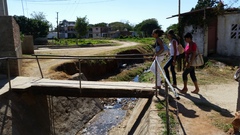
Learn about the best environmental technologies for a sustainable development and how they are managed in various settings around the world.

This course will use broad, geographic discussions and case studies to help students understand environmental problems.

How will we feed an extra two billion people by the middle of this century?

For the first time in history, the global demand for freshwater is overtaking its supply in many parts of the world. The U.N. predicts that by 2025, more than half of the countries in the world will be experiencing water stress or outright shortages. Lack of water can cause disease, food shortages, starvation, migrations, political conflict, and even lead to war. Models of cooperation, both historic and contemporary, show the way forward. The first half of the course details the multiple facets of the water crisis. Topics include water systems, water transfers, dams, pollution, climate change, scarcity, water conflict/cooperation, food security, and agriculture. The second half of the course describes innovative solutions: Adaptive technologies and adaptation through policy, planning, management, economic tools, and finally, human behaviors required to preserve this precious and imperiled resource. Several field trips to water/wastewater/biosolids reuse and water-energy sites will help us to better comprehend both local and international challenges and solutions.
For the first time in history, the global demand for freshwater is overtaking its supply in many parts of the world. The U.N. predicts that by 2025, more than half of the countries in the world will be experiencing water stress or outright shortages. Lack of water can cause disease, food shortages, starvation, migrations, political conflict, and even lead to war. Models of cooperation, both historic and contemporary, show the way forward. The first half of the course details the multiple facets of the water crisis. Topics include water systems, water transfers, dams, pollution, climate change, scarcity, water conflict/cooperation, food security, and agriculture. The second half of the course describes innovative solutions: Adaptive technologies and adaptation through policy, planning, management, economic tools, and finally, human behaviors required to preserve this precious and imperiled resource. Several field trips to water/wastewater/biosolids reuse and water-energy sites will help us to better comprehend both local and international challenges and solutions.

Is humanitarianism an effective, justifiable and sustainable response to ill-health, inequality, injustice and war?
Add to calendar

Trusted paper writing service WriteMyPaper.Today will write the papers of any difficulty.