

Online courses directory (19947)

<p>This free online course is ideal for students studying graphic design, those working in Computer-Aided Design (CAD) or indeed anyone interested in design in general. </p><br /> <p>Exploring graphic design, industrial design and the design process in general, this exciting course examines various design elements including line, shape, form and texture and design principles, covering composition, balance, contrast and hierarchy. </p>

A Foundation Course in Graphic Design for After Effects and Premiere editors, Giving You Creative Confidence...

Not an artist? Perfect! You don't need to learn Photoshop to make stunning graphics, banners, ads, etc. easily!

Where did graphic design come from, and where will it go next? This fast-paced introduction to graphic design history will change your understanding of everything from fonts and letterforms to posters and brands. Discover how printers revolutionized society when they created open access to information. Explore the visual systems that inform graphic design practice—from handwritten alphabets to online publications. Learn how avant-garde artists, architects, poets, and painters shook the world by reinventing mass media. Pursue the dream of a unified civilization held together by neutral typefaces, international pictograms, and global brands—and see how subcultures rebelled against cultural uniformity by forging their own visual identities. Thinking about history will open your eyes to new ideas and diverse practices. The course is taught by Brockett Horne and Ellen Lupton, renowned authors and leading faculty at Maryland Institute College of Art (MICA). In a series of dynamic conversations, they will introduce you to fascinating people and processes that changed the way we communicate. Test your knowledge with short quizzes, and stretch your own design practice by responding to inspiring creative prompts.
Course image A. M. Cassandre. The uncompromising one, the strongest, 1925. Lithograph.
Collection of Merrill C. Berman

Sharpen your design skills and start designing like a pro instantly by learning these simple principles and techniques.

Learn about the free graphic design tools I use to create & edit images for my websites, videos and youtube channel art.

Videos that review math concepts for the quantitative reasoning section of the GRE revised general test.

Quantitative Problem Solving: So Easy a Child Could Do It

With GRE Preparation – Part 1 and Part 2, you'll be prepared for all aspects of the computerized GRE® revised General Test.

Discover powerful strategies for success in the verbal reasoning and analytical writing sections of the GRE® revised General Test (course 1 of 2).
Learn a variety of useful techniques for tackling the quantitative reasoning sections of the computerized GRE® revised General Test (Course 2 of 2).

Build your earth science vocabulary and learn about cycles of matter and types of sedimentary rocks through the Education Portal course Earth Science 101: Earth Science. Our series of video lessons and accompanying self-assessment quizzes can help you boost your scientific knowledge ahead of the Excelsior Earth Science exam . This course was designed by experienced educators and examines both science basics, like experimental design and systems of measurement, and more advanced topics, such as analysis of rock deformation and theories of continental drift.

Great artists and their works inspire and move people even centuries after the works of art were created. This free online course reviews works of art by great artists through the centuries from Leonardo da Vinci and Raphael during the Renaissance, to artists such as Caravaggio and Jacques-Louis David as well as the artists Edouard Manet and Pablo Picasso in the 19th and 20th centuries. Great works of art such as The Last Supper by Leonardo, the frescos in the Sistine Chapel by Michelangelo to more modern works such as Guernica by Picasso are reviewed. This course will be of interest to professionals who work in the fields of art, design and graphics, to learners who are pursuing a career in the arts and to those who just love great works of art. If you have ever stepped into an Art Museum saying to yourself that you wish you knew just a little more about how to appreciate great art, this course is for you.<br />

This course provides a challenging introduction to some of the central ideas of theoretical computer science. It attempts to present a vision of "computer science beyond computers": that is, CS as a set of mathematical tools for understanding complex systems such as universes and minds. Beginning in antiquity—with Euclid's algorithm and other ancient examples of computational thinking—the course will progress rapidly through propositional logic, Turing machines and computability, finite automata, Gödel's theorems, efficient algorithms and reducibility, NP-completeness, the P versus NP problem, decision trees and other concrete computational models, the power of randomness, cryptography and one-way functions, computational theories of learning, interactive proofs, and quantum computing and the physical limits of computation. Class participation is essential, as the class will include discussion and debate about the implications of many of these ideas.
This course provides a challenging introduction to some of the central ideas of theoretical computer science. It attempts to present a vision of "computer science beyond computers": that is, CS as a set of mathematical tools for understanding complex systems such as universes and minds. Beginning in antiquity—with Euclid's algorithm and other ancient examples of computational thinking—the course will progress rapidly through propositional logic, Turing machines and computability, finite automata, Gödel's theorems, efficient algorithms and reducibility, NP-completeness, the P versus NP problem, decision trees and other concrete computational models, the power of randomness, cryptography and one-way functions, computational theories of learning, interactive proofs, and quantum computing and the physical limits of computation. Class participation is essential, as the class will include discussion and debate about the implications of many of these ideas.

The purpose of this seminar is to examine systematically, and comparatively, great and middle power military interventions into civil wars during the 1990's. These civil wars were high on the policy agenda of western states during the 1990's. Yet, these interventions were usually not motivated by obvious classical vital interests. Given the extraordinary security enjoyed by the great and middle powers of the west in the Cold War's aftermath, these activities are puzzling.

This course examines systematically, and comparatively, great and middle power military interventions, and candidate military interventions, into civil wars from the 1990s to the present. These civil wars did not easily fit into the traditional category of vital interest. These interventions may therefore tell us something about broad trends in international politics including the nature of unipolarity, the erosion of sovereignty, the security implications of globalization, and the nature of modern western military power.

Despite spectacular recent progress, there is still a lot we don't know about our universe. We don't know why the Big Bang happened. We don't know what most of the universe is made of. We don't know whether there is life in space. We don't know how planets form, how black holes get so big, or where the first stars have gone. This course will take you through nine of the greatest unsolved problems of modern astrophysics. We can't promise you the answers, but we will explain what we do and don't know, and give you an up-to-date understanding of current research. This course is designed for people who would like to get a deeper understanding of these mysteries than that offered by popular science articles and shows.
This is the first of four ANUx courses which together make up the Australian National University's first year astrophysics program. It is followed by courses on exoplanets, on the violent universe, and on cosmology. These courses compromise the Astrophysics XSeries. Learn more about the XSeries program and register for all the courses in the series today!

This course will focus on the myths of ancient Greece and Rome, as a way of exploring the nature of myth and the function it plays for individuals, societies, and nations.
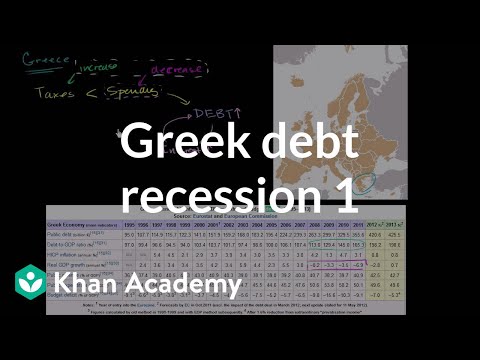
Greek Debt Recession and Austerity (part 1). Greek Financial Crisis (part 2). How and why Greece would leave the Euro (part 3). Why Europe is worried about Greece.
Add to calendar

Trusted paper writing service WriteMyPaper.Today will write the papers of any difficulty.