

Online courses directory (1116)

We introduce the characteristics and related analytic challenges on dealing with clinical data from electronic health records. Many of those insights come from medical informatics community and data mining/machine learning community. There are three thrusts in this course: Application, Algorithm and System

Aprenda a utilizar as novas metodologias de big data para a análise de grandes bancos de dados e para a melhoria dos processos de tomada de decisão em saúde.

Education is increasingly occurring online or in educational software, resulting in an explosion of data that can be used to improve educational effectiveness and support basic research on learning. In this course, you will learn how and when to use key methods for educational data mining and learning analytics on this data.

Learn various methods of analysis including: unsupervised clustering, gene-set enrichment analyses, Bayesian integration, network visualization, and supervised machine learning applications to LINCS data and other relevant Big Data from high content molecular and phenotype profiling of human cells.

Learn to use tools from the Bioconductor project to perform analysis of genomic data. This is the fifth course in the Genomic Big Data Specialization from Johns Hopkins University.

Nerves, the heart, and the brain are electrical. How do these things work? This course presents fundamental principles, described quantitatively.

Use of available (mainly web-based) programs for analyzing biological data. This is an introductory course with a strong emphasis on hands-on methods. Some theory is introduced, but the main focus is on using extant bioinformatics tools to analyze data and generate biological hypotheses.

Use of available (mainly web-based) programs for analyzing biological data. This is Part 2 of an introductory course with a strong emphasis on hands-on methods. Some theory is introduced, but the main focus is on using extant bioinformatics tools to analyze data and generate biological hypotheses.

This course was the first in a two-part series covering some of the algorithms underlying bioinformatics. It has now been split into three smaller courses.

This is the second course in a two-part series on bioinformatics algorithms, covering the following topics: evolutionary tree reconstruction, applications of combinatorial pattern matching for read mapping, gene regulatory analysis, protein classification, computational proteomics, and computational aspects of human genetics.

This course teaches the concepts and computational methods in the exciting interdisciplinary field of bioinformatics and their applications in life sciences. The lectures are taught in both Mandarin Chinese and English with slides in English. 生物信息学是一门新兴的生命科学与计算科学的前沿交叉学科。本课程讲授生物信息学主要概念和方法,以及如何应用生物信息学手段解决生命科学问题。本课程同时提供中文普通话授课和英文授课两个版本,以及英文幻灯片。

What makes bioinformatics education exciting is that people of a variety of education levels can get started quickly, with just a computer and internet access.

Are you interested in learning how to program (in Python) within a scientific setting? This course will cover algorithms for solving various biological problems along with a handful of programming challenges helping you implement these algorithms in Python. It offers a gentler-paced alternative to the first course in our Bioinformatics Specialization (Finding Hidden Messages in DNA).
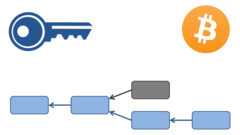
There’s a lot of excitement about Bitcoin, but also a lot of confusion about what Bitcoin is and how it works. We’re offering this course focusing on the computer science behind Bitcoin to help cut through the hype and get to the core of what makes Bitcoin unique.

Blended learning is a new educational model with great potential to increase student outcomes and create exciting new roles for teachers. In this course you will learn about the different types of blended learning and the best practices from real schools using these models. In addition, you will develop the tools you need to build your own blended learning program.

Professor Nader Tavassoli of London Business School contrasts traditional approaches to branding - where brands are a visual identity and a promise to customers - to brands as a customer experience delivered by the entire organisation. The course offers a brand workout for your own brands, as well as guest videos from leading branding professionals.

The Buddha said that human suffering—ranging from anxiety to sadness to unfulfilled craving—results from not seeing reality clearly. He described a kind of meditation that promises to ease suffering by dispelling illusions about the world and ourselves. What does psychological science say about this diagnosis and prescription—and about the underlying model of the mind?

Introduces students to (i) the history of Buddhist contemplative traditions in India and Tibet (meditation, yoga, mindfulness, visualization, etc.), (ii) innovations in scientific research on understanding such contemplative practices, (iii) recent adaptations of such practices in multiple professional and personal areas, and (iv) the practices themselves through brief secular contemplative exercises.

Learn to create a project budget and schedule that delivers results under costs and time constraints.

In this course, you will explore several structured, risk management approaches that guide information security decision-making.
Add to calendar

Trusted paper writing service WriteMyPaper.Today will write the papers of any difficulty.