

Online courses directory (1116)

Explore the forests of the world, from the taiga to the tropical rainforest! Learn why humans depend on them, and how we can sustainably manage forests for us and the many species with whom we share them.
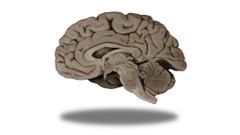
Learn the basic structure and function of the human nervous system, how nerve cells generate electrical signals and communicate, how they reshape their connections with use, and how neural systems integrate external and internal sensory signals to orchestrate action.

This course is intended as a self-study course for those interested in exploring a career as a Home Health Aide or Personal Care Aide.

As the world grows more socially and economically interdependent, Global Health has developed from an ethical dimension to an issue that now dominates global security. A diverse team of experts has designed an introductory course to give you a primer of the field and a dazzling view of one of the emerging disciplines of the 21st century. This course also serves as a prerequisite to the hands-on 'Global Health Responder' certification from the CU School of Medicine.

Learn how to analyze an organization's strategy and make recommendations to improve its value creation by building your strategist's toolkit. This course will be available on demand in February 2015.

The aim of this course is to understand issues that companies need to address when moving from being offline to online and learn how companies can craft business models where IT is embedded as an integral part of products, processes and customer interactions. You would get to appreciate how IT is changing the way companies create value through networks and coopetition.

Foundations of Teaching for Learning is a program of study primarily for people who are currently teaching but have had no formal teacher education. This course is an introductory one that considers the three domains of being a teacher: Professional Knowledge and Understanding; Professional Practice; and Professional Values, Relationships and Engagement.

How we teach has its foundation in how we were taught and how we learned. This course provides an opportunity for you to reflect on your personal and professional development as a teacher. Through reflection and portfolio development you will enhance your knowledge and understanding of how to promote learning.

The teacher’s work becomes meaningful when it is informed by research and theories of learning, and their relationship to actual practice. This course provides an opportunity for you to identify and understand students’ expectations and prior learning.

Curriculum is a framework for guiding teaching and learning. This course provides an opportunity for you to consider the relationship between the teacher, the learner and the curriculum.

This course will help you consider how to develop appropriate learning goals for individual and groups of students. You will learn how to plan learning activities to engage your students in ways that will achieve these goals.

At various points in the education cycle you will need to provide information which can be used to determine the extent to which your teaching is helping or has helped to achieve learning goals. This course prepares you to use assessment as part of the teaching and learning process.

This course will help you to consider what is expected of you as a member of the teaching profession. You will consider ethical behavior and the need to respect the laws and regulations governing teaching.

As a teacher you will need to establish appropriate relationships with many different groups within the school and the wider community. It is important for you to understand how critical these relationships are to student learning.

We are excited to provide this course for graduates of Foundations of Teaching for Learning Courses 1-8. This further enrichment of key themes in learning and teaching we have entitled ‘The Reflective Practitioner’ in order to emphasise the importance of standing back from practice to review, extend and challenge what we know, what we do and what we aspire to do better.

Learn what it takes to teach a K-12 course online! Investigate the history of virtual education, explore innovative tools, and examine key issues related to K-12 virtual instruction.

This course was previously called: The Magna Carta and its Legacy. This course aims to lead students into a greater appreciation for and an understanding of Magna Carta and its significance around the globe, as we approach the 800th anniversary of its sealing. The course examines why Magna Carta was radical in its day, why it has been a source of numerous debates, and why this anniversary is being celebrated in the present.

Each part of the world faces specific vulnerabilities to climate change and has different opportunities to mitigate the effects and build resilience in the 21st century. With the Paris Agreement at COP 21, the global community has signaled its intent to act. Indeed, without climate action, decades of development progress are threatened, meaning that we are at a ‘make it or break it’ point in time. This course presents the most recent scientific evidence, regional impacts and climate action strategies, and some opportunities for you to take action on climate change.

This course introduces concepts, algorithms, programming, theory and design of spatial computing technologies such as global positioning systems (GPS), Google Maps, location-based services and geographic information systems. Learn how to collect, analyze, and visualize your own spatial datasets while avoiding common pitfalls and building better location-aware technologies.
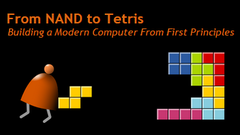
Build a modern computer system, starting from first principles. The course consists of six weekly hands-on projects that take you from constructing elementary logic gates all the way to building a fully functioning general purpose computer. In the process, you will learn -- in the most direct and intimate way -- how computers work, and how they are designed.
Add to calendar

Trusted paper writing service WriteMyPaper.Today will write the papers of any difficulty.