

Online courses directory (1116)

Ce Mooc parle de conservation de la nature, d’Afrique, de parcs, et de réserves. Découvrir et comprendre comment améliorer la gouvernance et la gestion de ces territoires uniques, c’est son objectif.

Returning graded homework, responding to parents, attending grade-level meetings, writing letters of recommendation, eating your own lunch... In an environment where even using the bathroom requires advanced planning, organization is key. This course provides insights, templates and exercises designed to get every teacher organized.

Learn how to gather, clean, and manage data from a variety of sources. This is the third course in the Johns Hopkins Data Science Specialization.

A philanthropist is anyone who gives anything — time, money, experience, skills, and networks — in any amount, to create a better world. This course will empower you to practice philanthropy more effectively and make your giving more meaningful to both you and those you strive to help.
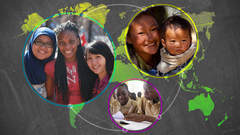
This course will explore the dynamic factors affecting the health and wellbeing of young people around the world, and how important it is for individuals, communities and nations that we improve the health and life chances of this important population group.

This Final Project course is only available to learners who have earned a Verified Certificate in each course of the Challenges in Global Affairs Specialization (The Changing Global Order, Configuring the World, and International Organizations Management). You won't be able to enroll in this course if you do not have a Verified Certificate in each of those three courses.
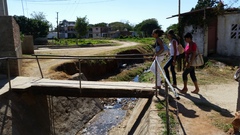
Learn about the best environmental technologies for a sustainable development and how they are managed in various settings around the world.

Is humanitarianism an effective, justifiable and sustainable response to ill-health, inequality, injustice and war?

This course proposes an overview of current global health challenges drawing on the insights of several academic disciplines including medicine, public health, law, economics, social sciences and humanities. This interdisciplinary approach will guide the student into seven critical topics in global health.

Questions related to sexuality and reproduction are intimately linked to health, well-being and human rights. In this course, you will gain a unique opportunity to explore the field of SRHR together with participants from around the world, and to reflect upon themes and issues that are of global relevance.

This course provides an overview of the issue of postharvest loss of grains by exploring essential physical, technical, and social dimensions of postharvest supply chains and loss prevention methods globally.

Students will explore energy consumption patterns including individuals, countries and the entire globe. These patterns will include all sectors of the global economy from fully developed countries to developing nations. New energy sources will be investigated and international solutions to future needs will be analyzed.

Health Care Workers and Health Professions Students can prepare to plan and deliver TB care in their communities by applying the latest clinical and research data presented in this nine-week course focusing on TB/HIV Co-Infection.

This class describes the science of global warming and the forecast for humans’ impact on Earth’s climate. Intended for an audience without much scientific background but a healthy sense of curiosity, the class brings together insights and perspectives from physics, chemistry, biology, earth and atmospheric sciences, and even some economics—all based on a foundation of simple mathematics (algebra).

This course offers an evidence-based analysis of globalization that addresses what is happening to us personally as well as economically amidst the market-led processes of global integration.

The majority of businesses say they want to become more global. And business leaders say that the lack of people with global intelligence is the key constraint holding them back. This course will address both gaps — at the business and the personal level, it will focus on practical strategies for dealing with the real consequences of globalization.

This course is designed to examine an array of issues related to the globalization of higher education and research. The main objective of the course is to enable students to better understand how and why universities are engaged in the globalization process, as well as what the key implications of this development process are.

This course explores musculoskeletal anatomy of the Upper Limb, and common injuries that affect its function. We discuss parts of the upper limb, the anatomy of bones, joints and muscles, nerve injuries and common pathologies.

Explore the fundamentals of the Global Positioning System (GPS) and how it works by conducting "backyard" laboratory experiments on your own mobile device. Learn the basics of satellite navigation and witness the power of a network with planet-wide coverage. Gain a deeper understanding of GPS and its role in our lives, while interacting with a worldwide community of learners and backyard scientists.

Gain a foundational understanding of the world of 2-dimensional materials, including Graphene. This course provides an overview of this exciting new field of study, starting with the concept of what a 2-dimensional material is, how they are produced, their unique and superlative properties, and the range of potential applications.
Add to calendar

Trusted paper writing service WriteMyPaper.Today will write the papers of any difficulty.